Golden hash browns, a set egg custard, and a bubbling cheddar top turn this breakfast casserole into the kind of dish people hover over before the pan even hits the table. The bottom bakes into a real crust instead of staying soggy, and the center slices cleanly once it has had a few minutes to settle. That balance is what makes it worth keeping in the rotation.
The trick is pressing the thawed potatoes firmly into the dish so they act like a base, not a loose layer of shreds. The eggs bake with whole milk for a custard that stays tender, while part of the cheddar goes into the filling and the rest lands on top for that browned, savory finish. Garlic powder and onion powder do a lot of the seasoning work here without making the casserole taste heavy.
Below, I’m walking through the one detail that keeps the hash browns crisp, the ingredient choices that matter most, and a few easy variations if you want to stretch this into a bigger brunch or change up the mix-ins.
The hash brown layer baked up crisp on the edges instead of soggy, and the eggs set beautifully without getting rubbery. My husband went back for seconds and asked if I could make it again next weekend.
Like this hash browns and eggs breakfast casserole? Save it for the mornings when you want a crisp potato base, cheesy eggs, and one pan feeding a crowd.
The Reason the Hash Brown Base Stays Crispy Instead of Turning Watery
Most breakfast casseroles go soft at the bottom because the potatoes are packed loosely or started too wet. Thawed hash browns still hold a lot of moisture, and if they go into the pan in a damp clump, that water steams the whole layer before it has a chance to brown. Pressing them firmly into a thin, even crust changes the whole dish. You want contact with the pan and enough compression that the shreds knit together as they bake.
The other piece is keeping the egg mixture from flooding the base. A tight seal is not the goal here; the custard should slip into the edges and around the potatoes, not drown them. That balance gives you a slice that holds together but still tastes like hash browns and eggs, not a pan of scrambled eggs sitting on potatoes.
What the Eggs, Milk, and Cheese Are Each Doing Here
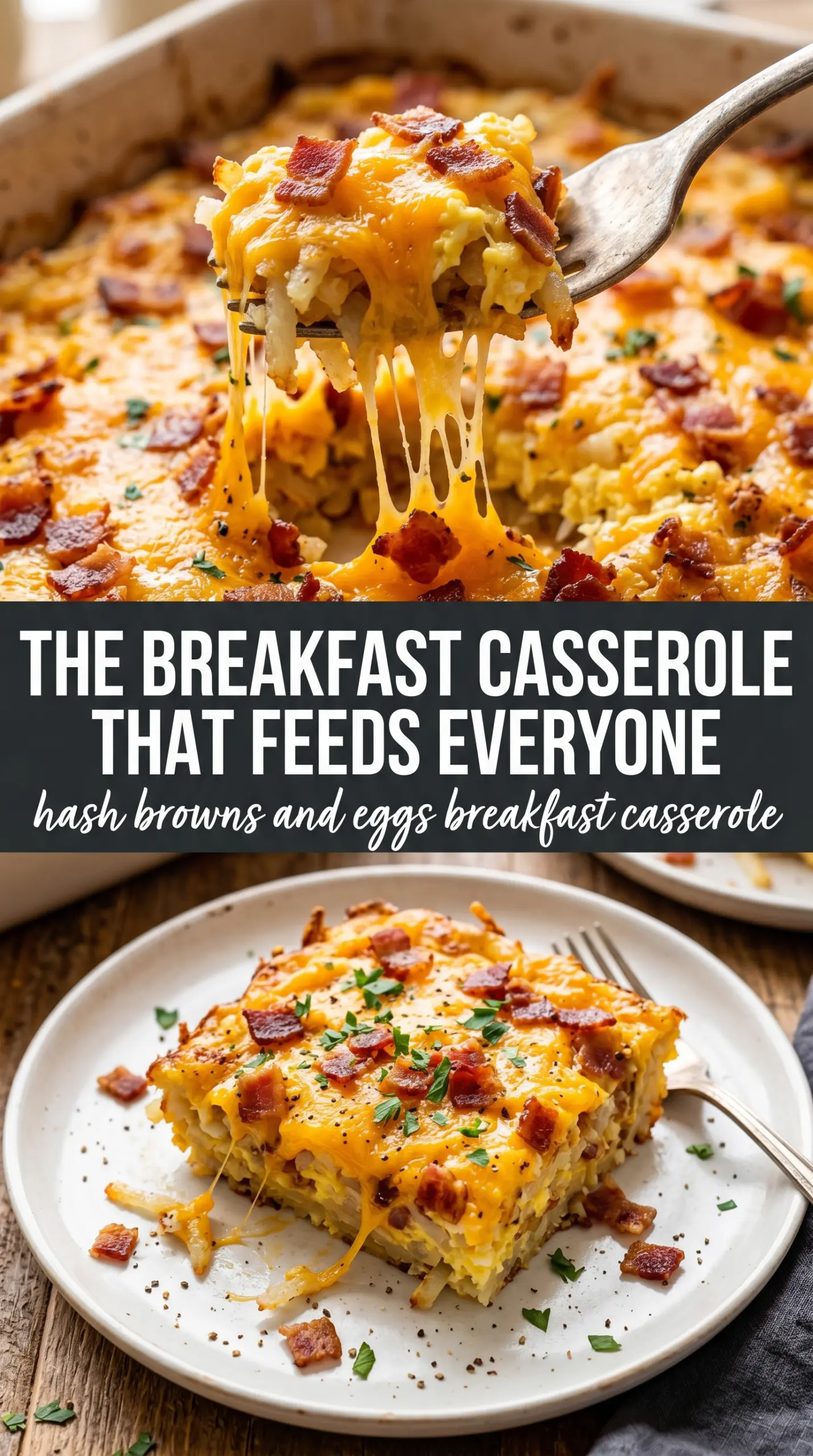
- Frozen hash browns — Thawed potatoes bake into the best crust here because they can be pressed flat and browned without fighting ice crystals. If you only have refrigerated shredded potatoes, pat them dry first; extra moisture is what causes a soggy bottom.
- Eggs — Eight eggs give the casserole enough structure to slice cleanly after it rests. Fewer eggs make the center loose, and more eggs start to crowd out the potato texture.
- Whole milk — This keeps the filling tender and creamy without turning it heavy. You can use 2% in a pinch, but the custard won’t taste as rich or set up as smoothly.
- Sharp cheddar — Sharp cheddar brings enough flavor to stand up to the potatoes and eggs. Mild cheddar melts fine, but it tastes flatter. If you swap in another cheese, choose one that melts well and has some bite.
- Garlic powder and onion powder — These season the custard evenly, which fresh garlic won’t do as cleanly in a baked egg dish. Fresh onion or pepper can go in as mix-ins, but the powdered seasonings carry the background flavor.
Building the Casserole So the Center Sets Before the Top Overbrowns
Pressing the Potatoes into a Real Crust
Start with a greased 9×13 dish and press the thawed hash browns into the bottom in an even layer. Use firm pressure and go all the way into the corners so the thickness stays consistent. If the layer looks shaggy or piled up in the middle, the center will stay soft while the edges overcook. A compact layer is what gives you that crisp, almost skillet-like base.
Whisking the Custard Until It Looks Uniform
Whisk the eggs, milk, seasonings, and 1.5 cups of cheddar until the mixture looks even and a little frothy. That’s how you know the salt and spices are distributed instead of settling in pockets. If you dump the cheese in at the end without mixing, it tends to clump and sink. The custard should look thick enough to coat a spoon but still pour easily over the potatoes.
Baking Until the Center Stops Wobbling
Pour the filling over the hash browns, scatter the remaining cheese over the top, and bake uncovered until the top is golden and the center is set. The middle should jiggle only slightly when you tap the dish, not slosh. If the top browns too fast before the eggs are done, lay a loose piece of foil over it for the last stretch. Let the casserole rest for 10 minutes before slicing so the eggs finish setting and the portions hold together.
How to Adapt This Breakfast Bake Without Losing the Good Texture
Make it gluten-free without changing anything
This casserole is naturally gluten-free as written, so you don’t need a special flour swap or binder. Just check that your hash browns and any add-ins, like ham or seasoning blends, are certified gluten-free if that matters for your kitchen.
Swap in ham, peppers, or green onions for a heartier bake
Diced ham adds salt and makes the casserole feel more like a full brunch main. Bell pepper brings sweetness and a little moisture, while green onions add sharpness without changing the texture much. Keep the total amount of mix-ins moderate so the eggs still fill the dish and set properly.
Use different cheese when cheddar isn’t what you have
Monterey Jack melts smoothly and gives a milder finish, while pepper jack adds a little heat. Avoid very soft cheeses that release a lot of oil, because they can make the top greasy before the center is fully set. If you use a stronger cheese, keep some cheddar in the mix so the casserole still tastes balanced.
Make it lighter with low-fat milk and extra vegetables
2% milk will work if that’s what you keep on hand, but the custard won’t taste quite as rich. To make up for that, add vegetables that cook dry, like diced peppers or onions, and avoid watery add-ins. The casserole still bakes up well, but the texture lands a little firmer and less creamy.
Storage and Reheating
- Refrigerator: Store leftovers covered for up to 4 days. The hash brown layer softens a little after chilling, but the flavor holds up well.
- Freezer: This freezes well in slices. Wrap portions tightly and freeze for up to 2 months, then thaw in the fridge before reheating.
- Reheating: Warm slices in a 325°F oven until heated through. The microwave works for speed, but it softens the potato base, so use short bursts if you go that route.
Questions I Get Asked About This Recipe
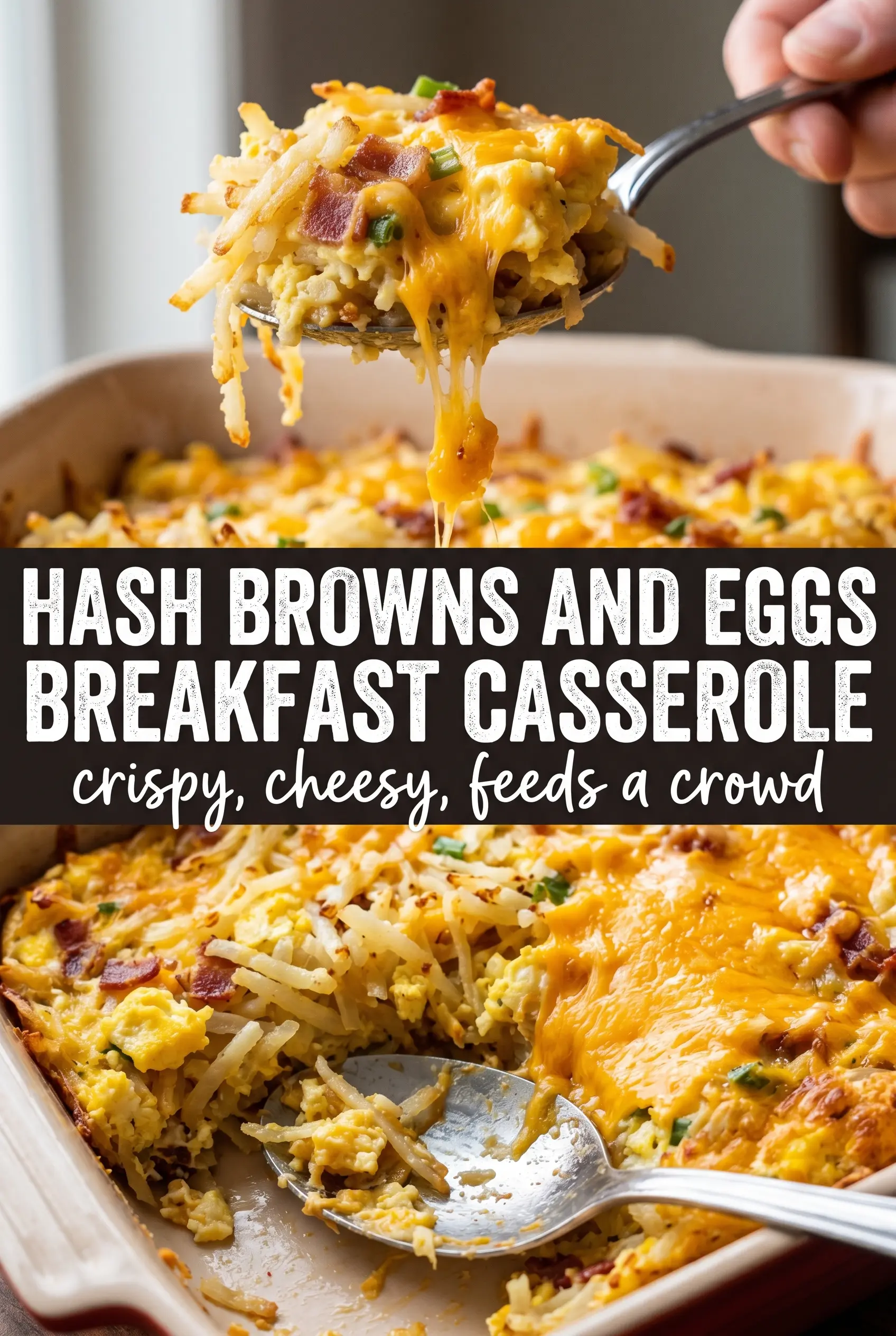
Hash Browns and Eggs Breakfast Casserole
Ingredients
Equipment
Method
- Preheat the oven to 375°F and grease a 9x13 baking dish.
- Press the thawed hash browns evenly into the bottom of the dish, pressing firmly to form a crust.
- Sprinkle any mix-ins over the hash brown layer.
- Whisk the eggs, whole milk, garlic powder, onion powder, salt, and black pepper, then stir in 1.5 cups shredded cheddar.
- Pour the egg mixture over the hash brown base and top with the remaining cheddar.
- Bake uncovered for 45–50 minutes at 375°F until the eggs are completely set and the top is golden.