Pizza monkey bread comes out with the kind of pull-apart center that disappears fast at the table: browned biscuit edges, pockets of melted mozzarella, and little bursts of pepperoni in every bite. The bundt pan does the heavy lifting here, giving the dough enough structure to bake into a golden loaf while keeping the middle soft and gooey instead of dry.
The trick is coating the biscuit pieces in seasoned butter before they go into the pan. That gives every layer flavor, helps the parmesan stick, and keeps the bread from tasting plain in the center. A light press into the pan is enough; pack it down too firmly and you lose the air pockets that make the loaf tear apart cleanly.
Below, I’ll walk through the part that matters most: how to keep the cheese from disappearing into the gaps and how to turn the loaf out without leaving half of it behind in the pan. The little details make the difference between a nice baked snack and a loaf people hover over while it’s still on the counter.
The biscuit pieces baked up fluffy inside with crisp, buttery edges, and the pepperoni stayed tucked into every pull-apart bite. I served it with warm marinara and the pan was empty in minutes.
Save this pepperoni-packed pizza monkey bread for game day, brunch, or any night that needs a cheesy pull-apart loaf with marinara on the side.
The Reason the Center Stays Tender Instead of Doughy
Pizza monkey bread can go wrong in one specific way: the outside browns before the biscuit pieces in the middle finish baking. The fix is in the bundt pan. It gives the loaf a tall shape, but it also means the dough pieces need enough room for heat to travel through the center, which is why a loose, even layer works better than a tightly smashed one.
The butter seasoning matters more than it looks like it should. Once the biscuit dough is tossed in garlic butter and spices, the coating keeps the pieces from drying out and helps the top bake into a salty, crackly crust. If you skip that step or undercoat the dough, the finished loaf tastes flat and the top can end up pale where the parmesan didn’t stick.
- Bundt pan — This shape helps the bread bake evenly and turn out in one piece. A regular cake pan doesn’t give you the same heat circulation or the same dramatic pull-apart shape.
- Refrigerated biscuit dough — Biscuit dough is sturdy enough to hold pepperoni and cheese without collapsing, and it bakes faster than yeast dough. Cut each piece into quarters so the centers cook through before the outside overbrowns.
- Mozzarella — Low-moisture shredded mozzarella melts cleanly and gives you those stretchy pockets inside. Fresh mozzarella releases too much water and can make the loaf soggy.
- Parmesan — This is the savory crust maker. Use the finely grated kind if that’s what you have, but avoid the shelf-stable powdery version if possible because it doesn’t brown or cling as well.
What Each Ingredient Is Actually Doing in This Recipe

- Primary ingredient (the star) — Quality matters most. Choose the best you can find.
- Cooking medium (oil, butter, or broth) — This carries flavors and prevents dryness.
- Seasonings (salt, pepper, spices, herbs) — Layer flavors so nothing overpowers. Build depth gradually.
- Aromatics (garlic, onion, herbs) — Cook with fat to bloom flavors. Become the foundation.
- Supporting ingredients — Complement the main ingredient without overpowering it.
- Sauce or liquid (if applicable) — Brings flavors together. Balance richness with acid.
- Acid (lemon, vinegar, wine, or other) — Brightens and prevents flat-tasting results.
- Final finish (garnish, glaze, or sauce) — Prevents one-dimensional taste and adds visual appeal.
How to Layer the Dough So Every Piece Bakes Into the Same Bite
Mix the Seasoned Butter First
Stir the melted butter with garlic powder, Italian seasoning, and red pepper flakes before anything touches the dough. That way the seasoning spreads evenly instead of ending up in one bitter, spicy pocket at the bottom of the bowl. The butter should be warm and liquid, not hot enough to cook the dough on contact.
Coat the Biscuit Pieces in Batches
Toss the quartered biscuit pieces with the pepperoni and mozzarella until every surface looks slick and speckled with seasoning. Work in a bowl with enough room to move everything around; if the bowl is cramped, the cheese clumps and the butter pools in one spot. You want the dough coated, not drenched.
Build the Bundt Pan in Loose Layers
Spoon the mixture into the greased bundt pan and press only lightly as you go. The goal is to eliminate giant gaps, not compress the loaf into a solid mass. If you pack it too firmly, the center stays dense and the finished bread tears instead of pulling apart in soft sections.
Bake Until the Top Is Deep Gold
Bake at 375°F until the top is deeply golden and the center feels set when you gently press the loaf. If the top is browning too quickly, tent it loosely with foil for the last few minutes. The smell will turn unmistakably pizza-like before it’s done, but don’t pull it early or the dough in the middle will still taste raw.
Invert While It’s Still Warm
Let the bread rest for a few minutes, then invert it onto a serving plate. Wait too long and the cheese can glue the loaf to the pan; flip it too fast and it may fall apart before it sets. Warm marinara is the right dip here because it keeps the bread from cooling down and sharpens the salty, cheesy edges.
Three Ways to Change the Loaf Without Losing What Makes It Good
Make It Meat-Lighter
Cut the pepperoni down by half and add extra mozzarella or chopped olives for a more balanced loaf. You’ll lose some of the smoky, salty punch from the pepperoni, but the bread still bakes up rich and satisfying. This is the version I’d use when I want it to lean more snacky than hearty.
Gluten-Free Version
Use a gluten-free refrigerated biscuit dough if you can find one with a sturdy texture. The loaf will usually be a little more delicate when you turn it out, so let it rest for a few extra minutes before inverting. Don’t expect quite the same chew, but the pizza flavor still comes through.
Add Vegetables Without Making It Watery
Use cooked, well-drained mushrooms, diced bell pepper, or finely chopped sautéed onion. Raw vegetables release too much moisture and can make the center gummy, especially in a dense loaf like this. Keep the pieces small so they nestle into the dough instead of breaking the pull-apart texture.
Storage and Reheating
- Refrigerator: Store leftovers covered for up to 3 days. The bread firms up as it chills, but the flavor stays good.
- Freezer: Freeze baked pieces tightly wrapped for up to 1 month. Thaw in the fridge before reheating so the center doesn’t stay cold.
- Reheating: Warm in a 350°F oven or air fryer until the cheese softens again and the edges crisp back up. The microwave works in a pinch, but it softens the crust and makes the bread a little rubbery.
Answers to the Questions Worth Asking
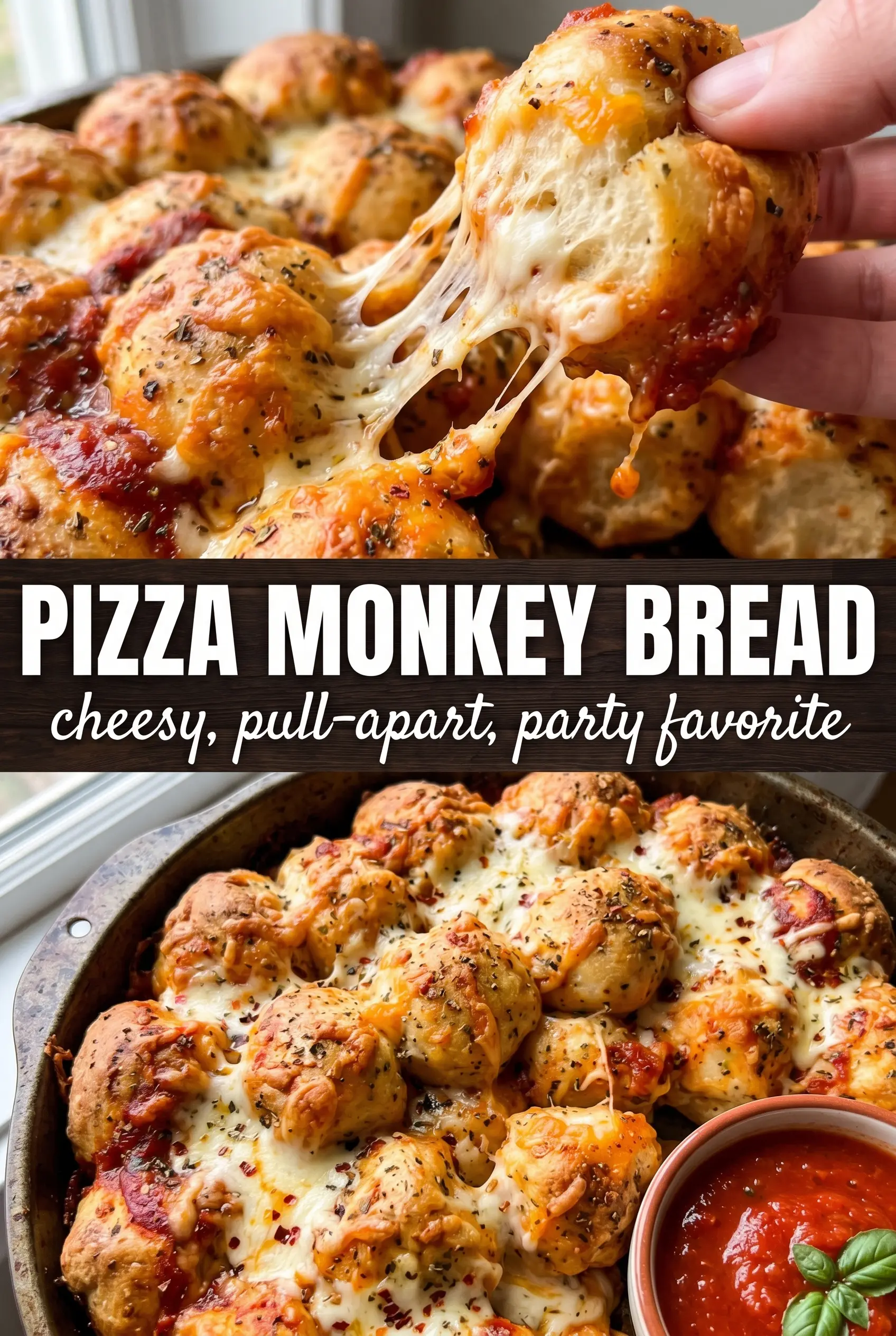
Pizza Monkey Bread
Ingredients
Equipment
Method
- Preheat the oven to 375°F and grease a bundt pan so the loaf releases cleanly.
- Mix the melted butter with garlic powder, Italian seasoning, and red pepper flakes until evenly combined and fragrant.
- Toss the quartered biscuit pieces, halved pepperoni, and shredded mozzarella with the garlic butter until every piece looks coated.
- Layer the coated mixture into the bundt pan, pressing slightly so it packs together.
- Sprinkle the grated parmesan over the top for a browned, cheesy finish.
- Bake for 25–30 minutes at 375°F until the top is golden-brown.
- Invert the monkey bread onto a serving plate and serve immediately with warm marinara for dipping.