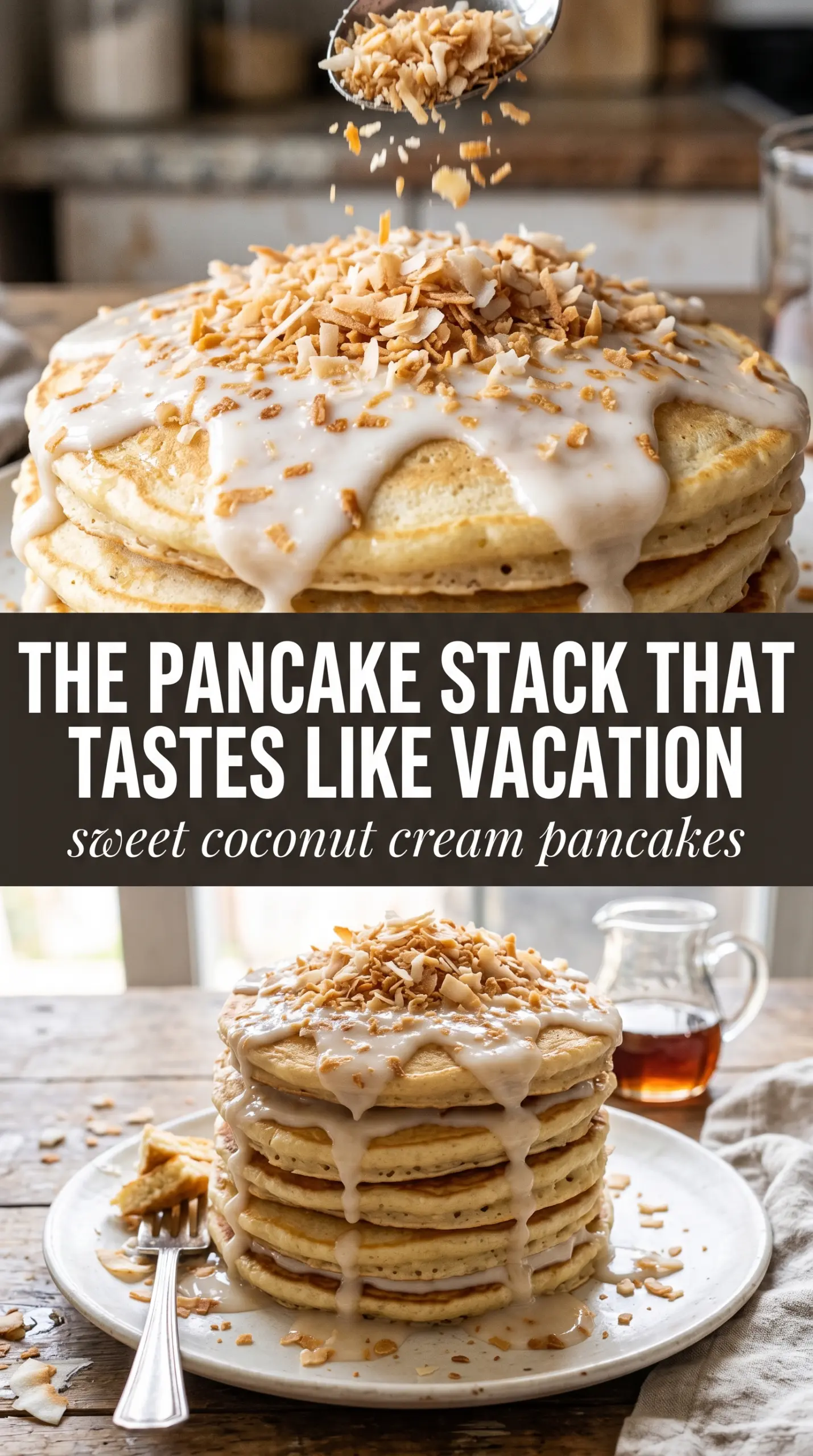
Thick, fluffy coconut pancakes with a golden crust and a glossy coconut cream syrup are the kind of breakfast that disappears fast. The batter bakes up tender in the middle with toasted edges on the outside, and the syrup brings enough sweetness to make the whole stack feel special without turning it heavy. Toasted coconut on top gives you a little crunch in every bite, which is exactly what keeps this from tasting flat.
What makes these work is the balance between coconut milk and cream of coconut. Coconut milk keeps the batter loose enough to spread and cook through, while cream of coconut adds body and sweetness that plain milk can’t match. The trick is stopping the mixing as soon as the flour disappears. If you work the batter too much, the pancakes go tight instead of fluffy, and the coconut pieces won’t have room to show up in the texture.
Below, I’ll walk through the part that matters most: how to keep the pancakes light while still getting that rich coconut flavor, plus the one syrup trick that makes the topping pourable instead of clumpy.
The pancakes came out thick and fluffy, and the coconut syrup soaked into the stack just enough without making them soggy. My kids asked for the toasted coconut on top again the next morning.
These sweet coconut cream pancakes are made for tall stacks, syrupy drips, and a finish of toasted coconut flakes.
The Trick to Keeping Coconut Pancakes Fluffy Instead of Dense
Coconut batter can go heavy fast because the ingredients are rich enough to tempt you into overmixing. The baking powder needs a light hand to do its job, and the shredded coconut adds texture without needing extra stirring. Once the wet and dry ingredients meet, stop when you still see a few streaks of flour. Those last streaks disappear on the griddle.
- Coconut milk — Use canned coconut milk, not the carton drink. The canned version brings the fat needed for tenderness and gives the pancakes their fuller coconut taste.
- Cream of coconut — This is what turns the batter from plain coconut pancakes into sweet coconut cream pancakes. It adds sweetness and body, so don’t swap it for regular coconut milk unless you’re ready for a thinner, less rich result.
- Shredded sweetened coconut — Fold it in at the end so it stays distributed instead of disappearing into the batter. Sweetened coconut browns nicely on the griddle and gives you little chewy bites.
- Baking powder — Fresh baking powder matters here. If it’s old, the pancakes spread before they rise, and you lose that thick, fluffy stack.
What Each Ingredient Is Actually Doing in This Recipe
- Primary ingredient (the star) — Quality matters most. Choose the best you can find.
- Cooking medium (oil, butter, or broth) — This carries flavors and prevents dryness.
- Seasonings (salt, pepper, spices, herbs) — Layer flavors so nothing overpowers. Build depth gradually.
- Aromatics (garlic, onion, herbs) — Cook with fat to bloom flavors. Become the foundation.
- Supporting ingredients — Complement the main ingredient without overpowering it.
- Sauce or liquid (if applicable) — Brings flavors together. Balance richness with acid.
- Acid (lemon, vinegar, wine, or other) — Brightens and prevents flat-tasting results.
- Final finish (garnish, glaze, or sauce) — Prevents one-dimensional taste and adds visual appeal.
Building the Batter and Cooking the Stacks
Mix the dry ingredients first
Whisk the flour, sugar, baking powder, and salt until the mixture looks even and aerated. This keeps the leavener from clumping in one spot, which would give you uneven rise and random bitter bites. A quick whisk is enough; you’re not trying to whip air into it. The goal is a uniform base before the wet ingredients go in.
Stir the wet ingredients just until combined
Mix the coconut milk, cream of coconut, eggs, melted butter, and vanilla in a separate bowl until smooth. When you add them to the dry ingredients, use a spatula or whisk and stop as soon as the batter comes together. If you keep stirring after the flour disappears, the pancakes turn rubbery and lose that soft center. Fold in the shredded coconut at the end so it stays visible in the finished stack.
Cook until the edges set and the bottoms turn deep gold
Spoon about 1/4 cup of batter onto a greased griddle over medium heat. The pancakes are ready to flip when the edges look set, the tops are dotted with bubbles, and the undersides have a deep golden crust. If the heat is too high, the coconut on the outside will darken before the middle cooks through, so keep the griddle at a steady medium. After flipping, the second side usually needs less time than the first.
Warm the coconut cream syrup until smooth
Put the cream of coconut, maple syrup, and butter in a small saucepan over low heat and warm just until the mixture loosens and turns glossy. If it looks separated at first, keep stirring gently; it will come back together as the butter melts. Don’t boil it, or the syrup can thicken too much and stop pouring cleanly over the stack. Warm syrup is the difference between a pretty drizzle and a sticky spoonful.
How to Adjust These Pancakes Without Losing the Coconut Character
Make them dairy-free
Use a plant-based butter in both the batter and the syrup. The pancakes are already coconut-forward, so you won’t lose the main flavor, but the syrup may be a touch thinner depending on the brand of coconut cream you use.
Make them less sweet
Cut the sugar in the batter to 2 teaspoons and use a little less maple syrup in the topping. You’ll still get the coconut cream flavor, but the stack will read more like a brunch pancake and less like dessert.
Make them gluten-free
Swap in a good 1:1 gluten-free baking flour blend. The batter may thicken a little more as it rests, so if it looks stiff, loosen it with a tablespoon or two of coconut milk. The pancakes will still be tender, though they won’t brown quite as evenly.
Use unsweetened coconut
If you only have unsweetened shredded coconut, it works fine. The pancakes will taste a little less candy-like and a little more toasty, which is a nice trade if you want the syrup to do most of the sweetening.
Storage and Reheating
- Refrigerator: Store leftover pancakes in an airtight container for up to 3 days. They’ll soften a little, but they still reheat well.
- Freezer: Freeze the pancakes without syrup between sheets of parchment, then seal in a bag for up to 2 months. The syrup is best made fresh.
- Reheating: Warm in a toaster oven or dry skillet over low heat until heated through. Microwaving works in a pinch, but it makes the coconut edges limp instead of keeping that light crust.
Questions I Get Asked About This Recipe
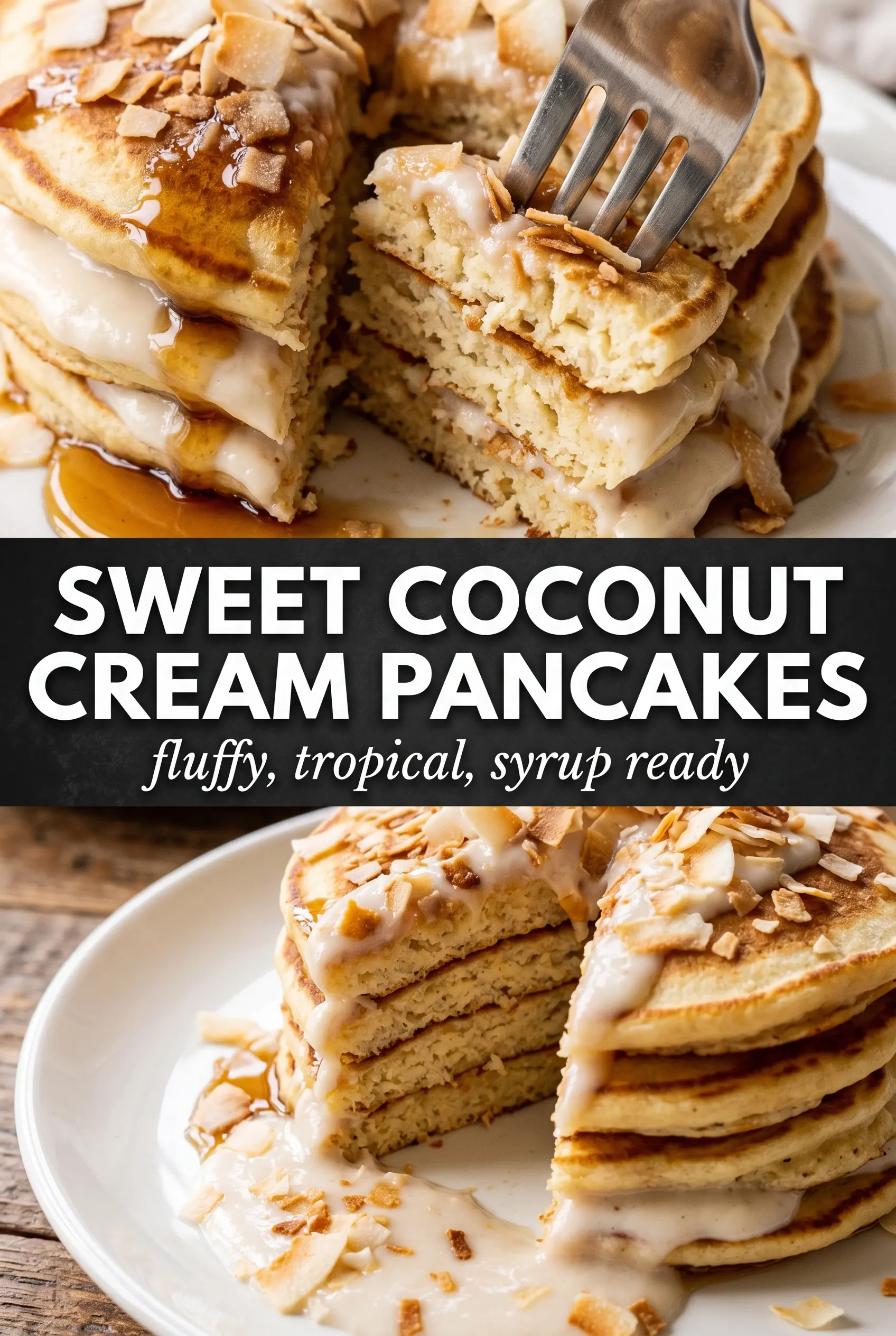
Sweet Coconut Cream Pancakes
Ingredients
Equipment
Method
- Whisk all-purpose flour, sugar, baking powder, and salt together until evenly mixed and no dry lumps remain (visual cue: the powder looks uniform).
- In a second bowl, mix coconut milk, cream of coconut, eggs, melted butter, and vanilla extract until smooth (visual cue: the mixture turns glossy and cohesive).
- Stir the wet mixture into the dry ingredients just until combined, then fold in shredded sweetened coconut (visual cue: a thick batter forms with visible coconut shreds, no overmixing).
- Grease a griddle and heat over medium until a small drop of batter sizzles gently (visual cue: the surface looks lightly shimmering).
- Scoop 1/4-cup portions onto the griddle and cook for 3–4 minutes per side until golden (visual cue: bubbles rise on top, edges look set, and the underside is browned).
- Warm cream of coconut, maple syrup, and butter together in a small saucepan until smooth (visual cue: the syrup turns glossy and uniform).
- Stack pancakes and pour coconut cream syrup over the top, then scatter toasted coconut flakes on top; add butter for serving if desired (visual cue: syrup drips down the sides).