Breakfast stuffed avocados hit the table with that ideal mix of creamy, salty, and just-set. The avocado warms through and turns even richer, the egg bakes right in the center, and the toppings give every bite a little crunch and sharpness so it never feels heavy. It’s the kind of breakfast that looks like you worked harder than you did, but the oven does most of the work.
The trick is giving the egg enough room and enough support. A quick scoop from the center keeps the avocado from overflowing, and tucking the halves into a small baking dish with foil around them keeps the whites from spilling out before they set. The yolk is the part to watch: pull the pan when the whites are opaque and the yolk still has a soft wobble if you want that rich, spoonable center.
Below, I’ve included the little details that matter most — how to keep the avocados upright, when the egg is done, and which toppings can be swapped without losing what makes this breakfast work.
The foil trick kept the avocados upright and the eggs baked evenly. I pulled them at 13 minutes and the yolks were still silky, which was exactly what we wanted.
Love the creamy avocado and runny egg combo? Save these breakfast stuffed avocados for an easy keto breakfast with crispy bacon and feta.
The Small Scoop That Keeps the Egg from Running Away
The biggest mistake with baked avocado eggs is treating the avocado like it can hold a full raw egg without help. It usually can’t. A small scoop from the center gives the egg room to settle deeper into the avocado, which helps the white cook around the yolk instead of sliding off the sides and pooling in the dish.
The other thing that matters is support. Avocado halves wobble, and once they wobble, the egg moves with them. Nestling them into a baking dish and surrounding them with crumpled foil keeps them upright so the whites stay where they belong and the yolks bake more evenly.
What Each Topping Is Actually Doing Here
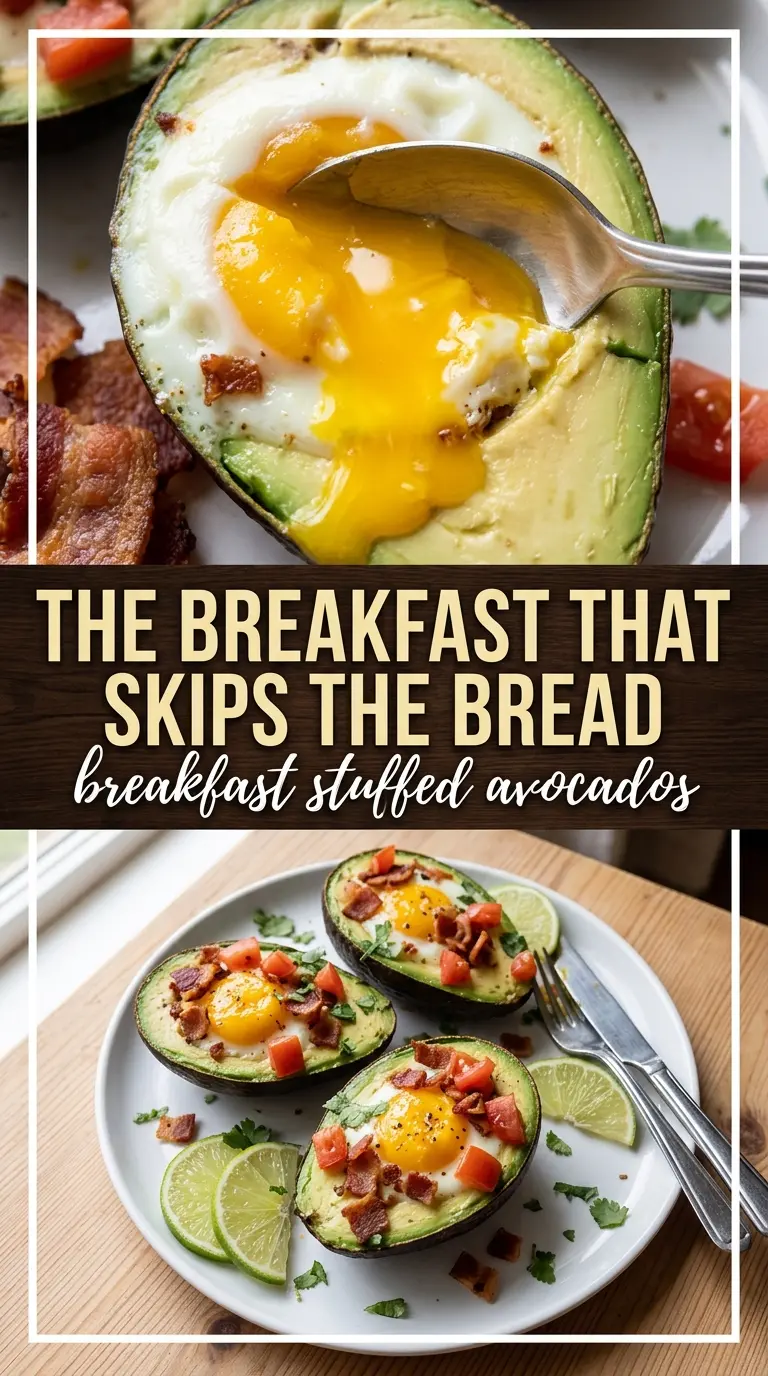
- Avocados — Choose ripe avocados that yield gently when pressed but aren’t mushy. If they’re too firm, they won’t soften enough in the oven; if they’re overripe, the edges can collapse before the egg sets.
- Eggs — Large eggs fit the cavity best after a little scooping. Very large eggs can overflow, so if that’s what you have, pull out a touch more avocado before cracking them in.
- Bacon — Crispy bacon adds salt and crunch, which matters because both the avocado and egg are soft. Cook it fully before topping so it stays crisp instead of steaming on the hot avocado.
- Feta — Feta gives the dish a sharp, briny bite that wakes up the mild avocado. Goat cheese works in a pinch, but it’s softer and less salty, so the finish tastes milder.
- Lime and herbs — A squeeze of lime at the end keeps the avocado tasting fresh and cuts through the richness. Chives are a little gentler; cilantro brings a brighter, more savory finish.
Getting the Whites Set Without Overcooking the Yolks
Making the Avocado Cups
Start by scooping a little extra avocado from the center of each half until the cavity is wide enough to hold an egg. You’re not trying to hollow it out completely; leave enough avocado around the edges so the half still holds its shape in the oven. A small baking dish works best because it keeps the halves snug, and the foil should hug the sides just enough to stop them from tipping.
Seasoning Before the Egg Goes In
Season the inside of each avocado before you add the egg. That keeps the avocado itself from tasting flat, which is easy to notice because the rest of the dish is so simple. Crack the egg directly into the cavity, then add a little more salt and pepper on top of the egg white. If a bit of white spills over, don’t chase it around the pan; it’ll set in place as it bakes.
Baking to the Right Center
Bake at 425°F for 12 to 15 minutes, but start checking early. The whites should look opaque and just set, while the yolk still moves slightly when you nudge the pan. If you wait until the yolk looks firm in the oven, it’ll be overdone by the time you serve it. Pull the dish, top with bacon, feta, red pepper flakes, and herbs, then finish with lime juice while everything is still hot.
Make It Vegetarian
Skip the bacon and add extra feta, chopped chives, or a spoonful of salsa after baking. You lose the smoky crunch, but the lime, herbs, and salty cheese keep the breakfast bright and satisfying.
Dairy-Free Version
Leave off the feta and lean harder on the seasoning, lime, and herbs. The dish still works because the avocado and egg carry the texture, but you’ll want the extra acid at the end to keep the flavor from feeling too soft.
Make It Lower-Carb and Extra Filling
Add a second egg to the side in a separate ramekin if your avocados are large enough, or serve the halves with a pile of sautéed greens. The avocado keeps it keto-friendly either way, but the extra greens turn it into a bigger breakfast without changing the method.
Storage and Reheating
- Refrigerator: Best eaten right away, but leftovers keep for 1 day in the fridge. The avocado will darken and the yolk will firm up.
- Freezer: Not a good freezer recipe. The avocado texture turns watery and the egg becomes rubbery after thawing.
- Reheating: Warm leftovers in a 300°F oven just until heated through, about 8 minutes. The microwave tends to overcook the egg and make the avocado limp before the center is warm.
Questions I Get Asked About This Recipe
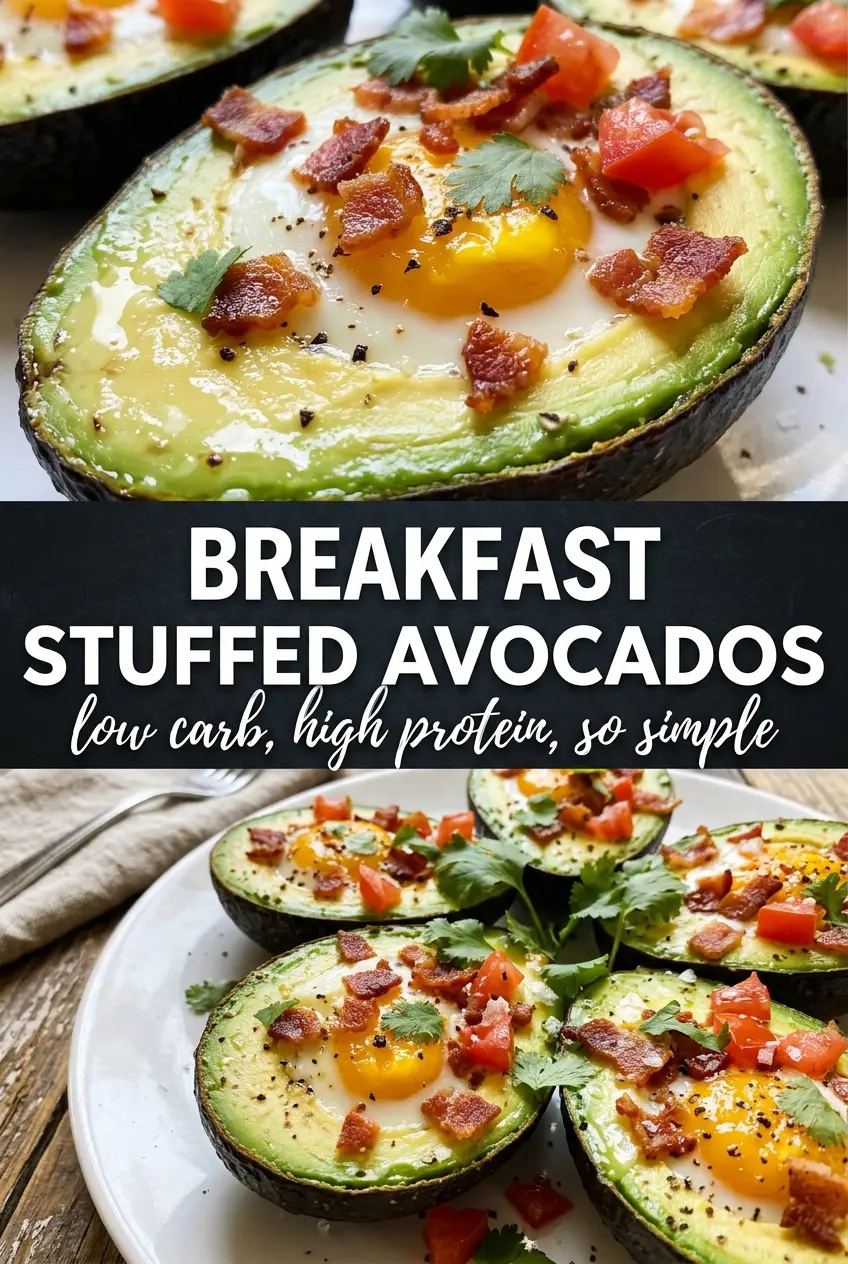
Breakfast Stuffed Avocados
Ingredients
Equipment
Method
- Preheat the oven to 425°F.
- Scoop out a bit more avocado from each half to make a larger cavity for the egg.
- Place the avocado halves in a small baking dish and crumple foil around them to keep them upright.
- Season the inside of each avocado with salt, black pepper, and garlic powder.
- Crack one egg into each cavity and season the egg with salt and black pepper.
- Bake for 12–15 minutes until the egg whites are set.
- Top each baked avocado with bacon, feta, red pepper flakes, and herbs.
- Serve immediately with lime wedges.