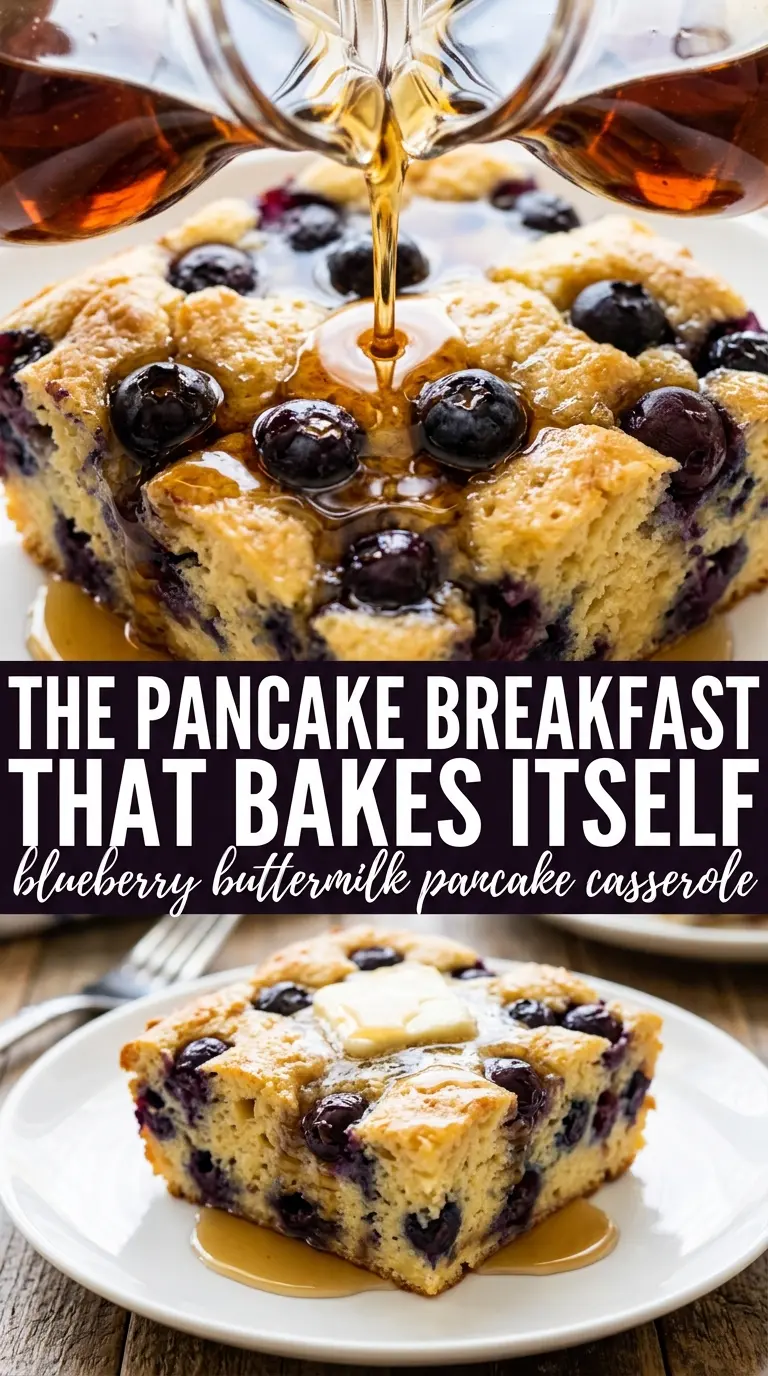
Blueberry buttermilk pancake casserole bakes up with crisp, bronzed edges, a tender middle, and pockets of juicy berries that burst into the crumb as soon as you cut it. It has all the comfort of a stack of pancakes, but none of the stove-side flipping or the first-cake-too-cold problem that always seems to happen when you’re cooking for a crowd.
The trick is in the batter. Buttermilk gives the casserole a gentle tang and keeps the texture soft, while baking soda works with that acidity for a lighter rise than you’d get from a plain quick-bread batter. The berries go on top instead of getting stirred hard through the batter, which helps keep the whole pan from turning gray-purple and keeps the top looking clean and bakery-style.
Below you’ll find the exact bake cues that matter, plus the small ingredient choices that keep the center set without drying out the edges. I also included a few variations for using frozen berries, making it dairy-free, and serving it for brunch without any last-minute scrambling.
The batter baked up so light and the blueberries stayed juicy instead of sinking to the bottom. I served it straight from the pan with maple syrup and everyone went back for seconds.
Love a golden, berry-studded breakfast bake? Save this blueberry buttermilk pancake casserole for easy brunch mornings.
The Reason This Pancake Casserole Stays Tender Instead of Dense
Most pancake bakes go heavy because the batter gets mixed like a cake batter or baked too long while people wait for the center to firm up. That turns the crumb tight and a little rubbery. Here, the batter should look lumpy when it goes into the pan. Those little streaks of flour disappear in the oven, and that’s what keeps the texture soft.
The other place this recipe wins is the balance between buttermilk, baking soda, and eggs. Buttermilk brings acidity, baking soda reacts with it, and the eggs help the set without turning the casserole bouncy. If the top is getting dark before the center is done, the pan is probably too close to the heat source or the oven is running hot. Move the rack to the center and start checking for the center to spring back lightly instead of looking for a dry surface.
What the Buttermilk and Blueberries Are Doing Here
- Buttermilk — This is what gives the casserole its tang and tender crumb. Regular milk works in a pinch if you add 1 tablespoon lemon juice or vinegar to each cup, but it won’t taste quite as rich.
- Baking soda and baking powder — The two leaveners do different jobs. Baking soda reacts with the buttermilk for lift right away, while baking powder helps the casserole rise evenly in the oven. Skip either one and the texture drops noticeably.
- Melted butter — Butter adds flavor and a soft, slightly custardy finish. If you use oil instead, the casserole will still bake, but it loses that pancake-shop taste at the edges.
- Blueberries — Fresh berries hold their shape best, but frozen berries work well straight from the freezer. Don’t thaw them first or they’ll bleed too much color into the batter and weigh down the top.
- Vanilla — It rounds out the tang from the buttermilk and makes the whole pan taste more like pancakes, not just baked batter. Use a good pure vanilla if you have it.
How to Build the Batter and Bake It at the Right Moment
Mix the Dry Ingredients First
Whisk the flour, sugar, baking powder, baking soda, and salt until the mixture looks even. This keeps the leaveners from clumping in one corner of the pan and helps the casserole rise more uniformly. If you skip the whisking and dump everything together fast, you’ll get random pockets that taste salty or rise unevenly.
Bring the Wet Ingredients Together Gently
In a separate bowl, whisk the buttermilk, eggs, melted butter, and vanilla until smooth. The butter should be warm, not hot, or it can scramble the eggs and leave little curds in the batter. Pour the wet ingredients into the dry and stir only until the flour disappears. Stop as soon as the batter looks shaggy and a little lumpy.
Scatter the Berries and Bake Until the Center Springs Back
Pour the batter into the greased baking dish, then scatter the blueberries evenly over the top so they don’t all sink in one spot. Bake at 375°F for 35 to 40 minutes, watching for a deeply golden top and a center that feels set when you press it lightly. If a knife comes out with a few moist crumbs, that’s better than a dry skewer; overbaking is what makes the casserole lose its pancake softness.
Serve It While the Edges Are Still Crisp
Let the pan sit for a few minutes so the center finishes setting, then dust with powdered sugar and cut into squares. The edges are best when they’re still a little crisp from the oven, and the maple syrup softens them just enough without turning the whole thing soggy. If you wait too long, the top loses that fresh-baked contrast.
How to Adapt It for Frozen Berries, Dairy-Free Mornings, and Brunch Guests
Use frozen blueberries without thawing
Frozen berries can go straight onto the batter. Thawing them first releases too much juice and can streak the whole pan purple. Expect the bake to need a few extra minutes if the berries are very cold.
Make it dairy-free with a tangy milk swap
Use a plain unsweetened dairy-free milk mixed with 1 tablespoon lemon juice or vinegar per cup to mimic the acidity of buttermilk. The texture will be slightly less rich, but the lift and tenderness stay on track. A thin, watery milk alternative won’t give the same soft crumb.
Turn it into a brunch centerpiece
Bake it in the morning and cut it into neat squares for serving on a platter. It holds together better than a skillet pancake stack, so it works well when people are serving themselves. Keep the syrup warm on the side instead of pouring it over the whole pan or the crisp top softens too fast.
Add a citrus edge
A little lemon zest in the batter makes the blueberries taste brighter and cuts through the richness of the butter. Keep the amount modest so the casserole still reads as pancakes, not blueberry muffin bread.
Storage and Reheating
- Refrigerator: Store leftovers covered for up to 4 days. The top softens a bit, but the flavor stays good.
- Freezer: Freeze cut squares individually wrapped, then move them to a freezer bag for up to 2 months. They thaw well for quick breakfasts, though the berries will be softer after freezing.
- Reheating: Warm in a 300°F oven or toaster oven until heated through. The microwave works for speed, but it softens the edges, so use short bursts if you want to keep some of that baked texture.
Answers to the Questions Worth Asking
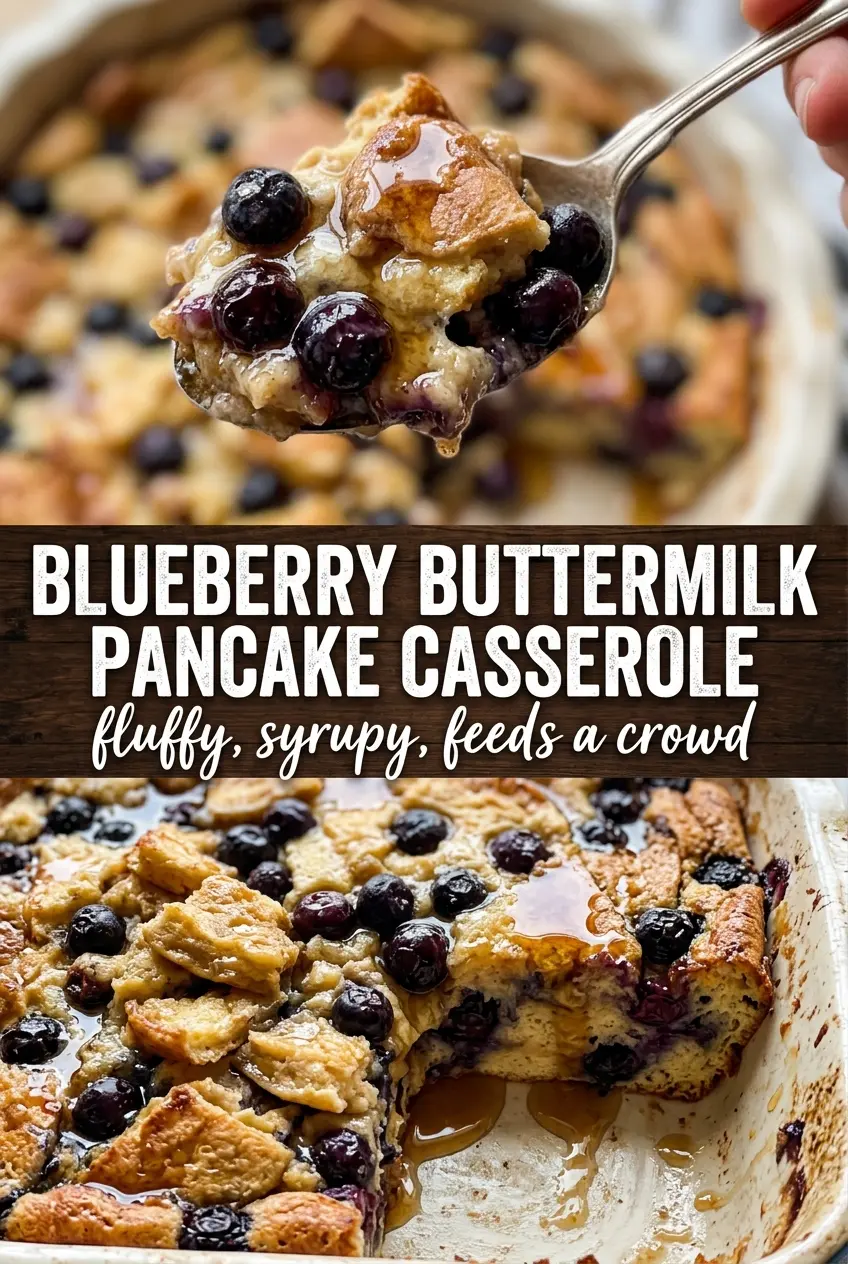
Blueberry Buttermilk Pancake Casserole
Ingredients
Equipment
Method
- Preheat the oven to 375°F and grease a 9x13 baking dish, making sure the corners are coated to prevent sticking (no visible dry spots).
- Whisk all-purpose flour, sugar, baking powder, baking soda, and salt together in a bowl until the mixture looks uniform in color.
- Whisk buttermilk, large eggs, melted butter, and vanilla extract together until smooth, with no streaks of egg visible.
- Stir the wet mixture into the dry ingredients until just combined, stopping as soon as no dry flour remains to keep the bake tender.
- Pour the batter into the prepared dish and scatter fresh or frozen blueberries evenly across the top so they’re dotted throughout.
- Bake at 375°F for 35–40 minutes until the center is set and the top is golden and lightly springy when gently pressed.
- Dust with powdered sugar, slice into squares, and serve with warm maple syrup for drizzling.