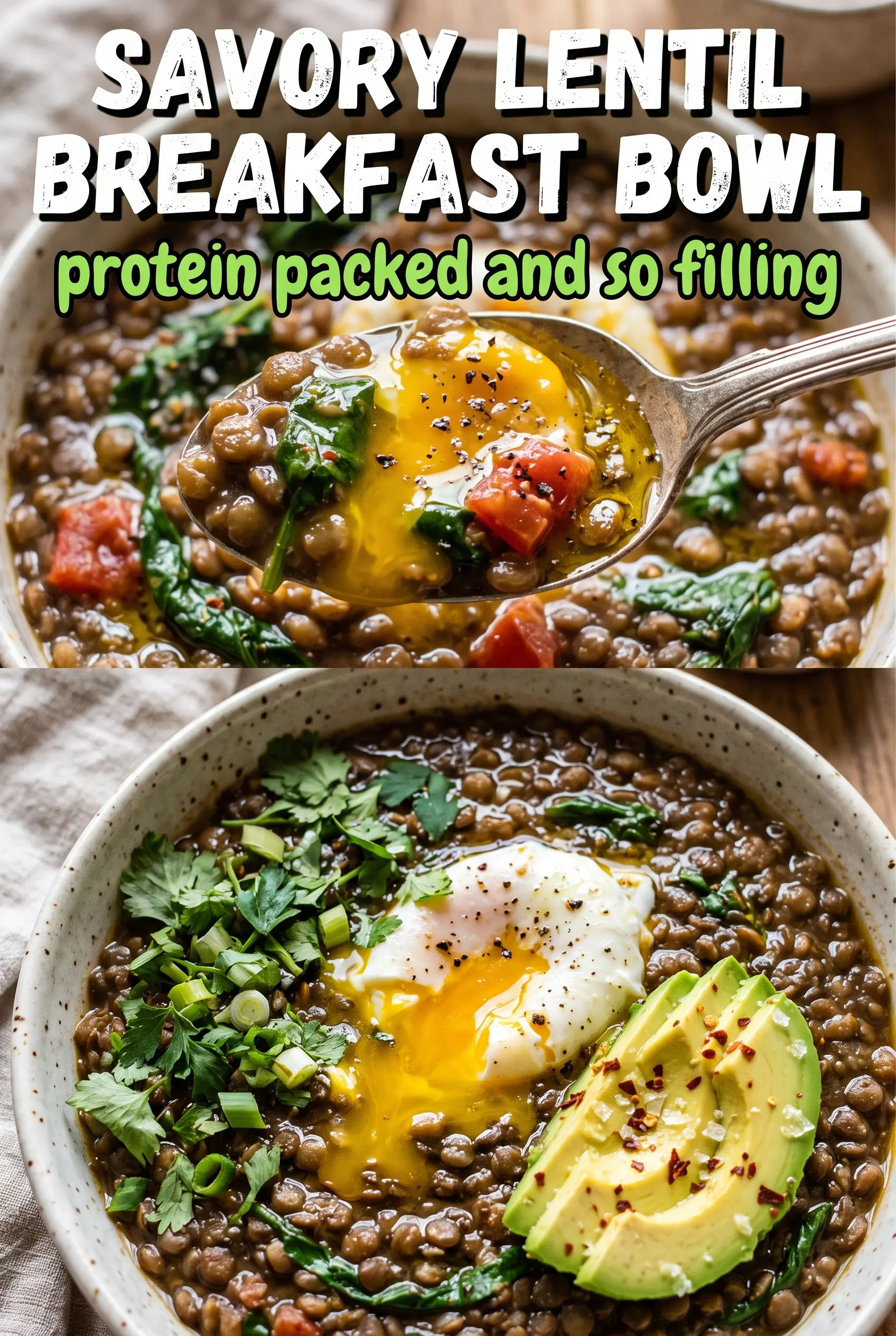
Herbed lentils, a soft egg, blistered tomatoes, and a little feta turn breakfast into something sturdy enough to carry you through the morning. The bowl feels fresh and bright from the lemon, but it still eats like a real meal, with enough texture to keep every bite interesting. It’s the kind of breakfast that doesn’t leave you hunting for a snack an hour later.
What makes this version work is the layering. The lentils are cooked with onion, garlic, cumin, smoked paprika, and turmeric so they taste seasoned all the way through instead of just sitting there as plain protein. Roasted cherry tomatoes bring sweetness and acidity, while the egg yolk runs into the lentils and turns the whole bowl a little richer without needing cream.
Below, I’ve included the small details that matter most: how to keep the lentils from turning mushy, when to roast the tomatoes, and which swaps still give you a breakfast bowl with enough character to actually want again tomorrow.
The lentils held their shape and soaked up the spices beautifully, and the runny egg yolk made the whole bowl taste rich without being heavy. My husband asked if I could pack the leftovers for lunch, which never happens with breakfast.
Save this savory lentil breakfast bowl for mornings when you want something hearty, high-protein, and finished with a runny egg.
The Part That Keeps the Lentils from Going Mushy
The biggest mistake with a breakfast lentil bowl is cooking the lentils until they collapse. You want them tender, not split open and soft like porridge. Green or brown lentils hold their shape best here, and they’re forgiving enough to sit under the egg without turning to paste.
Start the onion in the oil first so it softens and sweetens before the garlic and spices go in. That little head start matters. If the garlic goes in too early, it can burn while the onion is still catching up, and burnt garlic throws the whole bowl off. Once the broth goes in, keep the simmer gentle. A hard boil knocks the lentils around and breaks them down faster than you want.
- Green or brown lentils — These keep their structure better than red lentils, which turn soft fast and won’t give you the same bowl texture.
- Broth — Vegetable broth keeps it vegetarian; chicken broth adds a little more body. Either way, it seasons the lentils from the inside out.
- Cumin, smoked paprika, and turmeric — This trio gives the lentils a warm, savory base and a golden color. Don’t skip the paprika; it adds depth that salt alone can’t give you.
What Each Topping Is Actually Doing in the Bowl

- Eggs — The yolk acts like a built-in sauce. Poached gives you the prettiest finish and the cleanest runny center, but a fried egg with a soft yolk works just as well.
- Cherry tomatoes — Roasting concentrates their sweetness and keeps them from tasting watery on top of the lentils. If you skip the roast, the bowl loses a lot of contrast.
- Feta — Feta brings salt and a creamy crumble that wakes up the lentils. Goat cheese works too if you want something tangier, but it softens faster and spreads more.
- Fresh herbs and lemon — Parsley and dill keep the bowl from tasting heavy, and the lemon sharpens everything at the end. The acid matters more than people think here; it’s what makes the whole bowl taste finished.
Building the Bowl in the Right Order
Softening the Onion and Toasting the Spices
Warm the olive oil in a saucepan over medium heat, then cook the onion until it turns translucent and sweet at the edges. Add the garlic and spices and stir for about 30 seconds, just until fragrant. That short toast wakes up the cumin and paprika without pushing the garlic into bitterness. If the pan looks dry or the spices start sticking, lower the heat before adding the lentils.
Simmering the Lentils Until Tender
Add the lentils and broth, bring the pot to a boil, then drop it to a gentle simmer and cover. You’re looking for lentils that are tender but still hold their shape, usually around 20 to 25 minutes. Check a few near the end instead of relying only on the clock, because older lentils can take longer. If they’re done but there’s still a little liquid left, uncover the pot for the last few minutes and let it reduce.
Roasting the Tomatoes and Cooking the Eggs
While the lentils simmer, roast the tomatoes at 400°F until the skins blister and the cut sides look caramelized. That gives you concentrated sweetness and keeps the topping from turning watery. Poach or fry the eggs last so the yolk stays warm and soft when the bowls hit the table. If you’re poaching, keep the water at a quiet simmer, not a rolling boil, or the whites will shred.
Assembling for the Best Bite
Spoon the lentils into bowls first, then tuck the tomatoes around the edges and set the egg right in the center. Sprinkle feta over the top, add the herbs, and finish with a drizzle of olive oil and a squeeze of lemon. The order matters because the yolk should run into the lentils, not get buried under the toppings. Serve it immediately while the egg is warm and the tomatoes still have their roast on them.
How to Adapt This for Different Mornings
Make It Dairy-Free
Leave out the feta and finish with extra olive oil, lemon, and herbs. You lose the salty creaminess, so add a pinch more salt to the lentils at the end to keep the bowl balanced.
Make It Vegan
Skip the eggs and feta, then add avocado, toasted pumpkin seeds, or sautéed mushrooms for richness. You won’t get the same silky yolk, so a little extra olive oil at the end helps the bowl feel complete.
Make It Gluten-Free and Meal-Prep Friendly
This bowl is naturally gluten-free as written, and the lentils hold up well for meal prep. Store the lentils, tomatoes, and toppings separately, then reheat the lentils before adding the egg so the bowl doesn’t turn watery.
Storage and Reheating
- Refrigerator: Store the lentils and tomatoes for up to 4 days. The lentils thicken as they sit, so loosen them with a splash of broth or water before reheating.
- Freezer: The lentil base freezes well for up to 2 months. Freeze without the eggs, feta, or herbs, then thaw overnight in the fridge.
- Reheating: Warm the lentils gently on the stove or in the microwave until hot, then add fresh toppings. The common mistake is reheating everything together, which overcooks the egg and makes the tomatoes soggy.