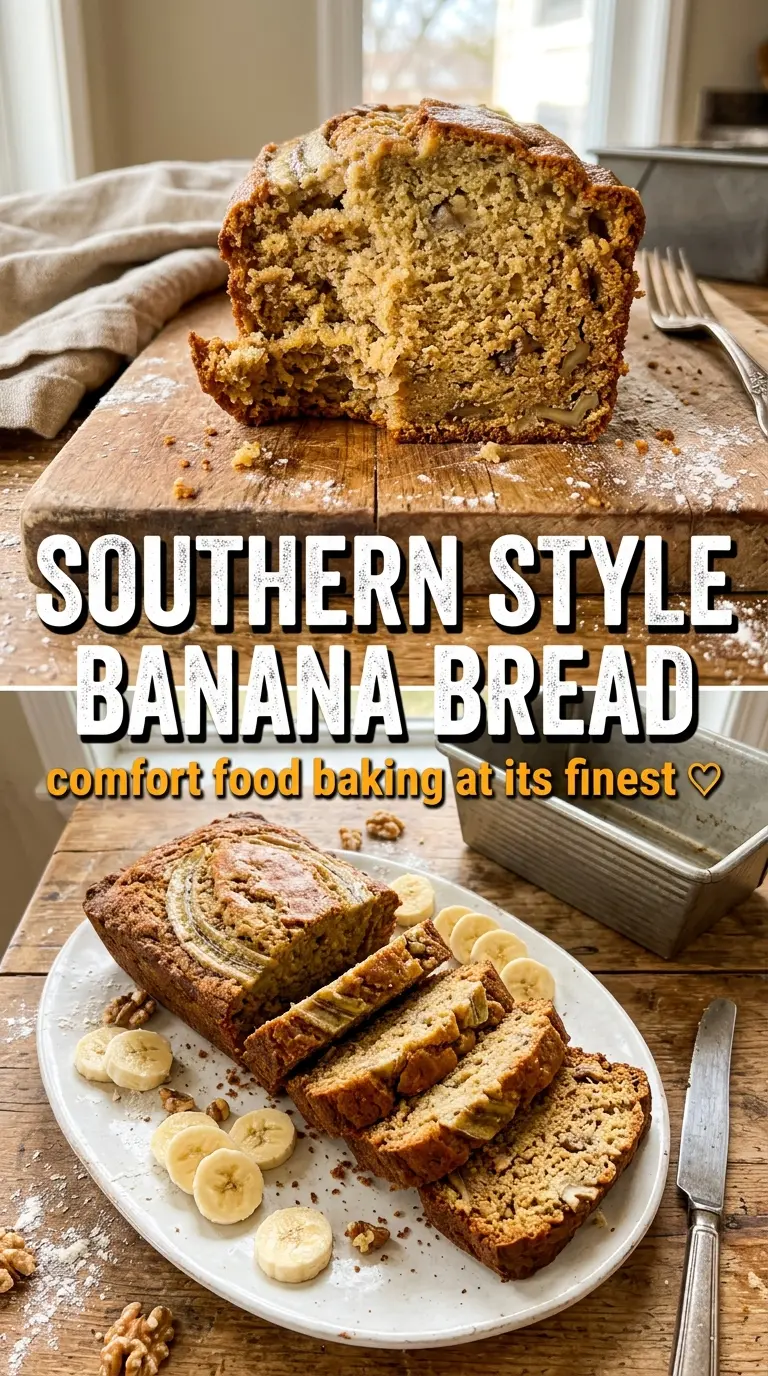
Trisha Yearwood’s banana bread bakes up with a tender, moist crumb and a deep banana flavor that tastes like it came straight from a well-loved Southern kitchen. The crust turns a beautiful golden brown while the center stays soft and sliceable, which is exactly what you want when a loaf is meant for breakfast, a snack, or a warm slice with butter at the end of the day.
What makes this version work is the balance of butter, sugar, and ripe bananas. The butter gives the loaf richness, while the bananas bring moisture and sweetness without needing a long ingredient list or any fuss. Creaming the butter and sugar first gives the bread just enough lift, and folding the flour in at the end keeps the texture from turning dense.
Below, I’ll walk through the small details that matter most, including how ripe the bananas should be, when to stop mixing, and how to tell when the loaf is baked through without drying it out.
The loaf came out tender all the way through, and the top baked to that perfect deep golden crust without the middle sinking. I added the walnuts, and they gave it just the right little crunch.
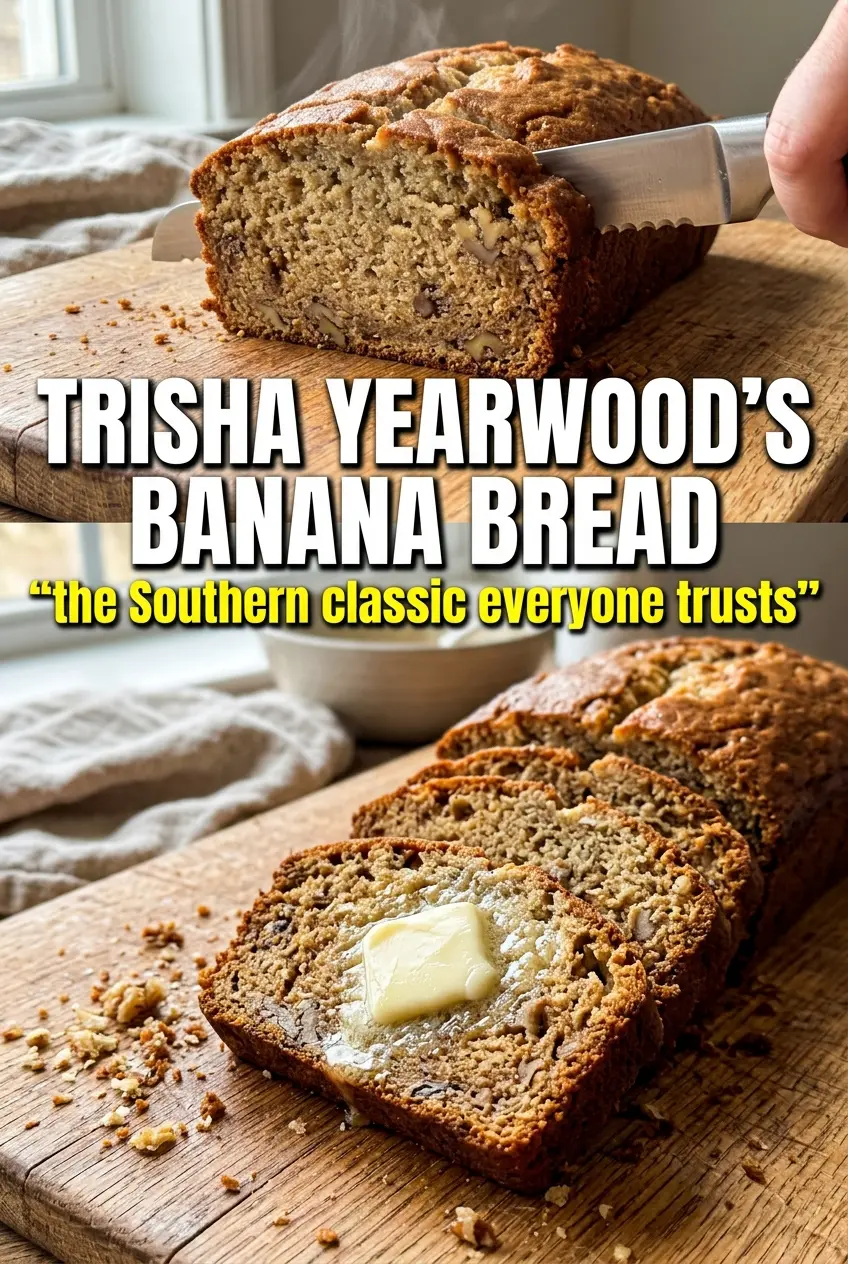
Trisha Yearwood’s banana bread turns out extra moist and slices cleanly once it cools a bit — save this one for the next time you’ve got ripe bananas on the counter.
The Banana Bread Mistake That Makes the Crumb Heavy
Most banana bread goes wrong in the same place: the batter gets mixed like cake batter, and the loaf bakes up tight instead of tender. Once the flour goes in, the goal changes. You’re no longer trying to build structure with air; you’re trying to hold on to the softness already there.
The other trap is using bananas that aren’t ripe enough. Pale yellow bananas with firm flesh don’t bring the same sweetness or moisture, and the bread will taste flatter than it should. The best bananas for this loaf are deeply speckled, soft, and almost overripe. That’s where the flavor lives.
- Creaming the butter and sugar — This gives the loaf its first bit of lift and keeps the texture from feeling leaden.
- Very ripe bananas — These bring the moisture and natural sweetness that make the bread taste old-fashioned and full.
- Gentle folding after the flour goes in — Stir only until the dry spots disappear. A few streaks are better than overmixing the batter.
What the Butter, Bananas, and Milk Are Really Doing
- Ripe bananas — They’re the main flavor and moisture source, so don’t substitute with underripe fruit unless you want a bland loaf with less softness.
- Butter — This gives the bread its rich, bakery-style crumb. You can swap in neutral oil in a pinch, but you’ll lose the buttery flavor that makes this version feel Southern and homey.
- Milk — Just a little loosens the batter enough to bake evenly. Whole milk works best, but 2% is fine. Don’t add extra; too much liquid can leave the center gummy.
- Pecans or walnuts — Optional, but they add a nice crunch against the soft crumb. Toast them first if you want a deeper, nuttier flavor.
Building the Loaf So It Bakes Through Without Drying Out
Creaming the Base
Start by beating the softened butter and sugar until the mixture looks lighter in color and a little fluffy. That step gives the bread its structure before the bananas go in. If the butter is too cold, it will stay clumpy and won’t trap air well, so let it soften at room temperature first.
Bringing in the Bananas
Stir the mashed bananas into the creamed mixture until they’re evenly distributed. The batter may look a little loose at this point, and that’s fine. If your bananas are extra large and very wet, expect the loaf to need the full baking time.
Folding in the Flour
Add the flour, baking soda, and salt together, then fold just until the dry streaks disappear. Stop there. Overmixing develops the gluten and turns banana bread chewy instead of tender, which is the fastest way to lose that soft, classic crumb.
Baking and Cooling
Pour the batter into the greased loaf pan and bake until the top is deep golden brown and a toothpick comes out clean from the center. If the top browns before the middle is done, lay a piece of foil loosely over the loaf for the last stretch of baking. Let it cool in the pan for at least 15 minutes before slicing or it may collapse and feel gummy in the middle.
How to Adapt This Banana Bread for Nuts, No Nuts, or a Different Pantry
Leave Out the Nuts for a Softer Slice
Skip the pecans or walnuts and the loaf bakes up a little cleaner and softer, with no crunch to interrupt the crumb. The bread still holds together well because the bananas and butter carry the texture.
Make It Dairy-Free
Use a good plant-based butter in place of the dairy butter and swap the milk for an unsweetened non-dairy milk. The loaf will still be moist, but the flavor will be a little less rich and buttery.
Use Whole Wheat Flour for a Heartier Loaf
Replace up to half the all-purpose flour with whole wheat flour. The loaf gets a nuttier flavor and a slightly denser crumb, so don’t swap all of it unless you want a much heavier bread.
Storage and Reheating
- Refrigerator: Store tightly wrapped for up to 5 days. The crumb firms up a little in the fridge, but the flavor stays good.
- Freezer: Banana bread freezes well. Wrap the cooled loaf or individual slices in plastic, then foil, and freeze for up to 3 months.
- Reheating: Warm slices in a toaster oven or microwave just until heated through. Overheating dries out the crumb fast, especially if the slice is already thin.
Answers to the Questions Worth Asking
Trisha Yearwood's Banana Bread
Ingredients
Equipment
Method
- Preheat the oven to 325°F and grease a 9x5 loaf pan so the batter releases easily after baking.
- Cream the softened butter and sugar until light, then beat in the beaten eggs, milk, and vanilla until smooth and glossy.
- Stir in the mashed ripe bananas until just combined, keeping the mixture thick and banana-speckled.
- Sift the all-purpose flour, baking soda, and salt together, then fold into the banana mixture until just combined.
- Fold in the chopped pecans or walnuts if using so the nuts stay evenly distributed without overmixing.
- Pour the batter into the prepared loaf pan and bake for 60–70 minutes at 325°F, until a toothpick comes out clean and the top is a deep golden brown.
- Cool in the pan for at least 15 minutes before slicing so the crumb sets and the loaf holds together.
- Serve warm with softened butter for the classic Southern banana bread finish.