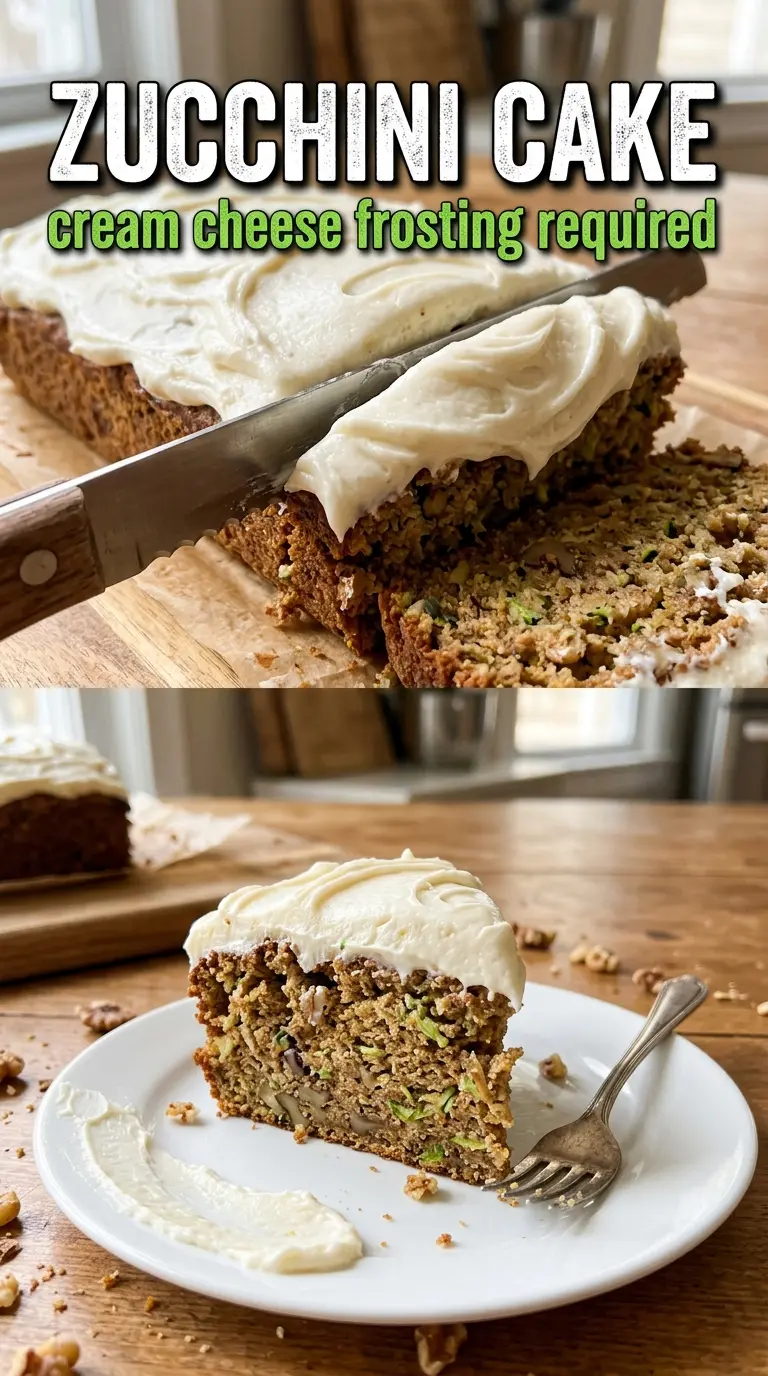
Zucchini cake earns its place in the dessert rotation because it stays moist for days without tasting heavy, and the warm spice makes it land somewhere between a snack cake and a carrot-cake cousin. The zucchini disappears into the crumb, leaving behind tenderness instead of vegetable flavor, which is exactly what you want here. A thick layer of cream cheese frosting on top turns a humble sheet cake into something people go back for slice after slice.
The trick is squeezing the zucchini dry before it goes into the batter. That one step keeps the cake from turning gummy in the middle or baking up loose around the edges. The other thing that matters is not overmixing once the flour goes in; this batter should look just combined, not whipped into submission. That keeps the crumb soft and fine.
Below, you’ll find the small details that make this cake hold together well, plus a few variations if you want to change the spices, skip the walnuts, or make it work for a different pantry situation.
The zucchini was packed in so well that the cake stayed tender for three days, and the cream cheese frosting spread on like a dream once it was fully cool.
Save this zucchini cake for when you want a moist spiced sheet cake with thick cream cheese frosting and no fussy layers.
The Zucchini Squeeze That Keeps the Crumb Tender, Not Wet
Most zucchini cakes fail for one simple reason: too much hidden water. Grated zucchini looks harmless, but it can dump enough moisture into the batter to make the center dense and slightly damp even after the edges are done. Squeezing it dry before mixing changes the whole cake. The batter still bakes up moist, but it does so with a clean crumb instead of a heavy one.
This cake also leans on a classic oil-based batter, which stays softer than butter cakes as it cools. That matters here because zucchini cake is best after it has had time to settle, not while it’s still steaming in the pan. If you frost it too soon, the frosting slides. If you underbake it, the middle sinks. Both problems are easy to avoid once you know what the batter is supposed to look like in the pan and in the oven.
What Each Ingredient Is Actually Doing in This Cake
- Zucchini — This is the moisture and tenderness source, but only after it’s squeezed dry. Leave it wet and the cake turns loose in the middle; squeeze it firmly in a clean kitchen towel or several layers of paper towels until no more liquid comes out.
- Vegetable oil — Oil keeps the crumb soft even after refrigeration, which is why this cake still tastes good the next day. Melted butter won’t give you the same plush texture here.
- Cinnamon and nutmeg — These are what make the cake taste warm and spiced instead of just sweet. Don’t skimp on the cinnamon; it carries the whole dessert.
- Cream cheese frosting — Softened cream cheese and butter whip into a thick frosting that holds its shape on a sheet cake. If the cream cheese is cold, you’ll get little lumps that never fully smooth out.
- Walnuts — Optional, but they add a little crunch and a nutty note that works well with the spice. Skip them if you want a softer, more classic snack-cake texture.
Building the Batter and Frosting It at the Right Time
Mixing the Wet Ingredients First
Whisk the sugar, oil, eggs, and vanilla until the mixture looks smooth and glossy. That step helps the sugar start dissolving before the flour goes in, which gives the cake a finer crumb. The batter should look loose and well blended, not thick or aerated like a butter cake batter. If the eggs stay streaky, keep whisking before you add the zucchini.
Adding the Zucchini Without Overworking It
Stir in the squeezed zucchini until it disappears into the batter. It won’t look like much at first, but that’s fine; the moisture will distribute as it bakes. Once the flour mixture goes in, switch to a spatula and stop as soon as you no longer see dry pockets. Overmixing at this point builds toughness, and zucchini cake should slice tenderly.
Baking Until the Center Sets
Spread the batter into a greased 9×13 pan and bake until the top springs back lightly and a toothpick comes out clean from the center. The edges should pull just slightly from the pan and smell deeply spiced. If the top is browned but the middle still looks shiny, give it a few more minutes. Sheet cakes can look done early, so trust the center more than the color.
Cooling Before the Frosting Goes On
Let the cake cool completely before you frost it. A warm cake will melt the cream cheese frosting into a thin layer, and you’ll lose that thick, swirled finish. I wait until the pan feels fully cool at the bottom, not just room temperature on top. Then beat the frosting until light and fluffy and spread it from edge to edge.
How to Adapt This Zucchini Cake for Different Pans and Preferences
Skip the Walnuts for a Smoother Crumb
Leaving out the walnuts gives you a softer, more uniform cake that cuts cleanly into neat squares. Nothing else needs to change, and the batter will still bake up with the same moist texture.
Make It Dairy-Free
Swap the cream cheese frosting for a dairy-free cream cheese alternative and use a plant-based butter with a firm texture. The frosting will still be tangy and spreadable, though it may set a little softer than the original.
Turn It Into Cupcakes
Portion the batter into lined muffin tins and bake until the centers spring back and a tester comes out clean, usually well before the sheet-cake timing. Cupcakes dry out faster, so pull them the moment the middle is set and frost only after they’re cool.
Storage and Reheating
- Refrigerator: Store covered for up to 5 days. The frosting stays firm, and the crumb actually gets a little more settled by day two.
- Freezer: Freeze unfrosted cake tightly wrapped for up to 2 months. Thaw in the refrigerator before frosting for the cleanest texture.
- Reheating: This cake is best served at cool room temperature, not warm. If it’s been chilled, let slices sit out for 20 to 30 minutes so the frosting softens and the cake texture relaxes.
Answers to the Questions Worth Asking
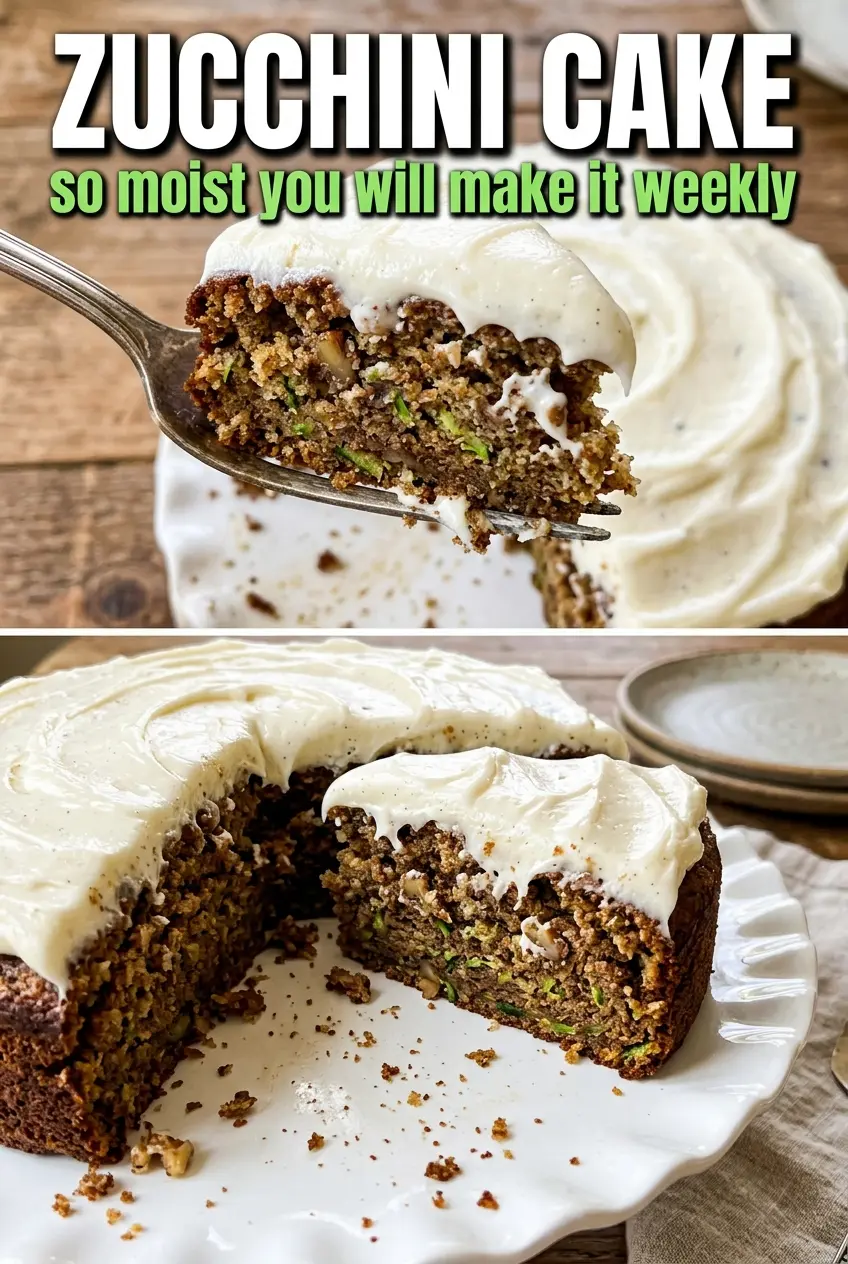
Zucchini Cake
Ingredients
Equipment
Method
- Preheat oven to 350°F and grease a 9x13 baking pan. Make sure the pan is evenly coated so the cake releases cleanly.
- Whisk all-purpose flour, cinnamon, baking soda, baking powder, salt, and nutmeg together. Continue until the spices are evenly distributed with no visible clumps.
- Beat granulated sugar, vegetable oil, eggs, and vanilla extract until smooth. Stop when the mixture looks glossy and fully combined.
- Stir in grated zucchini that has been squeezed dry. Mix until the batter turns evenly flecked with zucchini.
- Fold in the dry ingredients and walnuts (if using) until just combined. Fold only until no dry streaks remain to keep the crumb tender.
- Pour the batter into the prepared pan. Spread it into an even layer so it bakes uniformly.
- Bake at 350°F for 30–35 minutes until a toothpick comes out clean. The top should look set and lightly golden.
- Cool the cake completely before frosting. The surface should be cool to the touch so the frosting doesn’t melt.
- Beat softened cream cheese, softened butter, powdered sugar, vanilla, and milk until light and fluffy. Keep beating until the frosting holds shape and spreads smoothly.
- Spread the frosting over the cooled cake. Smooth it over the top and gently swirl or level for an even layer.