Autumn pearl couscous salad lands in that sweet spot between hearty and fresh: tender little pasta pearls, caramelized squash, tart cranberries, crunchy pecans, peppery greens, and creamy goat cheese all in one bowl. The contrast is what makes it memorable. Every bite has a little chew, a little crunch, and just enough sweetness to keep it interesting.
What makes this version work is balance. The couscous gets cooked first and cooled so it stays separate instead of turning gummy once the dressing hits it. The squash roasts until the edges caramelize, which matters more than people think, because bland squash makes the whole salad taste flat. A maple balsamic dressing ties everything together without drowning the greens, and the goat cheese goes on at the end so it stays soft and distinct instead of smearing into the bowl.
Below, I’ve included the one timing detail that keeps the textures clean, plus a few smart swaps if you need to work with what’s already in the pantry.
The couscous stayed fluffy, the squash caramelized at the edges, and the dressing was just enough to coat everything without making the arugula wilt. I’ve already made it twice for lunches.
Love the sweet-savory contrast in this autumn pearl couscous salad? Save it to Pinterest for an easy side with roasted squash, cranberries, and maple balsamic dressing.
The Trick to Keeping Pearl Couscous From Going Soft and Soggy
Pearl couscous has enough structure to hold up in a composed salad, but only if it cools before the dressing goes in. Hot couscous steams the greens and pulls moisture out of the squash, which is how you end up with a bowl that tastes muddy instead of bright. Spread it out briefly after cooking if you want it to cool fast and stay fluffy.
The other place people lose the texture is in the dressing. Maple balsamic is strong enough to season the whole salad, but it should coat, not flood. If the salad looks wet right after tossing, it’s too much dressing for that batch size, or the couscous was still warm when it went in.
What Each Ingredient Is Actually Doing in This Salad
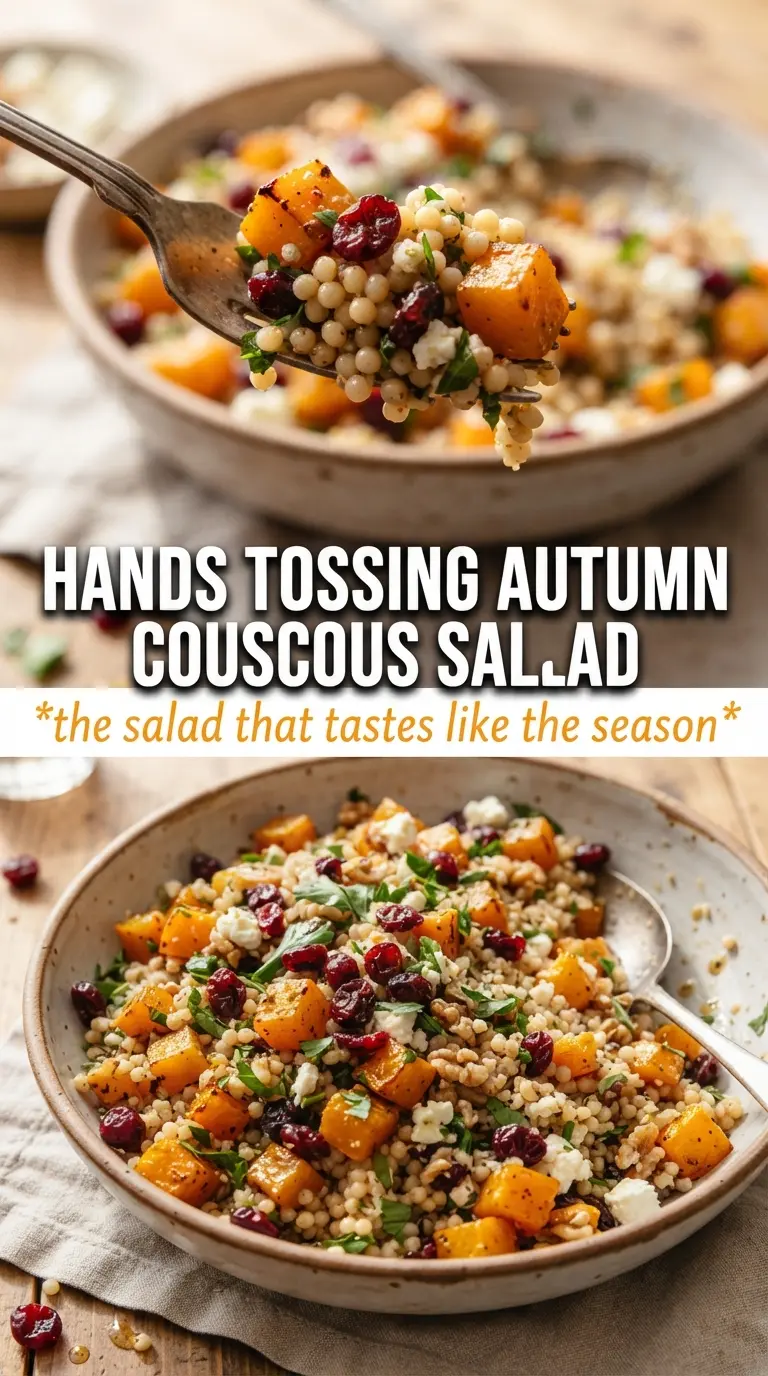
- Pearl couscous — This is the backbone of the salad. Regular couscous won’t give you the same chew or shape, and it tends to disappear once dressed. Cook it until just tender, then cool it so the grains stay distinct.
- Butternut squash — Roasting at high heat is what gives the salad depth. You want browned edges, not pale cubes, because that caramelization keeps the squash from tasting flat against the vinegar and greens.
- Arugula or mixed greens — Arugula adds peppery bite that keeps the bowl from leaning too sweet. Mixed greens work if that’s what you have, but use something with a little personality or the salad can taste one-note.
- Goat cheese — Goat cheese adds tang and creaminess, and it softens the sharp edges of the dressing. Feta can stand in if needed, but it changes the finish from creamy-tart to saltier and more briny.
- Pecans and pumpkin seeds — These are the crunch that holds the salad together. Toast them if they aren’t already toasted; raw nuts taste dull here and won’t give you the same contrast.
Building the Salad So the Textures Stay Distinct
Cooking the Couscous Properly
Cook the pearl couscous according to the package, then drain it well and cool it to room temperature before assembling. If it’s warm when you combine everything, the arugula wilts and the dressing gets absorbed too quickly. Fluff it once or twice as it cools so the pearls don’t clump together.
Roasting the Squash Until It Browns
Toss the butternut squash with oil, salt, and pepper, then roast at 425°F until the pieces are tender and the edges look deeply golden. Pale squash tastes watery in this salad, while browned squash brings sweetness and a little savory depth. Don’t overcrowd the pan or it will steam instead of roast.
Tossing and Finishing Without Bruising the Greens
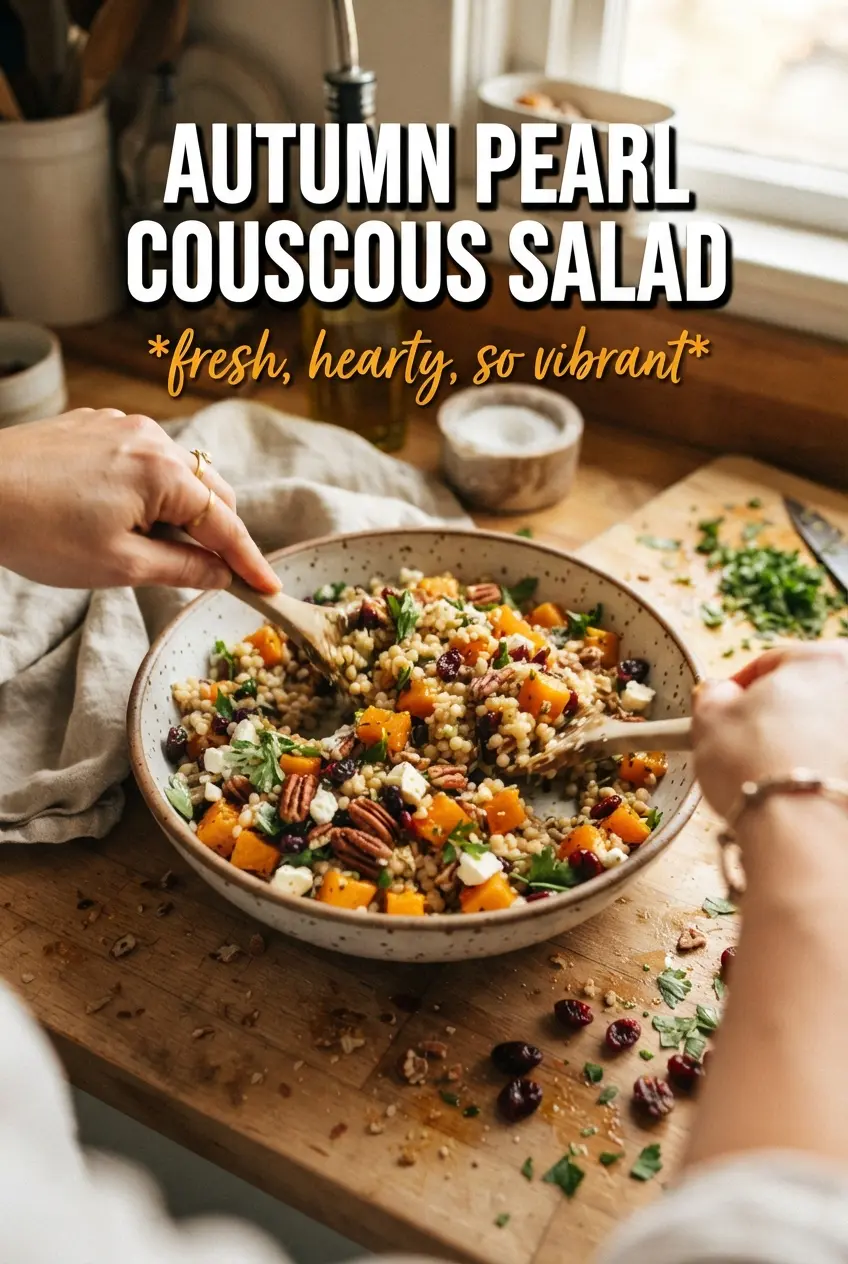
Combine the couscous, squash, arugula, cranberries, and pecans in a large bowl, then drizzle with dressing and toss gently. The greens should be lightly coated, not crushed into the base of the bowl. Add the goat cheese and pumpkin seeds last so they stay visible and keep their texture.
How to Adapt This Autumn Couscous Salad for Different Tables
Make It Dairy-Free
Leave out the goat cheese and add a few extra pumpkin seeds or toasted pecans for richness. You’ll lose the tangy creaminess, so add an extra tiny splash of balsamic to the dressing to keep the salad lively.
Make It Gluten-Free
Swap the pearl couscous for cooked quinoa or short-grain rice. Quinoa gives you a lighter, nuttier result, while rice makes the salad softer and more neutral, so the squash and dressing will stand out more.
Use What You Have for the Crunch
Walnuts, hazelnuts, or sunflower seeds all work if pecans aren’t in the pantry. Just toast whatever you use, because raw nuts won’t give the same crisp contrast against the soft couscous and squash.
Storage and Reheating
- Refrigerator: Store for up to 3 days. The greens will soften a bit, so expect the salad to lose some of its fresh bite.
- Freezer: Don’t freeze this salad. The couscous, greens, and goat cheese won’t thaw with the same texture, and the squash turns mushy.
- Reheating: This salad is best served cold or at room temperature. If you want to take the chill off the couscous and squash, warm only those components briefly, then add the greens and cheese after.
Questions I Get Asked About This Recipe
Autumn Pearl Couscous Salad
Ingredients
Equipment
Method
- Cook pearl (Israeli) couscous per package directions, then spread out and cool to room temperature.
- Visual cue: stop cooking when the pearls are tender and separate, not sticky.
- Roast cubed butternut squash at 425F with olive oil, salt, and pepper on a sheet pan for 25 minutes, turning once if needed.
- Visual cue: the squash should look golden on the edges and fork-tender when pierced.
- Whisk olive oil, balsamic vinegar, maple syrup, and Dijon with salt and pepper until emulsified and smooth.
- Visual cue: the dressing thickens slightly and looks glossy instead of separated.
- Combine cooled couscous, roasted squash, arugula or mixed greens, dried cranberries, and toasted pecans in a large bowl.
- Visual cue: the bowl should have even distribution of greens, pearls, and squash pieces.
- Drizzle the dressing over the salad and toss gently until everything is lightly coated.
- Visual cue: greens should look lightly dressed, with no dry pockets at the bottom.
- Top with crumbled goat cheese and toasted pumpkin seeds before serving.
- Visual cue: goat cheese should sit on top in small crumbles, with pumpkin seeds visible for crunch.