Southern mac and cheese should land somewhere between a baked pasta and a custard, with a spoonable center and a bronzed top that cracks softly when you dig in. The best versions don’t just melt into a bowl of noodles; they hold their shape on the plate, then turn creamy the second the spoon breaks through. That balance is what makes this one worth keeping around.
The eggs and evaporated milk do the heavy lifting here. The eggs set the casserole into that classic Southern texture, while the evaporated milk adds body without making the sauce heavy or greasy. Layering some of the cheese inside instead of dumping everything on top gives you pockets of gooey richness all the way through, and the final blanket of cheddar browns into a proper crust.
Below, I’ll show you how to keep the custard smooth, which cheeses matter most, and what to do if you want a slightly firmer or richer finish.
The custard set up perfectly and the top got that cheesy crust I was hoping for. I let it rest 10 minutes like you said, and it sliced cleanly without turning dry.
Love a baked Southern mac and cheese with a creamy custard center and golden top? Save this one for Thanksgiving, Sunday supper, or any time you need a real crowd-pleaser.
The Custard Trick That Keeps Southern Mac And Cheese From Turning Grainy
The most common failure in baked mac and cheese is rushing the dairy mixture and expecting the oven to fix it later. Eggs need a gentle bake, not a hot one, or they turn tight and a little curdled instead of creamy. This recipe leans on a whisked custard that gets poured over hot pasta and cheese, then set at a moderate temperature so the center firms up without splitting.
The other thing that matters is rest time. Pulling it the second the top looks done leaves the middle loose and soupy. Ten minutes on the counter lets the custard finish setting, which is what gives you clean scoops instead of a puddle on the plate.
What Each Cheese Is Actually Doing In This Dish
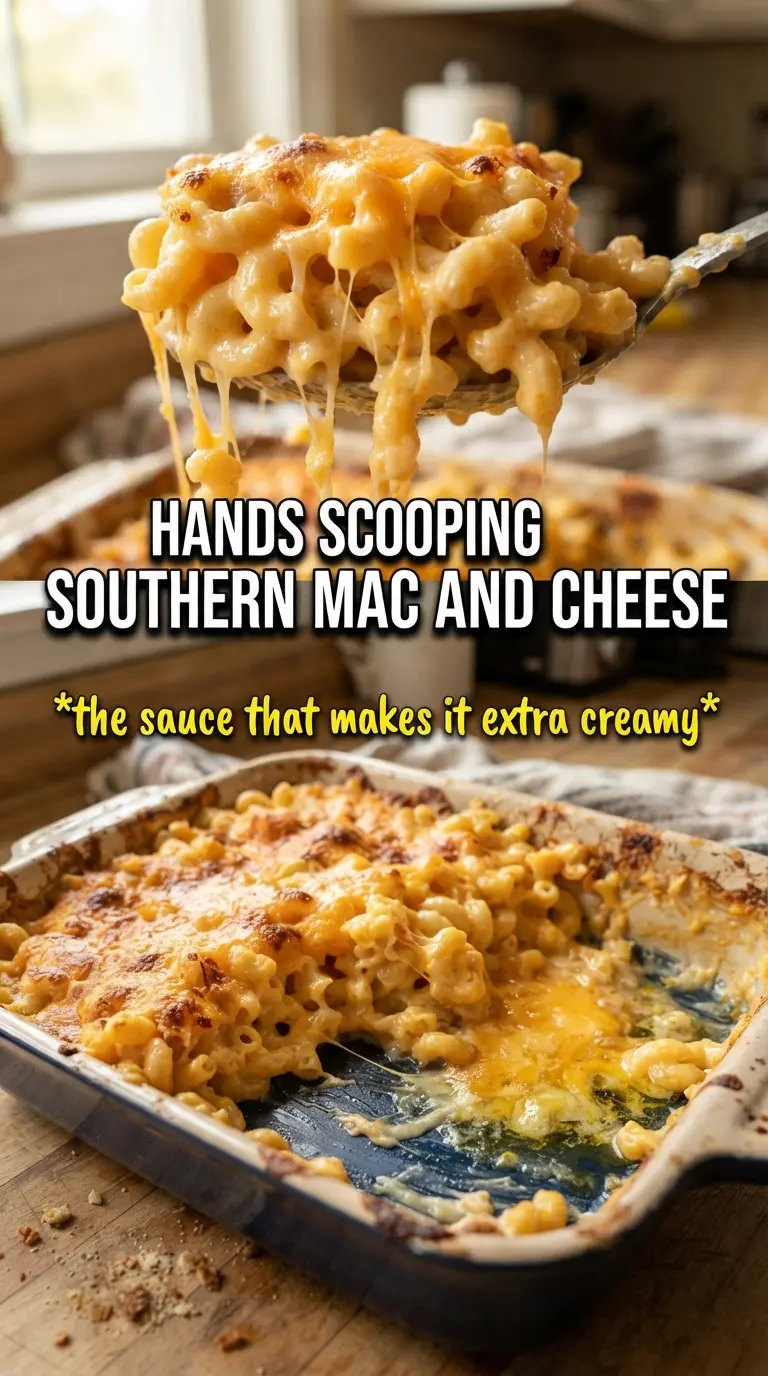
- Sharp cheddar — This brings the bold, familiar mac and cheese flavor and gives the top its browned crust. Use a block and shred it yourself if you can; pre-shredded cheese melts less smoothly because of the anti-caking coating.
- Colby Jack — This softens the sharpness of the cheddar and helps the middle stay creamy. It melts easily, which is why it works better here than a drier hard cheese.
- Gruyere — This adds a nutty depth that keeps the dish from tasting one-note. If you don’t have it, swap in fontina for a similar melt, though you’ll lose some of that savory edge.
- Evaporated milk — This gives body and richness without the heaviness of a straight cream sauce. Don’t replace it with all whole milk unless you want a looser set and a less plush texture.
- Eggs — These turn the dish into that classic Southern-style bake. If you skip them, you won’t get the same sliceable custard; you’ll get a looser stovetop-style mac.
Building The Layers So Every Scoop Gets Cheese
Start With A Buttered Dish And Warm Pasta
Butter the baking dish well, all the way into the corners, because the cheese will cling there first if you don’t. The pasta should be cooked and drained, then moved along before it cools completely so it settles into the layers easily. Don’t overcook the macaroni on the stove; it still has a long bake ahead, and mushy noodles turn the whole dish soft.
Whisk The Custard Until It Looks Smooth And Pale
Combine the eggs, milks, Dijon, spices, salt, and pepper until the mixture looks even and the eggs disappear into the liquid. If you see streaks of yolk, keep whisking, because those streaks can cook into little eggy ribbons in the finished bake. The Dijon doesn’t make the dish taste mustardy; it sharpens the cheese and keeps the custard from tasting flat.
Layer, Don’t Dump
Half the pasta goes in first, then a full layer of cheese, then the remaining pasta, then the custard poured evenly over the top. That order matters because it helps the liquid move through the pan instead of pooling in one spot. Finish with the remaining cheddar and the butter cubes so the top turns brown while the center stays rich.
Watch For The Jiggle, Not Just The Color
Bake until the top is golden and the center is set around the edges but still has a slight wobble in the middle. If it’s bubbling hard all over, it’s gone too far and the eggs are starting to tighten too much. The resting time is part of the cook here, not an afterthought.
Make It Spicier Without Losing The Custard
Add a little extra cayenne or a pinch of hot paprika, but keep the egg and milk ratio the same. The heat should ride underneath the cheese, not take over the dish.
Gluten-Free Version With The Same Texture
Use a sturdy gluten-free elbow pasta and cook it just shy of done so it can finish in the oven without falling apart. The custard and cheese structure stay the same, so the texture lands close to the original.
Lighter Dairy Swap For A Less Rich Bake
You can use all whole milk instead of the evaporated milk, but the result will be looser and less velvety. If you go this route, bake until the center is a touch firmer and expect a softer set after resting.
Make-Ahead For A Crowd
Assemble the casserole up to the point of baking, cover it, and refrigerate it for a few hours. Bring it close to room temperature before it goes into the oven so the center doesn’t stay cold while the top browns.
Storage and Reheating
- Refrigerator: Store leftovers covered for up to 4 days. The custard firms up as it chills, so slices will be denser after the first day.
- Freezer: It freezes fairly well in portions, wrapped tightly and then sealed. The texture softens a little on thawing, but it still reheats well if you don’t freeze it in one giant block.
- Reheating: Cover and warm in a 325F oven until hot through. If you blast it in the microwave, the eggs can seize and the cheese can turn oily, so use gentle heat and add a splash of milk only if it looks dry.
Questions I Get Asked About This Recipe
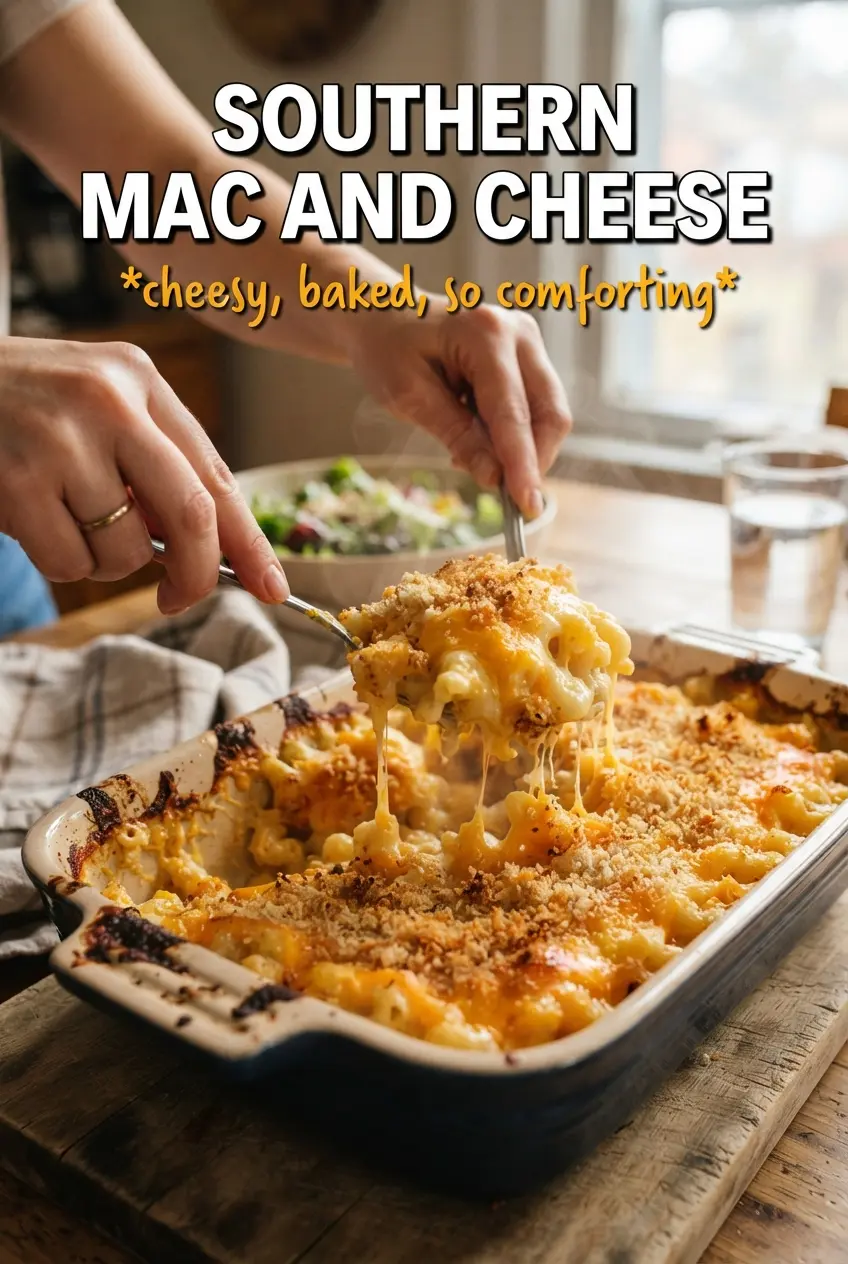
Southern Mac And Cheese
Ingredients
Equipment
Method
- Preheat oven to 350F and butter a deep 9x13 baking dish. Make sure the dish is fully coated so the custard releases cleanly.
- Whisk eggs, whole milk, evaporated milk, Dijon mustard, smoked paprika, garlic powder, cayenne, salt, and pepper until smooth. The mixture should look evenly colored with no streaks of egg.
- Layer half the cooked macaroni in the dish and scatter 2 cups sharp cheddar, all the Colby Jack, and Gruyere over. Spread the cheeses into an even layer so they melt into the custard.
- Add remaining macaroni and pour the egg-milk custard over everything. Pour slowly to help the custard seep between layers.
- Dot the top with butter cubes and sprinkle with the remaining 2 cups sharp cheddar. You should see butter pieces and a thick cheese layer on top.
- Bake for 40-45 minutes at 350F until the custard is set and the top is golden. Look for a lightly puffed center that no longer jiggles when nudged.
- Rest the mac and cheese for 10 minutes before serving. It will thicken as it cools so slices hold together.