French onion gnocchi brings all the deep, slow-cooked comfort of classic French onion soup into a one-pan dinner that lands with a lot more heft. The onions go long and low until they turn jammy and sweet, then the broth, cream, and Gruyere fold in around pillowy gnocchi so every bite tastes rich without feeling heavy. The best part is the broiled cheese on top: it forms those browned, stretchy spots that make the whole skillet look and taste like a dinner you’d order twice.
The key here is patience with the onions. If they rush, the sauce tastes flat. If they caramelize properly, the wine and broth pick up all that sweetness and the Worcestershire adds the savory depth that keeps the dish from drifting into one-note creaminess. I also like using uncooked gnocchi in the sauce instead of boiling it separately; it absorbs flavor as it cooks and helps thicken the pan at the same time.
Below, I’ve included the little details that matter most: how dark the onions should get, when the sauce is ready for the gnocchi, and the one broiler step that gives you that molten, bubbling finish without overcooking the skillet underneath.
The onions took a while, but they turned deep brown and sweet, and the gnocchi soaked up the broth without getting mushy. That broiled Gruyere on top was the part my husband kept going back for.
Love the caramelized onions and bubbling Gruyere? Save French onion gnocchi for the nights when you want a cozy one-pan dinner with a rich, broiled finish.
The Part Everyone Rushes: Why the Onions Need the Full Time
The onions are the backbone of this dish, and they need to lose their raw sharpness before anything else matters. Thirty-five to forty minutes feels long, but that’s what turns them from limp and pale into soft, sweet, and deeply browned. If they’re only lightly golden, the final sauce tastes thin no matter how much cheese you pile on top.
Keep the heat at medium-low and stir often enough to prevent sticking, but not so often that they never brown. If the pan starts to look dry before the onions are fully caramelized, add a small splash of water to lift the fond without scrubbing away the flavor. That browned layer is what makes the broth taste like it simmered all day.
What Each Ingredient Is Actually Doing in the Skillet
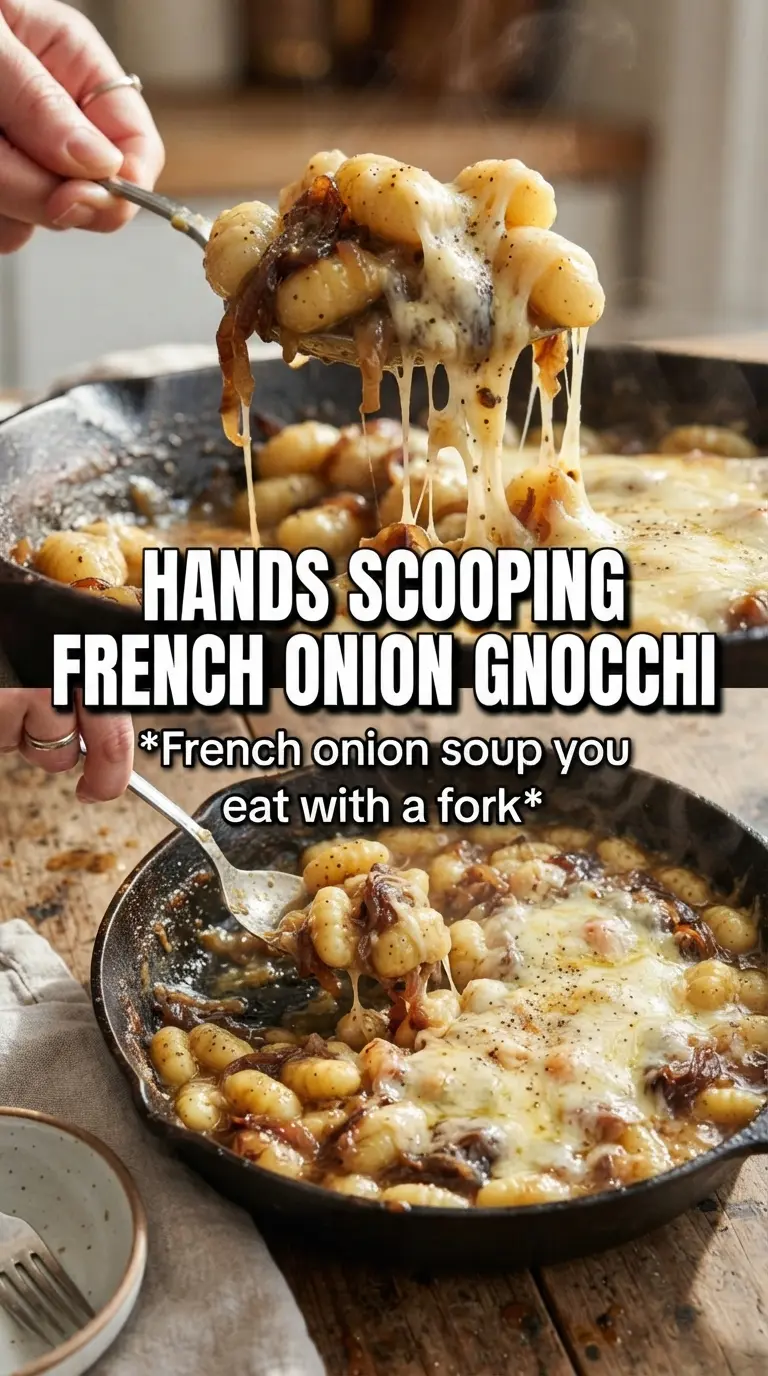
- Potato gnocchi — Uncooked gnocchi goes straight into the sauce and absorbs all that oniony broth as it cooks. Shelf-stable gnocchi works well here, and it’s the easiest swap if you don’t have fresh.
- Onions — Three large onions might look like a lot, but they cook down dramatically. Yellow onions are the best choice because they caramelize evenly and bring the right balance of sweetness and savoriness.
- Dry white wine — This deglazes the pan and lifts the browned bits into the sauce. Use something dry, not sweet; if you skip it, add a splash of broth with a teaspoon of vinegar for brightness.
- Gruyere — This is the cheese that gives you the classic French onion finish: nutty, stretchy, and beautifully browned under the broiler. Swiss cheese will melt, but it won’t taste as deep or turn as complex on top.
- Heavy cream — The cream softens the broth and makes the sauce cling to the gnocchi. Half-and-half works in a pinch, but the sauce will be a little thinner and less silky.
Building the Broth So the Gnocchi Cooks in Flavor, Not Plain Water
Caramelizing the onions
Melt the butter over medium-low heat, add the sliced onions, and give them time to soften before they color. You want deep amber edges and a jammy texture, not crispy bits. If they brown too fast, the heat is too high and the sugars will scorch before the onions turn sweet.
Deglazing and deepening the base
Add the garlic and thyme for just long enough to smell fragrant, then pour in the wine and scrape the bottom of the pan. The liquid should sizzle and loosen every browned bit; that’s where a lot of the flavor lives. Let the wine cook down for a couple of minutes so the sauce doesn’t taste sharp.
Simmering the gnocchi in the sauce
Stir in the broth, Worcestershire sauce, and cream, then bring the pan to a gentle simmer. Add the gnocchi directly to the skillet and cook until they’re tender and the sauce has thickened enough to coat a spoon, usually 4 to 5 minutes. If the heat is too high, the cream can separate and the gnocchi can split before they’re cooked through.
Broiling the Gruyere finish
Scatter the shredded Gruyere over the top and slide the skillet under the broiler just until it bubbles and browns in spots. Stay close, because cheese can go from golden to burnt fast. Pull it as soon as the top has a mottled brown finish and the edges are actively bubbling.
Three Ways to Bend This Toward Your Pantry
Make it gluten-free without losing the texture
Use certified gluten-free gnocchi and check the Worcestershire sauce, since some brands contain wheat. The sauce itself stays the same, and the result is still rich and silky; the only thing you need to watch is the gnocchi so it doesn’t overcook and turn soft.
Make it vegetarian with a deeper savory finish
Swap the beef broth for a rich vegetable broth and use a vegetarian Worcestershire-style sauce or a splash of soy sauce for depth. You’ll lose a little of the classic beefy note, but the caramelized onions still carry the dish, especially once the Gruyere melts over the top.
Skip the wine if you don’t cook with it
Replace the wine with a splash of broth plus a teaspoon of white wine vinegar or lemon juice. You won’t get the same roundness, but you’ll still get the acid you need to lift the sweetness of the onions and keep the sauce from tasting heavy.
Use a different melting cheese
Comté, Emmental, or a good Swiss-style cheese will melt nicely if Gruyere isn’t in your fridge. The flavor gets a little milder and less nutty, but the broiled top still gives you that stretchy, browned finish people expect from French onion anything.
Storage and Reheating
- Refrigerator: Store leftovers in a covered container for up to 3 days. The sauce thickens as it chills, and the gnocchi will soften a bit.
- Freezer: This dish doesn’t freeze well. The cream sauce can separate and the gnocchi turns grainy after thawing.
- Reheating: Warm gently on the stove over low heat with a splash of broth or cream to loosen the sauce. High heat is the fastest way to break the sauce and overcook the gnocchi.
Answers to the Questions Worth Asking
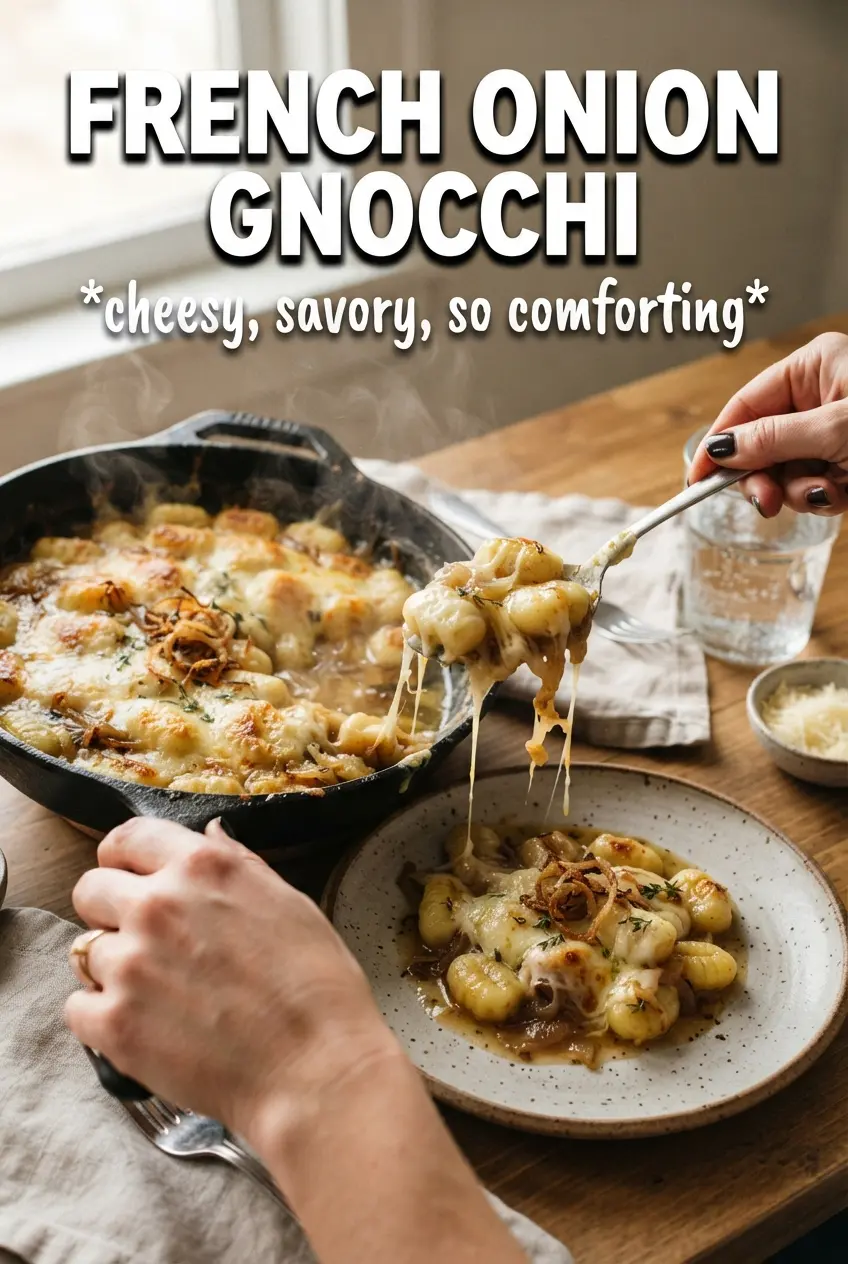
French Onion Gnocchi
Ingredients
Equipment
Method
- Melt the unsalted butter in a cast iron skillet over medium-low heat, then add the thinly sliced large onions and cook 35-40 minutes, stirring occasionally, until deeply caramelized.
- Keep the heat at medium-low so the onions turn deep amber without burning, with visible sticky, browned bits forming at the bottom.
- Add the minced garlic and fresh thyme, then cook for 1 minute until fragrant.
- Pour in the dry white wine to deglaze and cook for 2 minutes, scraping up browned onion bits.
- Add the beef broth, Worcestershire sauce, and heavy cream, then bring to a simmer.
- Simmer until the sauce loosens and looks glossy, ready to coat the gnocchi.
- Add the uncooked potato gnocchi to the simmering sauce and cook 4-5 minutes, stirring gently, until the gnocchi is cooked through and the sauce thickens.
- Taste and season with salt and pepper to taste, making sure every spoonful is well balanced.
- Scatter the shredded Gruyere over the top of the skillet so it covers the surface.
- Broil 3-4 minutes until golden and bubbly, with browned cheese spots across the top.