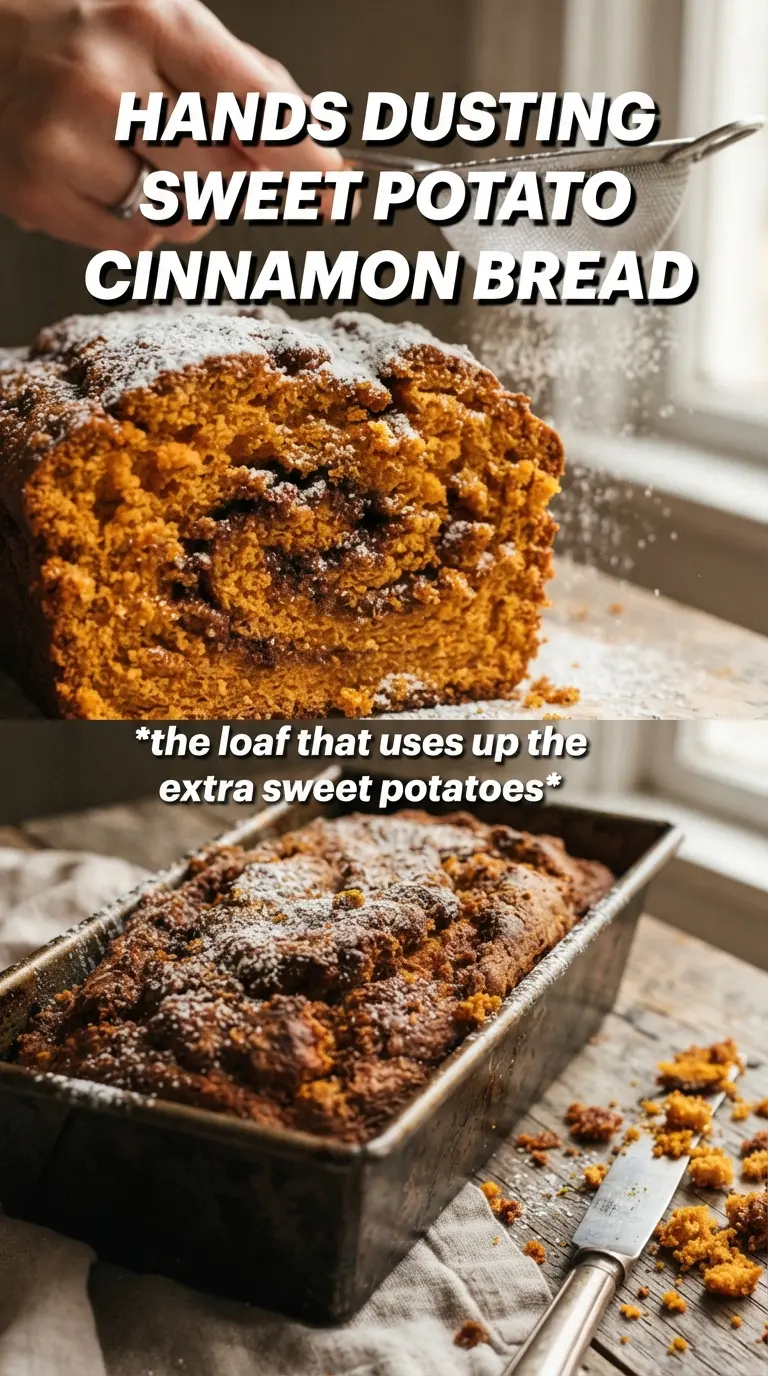
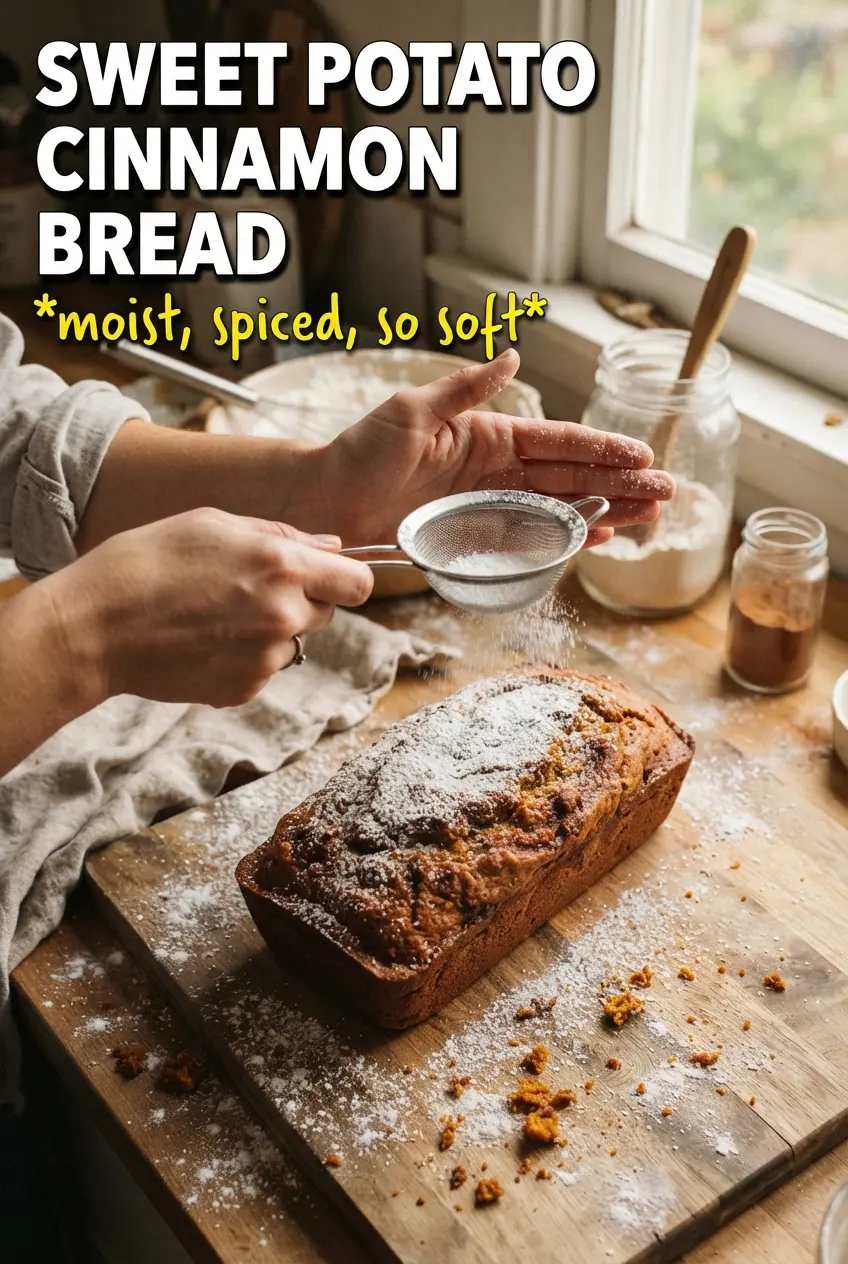
Sweet potato cinnamon bread bakes up with a soft, moist crumb, a warm spice aroma, and a ribbon of cinnamon sugar running through the middle that keeps every slice interesting. The top turns crackly with a little cinnamon-sugar crust, while the inside stays tender and golden-orange from the sweet potato puree. It’s the kind of loaf that disappears one slice at a time, still slightly warm from the pan.
What makes this version work is the balance of moisture and structure. Sweet potato brings body and softness, but sour cream keeps the loaf from feeling heavy. Oil gives a more even, lasting tenderness than butter alone, and the mix of baking powder and baking soda helps the bread rise without turning dense. The cinnamon swirl stays distinct because it’s layered into half the batter instead of stirred all the way through.
Below, I’ve included the details that matter most: how to keep the swirl from sinking, why the batter should stay just barely mixed, and a few smart swaps if you need them.
The swirl stayed in the middle and the loaf sliced cleanly once it cooled. I used leftover roasted sweet potato and the crumb came out incredibly soft without being gummy.
Love the cinnamon swirl and tender crumb in this sweet potato cinnamon bread? Save it to Pinterest for easy breakfast slices and cozy baking days.
The Secret to Keeping the Cinnamon Swirl from Melting Away
Most swirl breads go wrong because the filling gets stirred too much or the batter is too loose to hold it in place. Here, the batter is thick enough to support a ribbon of cinnamon sugar, but not so stiff that it bakes up dry. The key is layering half the batter first, adding the swirl, then covering it with the rest of the batter before making just a few knife turns.
If you drag the knife through the loaf too many times, the swirl turns muddy and disappears into the crumb. One or two gentle passes are enough. You’re aiming for visible marbling, not full mixing. The cinnamon sugar topping also helps by baking into a lightly crisped crust instead of sinking into the loaf.
What Each Ingredient Is Actually Doing Here
- Sweet potato puree — This is the moisture and the flavor base. Roasted sweet potato gives a deeper, sweeter taste than canned puree, but canned works if it’s plain and unsweetened. The puree should be smooth, not watery.
- Vegetable oil — Oil keeps the loaf soft for days. Butter can work, but it firms up more once cooled, which changes the texture. If you swap it, use melted butter in the same amount and expect a slightly tighter crumb.
- Sour cream — This adds tenderness and a gentle tang that keeps the sweetness in check. Plain full-fat yogurt can stand in, but the batter may be a touch looser. Stick with full-fat if you can.
- Brown sugar in the swirl — Brown sugar melts into that cinnamon ribbon and gives you a gooey center instead of a dry spice line. Granulated sugar won’t give the same texture.
- Baking soda and baking powder — Both matter here. The sour cream and sweet potato need a little lift, and using both leaveners keeps the loaf from baking up flat or heavy.
Getting the Batter, Swirl, and Bake Time Right
Mix the wet ingredients until they look smooth, not fluffy
Whisk the sweet potato, sugars, oil, eggs, sour cream, and vanilla until the mixture looks uniform and glossy. You’re not trying to beat in air here. If you whisk too hard, the loaf can rise unevenly and crack in a weak spot instead of across the top where you want it.
Fold the dry ingredients in just until the flour disappears
Once the dry ingredients go in, switch to a spatula and stop as soon as no dry streaks remain. A few small lumps are fine. Overmixing develops the flour and gives you a tougher loaf, which is the fastest way to lose that soft, cake-like crumb.
Build the swirl in layers
Spread half the batter in the pan, spoon the cinnamon swirl mixture over it, then top with the remaining batter. Use a knife to make a few lazy figure-eight cuts through the center. If the knife goes all the way to the pan on every pass, the swirl tends to bleed into the batter instead of staying defined.
Bake until the center is set, then let it rest
Bake at 350°F until a toothpick comes out clean or with a few moist crumbs, usually 60 to 65 minutes. The top should be set and the loaf should spring back lightly when touched in the center. Let it cool in the pan for about 10 minutes before moving it out, or the structure can tear while it’s still tender.
Three Ways to Adapt This Sweet Potato Cinnamon Bread
Dairy-Free Version
Swap the sour cream for a thick dairy-free yogurt with a plain flavor. The loaf stays moist, though it may be a little less rich. Keep the rest of the recipe the same so the batter texture doesn’t shift too much.
Use Canned Sweet Potato When You Need Speed
Canned sweet potato puree works well as long as it’s plain and not packed in syrup. Drain any excess liquid first if it looks wet. The flavor will be a little milder than roasted sweet potato, but the texture still bakes up nicely.
Make It a Little Less Sweet
Reduce the granulated sugar to 2/3 cup if you want the sweet potato and cinnamon to stand out more. Don’t cut the brown sugar in the swirl too much, or you’ll lose the soft, caramel-like center that makes each slice worth cutting.
Storage and Reheating
- Refrigerator: Store tightly wrapped for up to 5 days. The crumb stays moist, but the cinnamon sugar top softens a bit.
- Freezer: This bread freezes well. Wrap the whole loaf or individual slices in plastic, then foil, and freeze for up to 3 months.
- Reheating: Warm slices in the toaster oven or microwave just until heated through. Long reheating dries out the edges and makes the swirl tough instead of soft.
Questions I Get Asked About This Recipe
Sweet Potato Cinnamon Bread
Ingredients
Equipment
Method
- Preheat the oven to 350°F and grease a 9x5 loaf pan.
- Place a sheet pan in the oven while it preheats to help keep the loaf pan steady and promote even baking.
- Whisk the all-purpose flour, baking powder, baking soda, cinnamon, nutmeg, and salt until evenly combined, with no visible clumps.
- Whisk the sweet potato puree, granulated sugar, brown sugar, vegetable oil, eggs, sour cream, and vanilla until smooth and glossy.
- Fold the dry ingredients into the wet mixture until just combined, stopping as soon as no dry streaks remain.
- Pour half the batter into the greased loaf pan, then drizzle the cinnamon swirl mixture over the batter.
- Add the remaining batter on top, then swirl once or twice with a knife to marble the center.
- Sprinkle the cinnamon sugar topping evenly over the top so it forms a light, speckled crust.
- Bake for 60–65 minutes at 350°F until a toothpick inserted in the center comes out clean, with the loaf domed and set.