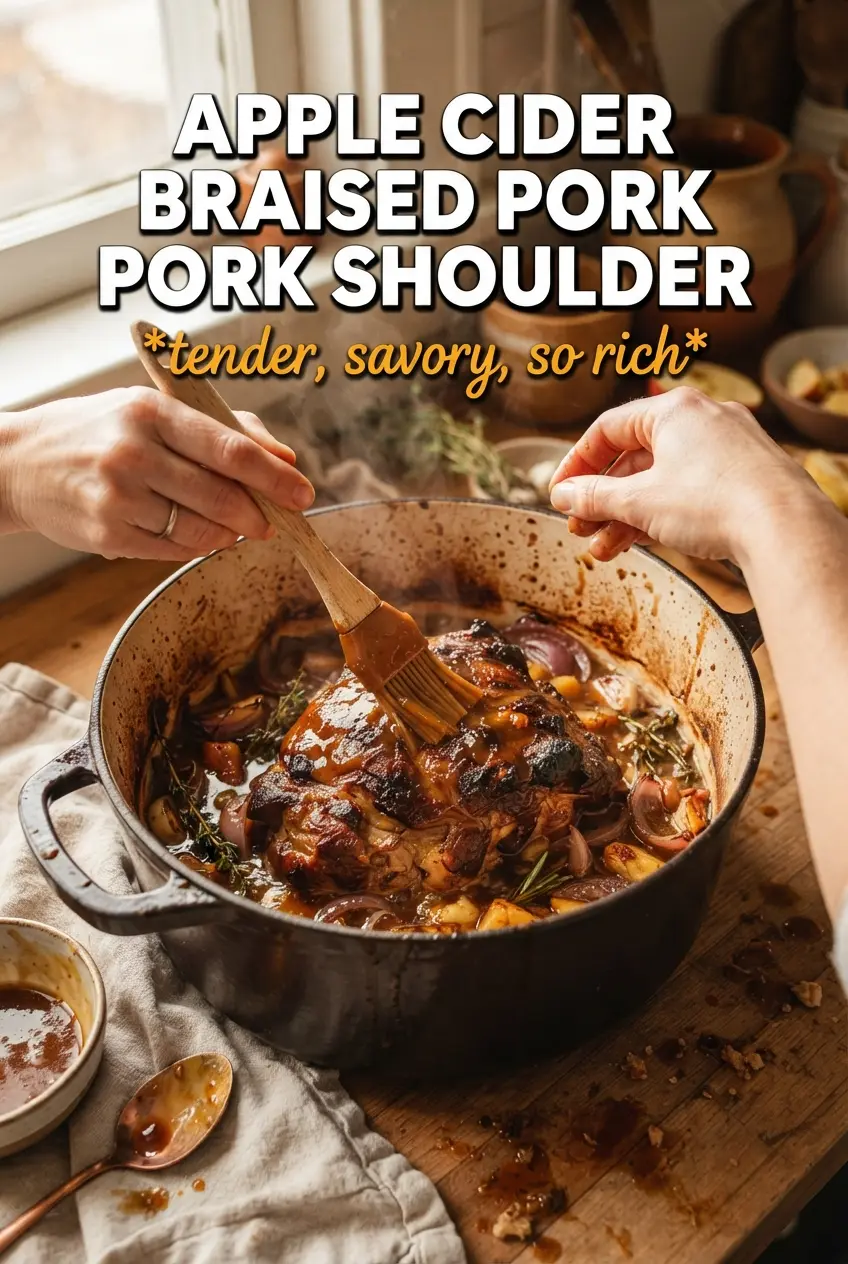
Apple cider braised pork shoulder turns a tough cut into tender, shreddable meat with a glossy pan sauce that tastes like it took all day, because it did. The pork comes out rich and savory, but the cider keeps it from feeling heavy, and the apples soften into little sweet pockets that melt right into the sauce.
The key is browning the pork well before any liquid goes in. That sear builds the deep, roasted flavor you want in a braise, and the mustard, vinegar, and brown sugar in the pot balance the cider so the sauce lands bright instead of sweet. Boneless pork shoulder is the right cut here because it has enough fat and connective tissue to stay juicy through a long oven stint.
Below you’ll find the small details that matter most: how to keep the braising liquid flavorful, when to stop cooking before the meat dries out, and the easiest way to finish the sauce so it coats every bite.
The pork shredded like butter after 4 hours, and the cider pan sauce thickened up beautifully with the apples. I served it over mashed potatoes and my husband went back for seconds before I sat down.
Save this apple cider braised pork shoulder for the kind of dinner that turns into leftovers worth planning for.
The Sear Is Doing More Than Browning the Outside
The biggest mistake with braised pork is rushing past the sear because you think the oven will do the heavy lifting. The oven makes the pork tender, but the sear is what gives the finished dish depth. If the meat goes into the pot pale, the sauce tastes flatter no matter how long it cooks.
Let the pork sit in the hot oil until it releases cleanly from the pot before turning it. If it sticks, it isn’t ready yet. That browned fond at the bottom of the Dutch oven is exactly what the cider and broth will lift up into the sauce, so don’t wipe the pot out after searing.
What the Apples, Cider, and Mustard Are Each Doing

- Apple cider — Use fresh cider if you can find it. It gives the sauce a rounder apple flavor than hard cider alone, while hard cider adds a little edge and more complexity. If you only have one type, either works, but fresh cider will read softer and sweeter.
- Dijon mustard — This keeps the sauce from tipping too sweet and helps it taste finished instead of one-note. Whole-grain mustard works in a pinch, but Dijon melts in more smoothly.
- Apples — Choose firm apples that hold their shape, like Honeycrisp or Granny Smith. Soft apples turn to mush before the pork is done, and you want distinct pieces that can settle into the sauce.
- Pork shoulder — This cut needs time, not babying. The fat and connective tissue are what make it silky and shreddable after hours in the oven, so don’t swap in a lean cut and expect the same result.
- Thyme and rosemary — These herbs bring the braise into savory territory and keep the cider from tasting like dessert. Fresh is best here because dried rosemary can turn woody and loud in a long cook.
Building the Braise So the Pork Stays Juicy
Seasoning and Searing the Pork
Season the pork generously with salt and pepper before it hits the pot. A light seasoning disappears into a long braise, and pork shoulder needs that early seasoning to taste fully seasoned at the end. Brown it on all sides in olive oil until the surface is deep mahogany, not just tan. Work in batches if your pot is crowded, because steam will keep the meat from searing properly.
Making the Braising Liquid
Sauté the onion and garlic just until they soften and pick up the browned bits from the bottom of the pot. Then whisk the cider, broth, Dijon, brown sugar, and vinegar together before adding them in. That quick mix keeps the mustard from clumping, and the vinegar sharpens the whole pot so the finished sauce tastes bright instead of heavy.
Low Oven, Slow Finish
Return the pork to the pot, tuck the apples and herbs around it, and cover tightly before it goes into the oven. You’re looking for a very gentle braise, not a hard boil in the pot. Around 3 1/2 to 4 hours, the pork should pull apart with almost no resistance. If you have to fight it with a fork, it needs more time; if it’s dry, it went too far.
Shredding in the Juices
Move the pork to a board and shred it while it’s still hot. Then stir it back into the strained or unstrained juices, depending on how rustic you want the dish to be. Let it sit in the sauce for a few minutes before serving so every strand soaks up flavor instead of tasting separate from the liquid.
How to Adapt This Braised Pork for Different Nights
Use hard cider for a sharper, more savory braise
If you want a less sweet sauce, swap some or all of the fresh cider for hard cider. The alcohol cooks off, but it leaves behind a drier, more complex apple note that works well if you’re serving the pork with rich mashed potatoes.
Make it dairy-free without changing the braise
The pork itself is naturally dairy-free. Serve it with dairy-free mashed potatoes or roasted potatoes and keep the braising liquid as written. The dish still lands rich because the pork shoulder and cider sauce carry the weight.
Make it ahead for a better second-day dinner
This braise tastes even better after a night in the fridge because the flavors settle together. Reheat the pork gently in its juices so it stays moist, and add a splash of broth if the sauce has tightened up too much.
Storage and Reheating
- Refrigerator: Store the pork and sauce in an airtight container for up to 4 days. The sauce will thicken as it chills.
- Freezer: It freezes well for up to 3 months. Cool completely first, then pack the pork with plenty of sauce so it doesn’t dry out on thawing.
- Reheating: Warm it covered in a 300F oven or on the stovetop over low heat with a splash of broth if needed. Don’t blast it on high heat or the pork can turn stringy before the sauce loosens up.
Questions I Get Asked About This Recipe
Apple Cider Braised Pork Shoulder
Ingredients
Equipment
Method
- Preheat the oven to 325°F. Season the pork shoulder generously with salt and pepper.
- Heat the olive oil in a Dutch oven and sear the pork on all sides until deeply browned, turning as needed. This should take about 8 to 12 minutes total for good color.
- Remove the pork, then sauté the onion and smashed garlic in the pot for 3 minutes. Stir often so the garlic doesn’t burn.
- Whisk the apple cider, chicken broth, Dijon mustard, brown sugar, and apple cider vinegar until smooth. Pour the mixture into the Dutch oven and scrape up any browned bits.
- Return the pork to the pot, then add the quartered apples, fresh thyme, and fresh rosemary. Cover tightly so the braise stays steamy.
- Braise in the oven at 325°F for 3-1/2 to 4 hours, until the pork is fall-apart tender. Look for meat that shreds easily when pressed with a fork.
- Shred the pork in the juices, then spoon the sauce over mashed potatoes to serve. Make sure each portion gets both pork and apple cider sauce.