Cheesy scalloped potatoes bake up into soft, layered slices coated in a rich cream sauce, then finish with a bubbling top that turns golden at the edges and spoon-tender in the center. The best versions don’t just taste rich — they slice cleanly, hold their shape, and still give you that melt-on-the-plate pull when you scoop into the dish.
What makes this version work is the combination of Yukon gold potatoes, a properly seasoned cream mixture, and a two-cheese finish. Yukon golds stay creamy without collapsing, and slicing them thin lets the sauce soak in all the way through the layers. Dijon adds a quiet sharpness that keeps the dish from tasting flat, while the nutmeg and thyme round out the cream without making it feel heavy.
Below, you’ll find the small details that matter most: how to layer the potatoes so they cook evenly, why the sauce goes over the raw potatoes instead of starting on the stove, and how to get that browned cheese top without undercooking the middle.
The potatoes came out tender all the way through and the top was browned in those crispy spots that everyone fights over. I loved that the cream mixture seasoned the layers instead of just sitting on top.
Save these cheesy scalloped potatoes for the nights when you want a bubbling gruyere-and-cheddar top with tender layers underneath.
The Part Where Most Scalloped Potatoes Turn Watery
Scalloped potatoes only work when the potatoes have time to soften in the cream instead of boiling in it. If the slices are too thick, the top browns before the center is tender. If the potatoes are packed loosely, the sauce doesn’t settle into the layers and you end up with dry gaps in the middle. The answer is thin, even slices and a tight layer pattern that gives the cream somewhere to go.
Pressing the potatoes down after adding the cream mixture matters more than people think. That step helps the liquid move between the slices instead of sitting on top in a shallow pool. The foil cover during the first bake traps steam, which is what finishes the potatoes before the cheese goes on. Once the foil comes off, the goal changes: get color on the top without losing the creamy texture underneath.
What the Cream, Cheese, and Potatoes Are Each Doing Here
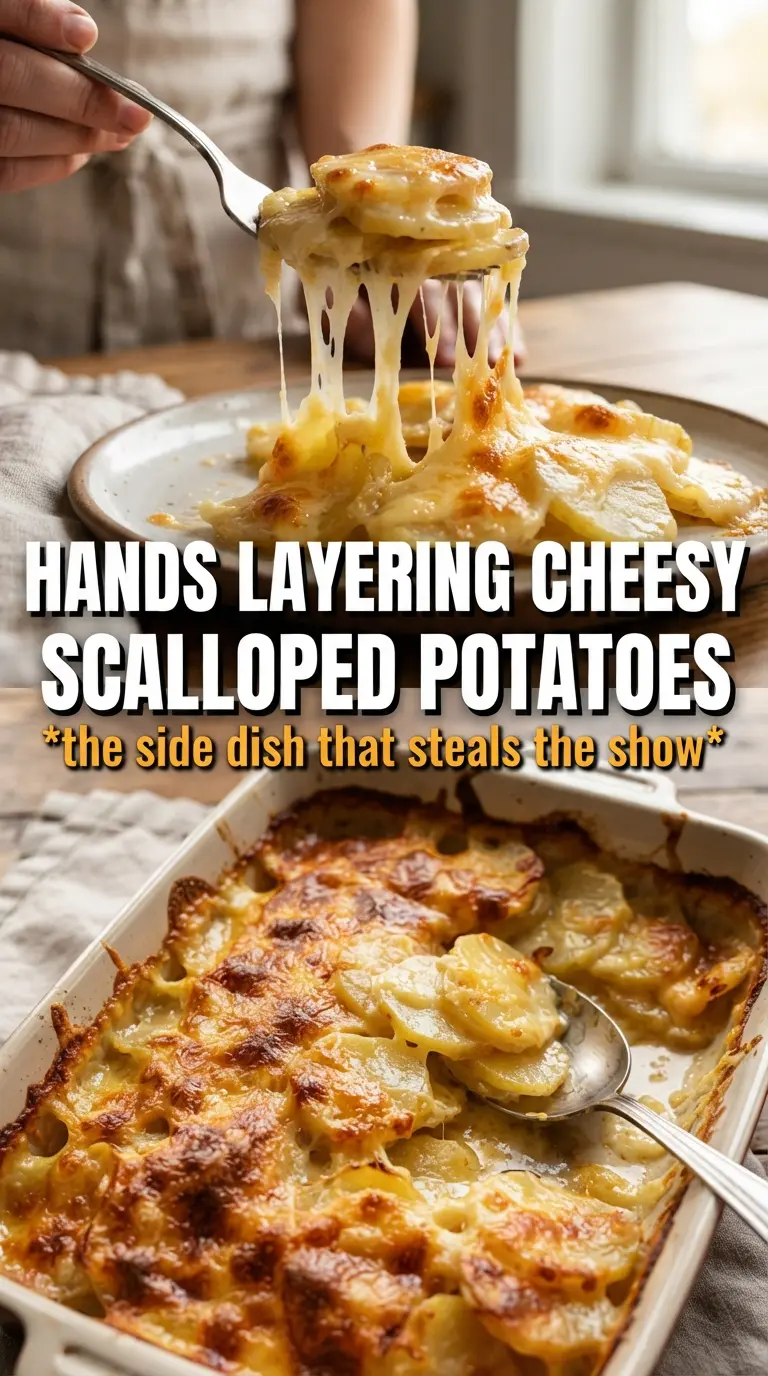
- Yukon gold potatoes — These are the right potato for this dish because they stay tender and buttery instead of turning mealy. Russets can work in a pinch, but they’ll give you a softer, less structured layer and a slightly drier bite after baking.
- Heavy cream and whole milk — The cream brings body and richness, while the milk keeps the sauce from feeling overly dense. Swapping in low-fat milk makes the sauce thinner and less stable, which is where watery scalloped potatoes usually start.
- Gruyere — Gruyere melts smoothly and brings a nutty, savory edge that keeps the dish from tasting one-note. If you can only buy one good cheese here, this is the one to spend a little extra on.
- Sharp cheddar — Cheddar adds color, tang, and that familiar browned top people expect from a pan of scalloped potatoes. Pre-shredded cheddar will work, but block-grated melts better and gives you a cleaner, less grainy finish.
- Dijon, thyme, and nutmeg — These are the small ingredients that stop the cream sauce from tasting flat. Dijon cuts through the richness, thyme adds a gentle herbal note, and nutmeg gives the sauce that classic baked-potato warmth without making it taste like dessert.
The Bake That Gets the Middle Tender Without Burning the Top
Building the Cream Mixture
Whisk the cream, milk, garlic, Dijon, thyme, nutmeg, salt, and pepper until the seasoning looks evenly distributed. You don’t need heat for this sauce because it’s not a roux-based sauce; the potatoes will thicken it as they bake. If the garlic is minced too coarse, it can stay a little sharp, so keep it fine.
Layering the Potatoes
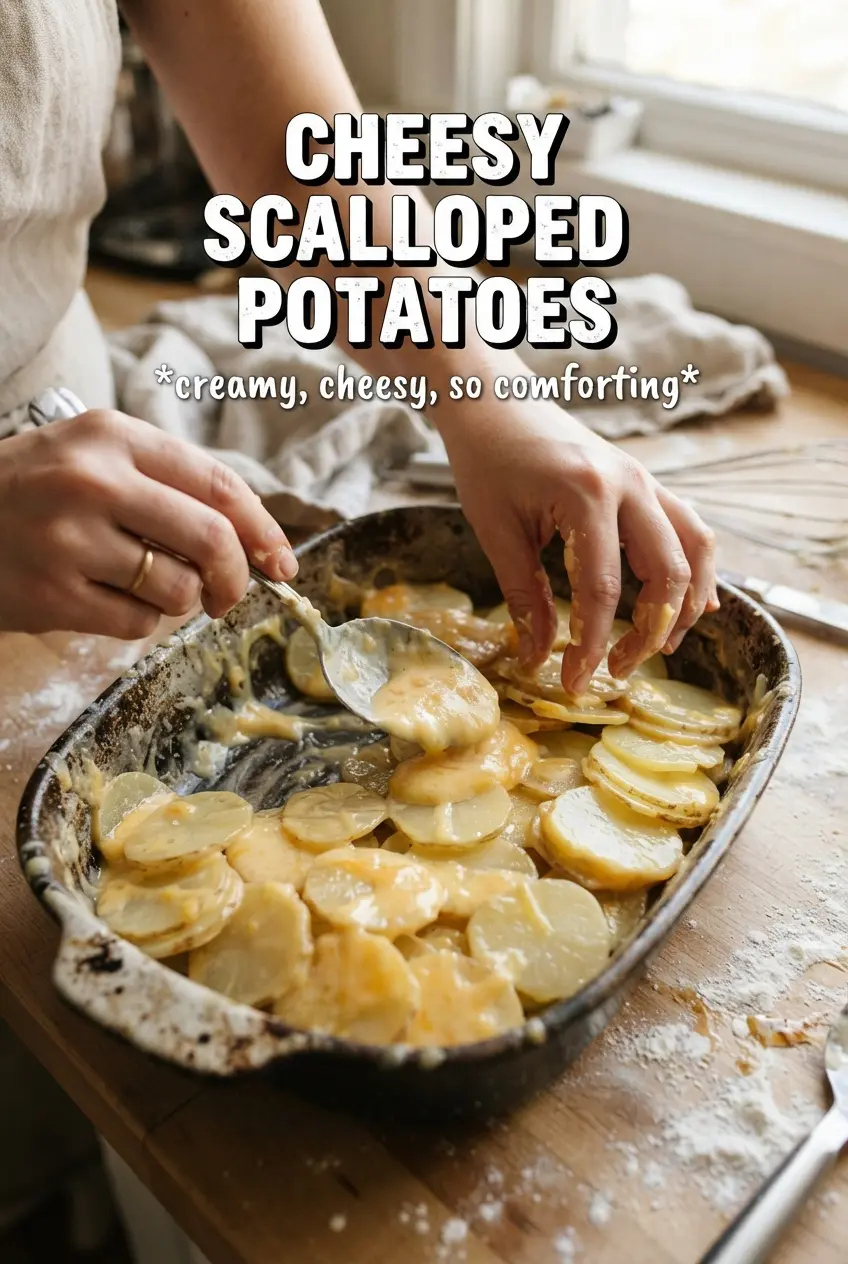
Arrange the slices in overlapping rows and keep the layers tight. Thin, even slices are the difference between a dish that bakes through and one with crunchy centers. Pour the cream mixture over the potatoes slowly so it can move down between the layers, then press everything down until the top looks partially submerged.
The Covered Bake
Cover the dish tightly with foil and bake until the potatoes are nearly tender. That first covered bake is the part that cooks the potatoes, not the cheese, so don’t rush it. If the foil is loose, steam escapes and the top dries out before the center softens.
The Cheese Finish
Once the potatoes are tender enough to be pierced with a knife, uncover the dish and scatter the Gruyere and cheddar evenly over the top. Bake again until the surface is bubbling and golden brown in spots. Let the dish rest before serving so the sauce thickens slightly and the layers hold together when scooped.
How to Adapt These Cheesy Scalloped Potatoes Without Losing the Texture
Make it gluten-free
This recipe is naturally gluten-free as written, since the sauce thickens in the oven rather than with flour. Just check that your Dijon and cheese are gluten-free if you’re cooking for someone with celiac disease.
Swap the cheeses for what you have
If you don’t have Gruyere, use Swiss, fontina, or an extra-sharp white cheddar. You want a cheese that melts smoothly; crumbly cheeses won’t give you the same silky top or the same pull when the spoon goes through the layers.
Use half-and-half instead of cream
Half-and-half works if that’s what you’ve got, but the sauce will be a little lighter and less rich. Keep the rest of the method the same, and expect a slightly looser texture after baking.
Add ham or leeks for a more substantial side
A handful of diced ham or softened leeks fits right into the layers and turns this into something closer to a meal side. Keep the amount modest so the potatoes stay the main event and the dish doesn’t get crowded.
Storage and Reheating
- Refrigerator: Store leftovers covered for up to 4 days. The sauce will set up as it chills, so the texture gets a little firmer.
- Freezer: These freeze reasonably well, though the dairy can separate slightly after thawing. Cool completely, wrap tightly, and freeze for up to 2 months.
- Reheating: Reheat covered in a 325°F oven until hot in the center. Microwaving works for a single serving, but use medium power so the sauce doesn’t split and the edges don’t dry out.
Questions I Get Asked About This Recipe
Cheesy Scalloped Potatoes
Ingredients
Equipment
Method
- Preheat the oven to 375F and butter a 9x13 baking dish.
- In a bowl, whisk the heavy cream, whole milk, garlic, Dijon mustard, thyme, nutmeg, 1-1/2 teaspoons salt, and pepper until smooth.
- Layer the very thinly sliced potatoes in overlapping rows in the baking dish.
- Pour the cream mixture over the potatoes.
- Press the potatoes down to submerge them, then cover tightly with foil.
- Bake for 50 minutes at 375F, keeping the dish covered.
- Uncover the dish and scatter the Gruyere and sharp cheddar over the top.
- Bake 18-22 more minutes at 375F until the top is golden, bubbling, and the potatoes are completely tender.
- Rest the scalloped potatoes for 10 minutes before serving.