Smoky sausage, buttery cabbage, and sharp Dijon come together in a skillet that eats like much more work than it is. The best part is the contrast: caramelized edges on the sausage, tender cabbage with a little bite left in the center, and a glossy pan sauce that clings instead of pooling at the bottom of the pan. It’s the kind of dinner that lands on the table fast, but still tastes built with purpose.
The trick is letting each ingredient earn its place. The sausage browns first so it can leave behind those deep, savory bits in the pan. Then the onions soften in the butter, the cabbage cooks long enough to lose its raw crunch, and the Dijon-vinegar glaze pulls everything into one sharp, balanced finish. If you rush the cabbage, it turns watery; if you skip the brown-on-the-pan step, the whole dish tastes flatter than it should.
Below you’ll find the timing that keeps the cabbage from steaming, the one ingredient swap that still gives you good browning, and a few ways to adjust the skillet for different diets or what’s already in your fridge.
The sausage got beautifully browned and the cabbage stayed tender with just enough texture. That Dijon and vinegar sauce coated everything instead of making it soggy, and my husband went back for seconds right away.
Save this sausage and cabbage stir fry for the nights when you want a fast skillet dinner with caramelized edges and a tangy Dijon finish.
The Step That Keeps the Cabbage From Going Limp
The biggest mistake in a cabbage skillet is crowding the pan and stirring nonstop. Cabbage releases moisture as it cooks, and if it never gets the chance to touch the hot surface, it steams itself soft and pale instead of picking up those bronzed edges that make this dish worth cooking. Give it room, stir occasionally, and let some pieces sit against the skillet long enough to color.
Brown the sausage first and remove it before the vegetables go in. That keeps the sausage from overcooking while the cabbage softens, and it also leaves the pan coated with flavorful fat and browned bits. Those bits are what make the butter, mustard, and vinegar taste like a finished sauce instead of a quick toss.
- Smoked kielbasa or andouille — You need a fully cooked sausage with enough fat to brown well. Kielbasa gives you a milder, smoky skillet; andouille brings more heat. Turkey sausage works, but it won’t leave behind the same rich drippings.
- Green cabbage — Green cabbage holds up best here because it softens without collapsing. Savoy cabbage will cook faster and turn silkier, while red cabbage will work but changes the look and tastes a little sharper.
- Dijon mustard — Dijon gives the sauce its backbone and helps it emulsify with the butter. Yellow mustard tastes flatter and sweeter, and stone-ground mustard gives a more rustic finish if that’s what you have.
- Apple cider vinegar — This is what keeps the dish from tasting heavy. If you use white vinegar, cut it back slightly; it’s harsher and less rounded than cider vinegar.
Building the Skillet in the Right Order
Brown the Sausage First
Heat a large skillet over medium-high and let the sausage slices sit untouched long enough to pick up deep color on the first side before you flip them. You want crisp edges and browned spots, not just warmed-through rounds. Pull them out once they’re caramelized. If you leave them in the pan while the cabbage cooks, they’ll soften and lose the sear you worked for.
Soften the Onion in the Leftover Fat
Melt the butter right in the same skillet and add the sliced onion. Cook until it turns golden at the edges and tastes sweet instead of sharp, about 5 minutes. That early browning matters because the onion becomes part of the sauce, not just background texture. If the pan looks dry, add a small knob more butter; if it looks greasy, the sausage had more fat than expected, and that’s fine.
Let the Cabbage Take the Heat
Add the garlic and caraway seeds for just a minute, then pile in the cabbage. It will look like too much at first, then collapse as it warms. Stir every so often instead of constantly so some of it can touch the pan and caramelize. If steam starts to build heavily, turn the heat up a little and keep moving the cabbage around the edges of the pan.
Finish With the Dijon Glaze
Whisk the Dijon, apple cider vinegar, and brown sugar together before pouring them in. That keeps the mustard from clumping and helps the sauce coat the cabbage evenly. Add the sausage back at the end and toss just until everything is glossy. Salt and pepper go in last because the sausage and mustard already bring plenty of seasoning, and you want to taste before pushing it too far.
How to Adjust This Skillet Without Losing What Makes It Work
Make it dairy-free
Swap the butter for olive oil or avocado oil. You’ll lose a little of the round, buttery finish, but the sausage still browns well and the Dijon-vinegar glaze keeps the skillet bright.
Use what you have for the sausage
Any smoked fully cooked sausage works here. Kielbasa is milder and rounder, while andouille adds heat and a little extra spice. If the sausage is very lean, add a splash more butter or oil so the cabbage doesn’t stick before it softens.
Make it lower carb
The dish is already naturally low carb, but you can skip the brown sugar or replace it with a keto-friendly sweetener. The sauce will taste a little sharper without the sugar, so keep the mustard and vinegar balanced and taste before serving.
Add potatoes for a fuller dinner
Par-cook diced potatoes first, then add them after the onion softens. Raw potatoes won’t cook through in the time the cabbage needs, and the skillet will turn crowded fast. Pre-cooking keeps the texture right and still lets the sausage and cabbage stay front and center.
Storage and Reheating
- Refrigerator: Store in an airtight container for up to 4 days. The cabbage softens a bit more as it sits, but the flavor stays strong.
- Freezer: It freezes well for about 2 months, though the cabbage will be softer after thawing. Cool it completely first and use a freezer-safe container.
- Reheating: Rewarm in a skillet over medium heat with a small splash of water or broth. The common mistake is blasting it in the microwave until the cabbage turns mushy and the sausage dries out.
Questions I Get Asked About This Recipe
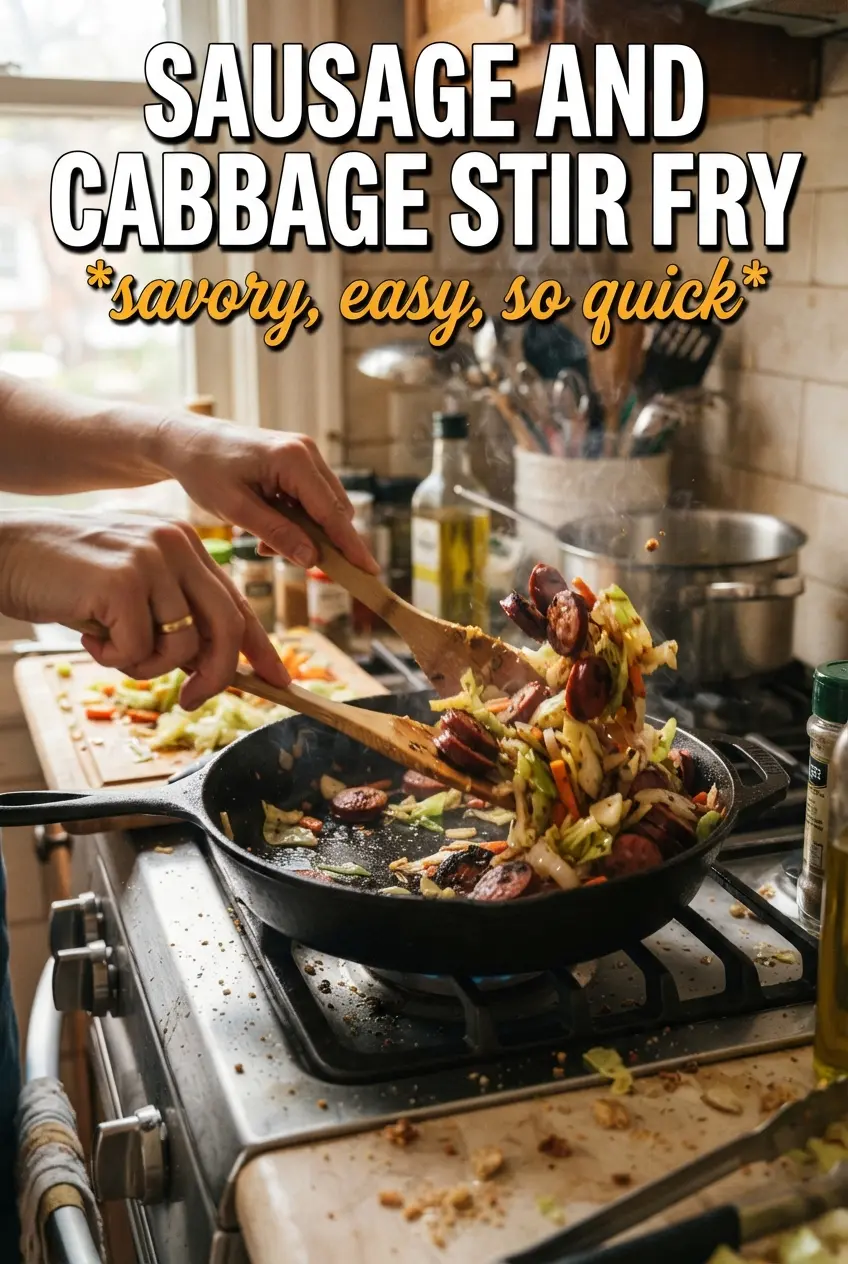
Sausage And Cabbage Stir Fry
Ingredients
Equipment
Method
- Heat a large cast iron skillet over medium-high heat and add the sausage rounds. Cook 6-8 minutes, stirring occasionally, until caramelized and browned at the edges; remove and set aside.
- Lower heat to medium and melt the unsalted butter in the same skillet. Sauté the onion for 5 minutes until softened and golden.
- Add the garlic and caraway seeds to the skillet. Cook 1 minute, stirring constantly, until fragrant.
- Add the chopped green cabbage to the skillet and stir to coat in the buttery onion mixture. Cook 8-10 minutes, stirring occasionally, until wilted and slightly caramelized at the edges.
- In a small bowl, whisk the Dijon mustard, apple cider vinegar, and brown sugar until smooth. Pour the glaze over the cabbage and stir to combine.
- Return the caramelized sausage to the skillet. Toss everything together for 1-2 minutes until heated through.
- Season with salt and pepper to taste. Top with fresh parsley and serve hot.