Stuffed baked potatoes with mushrooms hit that sweet spot between cozy and substantial. The skins stay crisp, the filling turns creamy without getting gluey, and the mushrooms bring a deep, savory bite that keeps every forkful interesting. It’s the kind of main dish that feels a little special without asking for much more than an hour in the oven and a skillet on the stove.
The trick is treating each part separately. Russet potatoes need enough time to dry out and turn fluffy inside, while the mushrooms need space in the pan so they brown instead of steam. Gruyere melts into the filling with a nutty finish that plays well against the mushrooms, and a little sour cream keeps the center rich without making it heavy. Fresh thyme and parsley keep the whole thing from tasting flat.
Below, I’m walking through the parts that matter most: how to keep the potato skins sturdy, how to get the mushrooms properly golden, and how to change the filling if you want to push it in a different direction.
The mushrooms got beautifully browned and the filling was creamy instead of watery. I added a little truffle salt on top and my husband went back for seconds before I even sat down.
Save these stuffed baked potatoes with mushrooms for the night you want a crisp potato shell, a creamy Gruyere filling, and plenty of golden mushrooms.
The Reason the Potatoes Stay Fluffy Instead of Dense
The biggest mistake with stuffed baked potatoes is turning the inside into paste. Once the potato flesh gets worked too hard, it loses that light, fluffy texture and starts eating like glue. The fix is simple: scoop while the potatoes are still warm, then mash just until the butter, dairy, and cheese disappear into the flesh. Stop the moment the mixture looks combined.
Russet potatoes are the right choice here because their dry, starchy interior mashes cleanly and their thick skins hold up when you refill them. Waxy potatoes stay too firm and don’t give you the same airy filling. If your potatoes seem damp after baking, let them sit cut-side up for a few minutes so steam can escape before you add the filling.
- Russet potatoes — These give you the fluffiest interior and the best sturdy shells. Smaller potatoes won’t hold as much filling, and waxy potatoes won’t break down the same way.
- Gruyere — This melts smoothly and brings a nutty, savory edge that sharp cheddar can’t quite mimic. If you need a substitute, use white cheddar or fontina, but expect a slightly different flavor and less of that rounded nuttiness.
- Mushrooms — Mixed mushrooms give more depth than one variety alone. Cremini bring body, shiitake add a deeper savory note, and both brown better than delicate mushrooms if the pan is hot enough.
- Sour cream and milk — This combination keeps the filling creamy without making it loose. Use whole milk if you can; skim milk works in a pinch, but the filling will taste leaner.
Getting the Mushrooms Brown Before They Go Into the Potatoes
Start by cooking the shallot in butter until it softens and turns fragrant, then add the garlic and thyme for just a minute. Garlic burns fast, so it only needs enough time to lose its raw edge. When the mushrooms go in, spread them out and leave them alone long enough to take on color. If the pan looks crowded, they’ll release water and steam instead of browning.
Once the mushrooms turn glossy and golden at the edges, season them. Salt early enough to pull out flavor, but not so early that they collapse before they have a chance to color. Fold most of them into the mashed potato mixture, then save the rest for the top so every serving gets a mix of creamy filling and browned mushroom pieces.
Baking the Potatoes Until the Centers Are Dry
Bake the potatoes until a knife slides in without resistance and the skins feel firm. If they come out too early, the insides stay damp and the filling turns heavy. Let them cool just enough to handle, then cut them open and scoop while the steam is still escaping. That steam is part of what keeps the filling from turning dense.
Building the Filling
Mash the potato flesh with the remaining butter, sour cream, milk, most of the Gruyere, and parsley until it looks creamy and spreadable. The texture should be rich but still hold its shape when spooned back into the skins. If it seems stiff, add a small splash of milk. If it looks loose, stop adding liquid and let the residual heat tighten it a bit.
Finishing Under the Heat
Top the filled potatoes with the reserved Gruyere and mushrooms, then bake just until the cheese melts and the tops pick up a little color. This second bake is about melding, not drying out. Finish with sour cream, chives, and a little truffle salt if you want a deeper mushroom note. Don’t add the herbs before the final bake or they’ll lose their freshness.
How to Adapt These Stuffed Baked Potatoes for Different Needs
Make Them Vegetarian-Friendly Without Losing Depth
The recipe is already vegetarian, but the flavor can go flat if you skip the browning step. Keep the mushrooms in the pan until they take on real color, and finish with a pinch of truffle salt or a little extra thyme if you want more savory intensity.
Dairy-Free Version
Use plant butter, unsweetened non-dairy milk, and a good melting dairy-free cheese. The filling won’t have the same tang or stretch as Gruyere, but it still works if you keep the mixture thick and don’t overdo the liquid. Add a little extra salt and herbs to keep the flavor balanced.
Gluten-Free and Naturally Hearty
As written, these stuffed potatoes are gluten-free as long as your cheese and seasonings are certified gluten-free. That makes them a solid main dish when you want something filling without needing bread, pasta, or a separate starch.
Make-Ahead for a Faster Dinner
Bake the potatoes and cook the mushroom mixture ahead of time, then store them separately. Reheat the potatoes just enough to loosen the centers, stir the filling back together, and finish with the final bake right before serving. That keeps the skins from getting soggy.
Storage and Reheating
- Refrigerator: Store leftovers in an airtight container for up to 3 days. The skins soften a little, but the flavor stays good.
- Freezer: Freeze the stuffed potatoes before the final bake for best texture. Wrap them well and thaw overnight in the fridge before reheating.
- Reheating: Warm in a 375F oven until heated through, then finish under the broiler for a minute or two if you want the top to crisp again. The microwave heats the center fast, but it softens the skins.
Questions I Get Asked About This Recipe
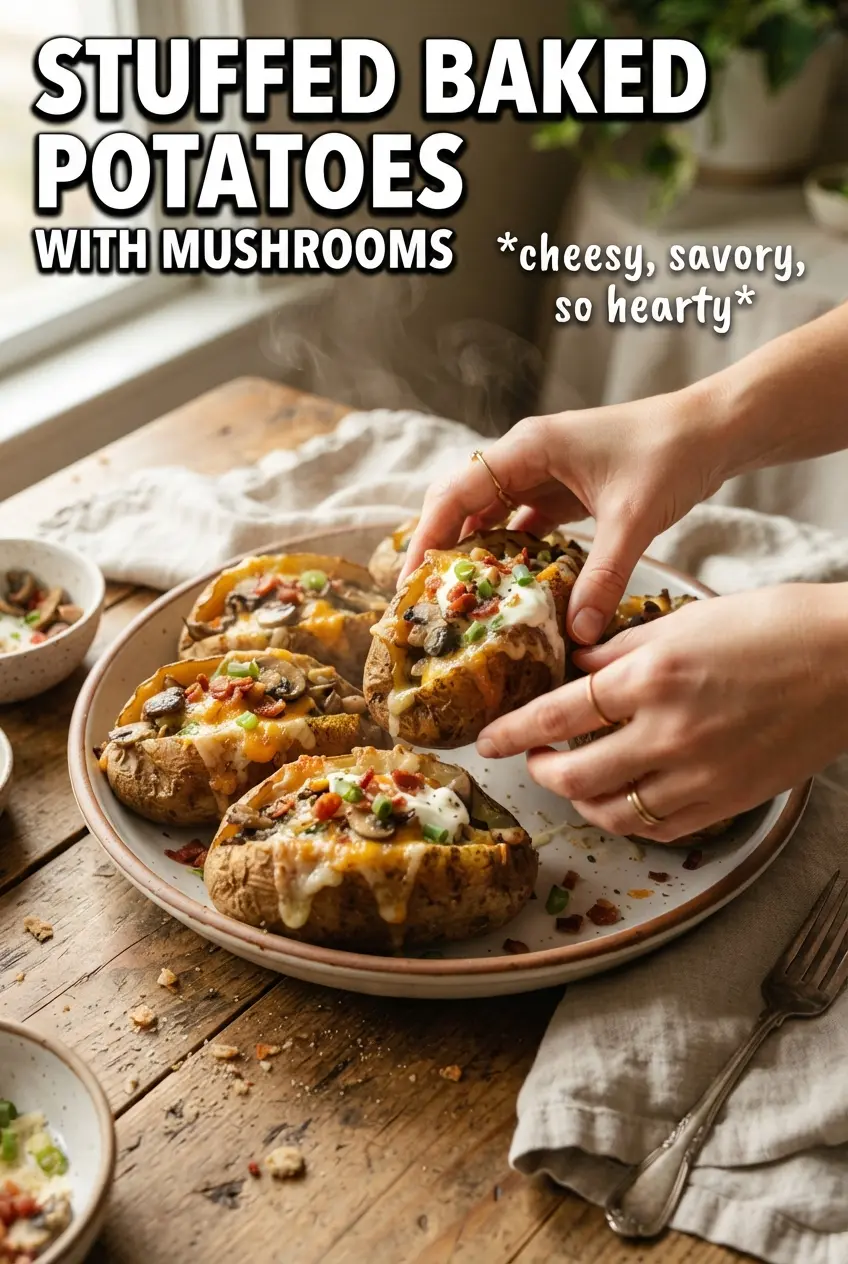
Stuffed Baked Potatoes With Mushrooms
Ingredients
Equipment
Method
- Heat oven to 400F and bake russet potatoes on a sheet pan for 55-60 minutes until tender. Let them cool slightly, then halve lengthwise and scoop out the flesh while keeping the skins intact.
- Melt 2 tablespoons of unsalted butter in a skillet over medium heat and sauté minced shallot for 3 minutes until softened. Add minced garlic and fresh thyme and cook for 1 minute until fragrant.
- Add sliced mixed mushrooms to the skillet and cook for 7-8 minutes, stirring occasionally, until golden. Season with salt and black pepper to taste.
- Scoop the potato flesh into a bowl and mash until mostly smooth with the remaining unsalted butter. Stir in sour cream, milk, 3/4 cup shredded Gruyere, and chopped fresh parsley until creamy.
- Fold in most of the cooked mushrooms, then spoon the filling into the potato skins. Arrange the stuffed potatoes on the sheet pan.
- Top each stuffed potato with the remaining Gruyere and remaining mushrooms. Bake at 400F for 15 minutes until the cheese is melted and the tops are golden.
- Finish with sour cream and fresh chives for serving. Serve warm.