Honey pepper chicken pasta lands in that sweet spot between sticky, savory, and a little sharp from the pepper. The sauce clings to every ridge of the pasta, the chicken stays juicy if you don’t rush the sear, and the parmesan pulls the whole pan into a glossy finish that tastes like it took more work than it did.
What makes this version work is the balance. Honey brings the glaze, soy sauce adds depth, and a generous hit of black pepper keeps the sweetness from flattening out. The cornstarch slurry thickens the sauce fast, but only after the broth has had a chance to simmer and the flavors have actually come together. That’s what keeps it from tasting like sweet chicken with sauce poured over it.
Below, I’ve laid out the small details that matter most — when to thicken the sauce, how much pasta water to use, and what to do if you want a little more heat or a less sweet finish. Those are the things that turn a decent pasta dinner into one you’ll make again.
The sauce thickened up beautifully and coated the penne instead of pooling at the bottom. I added a little extra black pepper at the end and it gave the honey the perfect balance.
Pin this honey pepper chicken pasta for a glossy, peppery weeknight dinner with a sweet-savory sauce that clings to every bite.
The Sauce Breaks If You Rush the Heat
Honey-based sauces can go from glossy to grainy if they boil too hard before the cornstarch slurry goes in. The trick here is to let the broth, honey, soy sauce, pepper, and red pepper flakes simmer just long enough to meld, then whisk in the slurry and keep the heat at a steady low simmer. That gives the sauce time to thicken without turning sticky or tasting scorched.
The other place people miss is the pasta water. A splash helps the sauce coat the noodles instead of sitting underneath them, and the starch in that water gives the sauce a little extra grip. If the pan looks tight when you add the pasta, that’s the moment for a small splash, not a big pour.
What Each Ingredient Is Doing in the Pan
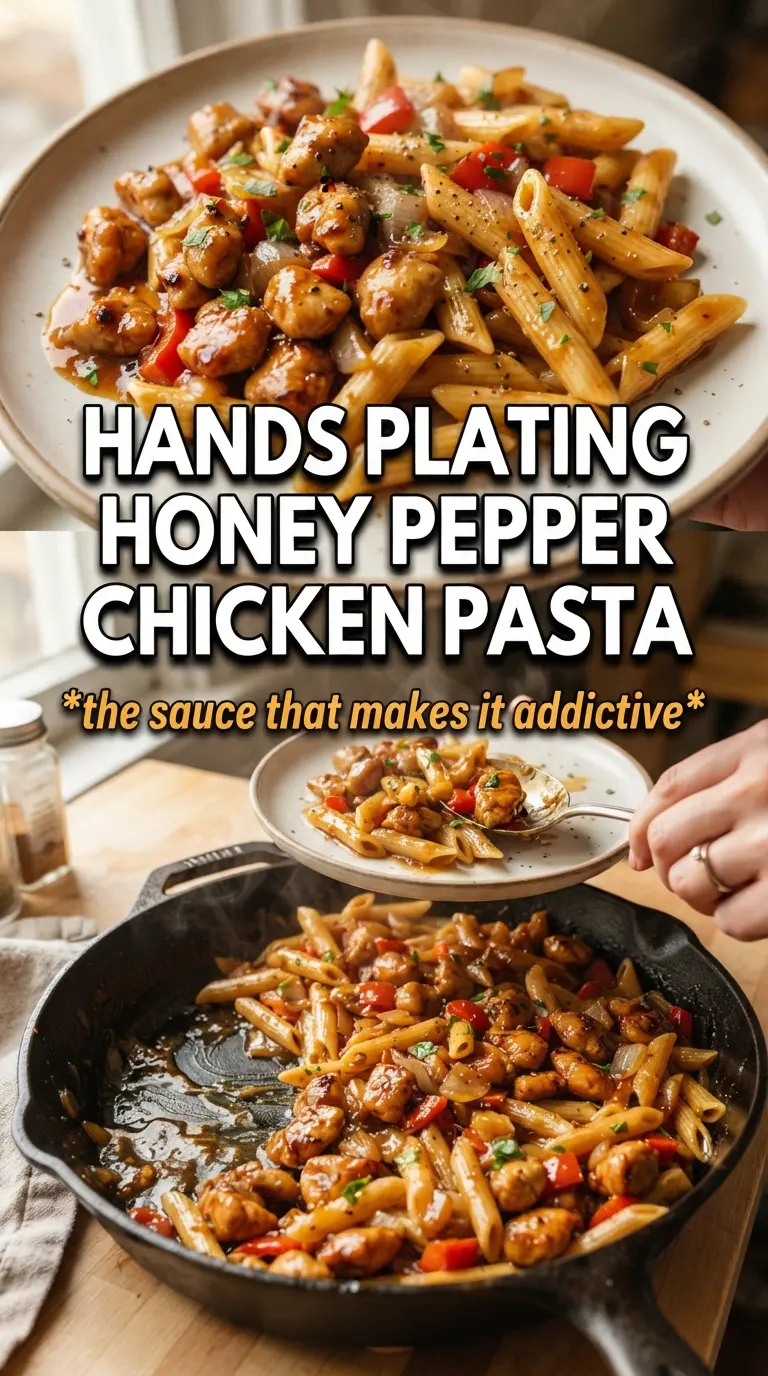
- Chicken breast — Thin slices cook fast and stay tender, which matters because the chicken gets returned to the sauce at the end. If the pieces are thick, they’ll take longer to sear and can dry out before the sauce is ready.
- Honey — This is the backbone of the glaze, so use real honey, not a syrupy substitute. It gives the sauce body and sheen, and there isn’t a swap that brings the same rounded sweetness.
- Black pepper — Don’t treat it like background seasoning here. The pepper cuts through the honey and makes the sauce taste finished instead of flat, which is why a full teaspoon matters.
- Soy sauce — Just enough to add salt and depth without turning the sauce dark or overly savory. Low-sodium works fine if that’s what you keep on hand.
- Cornstarch slurry — This thickens the sauce fast and keeps the finish glossy. Mix it with cold water first; if it goes in dry, it clumps before it can do its job.
- Parmesan — It adds a salty, nutty finish and helps the sauce cling. Grate it finely so it melts smoothly instead of hanging in strings.
Building the Pasta So the Sauce Clings
Searing the Chicken First
Season the chicken with salt and black pepper, then cook it in butter until the outside is golden and the center is just cooked through. Thin slices should take about 4 to 5 minutes per side, depending on your pan and how crowded it is. If the pan is packed, the chicken steams instead of browning, and you lose the flavor that should carry the whole dish.
Making the Sauce in the Same Pan
Once the chicken is out, add the garlic and cook it just until fragrant, about a minute. Then pour in the broth, honey, soy sauce, black pepper, and red pepper flakes, scraping up the browned bits from the pan as the sauce comes together. Those bits are loaded with flavor, and if they stick too hard, a splash of broth loosens them right back into the sauce.
Thickening and Finishing
Stir the cornstarch slurry again before adding it, then simmer until the sauce turns glossy and lightly coats the back of a spoon. Add the cooked pasta and a little reserved pasta water until every noodle is coated instead of dry. Return the sliced chicken, toss in the parmesan, and finish with parsley and a final grind of black pepper so the sauce tastes bright at the end.
How to Adapt This for a Different Table
Gluten-Free Pasta Swap
Use a sturdy gluten-free penne or rigatoni and cook it just to al dente, because it will soften a bit more once it hits the sauce. The sauce itself is already naturally gluten-free as long as your soy sauce is labeled gluten-free.
Dairy-Free Version
Swap the butter for olive oil or a dairy-free butter and leave out the parmesan, then finish with a little extra salt and black pepper. You’ll lose some of the creamy, nutty finish, but the sauce still clings well and keeps the same sweet-pepper balance.
More Heat, Less Sweet
Increase the red pepper flakes to 1 1/2 teaspoons and reduce the honey by 1 to 2 tablespoons if you want the sauce to lean sharper and less sticky. This keeps the glossy finish but shifts the balance toward pepper and savoriness.
Storage and Reheating
- Refrigerator: Store in an airtight container for up to 4 days. The sauce will thicken as it chills, which is normal.
- Freezer: It freezes okay, but the pasta softens a bit after thawing. If you want the best texture, freeze the chicken and sauce separately from freshly cooked pasta.
- Reheating: Warm gently on the stove or in the microwave with a splash of water or broth. Don’t blast it over high heat, or the sauce can tighten up and the chicken can turn dry.
Questions I Get Asked About This Recipe
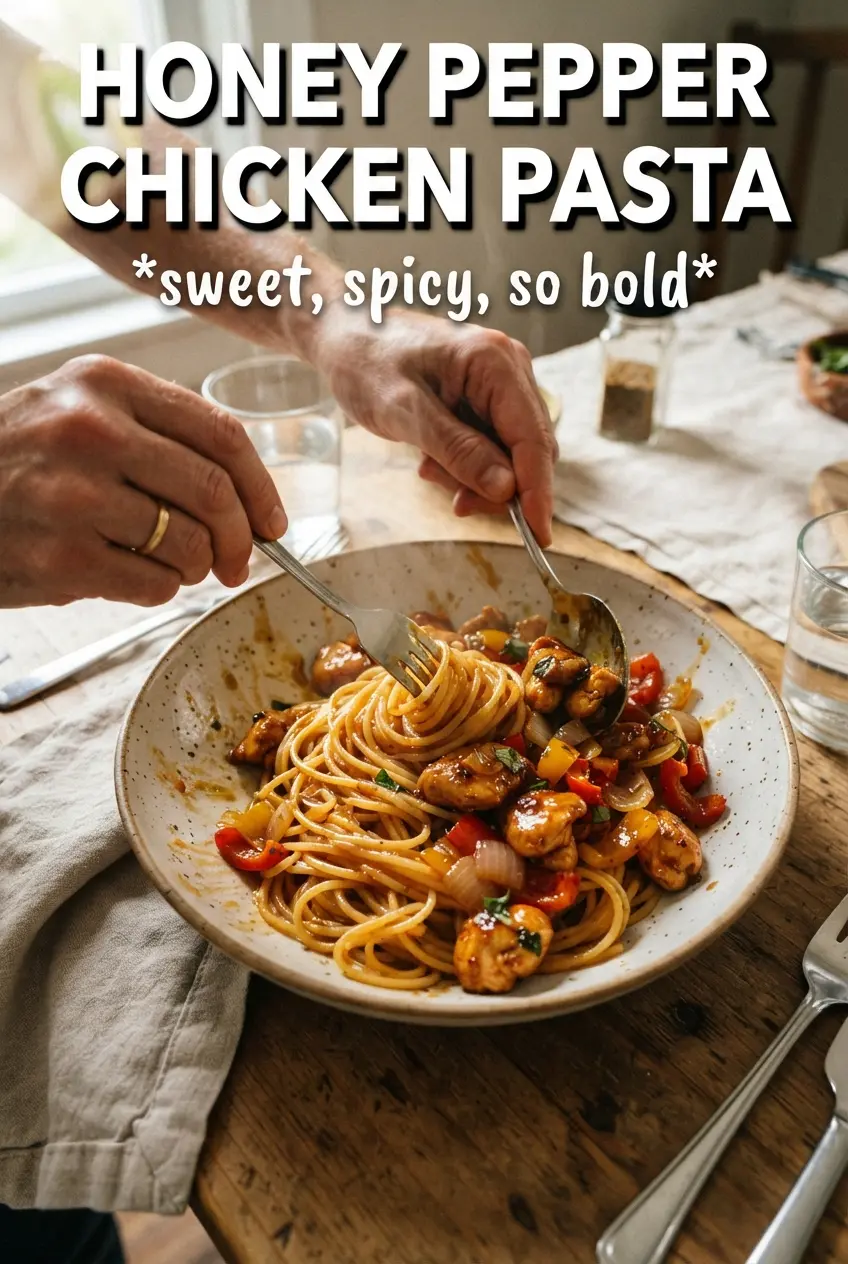
Honey Pepper Chicken Pasta
Ingredients
Equipment
Method
- Bring a large pot of salted water to a boil and cook penne or rigatoni until al dente, then reserve 1/2 cup pasta water and drain.
- Keep the pasta water warm so it’s ready to loosen the sauce when you toss the pasta.
- Season sliced chicken breast with salt and a generous amount of black pepper.
- Heat butter in a skillet over medium-high heat and sear chicken until golden, 4-5 minutes per side, then remove and slice.
- In the same skillet, sauté minced garlic for 1 minute until fragrant, then add chicken broth, honey, soy sauce, black pepper, and red pepper flakes.
- Whisk cornstarch with 2 tablespoons water, pour into the sauce, and simmer until thickened.
- Add cooked pasta to the sauce and toss, adding reserved pasta water as needed until glossy and evenly coated.
- Return sliced chicken to the skillet, toss to heat through, then finish with grated parmesan and top with fresh parsley.