Deep, dark chocolate cake gets a little extra body from sweet potato puree, and the result is the kind of layer cake that stays moist for days without tasting like anything but chocolate. The sweet potato doesn’t announce itself at the table. It works behind the scenes, softening the crumb and giving the cake a plush texture that holds up under a thick blanket of ganache frosting.
This version leans on both buttermilk and sweet potato, which keeps the batter tender without turning it heavy. The cocoa powder does the main flavor work, while the puree adds richness and keeps the layers from drying out in the oven. That combination matters because chocolate cakes can go from just-set to dry fast, especially once they cool.
Below, I’ll walk through the part that matters most: how to keep the crumb soft, how to make the ganache frosting spreadable instead of runny, and what to do if you want to make the cake ahead.
The cake stayed unbelievably moist for three days, and the ganache frosting set up perfectly without sliding off the layers. I never would have guessed sweet potato could make chocolate cake this rich.
Save this sweet potato chocolate cake for the days when you want a moist chocolate layer cake with a thick ganache finish.
The Secret to Keeping Sweet Potato Chocolate Cake Soft, Not Dense
The biggest risk with a cake like this is overmixing once the flour goes in. Sweet potato puree adds moisture, but it also adds heft, so the batter needs to stay light at the finish or the layers bake up tight instead of tender. Mix until the dry streaks disappear, then stop. The oven will do the rest.
Another common failure point is using sweet potato puree that’s too watery. If you roast and mash the potatoes yourself, let the puree cool and drain off any excess moisture before measuring it. Canned puree can work too, but it should be plain sweet potato, not pie filling. The cake depends on the puree for texture, not extra sugar or spices.
What the Chocolate Ganache Frosting Is Really Doing Here

- Sweet potato puree — This is what keeps the crumb soft and gives the cake a little resilience after baking. It shouldn’t taste like a vegetable cake; it should disappear into the background and leave you with a plush texture. Roast the potatoes if you can, since boiling adds extra water that can thin the batter.
- Buttermilk — The acidity helps the baking soda lift the cake and keeps the chocolate flavor from tasting flat. Regular milk won’t give the same tender crumb. If you need a substitute, use milk mixed with a little lemon juice or vinegar, then let it sit for a few minutes before adding it.
- Dark chocolate chips — These make the frosting rich enough to stand up to the cake’s sweetness. A good-quality chip melts more smoothly, but you don’t need fancy baking chocolate here as long as the chips are true dark chocolate and not candy melts.
- Heavy cream and butter — This is what turns melted chocolate into a glossy ganache that can be whipped into a spreadable frosting. Don’t rush the cooling stage. If it’s too warm, it’ll slide off the cake instead of clinging to the layers.
Building the Batter and Frosting Without Losing the Texture
Starting the Cake Batter
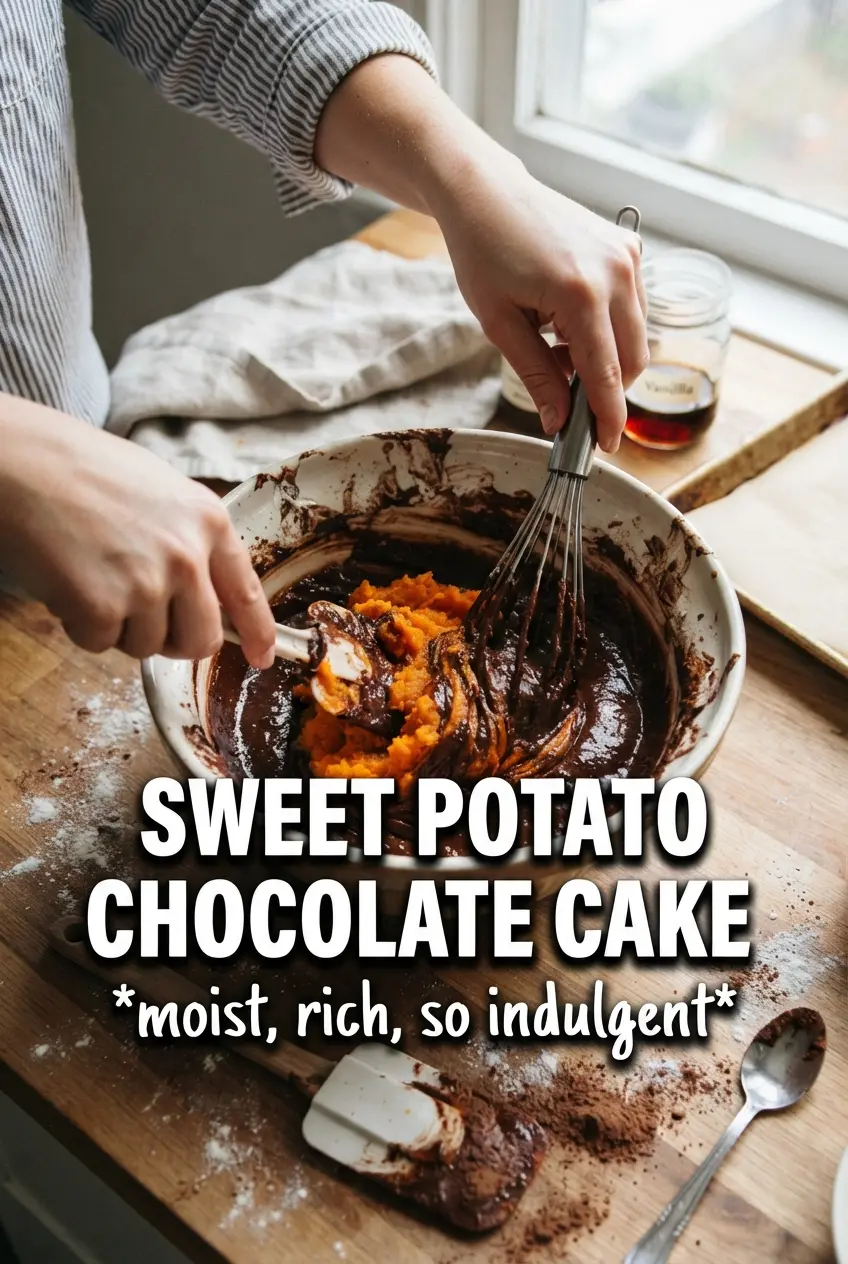
Beat the butter and sugar until the mixture looks pale and fluffy, not just combined. That step traps air, which gives the cake some lift before the leaveners finish the job. Add the eggs one at a time so the batter stays smooth, then mix in the sweet potato puree, buttermilk, and vanilla. If the mixture looks a little curdled at that point, it will come back together once the flour goes in.
Adding the Dry Ingredients
Fold in the flour, cocoa powder, baking powder, baking soda, cinnamon, and salt just until the batter is uniform. Cocoa can hide dry pockets, so scrape the bottom of the bowl once or twice. Stop as soon as you no longer see streaks of flour. Overmixing now is what turns a soft chocolate cake into a heavy one.
Baking to the Right Doneness
Divide the batter evenly between two greased 9-inch pans and bake until the centers spring back when touched and a tester comes out with a few moist crumbs. You want set edges and a soft middle, not a dry, fully clean tester. If the layers dome slightly, that’s fine; you can level them once they’re cool. Let them cool completely before frosting, or the ganache will melt and slide.
Making the Ganache Frosting
Heat the cream until it’s steaming, then pour it over the chocolate chips and butter and let it sit for two minutes before stirring. That pause matters. If you stir too soon, the chocolate can seize or stay grainy. Once it’s smooth, let it cool until it’s thick enough to spread, then beat in the powdered sugar and vanilla until it looks fluffy and holds soft peaks.
Chocolate Orange Version
Add 1 tablespoon orange zest to the batter and a splash of orange extract to the frosting. The citrus cuts through the richness and gives the cake a sharper finish without changing the texture.
Dairy-Free Adaptation
Use plant-based butter, a dairy-free buttermilk substitute made with unsweetened non-dairy milk and lemon juice, and a dairy-free dark chocolate that melts smoothly. The cake will still be moist, but the frosting won’t whip up quite as airy, so spread it with a spatula while it’s thick but still pliable.
Gluten-Free Swap
A 1:1 gluten-free flour blend can work here as long as it includes xanthan gum. The crumb may be a touch more delicate, so let the layers cool fully before moving them, and don’t try to frost warm cake.
Make-Ahead Plan
Bake the layers a day ahead, wrap them well once cooled, and frost the next day. The cake actually slices cleaner after it rests, and the chocolate flavor deepens overnight.
Storage and Reheating
- Refrigerator: Store covered for up to 5 days. The frosting will firm up, but the cake stays moist.
- Freezer: Freeze unfrosted layers tightly wrapped for up to 2 months. Thaw wrapped at room temperature before frosting for the best texture.
- Reheating: This cake is best served at room temperature. If you want a softer slice, let refrigerated pieces sit out for 30 to 45 minutes instead of microwaving, which can make the ganache greasy.
Questions I Get Asked About This Recipe
Sweet Potato Chocolate Cake
Ingredients
Equipment
Method
- Preheat oven to 350F and grease two 9-inch round pans, setting them aside with a clear workspace.
- Beat the butter and sugar until smooth and lighter in color.
- Add the eggs one at a time, then mix in the sweet potato puree, buttermilk, and vanilla until the batter looks uniform.
- Fold in the dry ingredients (flour, cocoa powder, baking powder, baking soda, cinnamon, and salt) just until no dry streaks remain.
- Divide the batter between the two pans and smooth the tops so the layers bake evenly.
- Bake for 35-40 minutes at 350F, until the centers spring back when lightly pressed and a toothpick comes out mostly clean.
- Cool the cakes completely in the pans before frosting so the ganache and frosting set properly.
- Heat the heavy cream until steaming, then pour it over the dark chocolate chips and unsalted butter.
- Rest the mixture for 2 minutes, then stir until fully smooth and glossy.
- Cool the ganache until spreadable, then beat in powdered sugar and vanilla until fluffy and lighter.
- Frost between the layers and spread frosting over the top and sides for an even coat.