Plump cheese tortellini turn carbonara into something especially satisfying: every bite carries a silky parmesan coating, crisp pancetta, and a peppery finish that clings instead of sliding off the pasta. It eats like a proper dinner, but it comes together fast enough for a weeknight, which is exactly why it earns a spot in the regular rotation.
The key is using the tortellini’s hot starch and the pan’s residual heat to thicken the egg mixture gently. If the pan is too hot, the eggs scramble; if the sauce is too cold, it stays thin and greasy. A splash of pasta water loosens the cheese into a glossy sauce, and the yolks give it that rich, velvety texture without feeling heavy.
Below, I’ve included the part that matters most: how to keep the sauce smooth, not clumpy, plus the small ingredient choices that make this taste like more than just pasta with bacon and cheese.
The sauce turned out silky instead of eggy, and the tortellini held onto it perfectly. The pancetta stayed crisp even after tossing, and the black pepper gave it just the right bite.
Save this tortellini carbonara for the night you want silky sauce, crispy pancetta, and dinner on the table in about 20 minutes.
The Trick to Keeping Tortellini Carbonara Creamy Instead of Scrambled
The biggest mistake with carbonara-style pasta is blasting the egg mixture with direct heat. Eggs set fast, and once they overcook, the sauce turns grainy instead of glossy. Here, the tortellini goes into the pancetta pan off the heat, which gives you just enough residual warmth to thicken the sauce without curdling it.
The other thing that matters is timing. The egg mixture needs to go in immediately after the tortellini so the hot pasta starts the emulsion before the cheese has a chance to clump. If the sauce looks tight or dry, pasta water is the fix, but it has to be added a splash at a time so the sauce stays rich instead of turning watery.
What the Tortellini, Pancetta, and Parm Are Each Doing Here
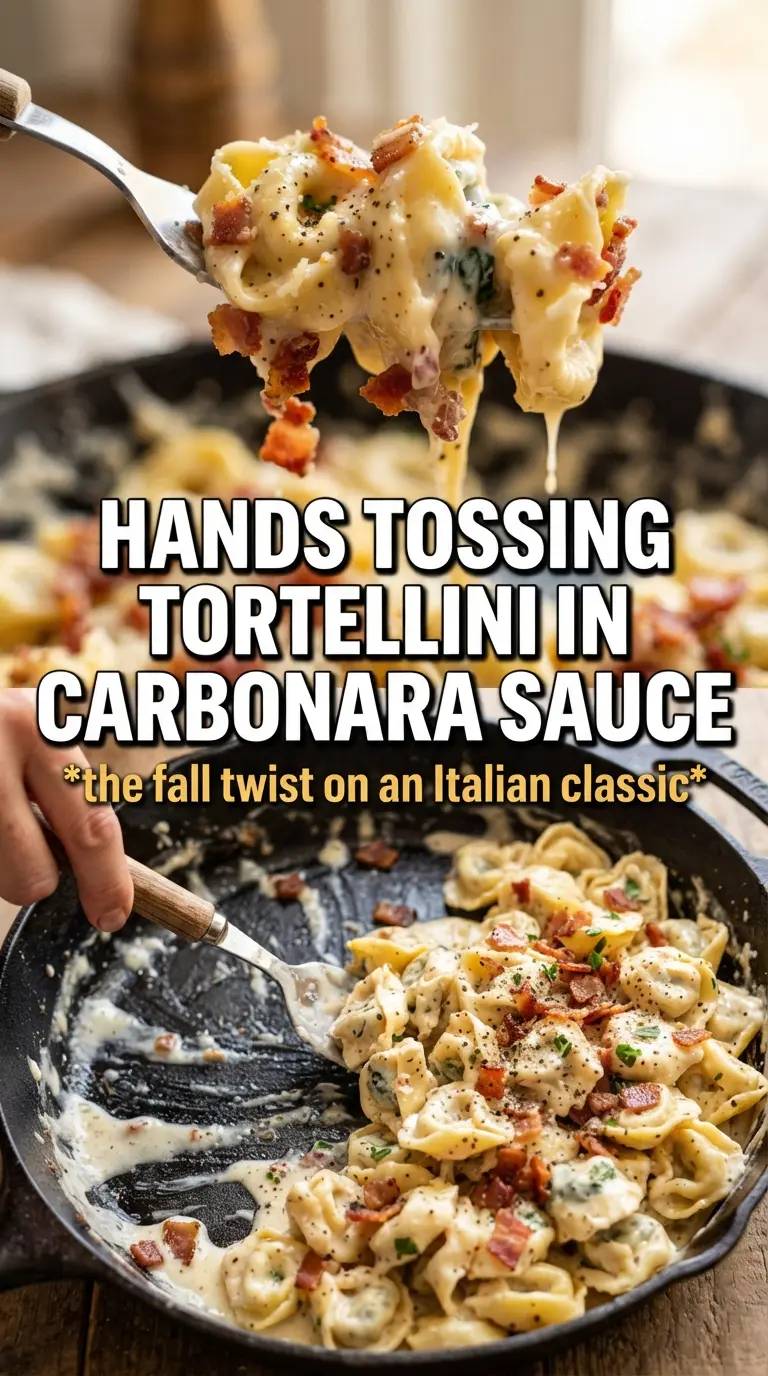
- Refrigerated cheese tortellini — This is what makes the dish feel generous and satisfying without needing a separate sauce-heavy pasta shape. Fresh or refrigerated tortellini cooks fast and gives you a little built-in creaminess from the filling. Frozen tortellini works too, but it usually needs an extra minute or two and a bit more pasta water to help the sauce cling.
- Pancetta or thick-cut bacon — Pancetta brings a cleaner, saltier pork flavor, while bacon gives you a smokier finish. Either one needs to be cooked until the fat renders and the edges turn crisp, because that rendered fat is part of the sauce. If you use bacon, drain off excess grease if the pan looks slick, or the final dish will feel heavy.
- Egg yolks plus one whole egg — The yolks create the silky body, and the whole egg keeps the sauce from becoming overly rich or thick. That balance matters here because tortellini already brings some richness of its own. Whisk the eggs with the cheese before they ever hit the pan so the sauce starts smooth instead of streaky.
- Finely grated parmesan — Fine grating lets the cheese melt into the eggs instead of staying sandy. Pre-grated parmesan from a tub often contains anti-caking agents that can make the sauce less smooth, so grate it yourself if you can. You’ll taste the difference right away.
- Pasta water — This is not just thinning liquid; it’s what turns the egg-and-cheese mixture into a proper sauce. The starch helps it coat the tortellini instead of sliding off. Reserve more than you think you’ll need, then add it gradually until the sauce loosens into a glossy coating.
- Nutmeg and black pepper — Nutmeg is subtle, but it softens the sharp edge of the parmesan and makes the sauce taste more rounded. Freshly cracked pepper is nonnegotiable here; it should be visible and assertive, not dusty. The pepper is part of the character of the dish, not just a finishing touch.
Building the Sauce in the Pan Without Breaking It
Render the Pancetta First
Cook the pancetta slowly enough that the fat has time to render before the edges burn. You want deep golden pieces with crisp edges and a small pool of fat in the pan, because that fat carries the flavor into the sauce. Add the garlic at the end and cook it just until fragrant; if it browns, it turns bitter fast.
Whisk the Egg and Cheese Until Smooth
Mix the yolks, whole egg, parmesan, nutmeg, and a heavy hand of black pepper in a bowl until the mixture looks thick and evenly combined. The cheese should be fully dispersed, not sitting in dry clumps. If you leave it lumpy, those bits tend to seize when they hit the hot pasta.
Toss Off the Heat, Then Add Water Slowly
When the tortellini goes into the pancetta pan, pull the pan off the burner before adding the egg mixture. Toss quickly and continuously so the heat from the pasta starts the sauce, then loosen it with pasta water a splash at a time. Stop as soon as the sauce turns silky and clings to the tortellini in a glossy coat; if it starts looking loose and soupy, you’ve added too much water too fast.
Finish With Salt, Parsley, and More Pepper
Taste before salting because pancetta and parmesan can already bring plenty of salt to the bowl. Fresh parsley brightens the richness and gives the dish a cleaner finish. A final shower of parmesan and more cracked pepper makes the top look and taste finished, not just assembled.
How to Adapt This Tortellini Carbonara for Different Kitchens
Gluten-Free Version
Use a gluten-free tortellini that holds its shape after boiling, and keep a close eye on the cooking time because some versions go from firm to fragile fast. The sauce method stays the same, but gluten-free pasta water can be a little less starchy, so you may need an extra spoonful or two to get that glossy coating.
Bacon Instead of Pancetta
Bacon gives the dish a smokier, slightly sweeter edge, which changes the character but still works well. Cook it until crisp, then spoon off extra fat if the pan looks greasy before you add the tortellini. Too much rendered bacon fat can flatten the parmesan and make the sauce taste heavy.
Dairy-Free Swap
This is the hardest version to mimic because parmesan is doing a lot of work, but a dairy-free tortellini plus a parmesan-style vegan seasoning blend can get you close. The sauce won’t thicken the same way, so use less pasta water and toss more gently to avoid a thin, oily finish. It’s a compromise, not an exact replica.
Storage and Reheating
- Refrigerator: Store leftovers in an airtight container for up to 3 days. The sauce will firm up as it chills, and the tortellini will absorb some of it.
- Freezer: I don’t recommend freezing this dish. The egg-and-cheese sauce can separate after thawing, and the tortellini texture gets softer than you want.
- Reheating: Warm it gently in a skillet over low heat with a splash of water or milk, stirring often until the sauce loosens again. High heat is what turns the eggs grainy, so keep the burner low and stop as soon as it’s just warmed through.
Questions I Get Asked About This Recipe
Tortellini Carbonara
Ingredients
Equipment
Method
- Bring a large pot of well-salted water to a boil, then cook refrigerated cheese tortellini until tender. Reserve 1 cup of pasta cooking water before draining.
- In a hot pan, cook diced pancetta until crispy, then add minced garlic and cook for 1 minute. Remove the pan from the heat.
- In a bowl, whisk egg yolks, whole egg, finely grated parmesan, nutmeg, and lots of freshly cracked black pepper until smooth.
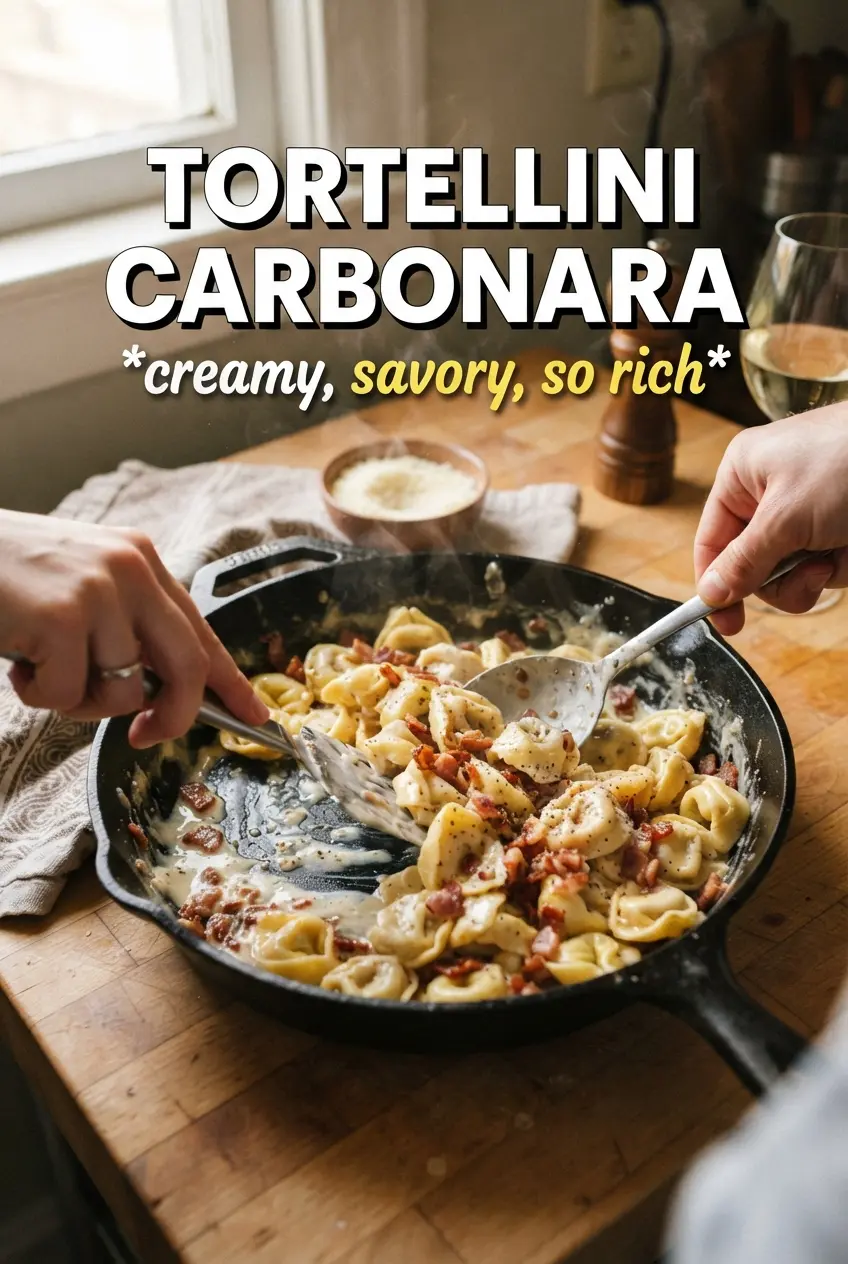
- Add hot tortellini to the pancetta pan, then turn the heat off and quickly add the egg mixture. Toss vigorously to coat every piece while the residual heat creates a creamy sauce.
- Add pasta water a splash at a time, tossing until the sauce is silky and creamy. Season with salt to taste, then top with fresh parsley and extra parmesan.