Red wine braised short ribs turn into the kind of dinner that fills the whole kitchen with a deep, savory smell and lands on the plate with meat that slips cleanly off the bone. The sauce becomes glossy and dark, with the red wine reduced into something rich and rounded instead of sharp. Served over mashed potatoes, every bit of the braising liquid gets mopped up exactly the way it should.
The best part of this version is that nothing gets rushed. A hard sear builds a dark crust on the ribs, and that crust does a lot of the work once the wine goes in. The vegetables soften into the base of the sauce, the tomato paste adds depth, and the long oven time breaks down the collagen until the meat is spoon-tender. If you’ve ever ended up with bland braised beef or a thin sauce, this method fixes both.
Below, I’ve included the small details that matter most: how dark the ribs should get before they come out of the pot, what the braising liquid should look like before it goes into the oven, and how to reduce the sauce so it coats the back of a spoon instead of pooling on the plate.
I’ve made short ribs before, but this was the first time the sauce turned out thick and silky without any extra flour. The ribs were fall-apart tender after 3 hours, and the wine flavor mellowed into something deep instead of boozy.
Save these red wine braised short ribs for the night you want a slow-cooked main dish with a deep mahogany sauce and fork-tender meat.
The Browning Stage That Keeps the Sauce from Tasting Flat
Short ribs need a serious sear before they go anywhere near the oven. If the meat looks pale when it comes out of the pot, the finished sauce usually tastes thin and one-dimensional no matter how long it simmers. You want a deep brown crust on every side, not just a bit of color on top, because that crust is where the savory backbone starts.
The other place people lose flavor is right after the meat comes out. Those browned bits stuck to the bottom of the Dutch oven are gold. Once the wine hits the pan, scrape them up completely and let the liquid simmer long enough to pick up their flavor before the ribs go back in.
What Each Ingredient Is Actually Doing in This Dish
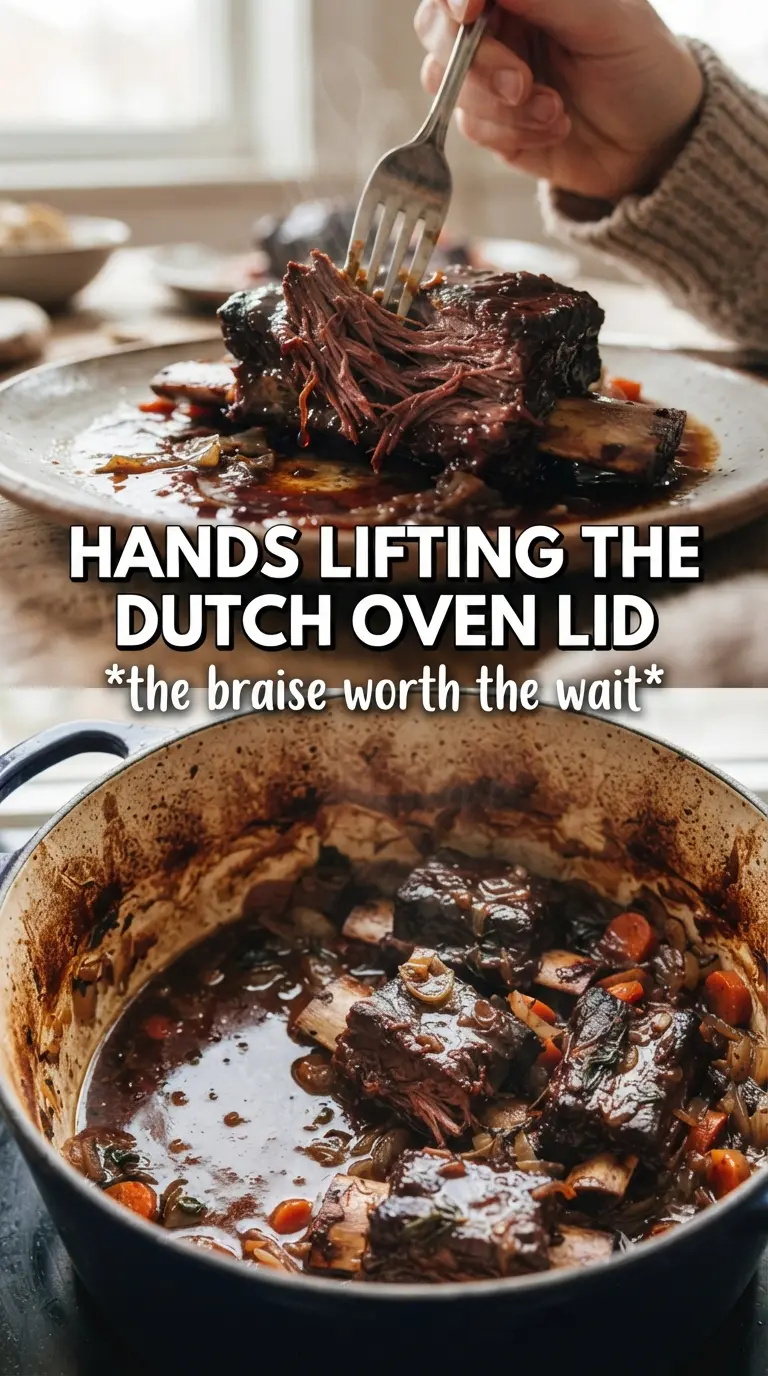
- Bone-in beef short ribs — The bones add flavor and help the meat stay rich during the long braise. Boneless ribs will cook faster, but they don’t give the same deep result.
- Dry red wine — Cabernet or Merlot both work well because they bring structure without turning the sauce sweet. Use something you’d actually drink; harsh wine gets harsher as it reduces.
- Tomato paste and diced tomatoes — Tomato paste brings concentrated depth, while the diced tomatoes add body and a little acidity to keep the sauce from tasting heavy. Cooking the paste for a couple of minutes first takes away the raw edge.
- Carrots, onion, celery, garlic, herbs — This is the aromatic base that rounds out the braising liquid. Don’t rush the sauté; softened vegetables blend into the sauce much better than crisp ones.
- Beef broth — It stretches the wine and keeps the braise savory instead of too sharp. Use a good broth if you can, since it ends up concentrated after the reduction.
Building the Braise So the Ribs Turn Silky, Not Dry
Seared, Then Set Aside
Preheat the oven first so the Dutch oven can go straight from stovetop to oven without delay. Season the ribs generously, then brown them in hot oil until the whole surface is dark and crusted. If they’re crowded in the pot, they’ll steam instead of sear, so work in batches if needed.
Softening the Aromatics
Cook the onion, carrots, and celery until they start to soften and pick up color around the edges. Stir in the garlic and tomato paste for about 2 minutes; that step cooks out the raw tomato flavor and gives the sauce a deeper base. If the paste catches on the bottom, lower the heat before it scorches.
Deglazing and Braising
Pour in the red wine and scrape up every browned bit from the bottom of the pot. Add the broth, tomatoes, bay leaves, thyme, and rosemary, then return the ribs so the liquid comes about halfway up the meat. Cover tightly and braise until the ribs are fork-tender and pulling back from the bone, which usually takes 3 to 3 1/2 hours.
Reducing the Sauce
Once the ribs are out, strain the braising liquid and simmer it until it turns glossy and coats a spoon. This is where the sauce goes from good to restaurant-level. Don’t rush this part over high heat, or the sauce can turn harsh and reduce too far before it thickens properly.
How to Adapt These Short Ribs for Different Kitchens and Tables
Gluten-Free by Default
This recipe is naturally gluten-free as written, which makes it an easy main dish for a mixed group. Just check your broth label, since some brands sneak in flour or other thickeners.
No Wine Substitute
If you want to skip the wine, replace it with an extra 2 cups of beef broth plus 1 tablespoon red wine vinegar. The sauce will be a little less deep and a touch brighter, but it still braises beautifully.
Make-Ahead for Better Flavor
These short ribs taste even better the next day because the sauce settles and the beef absorbs more of it. Cool everything completely, refrigerate overnight, and reheat gently before serving.
Extra-lean Serving Style
If you want a lighter plate, serve the ribs with polenta, cauliflower mash, or roasted potatoes instead of mashed potatoes. The sauce is still the star, so you only need a base that can catch it.
Storage and Reheating
- Refrigerator: Store in an airtight container for up to 4 days. The sauce will thicken as it chills, which is normal.
- Freezer: Freeze the ribs and sauce for up to 3 months. Cool completely first, then freeze in a sealed container with some sauce around the meat to keep it from drying out.
- Reheating: Rewarm gently on the stove over low heat or covered in a 300F oven until heated through. High heat can tighten the meat and make the sauce separate.
Answers to the Questions Worth Asking
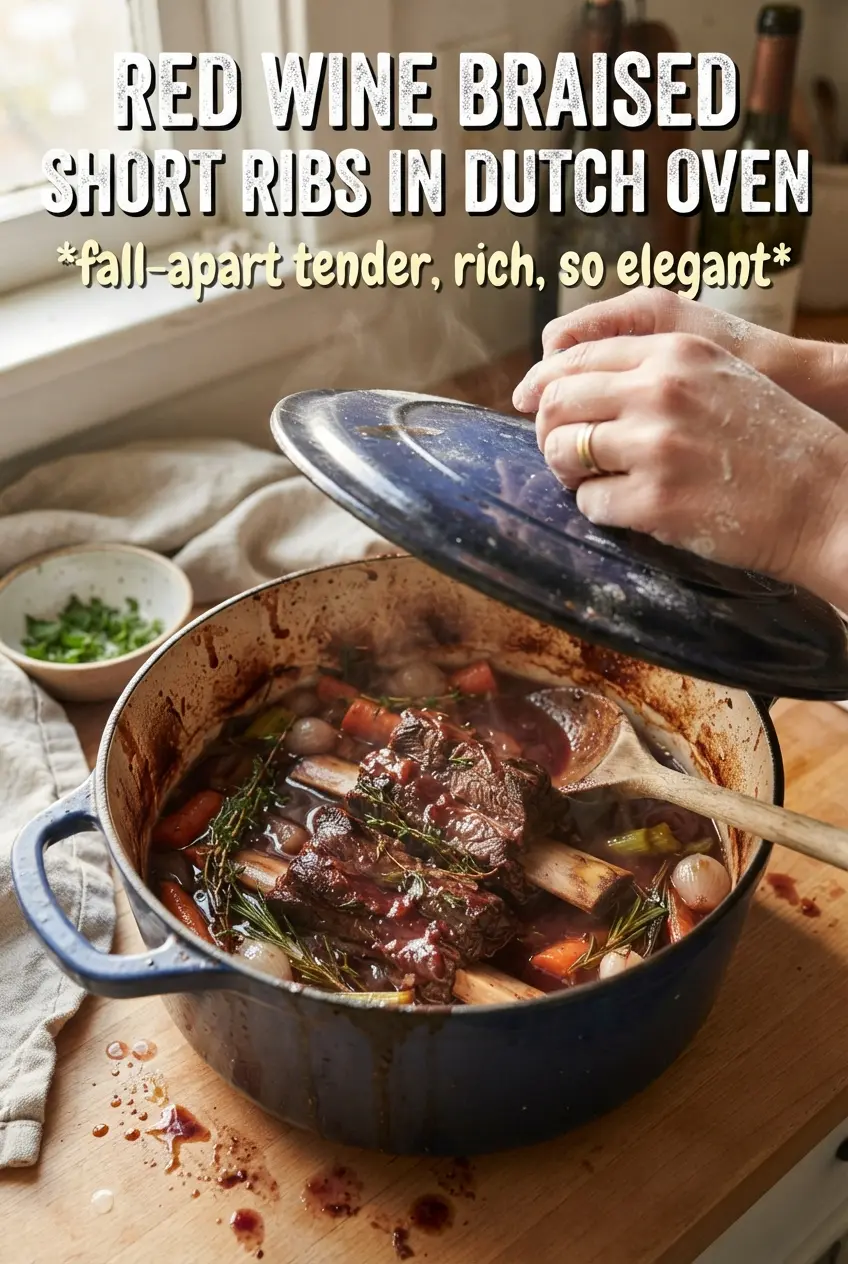
Red Wine Braised Short Ribs in Dutch Oven
Ingredients
Equipment
Method
- Preheat oven to 325°F, then season the short ribs generously with salt and pepper.
- Heat olive oil in a Dutch oven over high heat until shimmering, then add the ribs and sear until deeply browned on all sides, 8–12 minutes total.
- Remove the ribs to a plate.
- In the same Dutch oven, sauté the onion, carrots, and celery until lightly softened, about 5 minutes.
- Add the garlic and tomato paste and cook until fragrant, about 2 minutes.
- Deglaze with the red wine, scraping the bottom to dissolve the browned bits.
- Add beef broth, diced tomatoes, bay leaves, thyme, and rosemary, then bring to a simmer.
- Return the ribs to the pot, making sure the liquid comes about halfway up the sides of the meat.
- Cover and braise in the oven at 325°F for 3 to 3.5 hours, until the ribs are fall-off-the-bone tender.
- Remove the ribs, then strain the braising liquid and reduce it until glossy, 8–15 minutes on the stovetop.
- Serve the ribs over mashed potatoes with the reduced braising sauce.