Roasted Brussels sprouts and butternut squash give this pasta the kind of deep, caramelized flavor that makes a simple weeknight dinner feel built with care. The vegetables hold their shape, the brown butter coats every ridge of the rigatoni, and the parmesan melts into the sauce just enough to cling without turning heavy. It’s the kind of bowl that tastes layered and finished, even though the ingredient list stays short.
What makes this version work is separation and timing. The squash and Brussels sprouts roast on their own until the edges brown instead of steaming, and the butter is browned before the garlic and sage go in, so the sauce starts with nuttiness instead of just richness. Pasta water pulls everything together at the end and gives the sauce enough body to coat the noodles instead of pooling at the bottom of the bowl.
Below, I’ve included the small details that matter here: how to keep the butter from going from golden to burnt, what to look for when the vegetables are done, and a few smart swaps if you want to change the nuts or make it a little lighter.
The Brussels stayed crisp at the edges and the squash got those caramelized corners I was hoping for. The brown butter with sage made the whole pan smell incredible, and the pasta water helped the parmesan turn into a silky sauce instead of clumping.
Save these brown butter Brussels sprouts and butternut squash noodles for the night you want a cozy pasta with real roasted flavor.
The Trick to Keeping the Vegetables Roasted, Not Soggy
The biggest mistake in pasta with roasted vegetables is crowding everything together and hoping the oven does the rest. Brussels sprouts and butternut squash both hold a lot of moisture, and if they sit too close on the pan, they steam before they brown. Separate trays or plenty of space between pieces gives you caramelized edges and keeps the centers tender instead of waterlogged.
There’s also a timing reason to roast them before the pasta sauce comes together. Brown butter waits for nobody, and if the vegetables aren’t done first, the butter will sit and overcook while you’re watching the oven. Roast the vegetables until the cut sides are deeply golden and the sprouts have crisp leaves; that’s where the flavor lives.
What the Butter, Sage, and Parmesan Are Doing Here
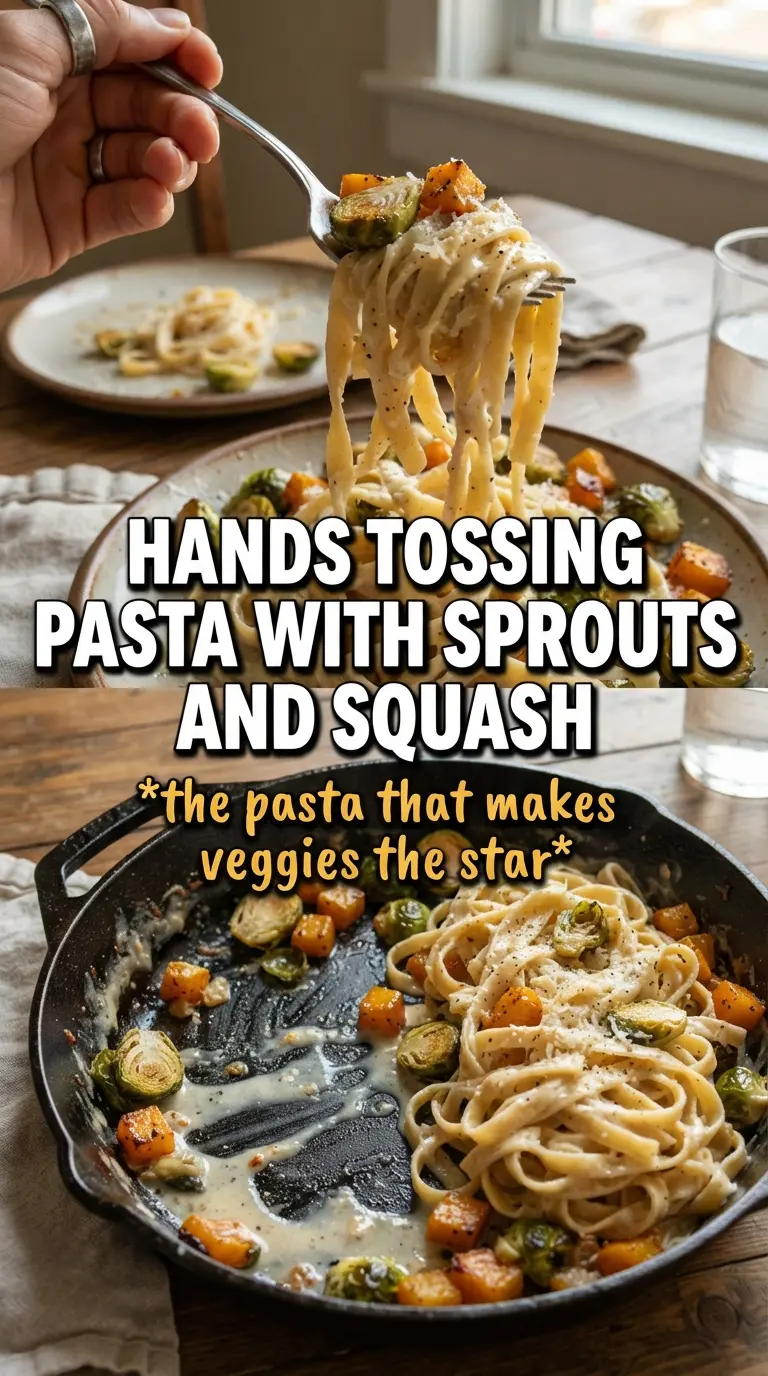
- Butternut squash — This brings sweetness and soft edges that balance the bitterness of the Brussels sprouts. Fresh cubes roast best because frozen squash tends to soften before it browns.
- Brussels sprouts — Halving them gives you flat sides that can actually caramelize. If you use larger sprouts, trim the stems and peel away loose outer leaves so they don’t burn before the centers are tender.
- Butter — Brown butter is the backbone of the sauce. You want it nutty and amber, not dark brown; once the milk solids start to smell toasted, move fast with the garlic and sage.
- Sage — Fresh sage perfumes the butter in a way dried sage can’t quite match. If dried is all you have, use less and add it earlier so it has time to bloom.
- Parmesan — The finely grated cheese melts into the pasta water and helps the sauce cling. Pre-shredded cheese can stay grainy, so grate it yourself if you want the smoothest finish.
- Hazelnuts or walnuts — Toasted nuts give the dish crunch and keep it from feeling soft all the way through. Hazelnuts are a little sweeter and more elegant; walnuts are easier to find and still work well.
How to Build the Sauce So It Clings Instead of Pooling
Roasting Each Vegetable on Its Own Terms
Spread the Brussels sprouts and squash out in a single layer and give them space. If the pan looks crowded, use two pans. You’re looking for browned edges and a fork-tender center, not limp vegetables with wet bottoms. If the sprouts are done before the squash, pull them early and let the squash finish; overcooked Brussels sprouts go soft fast.
Brown Butter Without Walking Away
Melt the butter over medium heat and keep the pan moving as the milk solids sink and then turn golden at the bottom. The smell changes from creamy to toasted and nutty, and that’s the moment to add garlic and sage. If the butter goes from golden to dark in a matter of seconds, the heat was too high; pull the pan off the burner and stop the cooking immediately.
Bringing the Sauce and Pasta Together
Add the cooked pasta to the brown butter with a splash of pasta water first, then parmesan, then the roasted vegetables. That order matters because the starch in the water helps the cheese emulsify instead of clumping. Toss until the sauce looks glossy and lightly coats the rigatoni; if it seems dry, add another spoonful of pasta water instead of more butter. The goal is a sauce that settles into the ridges, not a greasy pan.
Finishing With Crunch
Save the toasted nuts for the very end so they stay crisp. Stir some into the pasta and scatter more on top right before serving. That little bit of crunch keeps each bite from leaning too soft, which matters a lot in a dish built on roasted vegetables and a tender pasta base.
Three Ways to Make This Pasta Fit Your Table
Gluten-Free Version
Swap in a sturdy gluten-free pasta shape that can handle tossing, like a brown rice or corn blend. Cook it just to al dente and keep a little extra pasta water back, since gluten-free noodles often need a touch more help turning the sauce silky.
Dairy-Free Version
Use a good olive oil in place of the butter and finish with nutritional yeast or a dairy-free parmesan-style cheese. You’ll lose the deep nutty note that browned butter gives, but the roasted vegetables and sage still carry the dish well.
Make It Heartier
Add white beans or crispy pancetta if you want more staying power. Beans keep it vegetarian and soak up the sauce nicely, while pancetta brings salt and a smoky edge that plays well with the squash.
Storage and Reheating
- Refrigerator: Store in an airtight container for up to 4 days. The pasta will soak up more sauce as it sits, so expect a drier texture the next day.
- Freezer: Not my first choice for freezing because the roasted vegetables soften and the parmesan sauce loses some of its texture. If you do freeze it, cool it completely and freeze in a flat container for up to 2 months.
- Reheating: Reheat gently on the stove with a splash of water or broth over low heat, stirring often. Microwaving at high power can make the pasta tough and the sauce separate.
Questions I Get Asked About This Recipe
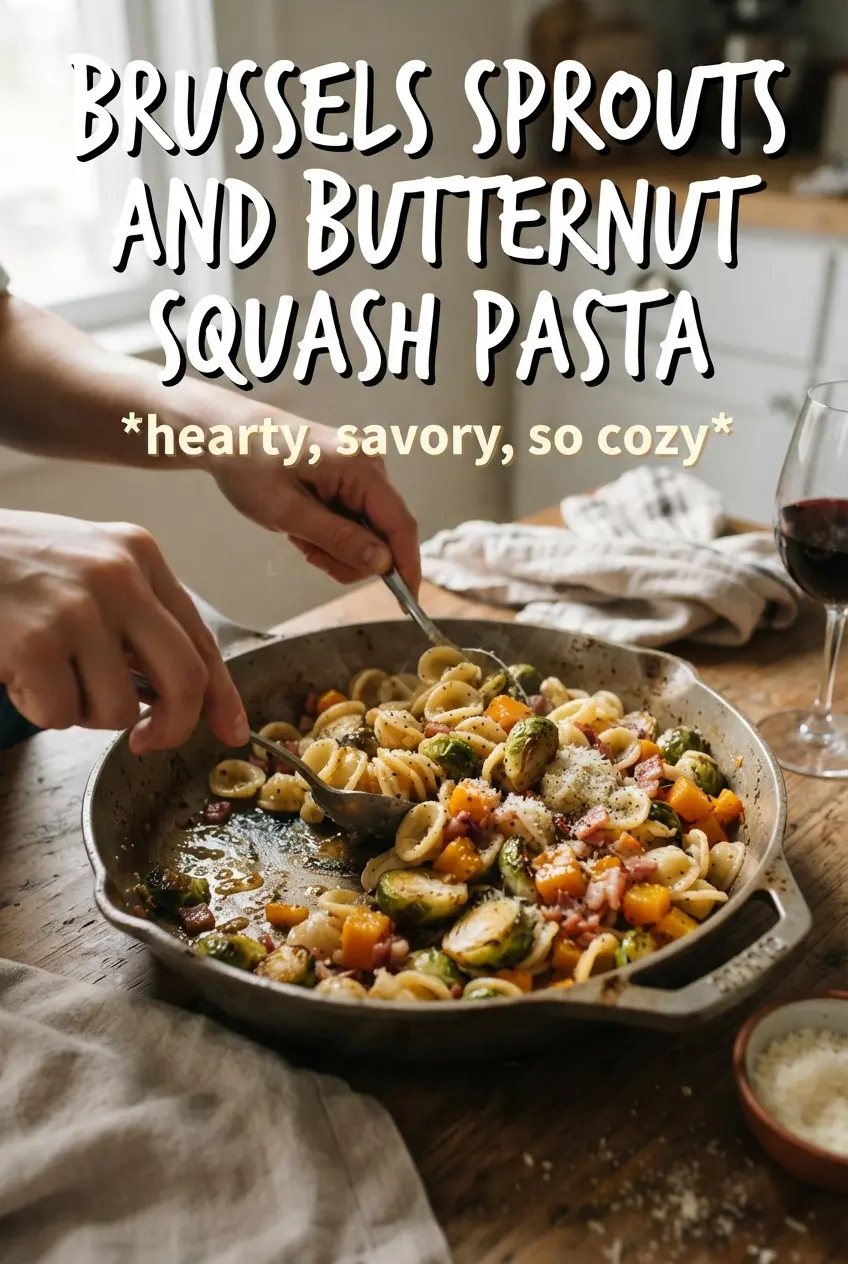
Brussels Sprouts And Butternut Squash Pasta
Ingredients
Equipment
Method
- Preheat oven to 425F. Toss butternut squash cubes with olive oil, salt, and pepper, then roast on a sheet pan for 25 minutes until caramelized.
- Using a separate sheet pan space, toss halved Brussels sprouts with olive oil, salt, and pepper. Roast for 25 minutes at 425F until caramelized.
- Boil rigatoni or penne in salted water until al dente. Reserve 1 cup pasta water, then drain the pasta.
- In a cast iron skillet over medium heat, melt unsalted butter. Add minced garlic and chopped sage and cook until golden and nutty.
- Add drained pasta to the skillet with brown butter, then splash in pasta water to coat. Toss until glossy and evenly combined.
- Add roasted butternut squash and roasted Brussels sprouts to the pasta. Toss until warmed through and coated with the sauce.
- Season with salt and pepper to taste, then scatter toasted hazelnuts or walnuts over the top. Serve immediately while the roasted vegetables still taste caramelized.