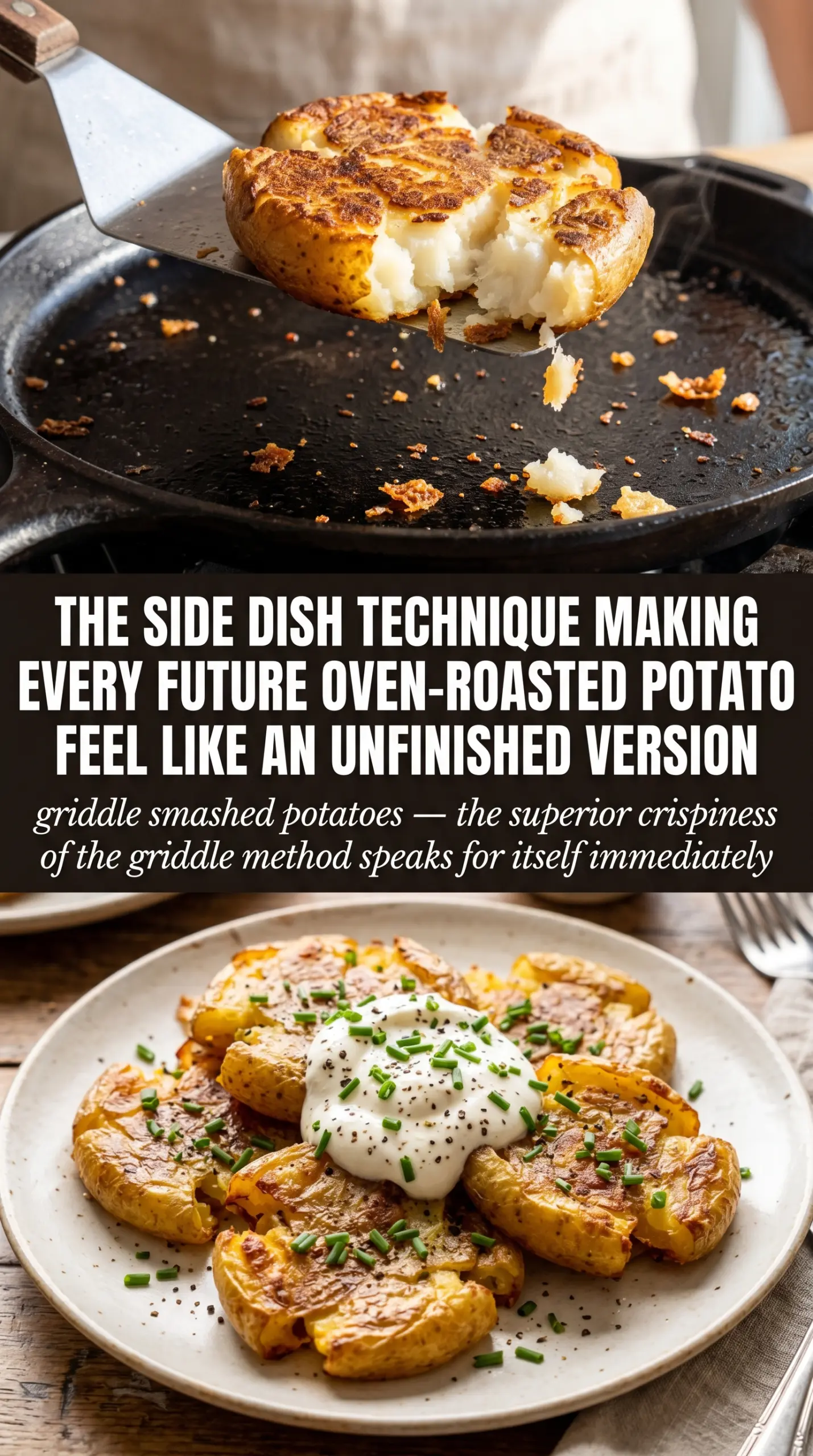
Griddle smashed potatoes land with the kind of contrast that keeps people hovering near the pan: crisp, lacy edges, a creamy center, and all the good stuff melted on top. The griddle gives you more even browning than a crowded skillet, so each potato gets space to really crackle instead of steam. Once you’ve had them with cheddar, bacon, and a little sour cream, plain roasted potatoes start feeling optional.
The trick is in the boil-and-dry step. The potatoes need to be tender enough to flatten without falling apart, but not waterlogged, or they’ll stick and smear instead of forming a crust. A mix of oil and butter gives you heat tolerance and flavor, while the garlic cooks around the potatoes instead of burning underneath them. That keeps the pan fragrant without turning bitter.
Below, I’ve included the small details that matter most: how flat to smash, when to flip, and how to keep the toppings from softening that crisp edge you worked for.
The potatoes got those crunchy edges on the griddle just like you said, and the garlic around them never burned. I served them with dinner and my husband kept picking at the crispy bits straight off the pan.
Save these griddle smashed potatoes for the nights when you want crispy edges, melty cheddar, and bacon on a side dish that disappears fast.
The Detail That Keeps Smashed Potatoes Crispy Instead of Soggy
Most smashed potato recipes lose their crunch because the potatoes go onto the heat while they’re still wet or too crowded together. Moisture is the enemy here. After boiling, drain them well and let the steam escape for a minute or two so the surface can dry before they hit the griddle. That one step makes the difference between a crisp crust and a soft, pale bottom.
Space matters too. Each potato needs direct contact with the hot surface, which is why a griddle works so well. If the potatoes are too close together, they’ll trap steam and the edges won’t brown the way they should. A heavy spatula does the best job of smashing them evenly without breaking them into pieces.
What the Butter, Oil, and Garlic Are Actually Doing Here
- Baby potatoes — These hold their shape after boiling and flatten without turning to mash. Yukon golds are the best stand-in if you don’t have baby potatoes; just pick smaller ones so they cook through before the outside overbrowns.
- Olive oil and butter — The oil carries the heat, and the butter brings the flavor and helps the crust brown deeply. Butter alone would brown too fast and can scorch on a hot griddle, so the oil keeps things steady.
- Garlic — Garlic tossed around the potatoes perfumes the pan without burning under the smash. Mince it finely so it cooks quickly; large pieces tend to catch before the potatoes are ready to flip.
- Cheddar, bacon, sour cream, and chives — These are the loaded-potato finish, and each one adds something different: sharpness, salt, creaminess, and freshness. Shred the cheese yourself if you can, because pre-shredded cheese doesn’t melt as smoothly.
From Boil to Griddle Without Losing the Crunch
Boiling Until Tender
Start the potatoes in well-salted water and cook them until a knife slides in without resistance, usually 15 to 20 minutes depending on size. If they’re undercooked, they’ll crack instead of flattening; if they’re overcooked, they’ll collapse into rough chunks on the griddle. Drain them immediately and let them sit until the outer steam fades.
Smashing for Maximum Surface Area
Set the potatoes on the hot griddle and press them down firmly with a heavy spatula until they’re about half an inch thick. You want them flattened enough to create lots of edges, but not so thin that they shred. If the spatula sticks, it usually means the griddle needs a little more fat or the potatoes still had too much moisture.
Building the Golden Crust
Let the first side cook undisturbed for 6 to 7 minutes. Don’t keep nudging them; the crust needs time to form before the potatoes will release cleanly. You’ll know they’re ready to flip when the undersides are deep golden and the edges look crisp and set, not soft and pale.
Finishing With the Toppings
Flip and cook the second side for another 5 to 6 minutes until it crisps up too. Then scatter the cheddar and bacon over the hot potatoes so the cheese melts right into the ridges. Finish with sour cream and chives at the table, not too early, or the fresh toppings will soften the crust you just built.
How to Adjust These for Different Tables and Diets
Skip the Bacon, Keep the Loaded Feel
Leave out the bacon and add extra chives plus a little smoked paprika over the top. You’ll lose the salty crunch, but the potatoes still taste complete because the cheddar and butter carry plenty of richness.
Dairy-Free Version
Use all olive oil instead of butter and swap in a dairy-free shredded cheese or skip the cheese entirely. The potatoes will still crisp well, but the finish will be less rich, so add extra herbs or a dusting of garlic powder to bring the flavor back up.
Make Them a Little More Hands-Off
Boil and smash the potatoes ahead of time, then griddle them right before serving. They hold well on a tray in a single layer for a couple of hours, which makes them easier to time with the rest of dinner.
Turn Them Into a Vegetarian Side
Skip the bacon and add a little extra butter and cheddar, or top with sour cream and herbs only. The result is still rich and crisp, just less smoky and salty.
Storage and Reheating
- Refrigerator: Store leftovers in an airtight container for up to 4 days. The crust softens in the fridge, but the flavor stays good.
- Freezer: These freeze best without the sour cream topping. Freeze the cooked potatoes in a single layer, then move them to a bag or container for up to 2 months.
- Reheating: Reheat on a hot skillet, griddle, or in a 425°F oven until the edges crisp again. The biggest mistake is microwaving them straight from the fridge, which turns the crust soft and gives you a steamed texture.
Answers to the Questions Worth Asking
Griddle Smashed Potatoes
Ingredients
Equipment
Method
- Boil baby potatoes until tender, about 15-20 minutes, then drain and cool slightly with no cover so the edges dry.
- Heat a griddle to medium-high and add olive oil and butter until the butter foams slightly, signaling it’s hot enough to crisp.
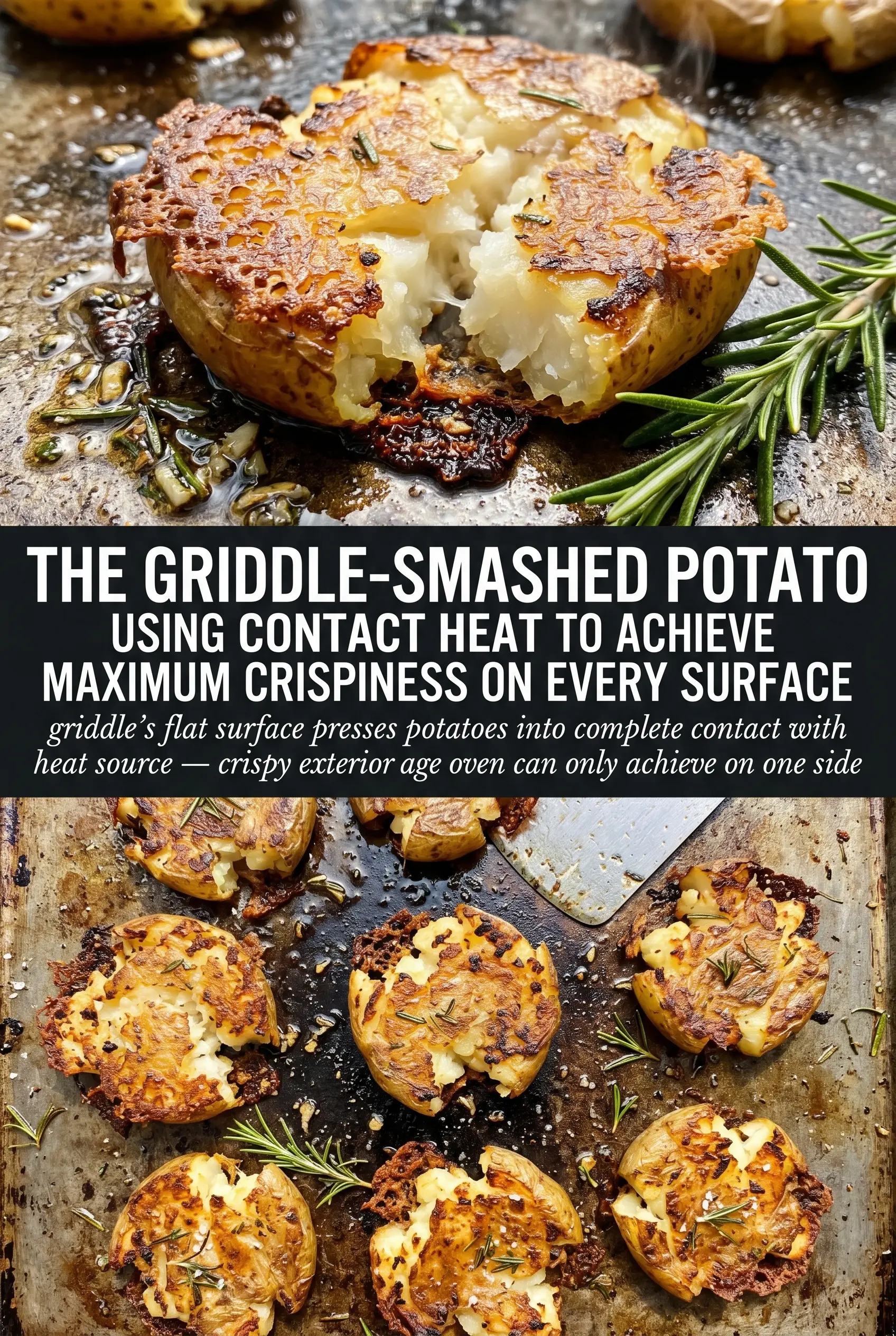
- Place potatoes on the griddle and smash completely flat with a heavy spatula so you get even, browned rounds.
- Add minced garlic around the potatoes and cook 6-7 minutes until a crispy golden crust forms on the bottoms, visible around the edges.
- Flip the potatoes and cook another 5-6 minutes until both sides are crispy and deeply browned.
- Top the hot griddle potatoes with shredded cheddar cheese, bacon, sour cream, and chives, so the cheese starts to melt from the heat.