Grilled mango pineapple chicken lands with the kind of sweet-smoky finish that keeps it in regular rotation. The chicken picks up a glossy, fruit-forward glaze on the grill, and the edges caramelize just enough to give you that little bit of char without losing the juicy center. Served with grilled mango and pineapple, it feels bright and complete on the plate, not like chicken with a sauce poured over it at the end.
What makes this version work is the balance in the marinade. Mango puree brings body, pineapple juice adds sharp sweetness, lime keeps it from tasting flat, and honey helps the surface brown instead of drying out. Garlic and ginger keep the fruit from going too soft and sugary. The other important step is reserving part of the marinade before the raw chicken goes in, so you have a clean basting sauce for the grill.
Below, I’ve included the timing that matters for getting the best texture, the ingredient swaps that still make sense, and a few ways to adjust this dish if you want to work with what’s already in your kitchen.
The marinade gave the chicken a beautiful caramelized finish, and the grilled pineapple was the part everyone kept reaching for. I only marinated it for about 3 hours and it still came out juicy and full of flavor.
Save this grilled mango pineapple chicken for the nights when you want sweet-smoky chicken with caramelized fruit and almost no cleanup.
How to Keep the Fruit Marinade Sweet, Not Sticky and Burnt
The main risk with a marinade like this is sugar. Mango puree, pineapple juice, and honey all help the chicken brown, but they also scorch fast if the heat is too aggressive or the chicken goes on dripping wet. Medium-high heat works here, but the grill has to be clean and preheated so the surface sears instead of clinging. If your chicken is sticking, it usually needs another minute before you try to turn it.
The second thing that trips people up is the fruit enzymes in pineapple. They’re useful, but they can turn chicken soft if you leave it in the marinade for too long. Two to six hours is the sweet spot. Past that, the texture starts to lose some structure, especially if you’re using thinner breasts.
- Reserve the basting portion before the chicken goes in. Once raw chicken touches the marinade, that batch is no longer safe for brushing on at the end.
- Use chicken thighs if you want more forgiveness on the grill. They stay juicier under heat and handle the sweet glaze better than very lean breasts.
- Let the chicken sit at room temperature for 15 to 20 minutes before grilling. Cold chicken seizes on the grill and cooks unevenly.
What the Mango, Pineapple, and Lime Are Each Doing Here
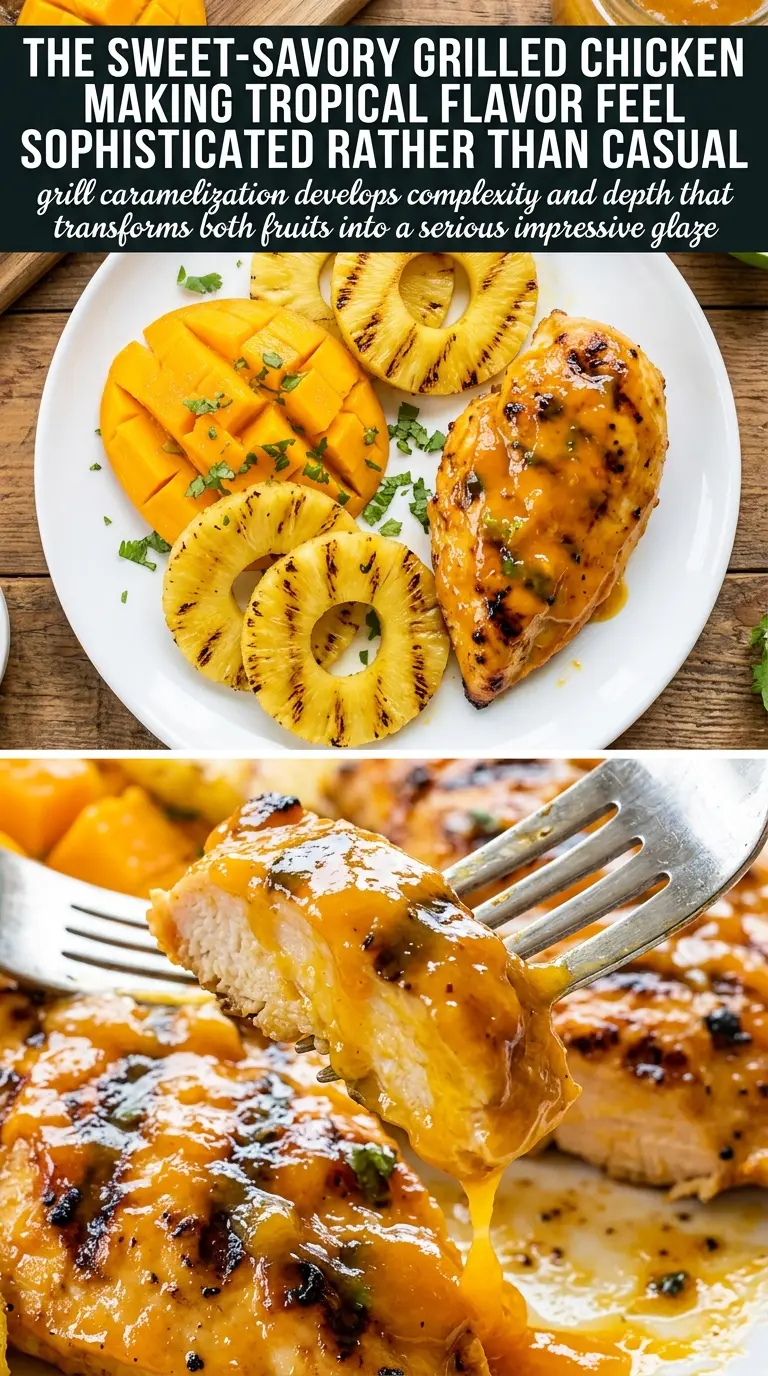
- Mango puree gives the marinade its thick, clingy body. Fresh mango blended smooth works best, but a good frozen puree is fine if it tastes clean and not fibrous. If your mango is bland, the whole dish flattens out.
- Pineapple juice adds sharp sweetness and helps the surface caramelize. Juice is better than crushed pineapple here because it keeps the marinade smooth and easy to baste with.
- Lime juice keeps the fruit from tasting sugary and one-note. If you skip it, the glaze can taste heavy instead of bright.
- Honey helps the chicken color on the grill. You don’t need a lot, but leaving it out makes the final glaze look paler and taste less rounded.
- Fresh ginger and garlic keep the marinade from drifting into dessert territory. Fresh is worth using here because powdered versions don’t punch through the sweetness the same way.
Getting the Glaze on the Grill Without Losing the Chicken
Blend the marinade until completely smooth
Blend the mango puree, pineapple juice, honey, lime juice, garlic, ginger, salt, and pepper until the mixture looks even and glossy. Any garlic chunks or stringy mango bits will stick to the grill and burn before the chicken is cooked through. Reserve half a cup before adding the chicken so you have a clean basting sauce later.
Marinate with enough time, not endless time
Cover the chicken and marinate it for 2 to 6 hours in the refrigerator. Less than two hours gives you surface flavor only, and much longer than six can start softening the meat too much, especially with pineapple in the mix. If you’re using thighs, the margin is a little wider; if you’re using breasts, keep closer to the lower end.
Grill over steady medium-high heat
Put the chicken on a hot grill and let it cook for 6 to 7 minutes per side, brushing with the reserved marinade as it cooks. If you keep opening the lid or moving the chicken too early, you’ll tear the surface and lose the caramelized crust. The chicken is done when it feels firm in the center and the juices run clear, or the thickest part reaches 165°F.
Char the fruit just enough to wake it up
Grill the mango and pineapple slices for about 2 minutes per side until they pick up dark grill marks and soften slightly. You want them warm and caramelized, not collapsing into mush. Serve them right away with the chicken while the contrast between smoky meat and hot fruit is still sharp.
How to Adapt This for Different Grills, Cuts, and Diets
Use chicken thighs for a juicier finish
Boneless, skinless thighs handle the sweet marinade better than breasts because they stay moist even if the grill runs hot. They also pick up a deeper char without drying out, which makes them the best choice if you’re nervous about overcooking.
Make it dairy-free and naturally gluten-free
This recipe already fits both with no extra work as long as your honey and spices are pure. The one thing to watch is any bottled pineapple juice or pre-made puree with added thickeners or flavorings.
Use an indoor grill pan when the weather won’t cooperate
A grill pan gives you the seared look and some of the charred flavor, though you won’t get the same smoke. Keep the pan well preheated and brush lightly with oil so the honey in the marinade doesn’t glue itself to the ridges.
Swap the fruit garnish based on what’s ripe
Mango and pineapple are the most natural match, but grilled peaches or pineapple alone still work if mango is expensive or under-ripe. The dish gets a little less tropical and a little more straightforward, but the sweet-smoky balance still holds.
Storage and Reheating
- Refrigerator: Store leftovers in an airtight container for up to 3 days. The fruit softens a bit, but the flavor holds up well.
- Freezer: The cooked chicken freezes for up to 2 months, though the grilled fruit doesn’t freeze as nicely and turns softer after thawing. Freeze the chicken separately if you can.
- Reheating: Warm the chicken gently in a covered skillet over low heat with a splash of water or leftover juice. High heat dries out the glaze fast and turns the edges sticky before the center is hot.
Questions I Get Asked About This Recipe
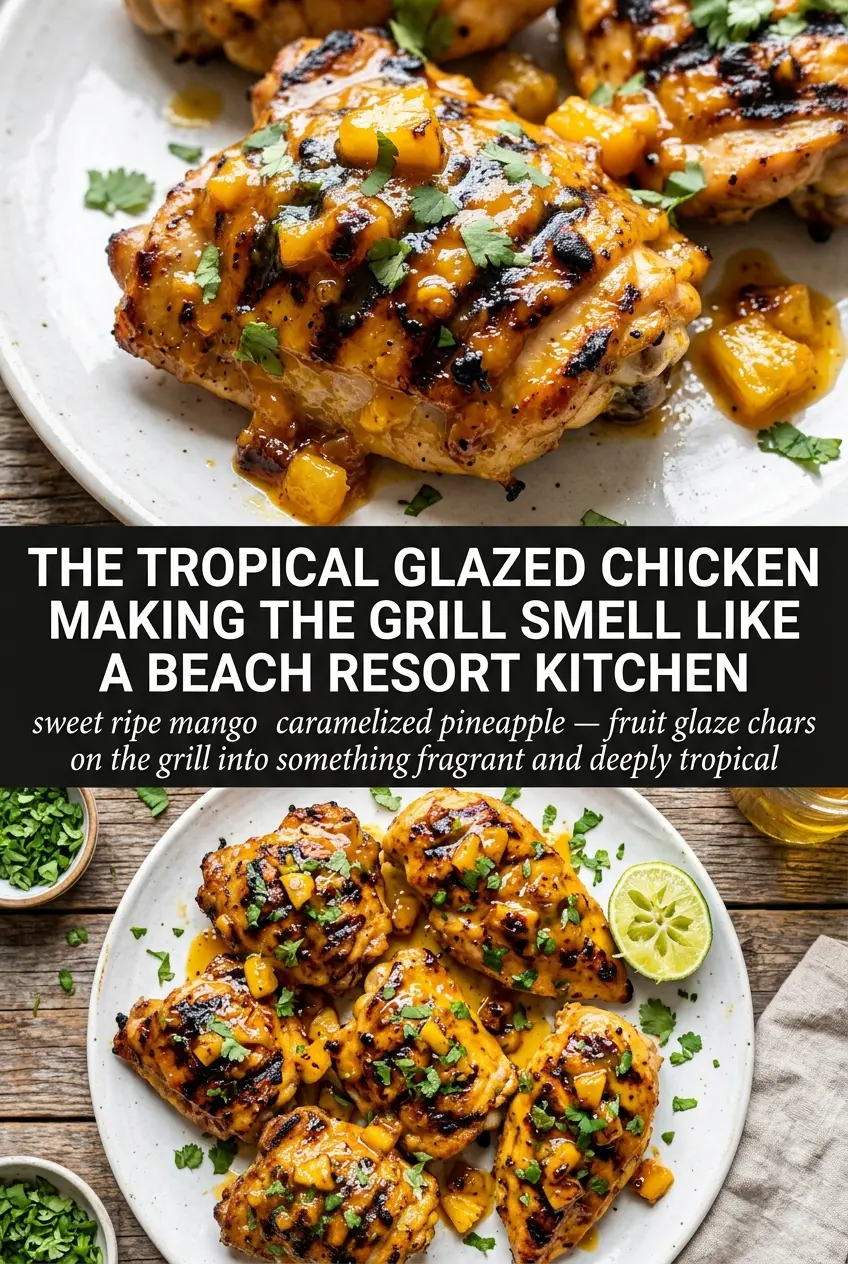
Grilled Mango Pineapple Chicken
Ingredients
Equipment
Method
- Blend mango puree, pineapple juice, honey, lime juice, garlic, ginger, salt, and pepper until smooth, glossy, and fully combined.
- Reserve 1/2 cup marinade for basting, then add the remaining marinade to the chicken and turn to coat evenly.
- Marinate the chicken for 2-6 hours to deepen the flavor and help form a caramelized glaze as it grills.
- Preheat the grill to medium-high heat, then place chicken on the grates and grill for 6-7 minutes per side, basting with the reserved marinade during grilling.
- Grill fresh mango and pineapple slices for 2 minutes per side, turning once, until lightly charred and softened.
- Serve the grilled mango pineapple chicken with the grilled fruit for a sweet-tangy, vibrant plate.