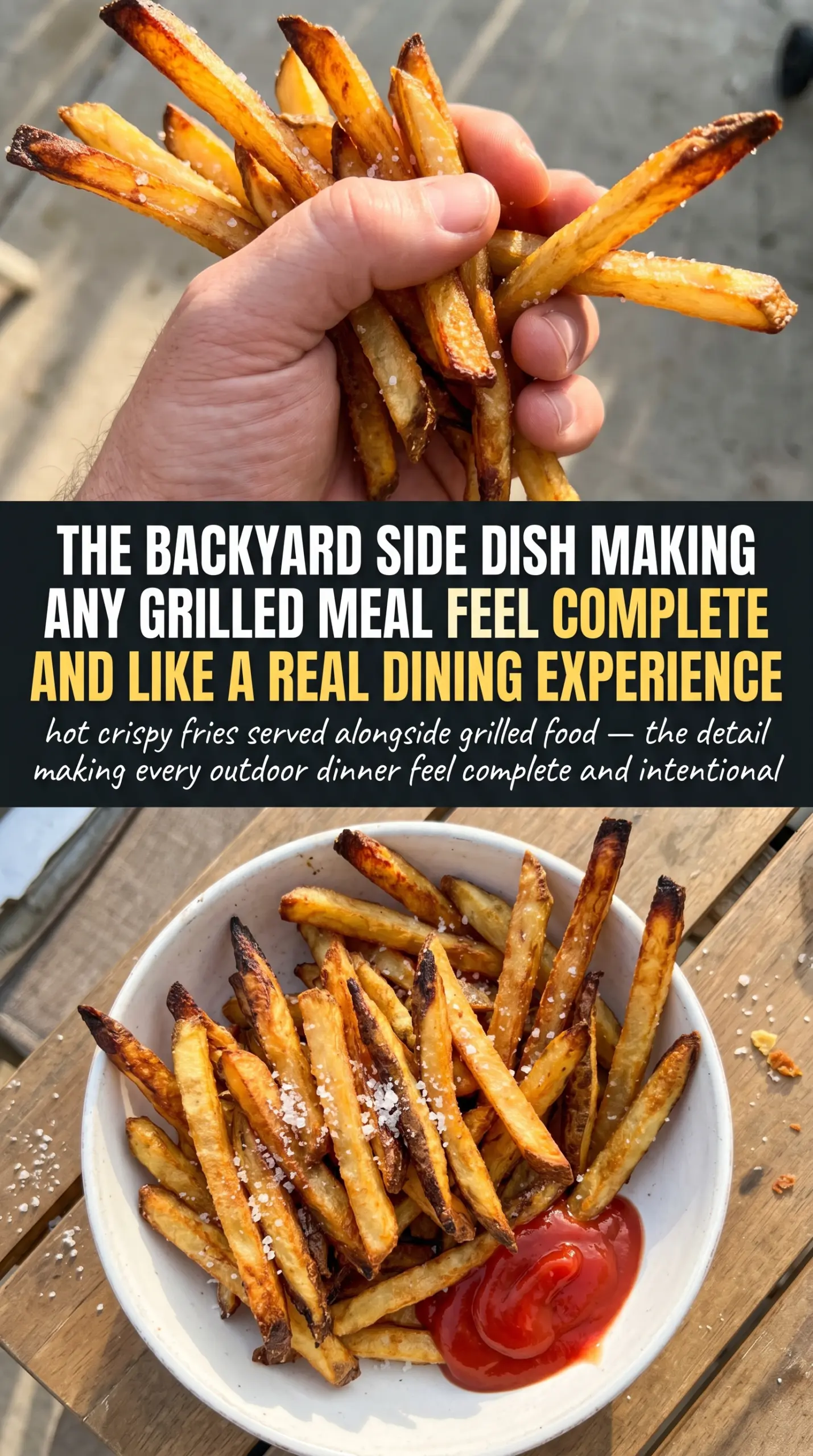
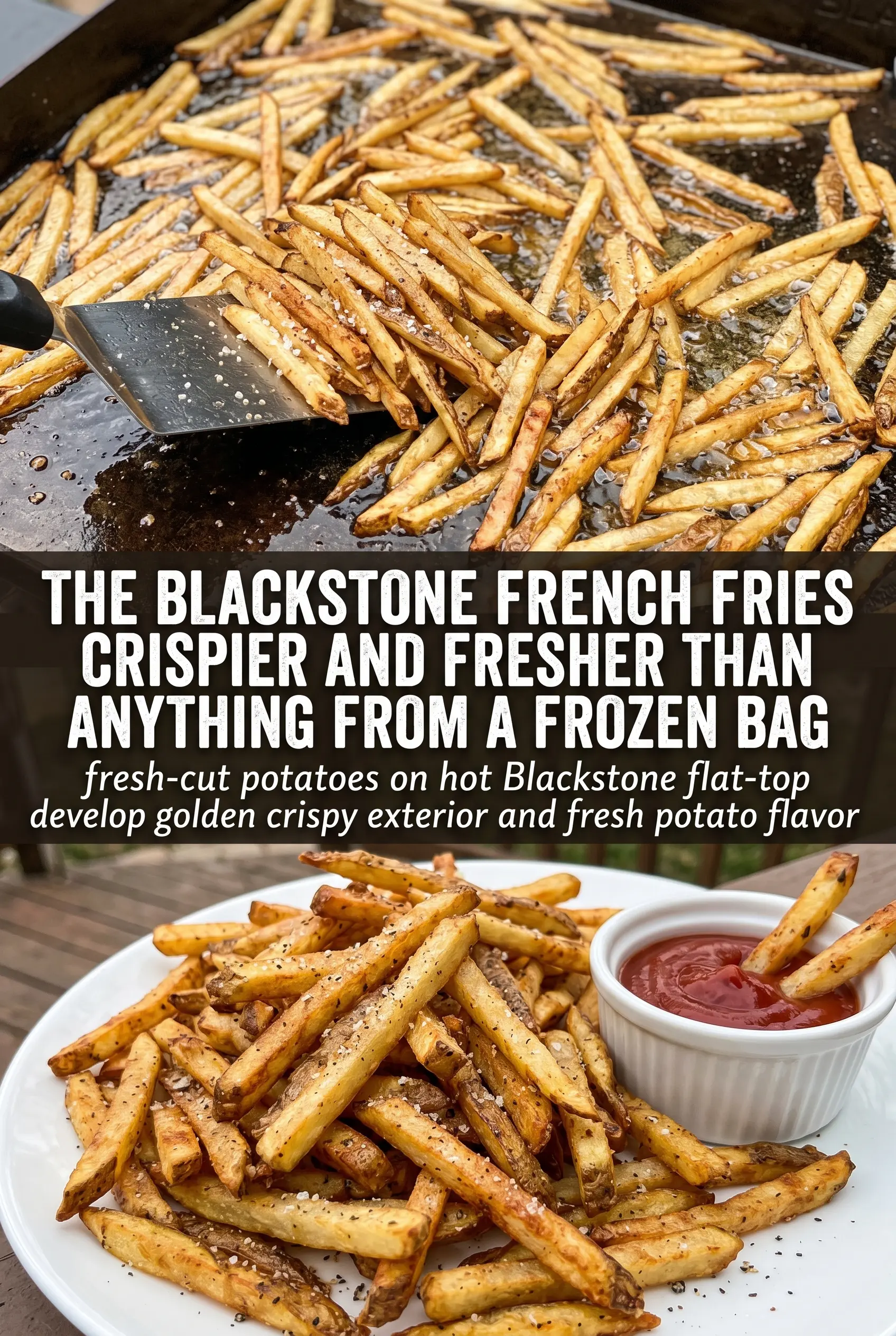
Blackstone fries come off the griddle with the kind of crackly edge and fluffy center that makes a basket disappear fast. The high heat gives them a deep golden crust without the heavy feel of deep frying, and the butter adds a rich finish that clings to every fry. When they’re spread in a true single layer and left alone long enough to brown, they pick up that satisfying griddle flavor you can’t get from the oven.
The trick is drying the potatoes well after their short soak. Wet potatoes steam before they crisp, and steamed fries go soft on the outside before the middle has a chance to cook through. A small amount of oil keeps them moving cleanly on the surface, while the butter adds flavor without taking over. Seasoning goes on at the end so the garlic powder and paprika stay fragrant instead of burning on the griddle.
Below, I’ve laid out the exact timing that gives these fries their best texture, plus a few simple swaps and storage notes for the times you want to stretch them a little farther or change up the seasoning.
I followed the drying tip and didn’t move the fries until they had a crust, and that made all the difference. They came out crisp on the outside, fluffy inside, and the seasoning stuck instead of sliding off.
Save these Blackstone fries for the next time you want crispy griddle fries with a buttery garlic-paprika finish.
The One Step That Keeps Griddle Fries Crisp Instead of Steamed
Most fries go soft on a griddle because they sit in moisture too long or get moved before they’ve built a crust. The soak pulls off surface starch, which helps, but the real difference is drying the potatoes completely and giving them enough uninterrupted contact with the hot surface. If they’re crowded, the fries trap steam between them and you lose that crisp edge before it even starts.
Medium-high heat works here because it’s hot enough to brown the fries without scorching the butter the second it hits the griddle. The oil gives you a stable base, while the butter adds flavor and helps the seasoning cling after cooking. If the griddle looks dry partway through, add a little more oil rather than more butter; too much butter early on can darken before the potatoes are ready.
- Russet potatoes — These are the right potato for a fry that stays fluffy inside and crisp outside. Their starch content gives you a lighter center than waxy potatoes would.
- Vegetable oil — Use a neutral oil with a high smoke point so the fries can brown without tasting greasy or burnt. Canola works the same way if that’s what you have.
- Butter — This is the flavor builder. It won’t replace the oil for frying strength, but it gives the fries that rich, griddle-cooked finish.
- Paprika and garlic powder — Add these after cooking so they stay aromatic instead of bitter. Smoked paprika works if you want a deeper, smokier edge.
- Fresh parsley — It’s not just garnish. A little chopped parsley cuts through the richness and makes the fries taste fresh right before serving.
What Each Ingredient Is Actually Doing in Blackstone Fries
- Protein (quality, proper thickness) — Good quality protein tastes better. Even thickness ensures even cooking.
- Seasoning (bold, distributed throughout) — Don’t be shy with salt and pepper. Quality seasoning elevates everything.
- Oil or fat (protective and flavorful) — The fat helps develop crust and carries flavors. Use generously.
- Heat management (appropriate temperature for the protein) — Too high and the outside burns before the inside cooks. Too low and it steams.
- Technique (sear, then finish based on thickness) — Proper technique creates flavor. Sear for crust, then cook through gently.
- Aromatics and seasonings (garlic, herbs, spices) — These add complexity and depth. Distribute them throughout the cooking process.
- Resting time (let it rest before serving) — Resting allows juices to reabsorb. This keeps the protein moist and tender.
- Optional: finishing sauce or glaze — A light sauce adds richness without overwhelming. Apply at the very end.
Getting the Fries Golden Without Burning the Seasoning
Cutting and Drying the Potatoes
Cut the potatoes into even 1/4-inch fries so they finish at the same pace. The soak only needs about 10 minutes, just enough to pull off some surface starch without turning this into a long prep project. After soaking, dry them thoroughly with towels until the surface feels matte, not slick. If they go onto the griddle damp, they’ll sputter and steam instead of browning.
Building Heat on the Griddle
Heat the Blackstone to medium-high before the fries go down. Add the oil first, then the butter, and let the butter melt into the oil so it doesn’t brown too fast in one hot spot. You want a thin, even film across the cooking area, not a puddle. If the griddle is too cool, the potatoes soak up fat and turn heavy before they crisp.
Letting the First Side Set
Spread the fries in a single layer and leave them alone for 8 to 10 minutes. That undisturbed time is what builds the crust. If you start flipping too early, the fries tear and stick because the surface hasn’t sealed yet. Look for edges turning deep gold and a little lift from the griddle before you move them.
Finishing and Seasoning at the Right Moment
Flip the fries and cook until the second side is golden and the centers are tender. Season them immediately after they come off the heat so the spice mixture sticks to the hot oil on the surface. If you season too early, the paprika can darken and taste harsh. A final shower of parsley and a quick pile into a basket keeps them crisp while you bring the sauces out.
How to Change the Seasoning Without Losing the Crunch
Garlic-Parmesan Fries
Toss the hot fries with finely grated Parmesan after seasoning, not before. The cheese melts lightly onto the fries and adds saltiness, but if you add it too soon on the griddle it can scorch and stick. This version tastes richer and a little more savory, with a sharper finish.
Dairy-Free Fries
Use all oil instead of butter and add a little extra salt at the end to replace the buttery roundness. The fries still crisp well, but the finish is cleaner and less rich. If you want more depth, add a pinch of smoked paprika or a little onion powder.
Spicy Griddle Fries
Add cayenne or chipotle powder to the seasoning mix after the fries cook. That keeps the heat from burning on the griddle and gives you a cleaner spice. This is the version I’d make for burgers because it cuts through all the richness on the plate.
Storage and Reheating
- Refrigerator: Store leftovers in an airtight container for up to 3 days. They’ll soften in the fridge, which is normal for griddle fries.
- Freezer: They freeze, but the texture won’t stay as crisp. If you need to freeze them, lay them on a sheet pan first, freeze until firm, then bag them.
- Reheating: Reheat on a hot skillet, griddle, or in a 425°F oven until the edges crisp again. The biggest mistake is using the microwave, which brings the steam back and makes them limp.
Questions I Get Asked About This Recipe
Blackstone Fries
Ingredients
Equipment
Method
- Cut russet potatoes into 1/4-inch thick fries and soak them in cold water for 10 minutes. This helps draw out surface starch for a crisper exterior.
- Pat the fries completely dry with paper towels. Dry fries hit the griddle better and reduce steaming.
- Heat the Blackstone griddle to medium-high and add the vegetable oil and butter. Wait until the butter melts and the surface shimmers.
- Spread the fries in a single layer on the griddle. Cook for 8-10 minutes without moving so they form an even crust.
- Flip the fries and cook for another 8-10 minutes until golden and crispy on all sides. Look for visible browning and rising steam.
- Season the fries immediately with garlic powder, paprika, onion powder, salt, and pepper. Seasoning right away clings as the fries are hot.
- Garnish with chopped fresh parsley and serve with ketchup and other dipping sauces. Serve while the fries are still crisp.