Grilled Thai coconut chicken skewers turn out with a charred edge, juicy center, and a marinade that clings in a light, glossy coating instead of burning off on the grill. The coconut milk keeps the chicken tender, while lemongrass, ginger, garlic, and a little curry powder give each bite that unmistakable Thai-inspired balance of savory, fragrant, and just a touch sweet. When they come off the grill with those browned spots and a squeeze of lime, they disappear fast.
What makes these work is the marinade ratio. Coconut milk alone can go bland and greasy, but fish sauce brings depth, brown sugar helps with browning, and lemongrass gives the skewers their clean, citrusy backbone. The chicken needs time to sit in that mixture, though not forever; a long soak gives flavor without turning the texture mushy.
Below, I’ve included the small details that matter most: how to handle lemongrass so it doesn’t stay stringy, what to watch for on the grill, and a few practical swaps if you need to adapt the recipe without losing what makes it good.
The coconut marinade caramelized on the grill and the chicken stayed juicy all the way through. I let it sit for about 2 hours, and the lemongrass flavor came through beautifully without overpowering the peanut sauce.
Grilled Thai coconut chicken skewers with charred edges and peanut sauce are perfect for your next grill night.
The Marinade Needs Balance, Not Just Coconut Milk
Coconut milk gives these skewers tenderness, but it can’t do the whole job on its own. The fish sauce is what keeps the flavor from tasting flat, and the brown sugar helps the chicken pick up those browned, sticky bits on the grill. If the marinade tastes a little aggressive in the bowl, that’s a good sign; it should mellow as it coats the chicken and cooks.
The most common mistake is using too much heat too early. Coconut milk has natural sugars, and those sugars can darken fast before the chicken is cooked through. Medium-high heat is the target here, not a raging fire. You want steady browning on the outside and fully opaque chicken in the center, not blackened spots with raw pieces hidden between them.
What the Lemongrass, Fish Sauce, and Coconut Milk Are Each Doing

- Coconut milk — Use full-fat coconut milk here. It coats the chicken and carries the aromatics better than light coconut milk, which can taste thin and watery after grilling. Shake the can before opening so the cream and liquid combine.
- Lemongrass — Fresh lemongrass matters. It brings the bright, citrusy note that makes these taste distinctly Thai, and dried lemongrass won’t give the same punch. Mince it very finely so it softens during marinating and doesn’t leave woody bits on the skewers.
- Fish sauce — This is the savory backbone of the marinade. It’s not there to make the chicken taste fishy; it adds salt, depth, and umami that coconut milk can’t provide. If you need a substitute, use soy sauce, but the flavor will be a little less round and a little more straightforward.
- Chicken breasts — Breasts stay lean and grill quickly, which works well as long as the pieces are cut evenly into 1-inch chunks. Thighs also work and stay a little juicier, but they need an extra minute or two on the grill and a bit more attention because they brown faster.
- Peanut sauce — Don’t skip the dipping sauce. The skewers are balanced, but the peanut sauce adds richness and a creamy finish that plays against the char. If your sauce is thick, thin it with a splash of warm water instead of more coconut milk so the peanut flavor stays clean.
How to Get Juicy Chicken and Real Grill Marks on the Same Skewer
Building the Marinade
Stir the coconut milk, fish sauce, brown sugar, lemongrass, ginger, garlic, and curry powder until the sugar dissolves and the mixture looks evenly cloudy. If the sugar sits in a gritty layer at the bottom, it won’t cling to the chicken properly. The marinade should smell fragrant and savory, with a little sweetness behind it, not sugary or flat.
Marinating Without Turning the Chicken Soft
Add the chicken and coat every piece well, then refrigerate for 1 to 4 hours. Less than an hour and the flavor stays on the surface; much longer than 4 hours and the acids and salt start to work the texture too hard. If you’re prepping ahead, marinate the chicken in the fridge and thread the skewers later so the meat stays cold and firm.
Skewering for Even Cooking
Thread the chicken onto soaked wooden skewers with a little space between pieces. That gap matters because crowded chicken steams instead of browns. If the pieces are pressed tightly together, the centers lag behind while the outside overcooks. Keep the size consistent, too, since mixed pieces mean mixed doneness.
Grilling to the Point of Char
Preheat the grill to medium-high and oil the grates lightly if they tend to stick. Lay the skewers down and let them sit long enough to mark before turning, usually 5 to 6 minutes per side depending on the heat of your grill. Pull them when the chicken is cooked through and the edges have deep brown spots; if you wait for the exterior to look dark all over, the inside usually goes dry.
Make It With Chicken Thighs for a Richer Bite
Chicken thighs bring more fat and a little more forgiveness on the grill, so they stay juicy even if your heat runs a touch hot. Cut them into the same size pieces and expect a slightly longer cook time. The flavor leans deeper and meatier, while the texture stays tender.
Make It Gluten-Free Without Losing the Marinade’s Depth
The skewers themselves are naturally gluten-free as written if your fish sauce and peanut sauce are certified gluten-free. Check the bottle on both, since some versions add wheat-based ingredients. The final dish keeps the same charred, savory-sweet balance.
Turn Them Into a Stovetop Dinner
If you don’t have a grill, use a hot grill pan or cast-iron skillet and cook the skewered or unskewered chicken in batches. You won’t get quite the same smoky edge, but the marinade still caramelizes and the chicken still picks up those browned spots. Keep the heat steady and resist moving the pieces too often.
Storage and Reheating
- Refrigerator: Store leftovers in an airtight container for up to 3 days. The chicken stays flavorful, though the char softens a bit.
- Freezer: Freeze the cooked chicken off the skewers for up to 2 months. The texture is best if you freeze it plain and add fresh cilantro and lime after reheating.
- Reheating: Warm gently in a skillet over medium-low heat with a splash of water or extra peanut sauce. Microwaving on high tends to dry out the chicken fast, so use short bursts if that’s your only option.
Answers to the Questions Worth Asking
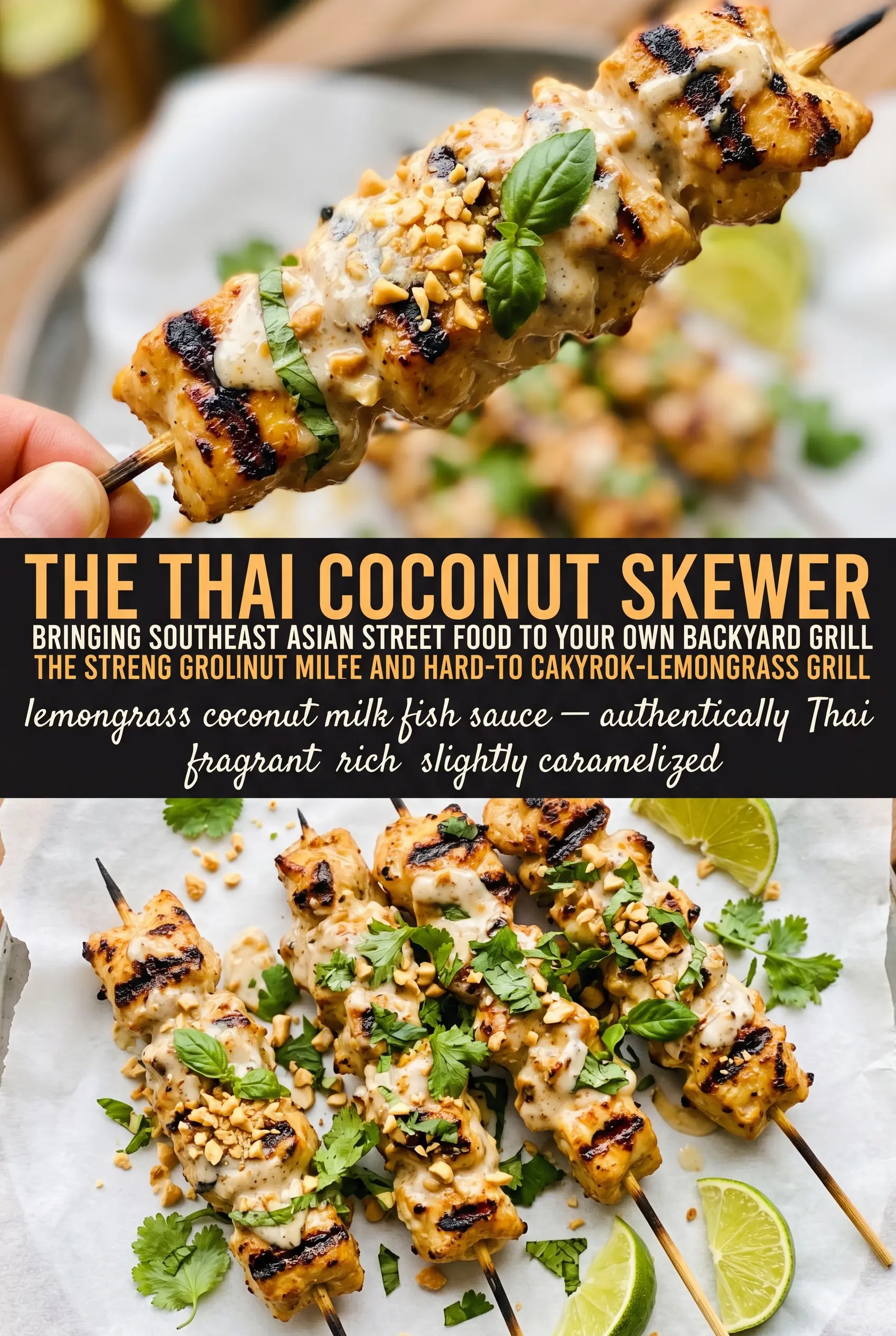
Grilled Thai Coconut Chicken Skewers
Ingredients
Equipment
Method
- Combine coconut milk, fish sauce, brown sugar, lemongrass, ginger, garlic, and curry powder in a bowl until smooth and uniform in color.
- Add chicken breasts to the marinade, toss to coat, and refrigerate for 1-4 hours covered.
- Thread marinated chicken onto soaked wooden skewers, leaving a little space between pieces for even charring.
- Preheat the grill to medium-high heat and lightly clear space for direct heat.
- Grill skewers for 5-6 minutes per side until chicken is cooked through and slightly charred, with visible grill marks.
- Serve the grilled skewers immediately with peanut sauce for dipping, fresh cilantro, and lime wedges.