Spicy honey-lime chicken hits the table with that sweet-heat balance that keeps you coming back for another bite. The glaze turns sticky and glossy on the grill, the edges pick up char, and the lime keeps the honey from tasting heavy. It’s the kind of chicken that feels a little special without asking for much more than a quick marinade and a hot grill.
What makes this version work is the way the marinade does two jobs at once: it seasons the chicken all the way through while also building a finish that caramelizes instead of burning. Honey brings color and shine, but it needs the lime juice and olive oil to keep it from clinging too aggressively to the grates. The short marinating window is enough to add flavor without turning the chicken mushy, which is especially important if you’re using breasts.
You’ll find the timing that keeps the chicken juicy, the one marinade mistake that causes flare-ups, and a few smart ways to adapt the spice level without losing the sweet-tart balance.
The chicken got that sticky caramelized coating on the grill, and the lime kept it bright instead of cloying. I used thighs and the meat stayed juicy even after the charred edges picked up all that honey glaze.
Save this spicy honey-lime chicken for a sticky grilled dinner with charred edges and bright citrus heat.
The Marinade Needs Time, But Not Too Much
The biggest mistake with honey-lime chicken is thinking more marinating time always means better flavor. Lime juice is acidic, and if the chicken sits too long, the surface can turn soft and a little chalky before it ever hits the grill. Thirty minutes gives you enough time for the garlic, spices, and citrus to get into the meat without compromising texture, and four hours is the top end I’d use.
The other thing that matters here is heat management. Honey wants to brown fast, which is great for those caramelized edges, but it also means the grill has to be hot and clean enough that the chicken releases instead of tearing. If the grates aren’t oiled and the chicken goes on before the grill is fully heated, the glaze sticks and you lose the best part of the finish.
What Each Ingredient Is Doing in the Glaze
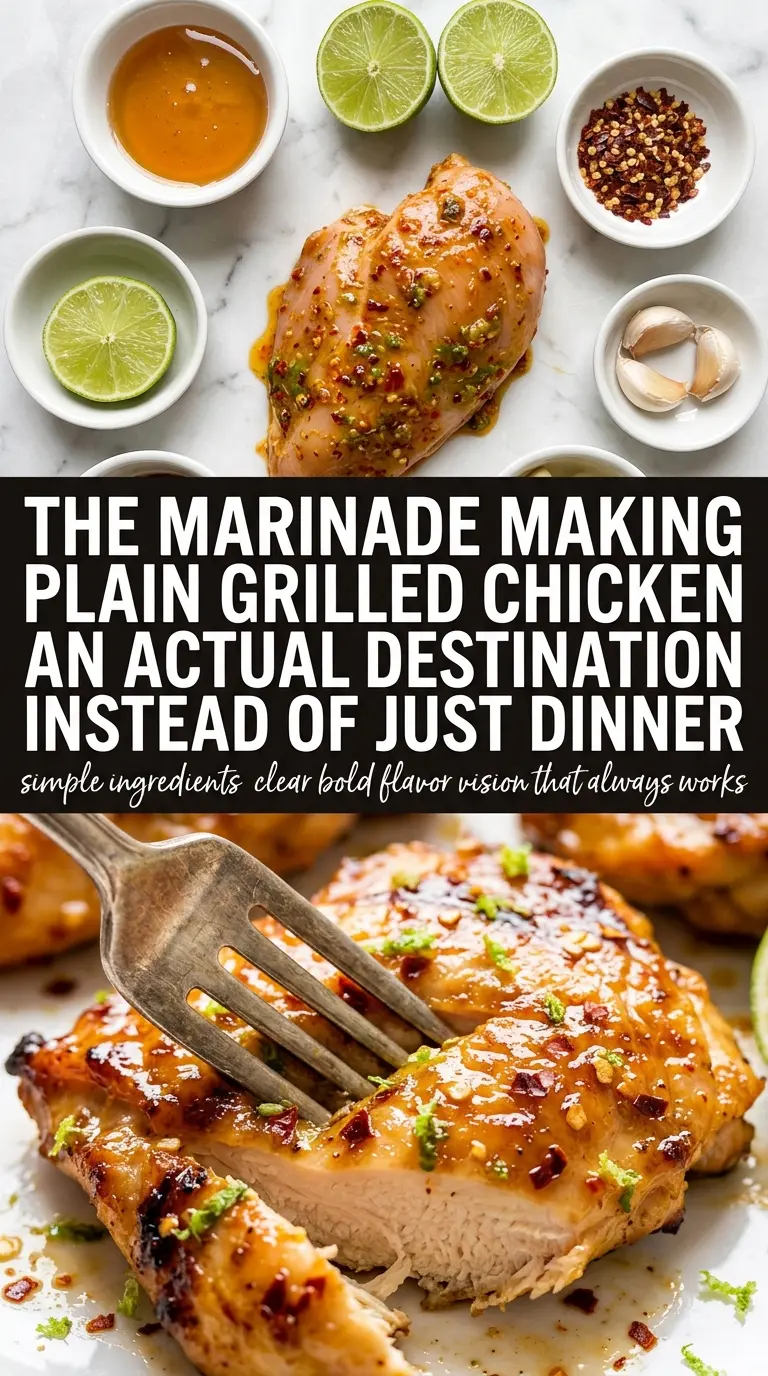
- Honey — This builds the glossy coating and helps the chicken caramelize. Use a mild honey so the citrus and spice stay in front; darker, strongly flavored honey can drown them out.
- Lime juice and zest — Juice brings brightness and helps tenderize the surface, while zest carries the oils that make the marinade smell fresh even before it cooks. Don’t skip the zest if you want the chicken to taste distinctly limey instead of just tangy.
- Chicken thighs or breasts — Thighs stay juicier and are more forgiving on a grill, while breasts cook faster and need a closer eye. If you use breasts, pound them to an even thickness so the thinner ends don’t dry out before the center is done.
- Cayenne and chili powder — Chili powder gives the warm base note, and cayenne supplies the actual heat. If you want less burn, cut the cayenne in half before you cut the honey; the sweet balance matters more than raw spice level here.
- Olive oil — Oil helps the marinade coat the chicken evenly and keeps the glaze from sticking too aggressively once it hits the grill. You can swap in avocado oil if that’s what you keep on hand; use the same amount.
- Garlic — Fresh minced garlic gives the marinade a savory edge that powdered garlic doesn’t fully match. Mince it fine so it doesn’t scorch in big pieces on the grates.
Getting the Glaze On Without Burning the Chicken
Mix the marinade until the honey disappears
Whisk the honey, lime juice, zest, oil, garlic, chili powder, cayenne, cumin, salt, and pepper until the mixture looks smooth and a little thickened. If the honey is sitting in streaks at the bottom of the bowl, it won’t coat the chicken evenly and the first few pieces will take all the sugar. The lime juice should lighten the color and make the marinade look glossy.
Marinate with enough space for the chicken to coat evenly
Use a zip-top bag or a shallow dish, and turn the chicken once or twice while it sits. The meat should look well coated, not drowned; too much liquid just makes the flavor less concentrated. If you reserved some marinade for basting, keep it separate from the raw chicken so you’re not brushing contaminated liquid onto finished meat.
Grill over medium-high heat and watch for sticking
Oil the grates, then lay the chicken down and leave it alone for a few minutes so it can sear and release naturally. If you start moving it too early, the glaze tears and the chicken sticks. Brush on the reserved marinade during the last few minutes, not from the start, because honey burns before the interior is cooked through.
Rest before slicing
Pull the chicken when it hits 165°F in the thickest part, then let it rest for five minutes. That pause keeps the juices from flooding out the second you cut into it. Slice against the grain if you’re serving breasts; it makes the texture much more tender.
How to Adjust the Heat, the Cut, and the Cooking Method
Milder Version for Heat-Sensitive Eaters
Cut the cayenne to 1/8 teaspoon or leave it out entirely and keep the chili powder. You’ll still get a warm, smoky note without the sharp burn, and the honey-lime balance stays intact. This is the easiest change if you’re serving kids or anyone who likes sweet over spicy.
Thighs for Juicier Grilled Chicken
Use boneless, skinless thighs and keep the same marinade and grill time range, checking them a little earlier if they’re small. Thighs tolerate the honey glaze better and stay tender even if the grill runs a touch hot. The finished flavor is richer and the texture is softer than with breasts.
Dairy-Free and Gluten-Free Without Changes
This recipe is naturally dairy-free and gluten-free as written, so there’s nothing to replace. Just check your chili powder if you’re using a blend, because some store-bought versions include additives. That’s a label check, not a recipe change.
Oven Broiler When You Don’t Have a Grill
Set the chicken on a foil-lined sheet pan and broil close to the heat source, turning once and brushing with the reserved marinade near the end. Broilers work fast, so the line between caramelized and burnt is narrow; stay close and use the visual cue of deep golden spots with no blackened sugar patches. The flavor lands in the same sweet-tart lane, just without the grill marks.
Storage and Reheating
- Refrigerator: Store leftovers in an airtight container for up to 4 days. The glaze will firm up a little in the fridge, but the flavor holds well.
- Freezer: Freeze cooked chicken for up to 2 months. Slice it first if you want faster thawing, and wrap it well so the honey glaze doesn’t pick up freezer smells.
- Reheating: Reheat gently in a covered skillet with a splash of water or lime juice over low heat, or warm it in a 300°F oven until just heated through. High heat dries out the chicken and makes the sugary glaze tough.
Questions I Get Asked About This Recipe
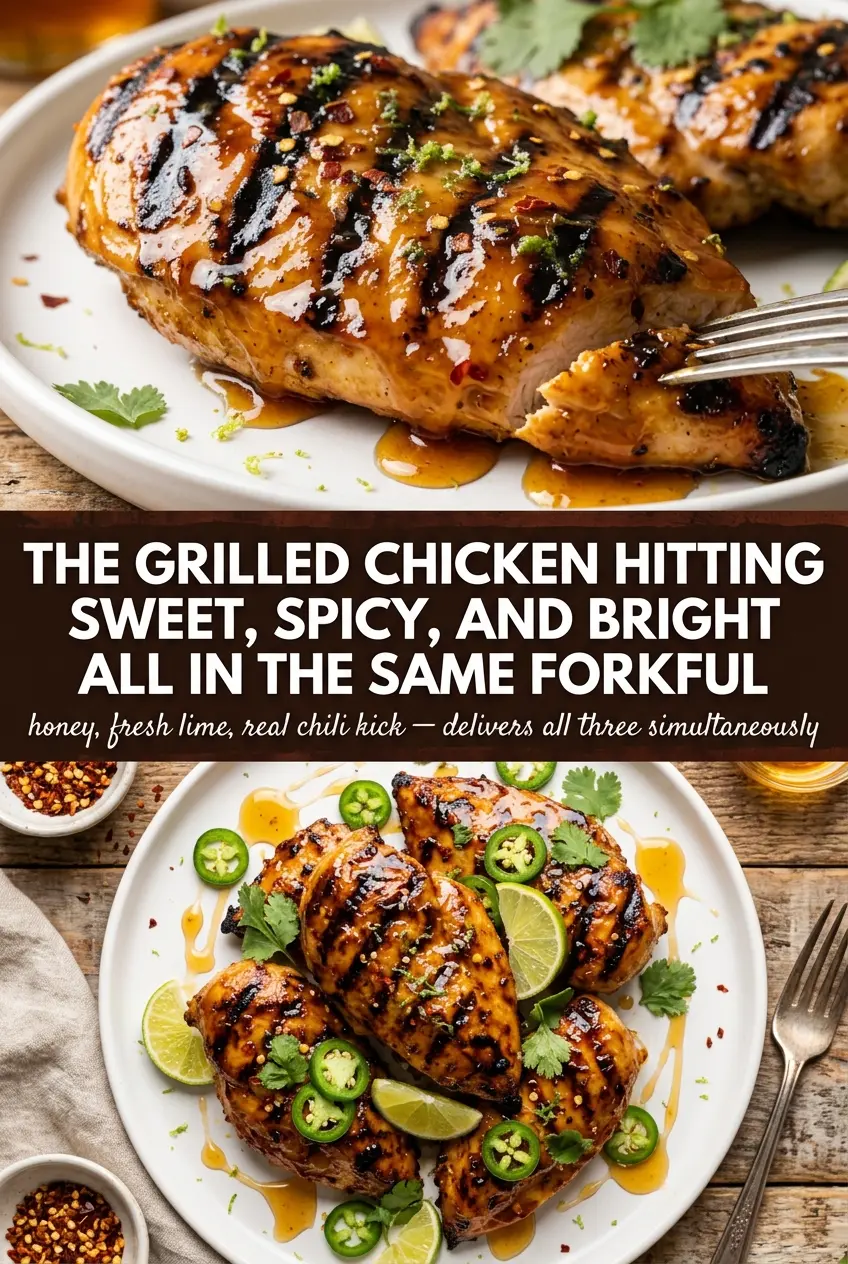
Spicy Honey-Lime Chicken
Ingredients
Equipment
Method
- Whisk honey, lime juice, lime zest, olive oil, garlic, chili powder, cayenne, cumin, salt, and pepper until fully combined and smooth.
- Place chicken in a large zip-top bag and pour in the marinade, then reserve 1/4 cup for basting.
- Refrigerate the chicken at least 30 minutes or up to 4 hours so the flavors penetrate.
- Preheat the grill to medium-high heat and oil the grates to prevent sticking.
- Grill chicken for 6-8 minutes per side, basting with the reserved marinade, until the internal temperature reaches 165°F.
- Let the chicken rest for 5 minutes to keep it juicy.
- Garnish with fresh cilantro and lime wedges, then serve.