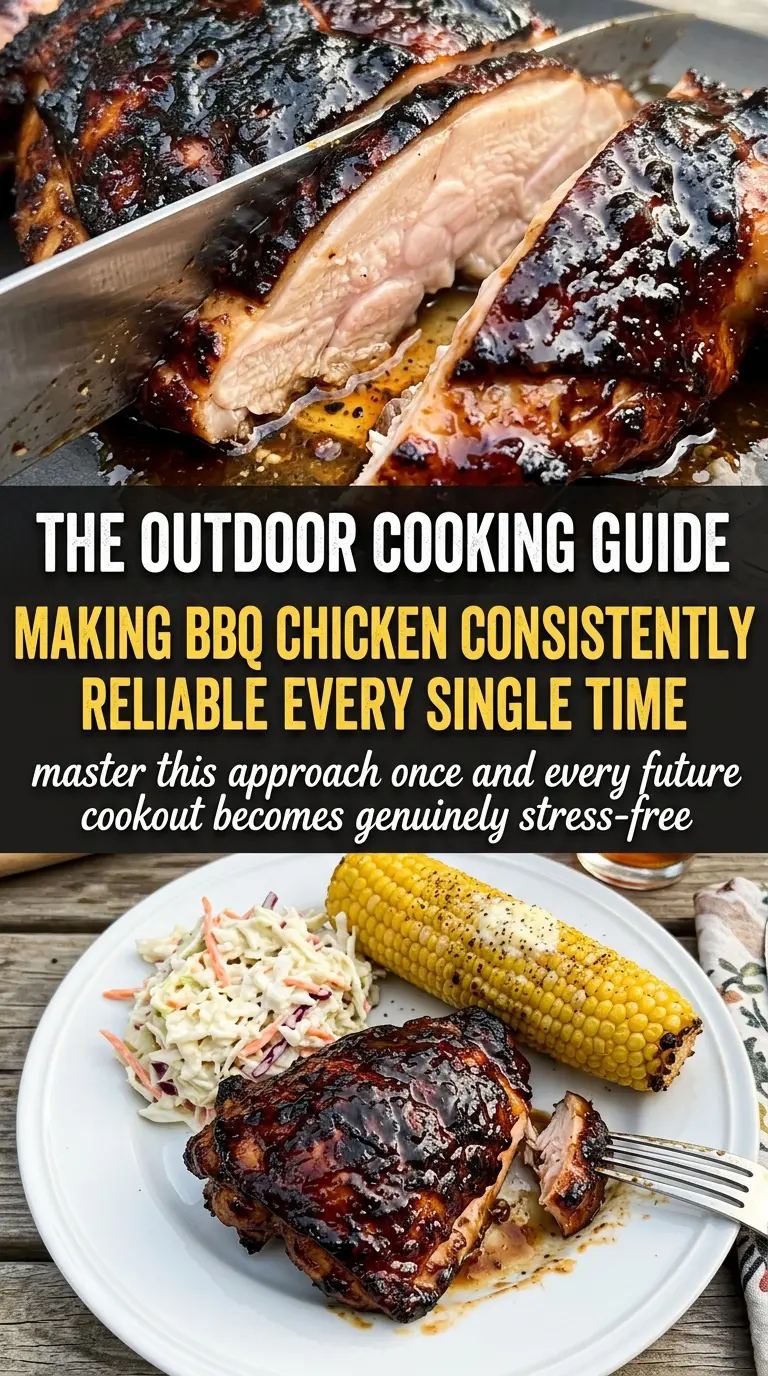
Juicy BBQ chicken earns its place on the table when the skin picks up a little smoke, the meat stays tender, and the sauce turns sticky at the edges without burning. The best versions hit that balance between caramelized and clean-tasting, with enough seasoning under the glaze that every bite tastes finished, not just sauced at the end.
This version keeps the method simple, but it pays attention to the two things that matter most: moisture and heat control. Patting the chicken dry helps the seasoning stick and gives the grill a chance to do its job, while indirect heat cooks the pieces through before the sauce goes on. The apple cider vinegar loosens the BBQ sauce just enough to help it brush on in thin layers, and the smoked paprika adds a little depth without taking over.
Below, you’ll find the small timing details that keep the chicken juicy, plus a few ways to adapt it if you’re working with different cuts or cooking for a crowd. The glaze matters here, but so does the order you build it in.
The sauce glazed up beautifully in the last few minutes and the chicken stayed juicy all the way through. I usually end up with dry breasts or burnt sauce, but this method gave me both good char and a sticky finish.
Save this juicy BBQ chicken for the nights when you want smoky grilled chicken with a sticky glaze and almost no cleanup.
The Reason Grilled BBQ Chicken Stays Juicy Instead of Drying Out
The biggest mistake with BBQ chicken is treating the sauce like the cooking medium from the start. Sugar in most BBQ sauces burns before the chicken has time to cook through, which leaves you with scorched glaze and meat that’s still catching up inside. Indirect heat fixes that problem. It lets the chicken cook gently first, so the final saucing step is about caramelizing, not rescuing.
Temperature matters more than flare-up drama here. Medium heat gives you enough energy to cook the chicken without ripping the outside apart, and the last move to direct heat is only for finishing the glaze. If your grill runs hot, create a cooler side and keep the chicken there until the final basting stage. That one adjustment does more for juiciness than any extra coating of sauce ever will.
- Indirect heat first — This cooks the chicken through without burning the sugars in the BBQ sauce.
- Direct heat at the end — Move the pieces over the flame only when the sauce is on and the meat is nearly done.
- Resting matters — Five minutes gives the juices time to settle back into the meat instead of running onto the cutting board.
What the BBQ Sauce, Vinegar, and Smoked Paprika Are Actually Doing
- BBQ sauce — Use a sauce you actually like the taste of before it ever hits the grill. This is the main flavor, so a bland bottle stays bland no matter how well you cook the chicken.
- Apple cider vinegar — A tablespoon loosens the sauce so it brushes on in a thinner, more even layer. It also cuts through the sweetness enough to keep the glaze from tasting heavy.
- Smoked paprika — This adds a little smoke depth when the grill flavor is subtle, especially if you’re cooking with gas. If you skip it, the chicken still works; it just tastes flatter.
- Chicken pieces — Thighs and legs stay the juiciest because they handle longer grill time better. Breasts work too, but they dry out faster if you wait until the glaze stage to watch the temperature.
Building the Grill Time So the Sauce Never Burns
Seasoning the Chicken Properly
Pat the chicken dry before anything else. Moisture on the surface blocks browning and makes the seasoning slide around instead of sticking. A thin coat of olive oil helps the salt and pepper cling and gives the skin a better chance to crisp where it touches the grate. If the pieces look wet after seasoning, blot them again; wet chicken steams before it sears.
Cooking Over Indirect Heat
Place the chicken on the cooler side of the grill and close the lid. You want steady heat that gently cooks the meat, not a blast of flame that chars the outside before the center is done. Turn the pieces every 10 minutes so they cook evenly and don’t stick in one spot. If the grill is running hot and the skin darkens too fast, move the pieces farther from the flame and keep the lid closed.
Glazing in the Last 10 Minutes
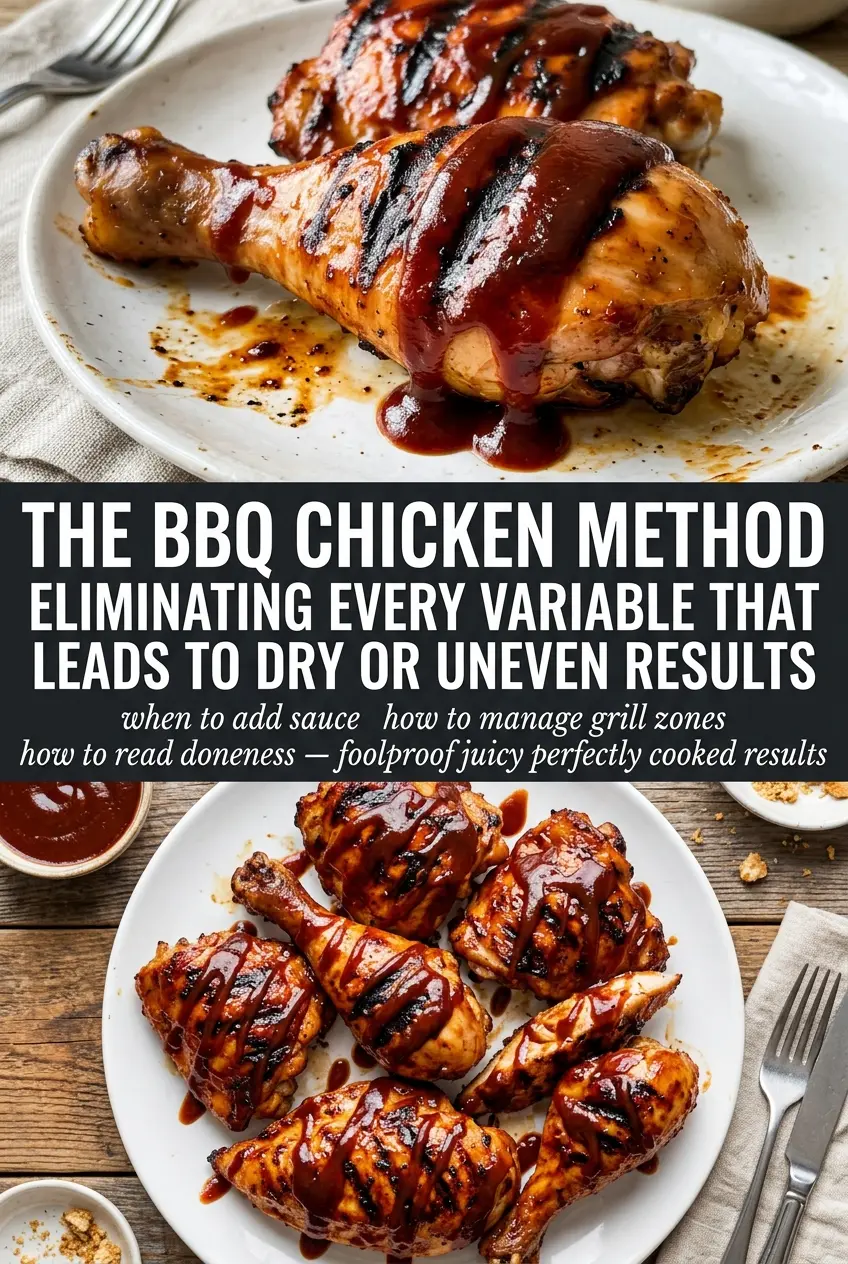
Mix the sauce with vinegar and smoked paprika, then brush it on during the final stretch only. Thin coats caramelize better than one thick layer, which can drip off and burn before it sets. Once the chicken is close to 165°F, move it over direct heat for just long enough to create a sticky glaze with a little char at the edges. If the sauce starts to blacken instead of shine, pull the chicken back to the cooler side immediately.
Knowing When It’s Done
Use temperature, not guesswork. Chicken is done at 165°F in the thickest part, but thighs can go a little higher and stay tender. The sauce should look glossy and lightly darkened, not matte and crusty. Let the chicken rest for 5 minutes before serving so the juices stay where they belong.
How to Adapt This Grill Chicken for Different Cuts and Dietary Needs
All-Thigh Version for Extra Juiciness
Swap all the mixed pieces for thighs if you want the most forgiving result. Thighs handle the grill better and stay moist even if your heat runs a little high, though they usually need a few extra minutes before they reach temperature.
Chicken Breast Without the Dry Texture
Breasts work best if you keep them on the cooler side of the grill and start checking early. Pull them as soon as they reach 165°F, because waiting for the sauce to look perfect is how breast meat turns stringy. Thin, even pieces cook more reliably than thick, uneven ones.
Gluten-Free and Dairy-Free as Written
This recipe is naturally both gluten-free and dairy-free as long as your BBQ sauce fits those needs. Check the label on the sauce, since that’s usually where gluten sneaks in. No other changes are needed.
Oven Finish When the Weather Won’t Cooperate
If you can’t grill, roast the chicken at 400°F until nearly done, then brush on the sauce and broil briefly to caramelize it. Broil only long enough to set the glaze, because the sugars go from glossy to burnt fast under direct heat. You lose a little smoke, but the texture stays on track.
Storage and Reheating
- Refrigerator: Store covered for up to 4 days. The sauce settles a bit, but the chicken stays flavorful.
- Freezer: Freeze for up to 2 months in an airtight container. Thighs freeze better than breasts, which can turn a little drier after thawing.
- Reheating: Reheat covered in a 325°F oven until warm, or gently in a skillet with a splash of water. High heat dries the chicken out and tightens the glaze into a hard coating.
Questions I Get Asked About This Recipe
The Best Easy Juicy BBQ Chicken
Ingredients
Equipment
Method
- Pat the chicken pieces dry, then coat with olive oil and season with salt and pepper.
- Mix BBQ sauce with apple cider vinegar and smoked paprika until smooth.
- Preheat the grill to medium heat at 350-400°F.
- Grill the chicken over indirect heat for 30-35 minutes, turning every 10 minutes so it cooks evenly.
- During the last 10 minutes, brush the chicken generously with BBQ sauce and move it to direct heat.
- Continue grilling and basting until the internal temperature reaches 165°F and the sauce looks caramelized with a glossy glaze.
- Let the chicken rest for 5 minutes so the juices redistribute before serving.