Sticky, glossy chicken skewers with a bourbon-maple glaze have a way of disappearing the second they hit the table. The chicken stays juicy while the outside turns caramelized and lacquered, with just enough smoke from the grill to keep the sweetness in check. This is the kind of dinner that looks like party food but cooks fast enough for a weeknight.
The trick is in the balance. Bourbon brings depth, maple syrup gives the glaze its shine, and BBQ sauce carries the seasoning so you don’t have to build flavor from scratch. A little cider vinegar keeps the marinade from tasting flat, and Dijon helps the glaze cling instead of sliding off the chicken. I also reserve part of the sauce before it touches raw chicken, which keeps the basting sauce clean and concentrated.
Below you’ll find the piece that matters most: how to get a sticky glaze without burning the sugars, plus a few swaps that keep the skewers working if you don’t have a grill handy.
The glaze got sticky and dark on the grill without turning bitter, and the chicken stayed juicy even after a few minutes on each side. My husband kept sneaking pieces off the platter before dinner.
Bourbon Maple BBQ Chicken Skewers are the kind of glazed grill dinner that turns sticky, smoky, and caramelized every time.
The Part That Keeps the Glaze from Burning Before the Chicken Cooks
The biggest mistake with a sweet glaze like this is putting it over high heat too early. Maple syrup and BBQ sauce can go from glossy to scorched fast, especially if the chicken pieces are crowded or the grill is running hotter than medium. The marinade does the flavoring work first, and the reserved sauce goes on during the last stretch when the chicken is already nearly done.
Cutting the chicken into even cubes matters more here than on a lot of grilled recipes. Uneven pieces mean some skewers are dry while others are still catching up. Soak the wooden skewers long enough that they don’t turn brittle over the flame, and give the chicken a full hour in the marinade if you can. That’s the sweet spot for flavor without making the surface too wet to brown.
What Each Ingredient Is Actually Doing in This Dish
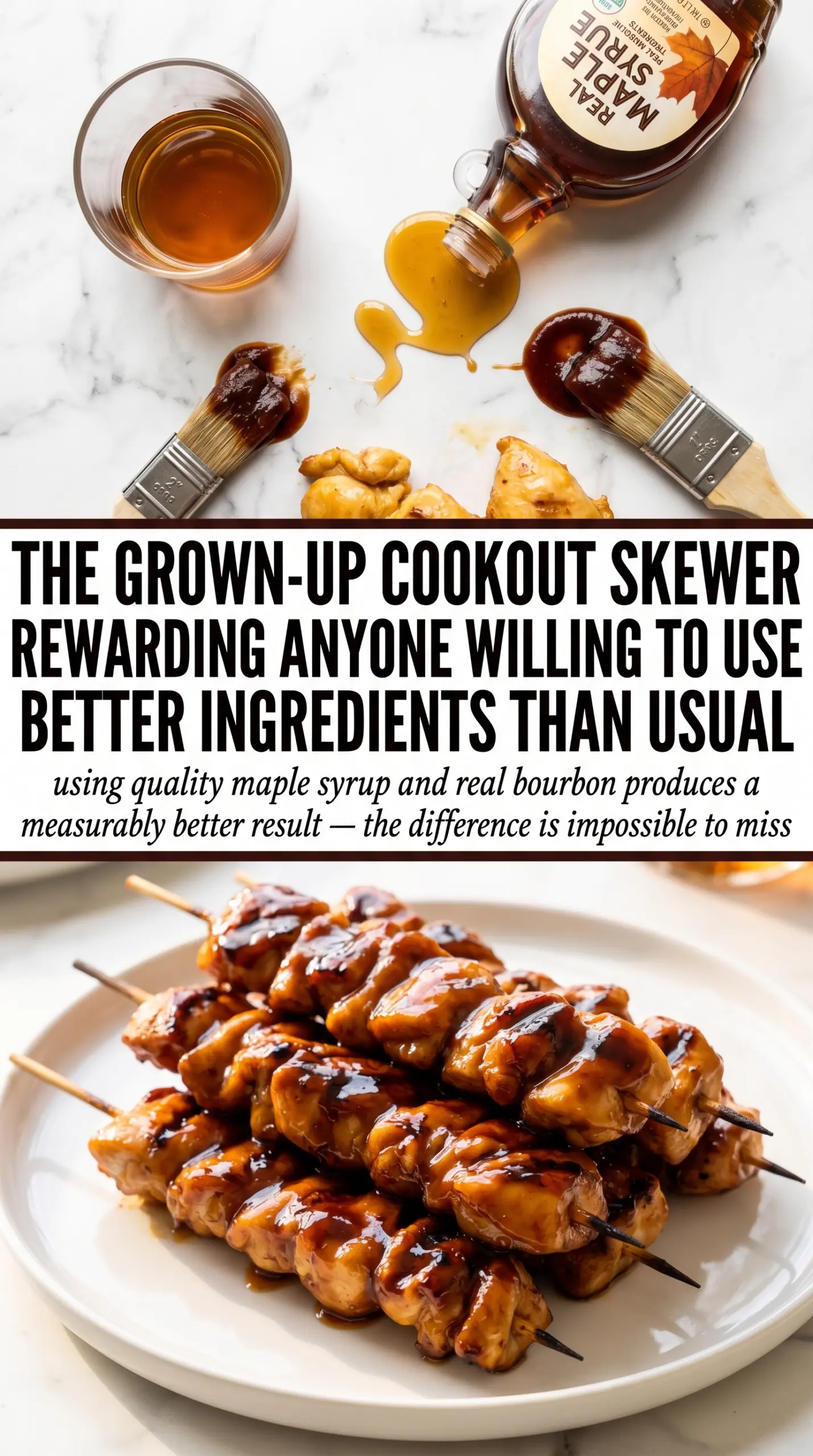
- Chicken breasts — Breasts stay lean and pick up the glaze cleanly, but they need even cutting so they don’t dry out before the sauce tightens. Thighs work too if you want more forgiving meat and a richer bite; just expect a slightly longer cook time and a softer texture.
- BBQ sauce — This is the backbone of the glaze, bringing salt, spice, smoke, and body in one ingredient. A good bottled sauce is fine here because you’re layering it with bourbon, maple, and vinegar, but avoid anything ultra-thick or heavily molasses-based unless you like a sweeter finish.
- Bourbon — Bourbon adds warmth and a little oak without tasting boozy once it cooks down. You can replace it with apple juice plus a splash of vanilla for a non-alcoholic version, though you’ll lose some depth and the glaze will read a touch softer.
- Maple syrup — Real maple syrup gives the glaze that sticky lacquer and a rounded sweetness that brown sugar can’t quite mimic in the same way. If you use pancake syrup, the sauce will still work, but the finish will be thinner and less clean.
- Apple cider vinegar and Dijon mustard — These keep the glaze from turning heavy. The vinegar wakes up the sweetness, while Dijon helps emulsify the sauce so it clings better during basting instead of sliding off onto the grill grates.
How to Build a Sticky Glaze Without Losing the Chicken
Mixing the Marinade
Stir the BBQ sauce, bourbon, maple syrup, vinegar, and Dijon until the sauce looks smooth and dark. Reserve one quarter cup before the raw chicken goes in, because that clean portion is what you’ll use for basting later. If you skip that step, you’ll be stuck with a cross-contaminated sauce you can’t safely brush on at the end.
Marinating for Flavor, Not Mush
Coat the chicken cubes in the remaining sauce and let them sit for 1 to 4 hours. An hour gives good flavor; much longer than four hours can make the surface a little soft because of the vinegar. When the chicken comes out, it should look lacquered, not swimming.
Threading and Grilling
Thread the pieces onto soaked skewers with a little space between each cube so the heat can reach all sides. Grill over medium heat and turn the skewers every few minutes, basting only after the first side has started to set. If the glaze starts to smoke hard or look black instead of deep mahogany, move the skewers to a cooler spot on the grill and finish there.
The Final Sticky Finish
Cook until the chicken reaches 165°F and the outside feels tacky when you touch it with a spatula. The glaze should cling in a shiny coat, not run off in a puddle. Let the skewers rest for a few minutes before serving so the juices settle and the sauce stays on the meat instead of collecting on the plate.
How to Adapt These Skewers for Different Grills and Gatherings
Dairy-Free and Naturally Gluten-Free
This recipe already fits a dairy-free, gluten-free table as long as your BBQ sauce is certified gluten-free. That’s the one label worth checking, since sauces vary a lot and some sneak in wheat-based thickeners or soy sauce with gluten.
No Bourbon on Hand
Use apple juice or unsweetened apple cider in place of the bourbon. You lose the oak and burnished depth, but the chicken still gets a sweet-savory glaze that grills beautifully. Add a tiny extra splash of vinegar to keep the flavor from drifting too sweet.
Using Chicken Thighs Instead of Breasts
Thighs give you a juicier, more forgiving skewer and can handle a little extra heat. Cut them into similar-sized pieces and grill until the edges are charred and the centers hit 165°F. The result is less lean and a little richer, which works nicely with the maple glaze.
Storage and Reheating
- Refrigerator: Store leftovers in an airtight container for up to 4 days. The glaze will tighten a bit in the fridge, which is normal.
- Freezer: The cooked chicken freezes well for up to 2 months, though the glaze won’t stay quite as glossy after thawing. Freeze the skewers off the sticks if space is tight, then thaw in the refrigerator.
- Reheating: Warm gently in a covered skillet over low heat or in a 300°F oven until heated through. High heat dries out the chicken and can turn the maple glaze sticky in the wrong way.
Questions I Get Asked About This Recipe
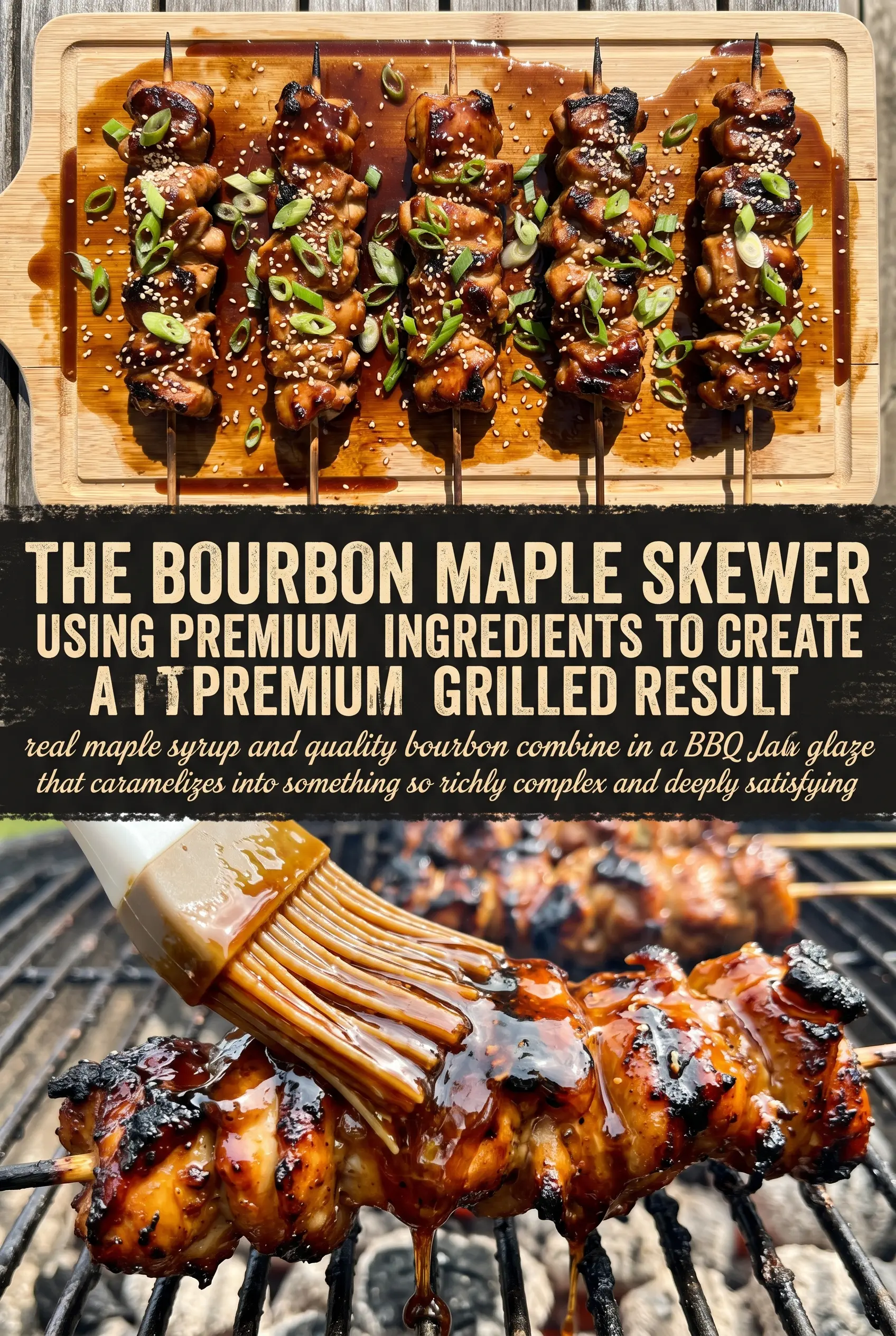
Bourbon Maple BBQ Chicken Skewers
Ingredients
Equipment
Method
- In a bowl, mix BBQ sauce, bourbon, maple syrup, apple cider vinegar, and Dijon mustard until smooth.
- Reserve 1/4 cup of the mixture for basting so it stays separate from the marinade.
- Add the cubed chicken to the remaining sauce and marinate for 1-4 hours.
- Thread the marinated chicken onto soaked wooden skewers in an even layer.
- Grill the skewers over medium heat for 5-6 minutes per side, basting frequently with the reserved sauce.
- Cook until the chicken reaches 165°F and the glaze is sticky, with a glossy caramelized look.