Tender, lemony Greek chicken has a way of disappearing fast once it comes off the grill. The outside picks up just enough char to bring out the herbs, while the inside stays juicy from the olive oil and the long soak in lemon, garlic, and oregano. It tastes clean and bright, but it still has enough savory depth to stand on its own with nothing more than a simple salad or a pile of warm pita.
The part that makes this version work is the balance. Lemon gives it that classic Greek snap, but the olive oil keeps the acid from drying the chicken out. Fresh oregano brings a greener, sharper note than dried alone, and the garlic needs to be minced fine so it perfumes the marinade instead of burning on the grill. I’ve tested this with both chicken pieces and boneless cuts, and the biggest difference always comes down to marinating time and managing the heat so the outside doesn’t overcook before the center reaches temperature.
Below you’ll find the trick to getting that deep, seasoned flavor all the way through the meat, plus a few smart swaps and storage notes for making this recipe fit your kitchen.
The chicken came off the grill juicy and full of lemon garlic flavor, and the marinade kept the pieces from drying out even after a second round on the heat.
Save this juicy Greek chicken for the nights when you want bright lemon oregano flavor and a grill-kissed dinner with almost no cleanup.
The Marinade Works Because It Protects the Meat, Not Just Flavors It
Lemon and garlic get all the attention in Greek chicken, but the real job of the marinade is protecting the meat from drying out over high heat. Olive oil coats the surface and helps the herbs cling, while the acid from the lemon slowly seasons the chicken without needing a long ingredient list. The trick is not to overdo the marinating time with very small pieces, because too much acid can push the texture toward soft instead of juicy.
If you’ve ever ended up with chicken that tasted good but still cooked up a little tight, the issue was usually heat or timing, not the seasoning. Medium-high heat gives you browning before the juices run out, and resting the chicken for a few minutes keeps those juices in the meat instead of on the cutting board.
What Each Ingredient Is Actually Doing in This Dish
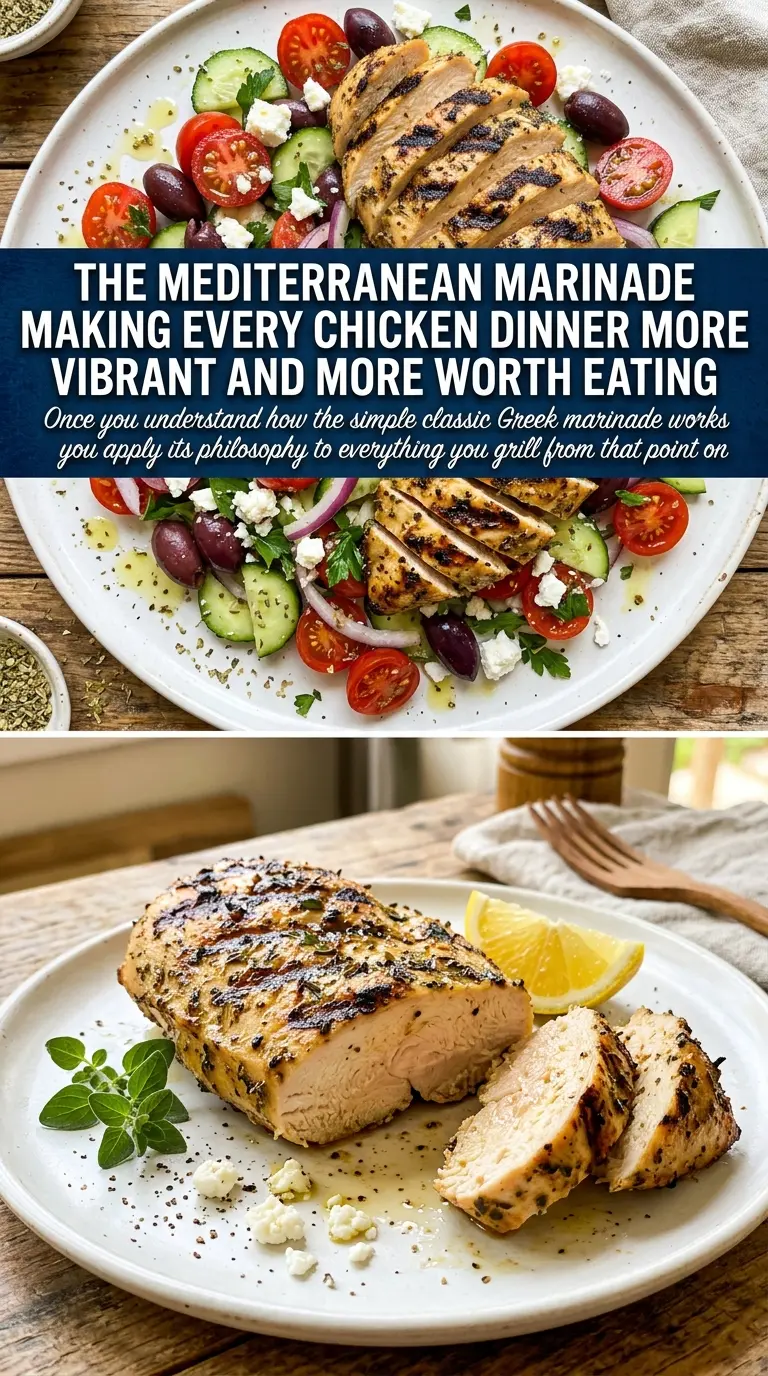
- Chicken pieces — Bone-in pieces stay juicier on the grill, but boneless thighs work well if you want faster cooking. If you use breasts, keep a close eye on them and pull them as soon as they hit 165°F so they don’t dry out.
- Olive oil — This is what gives the marinade body and helps the herbs and garlic coat every surface. Cheap olive oil is fine here because you’re using it for cooking, not finishing, but don’t skip it or the lemon will feel too sharp.
- Lemon juice and zest — Juice brings the tang, but zest carries the floral lemon oils that make the chicken taste fresh instead of flat. If you only have bottled juice, the flavor still works, but the zest matters enough that I wouldn’t leave it out.
- Fresh oregano — Fresh oregano gives a brighter, more Mediterranean herb note than dried alone. If you’re using dried, cut the amount in half and crush it between your fingers before adding it so it wakes up in the oil.
- Garlic — Mince it finely so it disperses through the marinade and doesn’t scorch on the grill. Big pieces of garlic can burn before the chicken is done, which gives the whole dish a bitter edge.
Grilling the Chicken So It Stays Juicy
Let the Marinade Do the Heavy Lifting
Whisk the marinade until it looks slightly thick and emulsified, then coat the chicken thoroughly. Four hours gives you great flavor, and overnight gives you the deepest seasoning, but don’t push much past 24 hours or the lemon starts changing the texture in a way you can taste. Turn the chicken once or twice while it rests so every side gets contact with the herbs and garlic.
Set the Grill Up for Browning, Not Charred Edges
Grill over medium-high heat, not blazing heat. You want steady sizzle when the chicken hits the grates and clean grill marks after a few minutes, not blackened edges with a raw center. If the outside is dark too quickly, move the pieces to a cooler part of the grill and let them finish there.
Cook to Temperature, Then Stop
Use an instant-read thermometer and pull the chicken at 165°F in the thickest part. That number matters more than the clock, because chicken pieces vary a lot in size and thickness. If you keep cooking past that point, the juices keep tightening up and the meat loses the tenderness this recipe is known for.
Rest Before Serving
Let the chicken rest for 5 minutes before slicing or serving. That short pause gives the juices time to settle back into the meat instead of spilling out the moment you cut in. It also gives you a little breathing room to get the sides on the table.
How to Adapt This for the Chicken You Have on Hand
Boneless Thighs for Faster Weeknights
Boneless thighs cook faster and stay forgiving if your grill runs hot. They still soak up the lemon and oregano beautifully, but they won’t give you quite the same dramatic char as bone-in pieces. Start checking them early, since they can go from juicy to overdone in a couple of minutes.
Oven-Baked Greek Chicken
If grilling isn’t an option, bake the marinated chicken on a wire rack set over a sheet pan at 425°F until it reaches temperature. The flavor stays bright, though you’ll lose some of the smoky edge from the grill. A brief broil at the end can help bring back a little color.
Dairy-Free, Naturally
This recipe already skips dairy, which makes it a good fit for a lot of tables without any extra work. Just keep the marinade balanced with enough olive oil so the lemon doesn’t taste sharp or thin.
Gluten-Free Serving Ideas
The chicken itself is gluten-free, so the main thing to watch is what you serve with it. Rice, potatoes, salad, and grilled vegetables all fit the same bright, savory profile without adding any extra fuss.
Storage and Reheating
- Refrigerator: Store leftovers in an airtight container for up to 4 days. The flavor stays good, though the grilled edges soften a bit.
- Freezer: It freezes well for up to 2 months. Cool the chicken completely first, then wrap it tightly or store it in freezer bags with the air pressed out.
- Reheating: Reheat gently in a covered skillet with a splash of water or broth over low heat, or warm it in a 300°F oven until heated through. High heat dries out leftover chicken fast, which is the main mistake to avoid.
Answers to the Questions Worth Asking
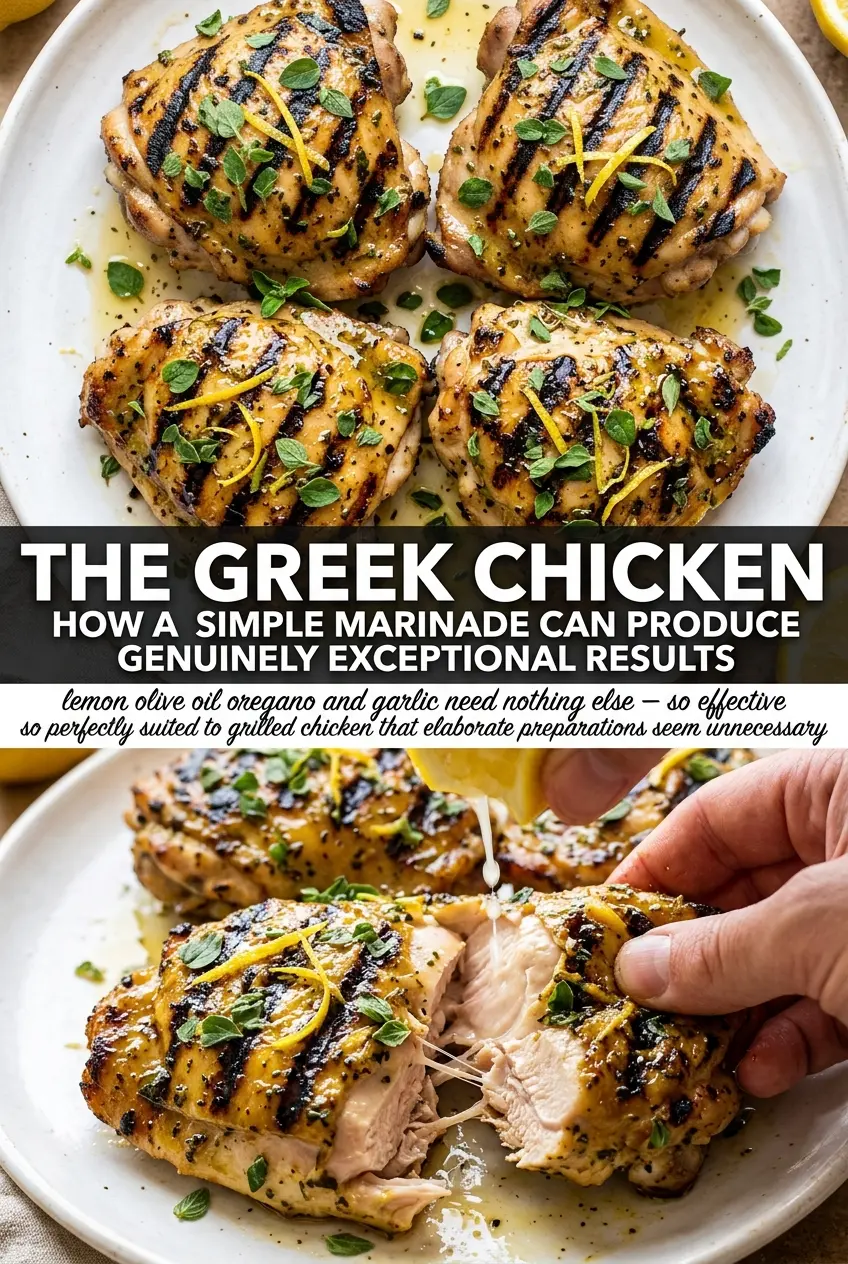
Juicy Greek Chicken
Ingredients
Equipment
Method
- Whisk together olive oil, lemon juice, lemon zest, minced garlic, oregano, dried thyme, salt, and pepper until the mixture looks evenly combined.
- Taste the marinade and adjust salt and pepper as needed so it’s boldly lemony and herb-forward.
- Place chicken pieces in a resealable bag or shallow dish, pour over the marinade, and turn to coat all sides.
- Cover and refrigerate to marinate for 4-24 hours, which helps the chicken absorb the lemon-oregano flavor.
- Preheat the grill to medium-high heat, aiming for consistent heat across the grates.
- Grill chicken over medium-high heat until the internal temperature reaches 165°F, turning as needed for even charring.
- Transfer chicken to a plate and let rest for 5 minutes before serving so juices redistribute.