Juicy grilled chicken with deep seasoning and clean, balanced flavor earns a permanent spot in the rotation fast. The marinade hits the sweet spot between salty, tangy, and just a little sweet, and the grill gives the outside the kind of light char that makes each bite taste like it came from a cook who knows what they’re doing.
The trick here is balance and timing. Soy sauce, lemon juice, Worcestershire, Dijon, garlic, and brown sugar build a marinade that seasons all the way through without turning the chicken mushy. A shorter marinate still works, but a few hours in the fridge gives the best payoff: the meat stays juicy, the surface browns well, and the flavor tastes intentional instead of one-note.
Below, I’ve included the detail that matters most with grilled chicken: how to keep the heat right so the outside doesn’t scorch before the center is done. There’s also a note on swaps and storage, since this recipe is just as useful for a weeknight dinner as it is for a backyard cookout.
The chicken stayed juicy and the marinade browned beautifully on the grill. I left it in for about 4 hours and the flavor went all the way through without tasting too salty.
Save this all-star grilled chicken for the nights when you want juicy, well-marked chicken with a simple marinade that actually delivers.
The Marinade Timing That Keeps Chicken Juicy Instead of Mushy
The most common mistake with grilled chicken is treating marinade time like it can only help. Acid does tenderize, but too much time in lemon juice can push the texture past juicy and into soft on the outside, stringy in the middle. For this version, 2 to 8 hours is the sweet spot, and that window matters because the soy sauce and Worcestershire bring salt and depth while the lemon brightens without taking over.
If the chicken looks pale and wet when it comes out of the fridge, that’s normal. What you want is for the surface to be lightly coated, not sitting in a puddle of liquid. Let excess marinade drip off before the chicken hits the grill, or the sugars in the brown sugar will burn before the chicken has time to cook through.
- Chicken pieces — Bone-in pieces stay juicier on the grill, but boneless works too if you watch the temperature closely. Thinner pieces need less time and should be moved to cooler heat once they pick up color.
- Olive oil — Helps carry the seasoning and keeps the surface from drying out. A neutral oil works if that’s what you have, but olive oil gives the marinade a fuller taste.
- Dijon mustard — This is what helps the marinade cling instead of sliding off. Yellow mustard will work in a pinch, but it tastes sharper and less rounded.
- Brown sugar — A small amount helps the chicken brown and balances the lemon. Skip it only if you want a more savory finish; otherwise, it’s part of what makes this taste like classic backyard grilled chicken.
Grilling It Hot Enough for Color, Low Enough for a Clean Finish

Building the Marinade
Whisk the marinade until the brown sugar dissolves and the mixture looks smooth, not gritty. You want the garlic and paprika suspended evenly so every piece gets the same seasoning. If the sugar sits in a clump at the bottom, it won’t do its job and can scorch on the grill.
Marinating the Chicken
Coat the chicken thoroughly and refrigerate it in a covered bowl or bag. Turn it once or twice if you can, but don’t obsess over it; the goal is even contact, not constant movement. Pull it out of the fridge while the grill preheats so it isn’t ice-cold when it hits the grates.
Getting the Grill Marks
Preheat to medium-high and oil the grates lightly so the chicken releases cleanly. Put the chicken down and leave it alone long enough to sear; if you keep nudging it, the skin or surface will tear before those marks form. You’re looking for defined grill lines and a little color before you turn it.
Finishing to 165°F
Keep turning the chicken occasionally until the thickest part reaches 165°F. If the outside is browning faster than the inside cooks, move the pieces to a cooler part of the grill and close the lid for a bit. Pull the chicken at temperature, then rest it for 5 minutes so the juices settle back into the meat instead of running onto the cutting board.
Three Ways to Work This Marinade Into Your Week
Make It with Boneless Chicken Breasts
Boneless breasts cook faster and are easier for sandwiches or meal prep, but they dry out more quickly. Pound them to an even thickness so the thinner end doesn’t overcook while the thick end finishes. Pull them as soon as they hit 165°F and rest them before slicing.
Dairy-Free and Gluten-Free Friendly
This recipe already leans naturally dairy-free, and it can stay gluten-free if you use a gluten-free soy sauce or tamari. That swap keeps the same salty backbone without changing the grilling method or the final texture.
Add Smoke Without a Smoker
A small pinch of smoked paprika can deepen the grill flavor if you want a stronger barbecue note. It won’t taste like full-on smoked chicken, but it adds enough warmth to make the marinade feel a little richer and more cooked-in.
Storage and Reheating
- Refrigerator: Store cooked chicken in an airtight container for up to 4 days. It stays juicy if you keep the pieces whole instead of slicing them first.
- Freezer: Freeze cooked chicken for up to 3 months. Wrap tightly and thaw in the fridge so it doesn’t dry out from a fast temperature change.
- Reheating: Warm it gently in a covered skillet over low heat with a splash of water or broth, or reheat in a 300°F oven. High heat toughens the chicken fast, which is the main reason leftovers turn dry.
Questions I Get Asked About This Recipe
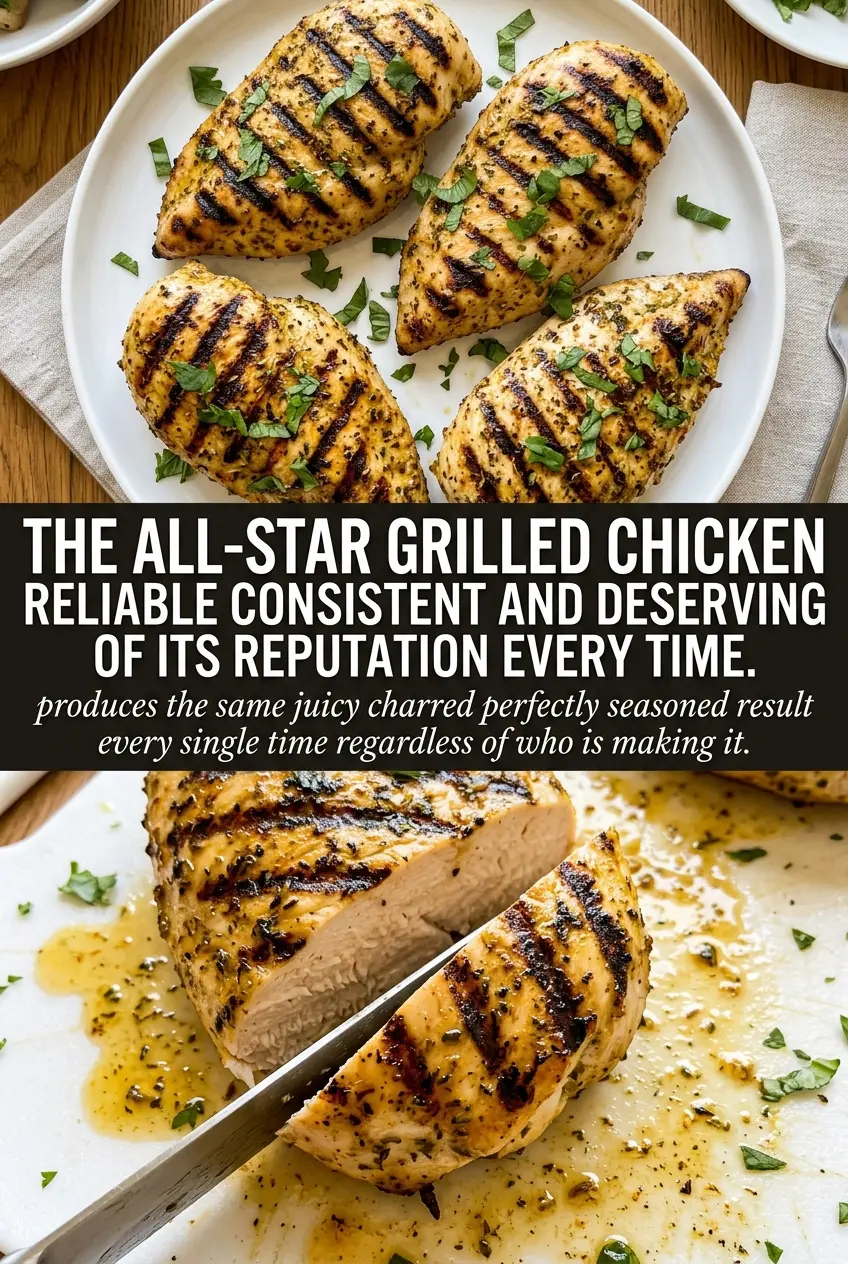
All-Star Grilled Chicken
Ingredients
Equipment
Method
- Whisk together the olive oil, soy sauce, lemon juice, Worcestershire sauce, Dijon mustard, minced garlic, brown sugar, black pepper, and paprika until smooth.
- Transfer the marinade to a resealable container or large bowl and set aside while you prep the chicken.
- Add the chicken pieces to the marinade, coat evenly, and refrigerate for 2-8 hours.
- Keep the chicken covered in the refrigerator so the marinade stays in contact with the meat for best flavor.
- Preheat the grill to medium-high heat and lightly oil the grates.
- Grill the chicken, turning occasionally, until the internal temperature reaches 165°F.
- Watch for steady grill marks and doneness as the chicken finishes cooking through the thickest pieces.
- Let the grilled chicken rest for 5 minutes before serving to keep it juicy.