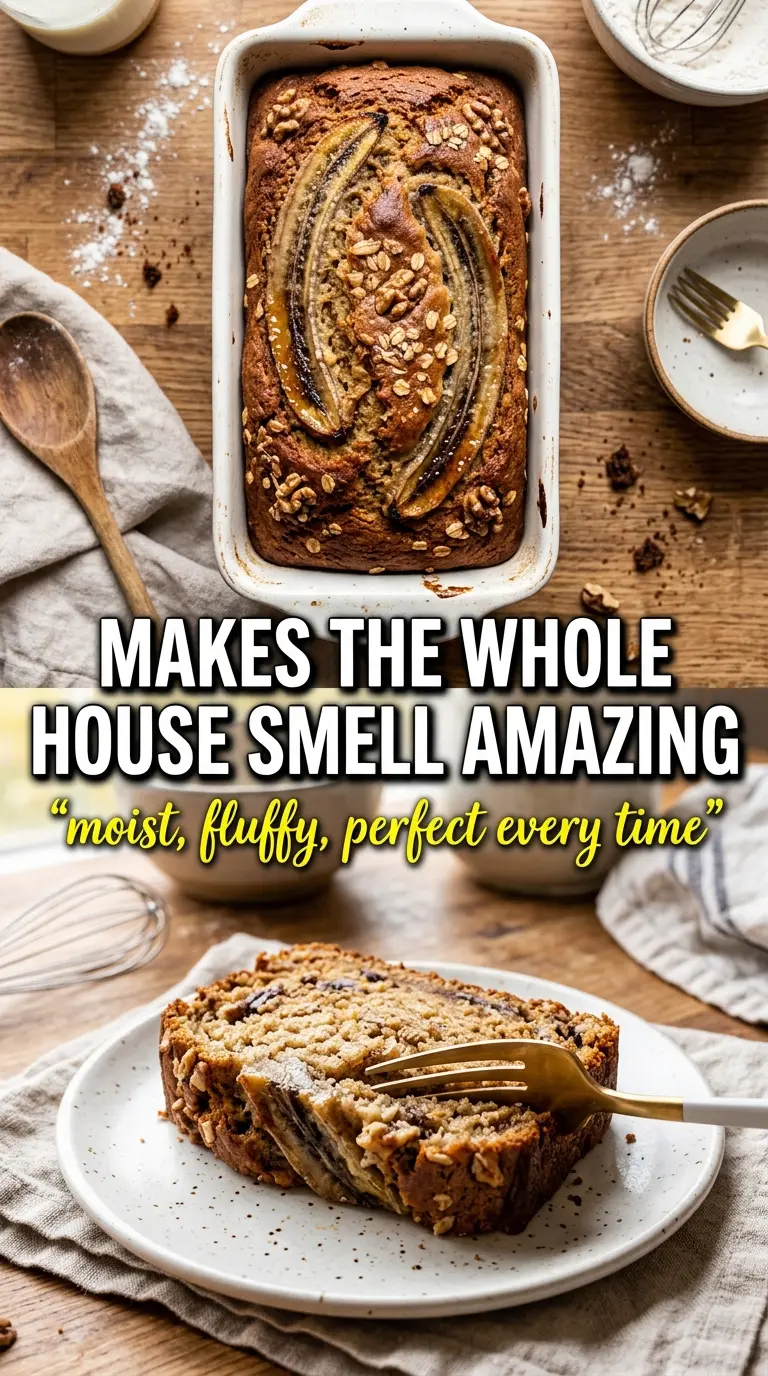
Banana bread earns its place in the kitchen when the crumb stays tender for days and the top bakes into a deep, caramelized crust that tastes like the best part of the loaf. This version does that without extra fuss. It comes together in one bowl, uses very ripe bananas for real flavor, and bakes into a loaf that slices cleanly once it’s had a little time to cool.
The trick is in the balance. Melted butter gives the bread a rich, soft texture without making it heavy, while cinnamon adds just enough warmth to keep the banana from tasting flat. The bananas should be very ripe — speckled, soft, and almost overwhelming on the counter — because that’s where the sweetness and depth come from. Overmixing is the fastest way to lose that tender crumb, so the batter gets folded just until the flour disappears.
Below, you’ll find the small details that make this loaf turn out well every time, plus a few smart swaps and storage notes for when you want to bake ahead.
I’ve made banana bread for years, and this one finally gave me the moist crumb and crackly top I’ve been chasing. The loaf stayed soft for three days and the cinnamon with the browned banana flavor was just right.
Love a loaf with a dark golden crust and a moist, banana-rich crumb? Save this best banana bread for the next time those spotty bananas need a purpose.
The Difference Between Moist Banana Bread and Dense Banana Brick
The most common banana bread mistake is treating it like a cake batter and beating it until smooth. That develops the flour and tightens the crumb. Banana bread should look a little rough when it goes into the pan, with the flour just barely folded through and a few streaks disappearing as you stop.
The second problem is using bananas that aren’t ripe enough. Pale bananas add moisture, but they don’t bring the deep banana flavor this loaf needs. Very ripe bananas mash easily and almost dissolve into the batter, which is what gives the bread its soft, almost custardy center and that dark, almost toffee-like sweetness after baking.
What Each Ingredient Is Actually Doing in This Loaf
- Very ripe bananas — These are the backbone of the loaf. The darker and softer they are, the sweeter and more fragrant the bread will be. If yours are still a little firm, roast them in the peel at 300°F until the skins blacken and the insides turn soft.
- Melted butter — This gives the bread a richer flavor than oil and keeps the crumb tender. It also mixes easily with the bananas, which means less stirring and a lighter texture overall.
- Sugar — Beyond sweetness, sugar helps the top brown and caramelize. You can reduce it a little, but don’t cut it too much or the loaf loses that classic banana bread finish.
- All-purpose flour — This gives the loaf its structure. Bread flour makes it tougher, and cake flour makes it too fragile. All-purpose is the right middle ground here.
- Baking soda — It reacts with the bananas and helps the loaf rise. If your banana bread comes out flat, old baking soda is often the culprit.
- Cinnamon — Just enough to round out the banana flavor without turning the loaf into spice bread. It’s subtle, but it matters.
Getting the Batter into the Pan Without Losing the Tender Crumb
Start with the Bananas and Butter
Mash the bananas in a large bowl, then whisk in the melted butter while the butter is still warm, not hot. The warmth helps everything blend smoothly, and the mixture should look thick, glossy, and a little lumpy. If the butter is too hot, it can scramble the egg later, so let it cool for a minute if it’s steaming.
Build the Sweet Base
Stir in the sugar, egg, and vanilla until the mixture looks cohesive and slightly pale. You’re not trying to whip air into it; you’re just combining the wet ingredients evenly. If the egg disappears into the batter and the mixture looks loose and smooth, you’re in the right place.
Fold in the Dry Ingredients
Sprinkle the flour, baking soda, salt, and cinnamon over the banana mixture, then fold gently with a spatula. Stop as soon as you no longer see dry flour. A few small lumps are fine. If you stir until the batter looks silky, the loaf will bake up tight and chewy instead of soft.
Watch the Bake, Not Just the Clock
Pour the batter into the greased loaf pan and bake until the top is deeply golden and a toothpick comes out clean or with a few moist crumbs. The center should be set but not dry. If the top browns too quickly before the middle is done, lay a piece of foil loosely over the loaf for the last 15 minutes.
Let the Crumb Set Before Slicing
Cool the loaf in the pan for 10 minutes, then turn it out onto a rack. Letting it cool slightly keeps it from collapsing when you cut it. If you slice it while it’s still steaming hot, the inside can seem gummy even when it’s fully baked.
Three Ways to Adjust This Banana Bread Without Losing the Good Part
Make It Dairy-Free
Swap the butter for melted coconut oil or a neutral oil like avocado. Coconut oil gives a little more flavor and firms up as it cools, while avocado oil keeps the crumb soft and neutral. The loaf still bakes up moist, though the butter-rich taste will be a little lighter.
Add Nuts or Chocolate Without Ruining the Texture
Fold in up to 3/4 cup chopped walnuts, pecans, or chocolate chips after the flour goes in. Tossing them in a spoonful of flour first helps keep them from sinking to the bottom. Chocolate makes the loaf a little richer, while nuts add crunch and a more classic bakery-style bite.
Reduce the Sugar Slightly
You can cut the sugar back to 1/2 cup if your bananas are extremely ripe. The loaf will still be moist, but the crust won’t caramelize quite as deeply and the flavor will be less dessert-like. I wouldn’t go lower than that unless you’re planning to serve it with butter or jam.
Storage and Reheating
- Refrigerator: Store tightly wrapped at room temperature for up to 3 days, or refrigerate for up to 5 days if your kitchen runs warm. The crumb firms up a little in the fridge, but the flavor stays good.
- Freezer: Banana bread freezes well. Wrap the cooled loaf or individual slices tightly in plastic wrap, then foil, and freeze for up to 3 months.
- Reheating: Thaw at room temperature, then warm slices in a toaster oven or microwave for just a few seconds. Don’t overheat it or the crumb turns dry and the butter flavor disappears.
Questions I Get Asked About This Recipe
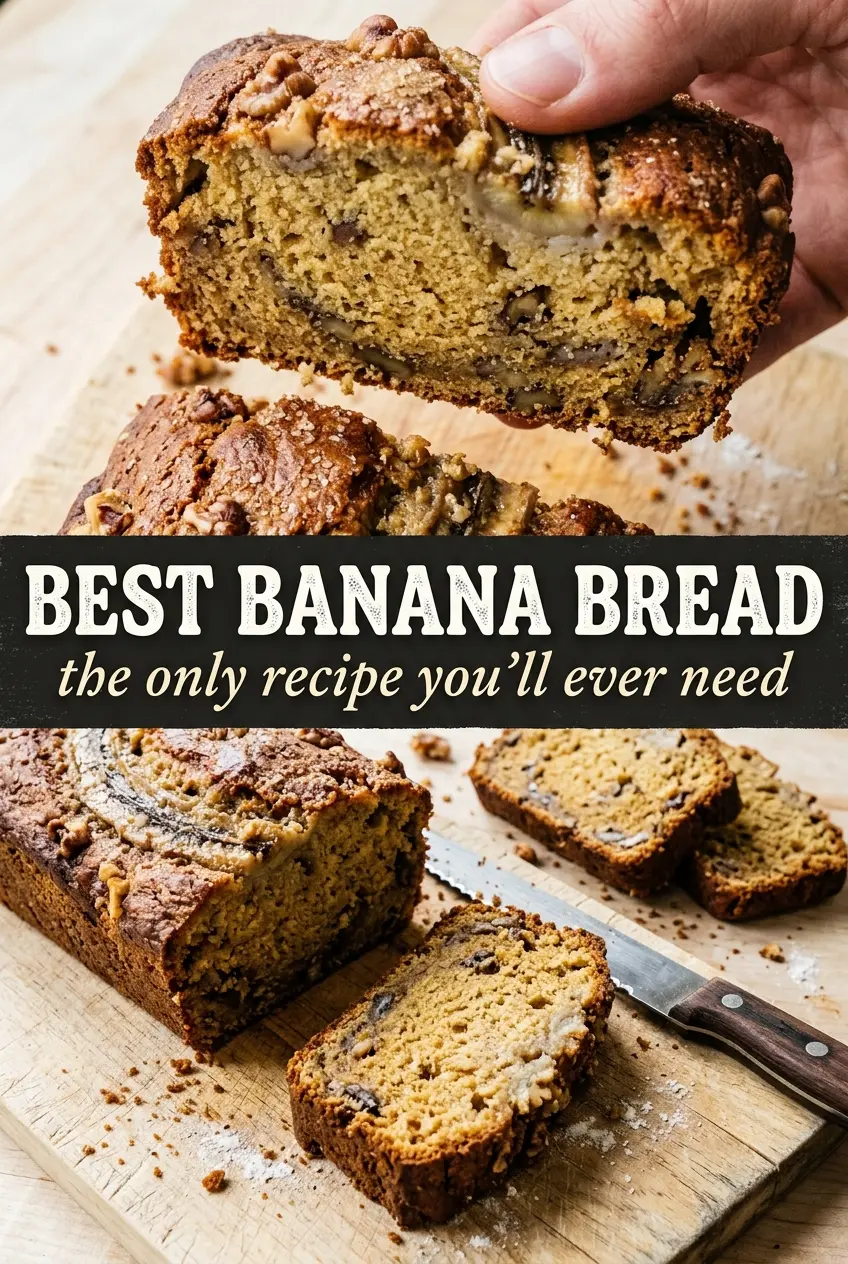
Best Banana Bread
Ingredients
Equipment
Method
- Preheat the oven to 350°F and grease a 9x5 loaf pan so the loaf releases cleanly after baking.
- Melt the unsalted butter and whisk it directly into the mashed very ripe bananas in a large bowl.
- Stir in the sugar, large egg, and vanilla extract until the mixture looks uniform and well combined.
- Sprinkle the all-purpose flour, baking soda, salt, and cinnamon over the banana mixture and fold until no dry streaks remain.
- Pour the batter into the prepared pan and bake for 60–70 minutes at 350°F until the top is deeply golden and a toothpick comes out clean.
- Cool the loaf in the pan for 10 minutes before removing it.
- Turn the loaf out onto a rack and wait until slightly cooled; do not slice yet or the crumb may fall apart.