Golden, moist banana bread with a tender crumb and a little extra body is exactly what cottage cheese brings to the table here. The loaf slices cleanly once it cools, but it still stays soft in the middle with that familiar banana bread comfort and a barely rich finish that makes a second slice feel inevitable.
The trick is blending the cottage cheese first so it disappears into the batter instead of leaving little curds behind. That smooth base gives you moisture without making the loaf heavy, and it pairs well with ripe bananas, which carry most of the sweetness and flavor. Honey or maple syrup keeps the sweetness gentle, so the banana taste stays front and center.
Below, I’m breaking down the one step that matters most if you want a loaf that bakes through without drying out, plus a few swaps that help if you’re working with what’s already in the kitchen.
I was skeptical about the cottage cheese, but after blending it smooth the loaf came out incredibly moist and not at all gummy. It sliced beautifully once cooled, and the banana flavor was even better the next day.
Save this cottage cheese banana bread for the loaf that bakes up extra moist, slices cleanly, and stays tender for days.
The Reason This Loaf Stays Tender Instead of Heavy
Cottage cheese can go wrong fast in banana bread if it’s left in its curdled state. Those little pockets of curd don’t melt away during baking; they can leave the crumb uneven and make the loaf feel coarse in places. Blending it smooth first solves that problem and turns it into part of the wet base, where it behaves more like a built-in tenderizer.
The other place people run into trouble is with the bananas. Very ripe bananas bring moisture and sweetness, but too much mashed banana without enough flour can tip the loaf into a dense, underbaked middle. This formula keeps the batter balanced, so the center sets without turning dry at the edges. Bake it until the top is deeply golden and a toothpick comes out clean from the center, not just the top crust.
What Each Ingredient Is Actually Doing In This Loaf
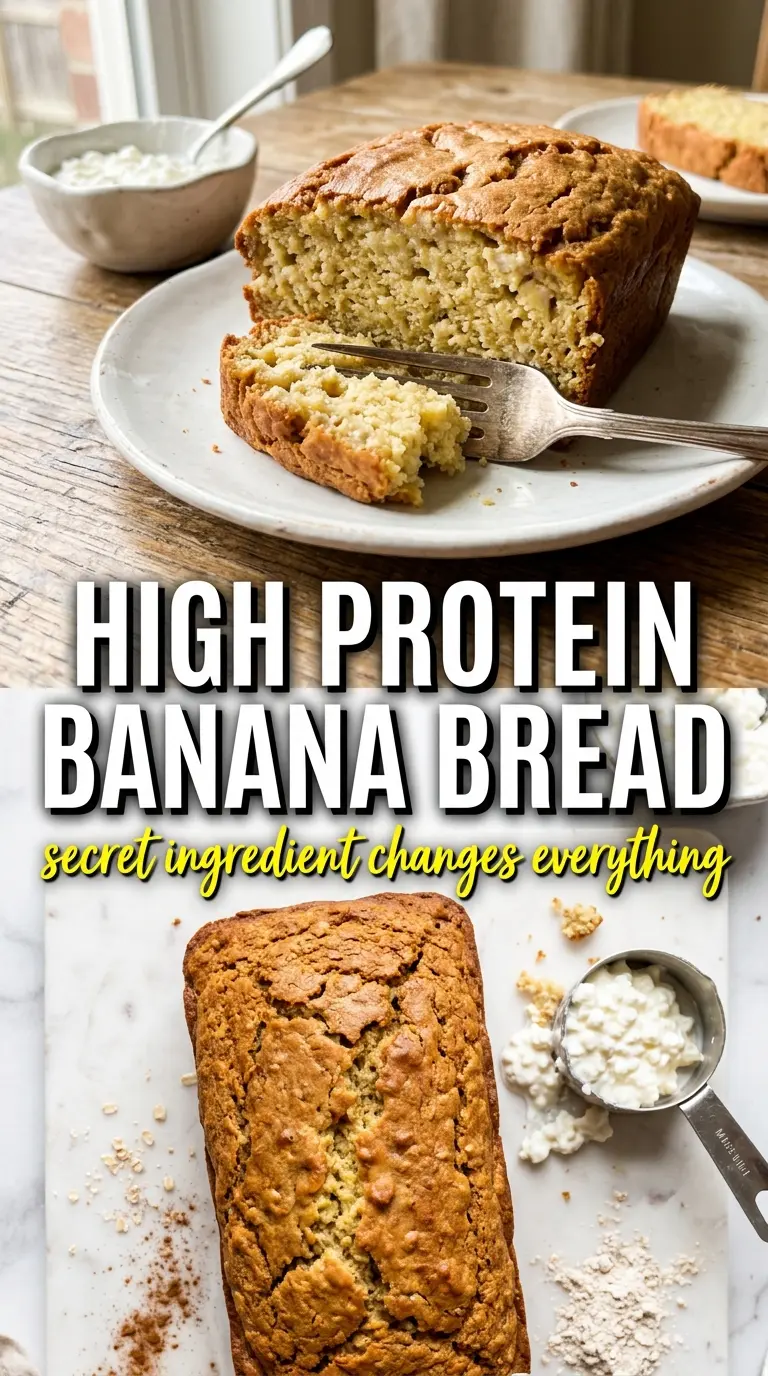
- Cottage cheese — This is the ingredient that gives the loaf its extra moisture and tender crumb. Full-fat cottage cheese works best because it bakes up richer and less watery than low-fat versions. Blend it until completely smooth so it disappears into the batter.
- Bananas — Use bananas with plenty of brown spots, or even mostly black peels if that’s what you have. The riper they are, the more flavor and natural sweetness you get, and that matters here because the recipe uses only a small amount of added sweetener.
- Honey or maple syrup — Either one works, but honey gives a slightly rounder sweetness while maple brings a softer, more caramel-like note. Use what you have; the loaf is not dependent on one specific sweetener.
- Butter — Melted butter adds flavor and helps the crumb stay soft. You can swap in neutral oil if you need a dairy-free version, but the loaf will taste a little less rich.
- Flour, baking soda, and baking powder — The flour gives the loaf structure, while the two leaveners work together to lift a batter that’s naturally heavy from the bananas and cottage cheese. Don’t overmix once the flour goes in, or the bread will turn tight instead of tender.
- Cinnamon — This doesn’t need to dominate. It just rounds out the banana flavor and keeps the loaf from tasting flat.
Mixing the Batter Without Beating the Air Out of It
Smooth the Cottage Cheese First
Blend the cottage cheese until it looks like a thick, creamy liquid with no visible curds. That step matters more than most people think, because curds leave the loaf textured in an uneven way instead of giving you that soft, even crumb. If you don’t have a blender, an immersion blender works too. Stop when it’s fully smooth, not foamy.
Build the Wet Base
Whisk the blended cottage cheese with the mashed bananas, eggs, honey or maple syrup, melted butter, and vanilla until the mixture looks uniform and glossy. The batter will be loose and slightly speckled from the bananas, and that’s exactly what you want. If the butter is too hot, it can scramble the eggs, so let it cool for a minute after melting.
Fold, Don’t Stir
Add the flour, baking soda, baking powder, cinnamon, and salt, then fold just until no dry streaks remain. A few small lumps are fine. If you keep mixing after the flour disappears, the loaf gets tougher and the center can turn gummy instead of tender. Pour it into the pan right away so the leaveners start working in the oven, not on the counter.
Bake Until the Center Is Set
The loaf is done when the top is deeply golden, the edges pull slightly from the pan, and a toothpick inserted into the center comes out clean or with just a few moist crumbs. If the top browns too quickly, lay a loose piece of foil over it for the last 15 minutes. That keeps the crust from overdarkening while the middle finishes baking.
How to Adapt This Loaf When You Need a Different Version
Dairy-Free Version
Swap the cottage cheese for a thick dairy-free yogurt and replace the butter with neutral oil or melted coconut oil. You’ll lose a little of the tang and richness from the original, but the loaf still stays moist and slices well.
Gluten-Free Version
Use a 1:1 gluten-free baking flour that already includes xanthan gum. The batter should still look thick and pourable, and the bake time may run a little longer because gluten-free flour holds moisture differently.
Lower-Sugar Loaf
Reduce the honey or maple syrup to 2 tablespoons if your bananas are very ripe. The loaf will taste less sweet and a little more breakfast-like, but the bananas still carry plenty of flavor on their own.
Add-Ins That Work
Fold in up to 1/2 cup of chopped walnuts, pecans, or chocolate chips after the dry ingredients go in. Anything more than that starts crowding the batter and can interfere with the loaf setting evenly.
Storage and Reheating
- Refrigerator: Store sliced or unsliced in an airtight container for up to 5 days. The texture stays moist, though the crumb firms up slightly as it chills.
- Freezer: This loaf freezes well. Wrap the cooled loaf or individual slices tightly, then freeze for up to 3 months. Thaw at room temperature or overnight in the fridge.
- Reheating: Warm slices in a toaster oven or microwave just until heated through. Don’t overheat it, or the loaf can dry out and lose the soft texture that makes it good in the first place.
Answers to the Questions Worth Asking
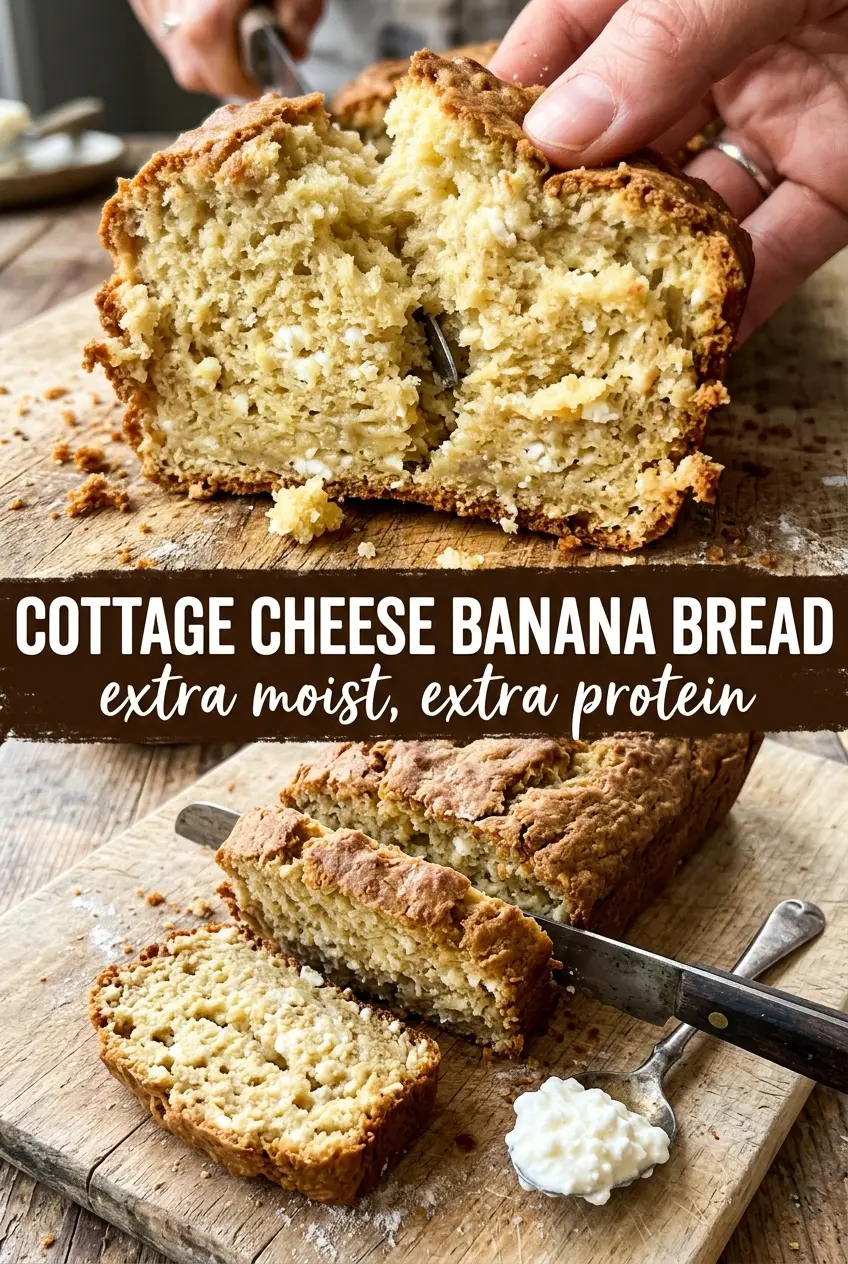
Cottage Cheese Banana Bread
Ingredients
Equipment
Method
- Preheat oven to 350°F and grease a 9x5 loaf pan, so the loaf releases cleanly. Visual cue: you should see the pan lightly coated with no bare metal spots.
- Blend cottage cheese until smooth, then whisk together with mashed bananas, eggs, honey, melted butter, and vanilla. Visual cue: the mixture should look uniform and thick, with no cottage cheese curds.
- Fold in flour, baking soda, baking powder, cinnamon, and salt until just combined. Visual cue: stop when no dry flour streaks remain to avoid tough crumb.
- Pour batter into the prepared pan and smooth the top. Visual cue: the surface should be even with a slight ridge where batter settles.
- Bake for 60–70 minutes at 350°F until deeply golden and a toothpick inserted in the center comes out clean. Visual cue: the top should be browned and the loaf should look set in the middle.
- Cool in pan for 15 minutes before turning out, then cool fully before slicing for best texture. Visual cue: the loaf should firm up and hold its shape when lifted.