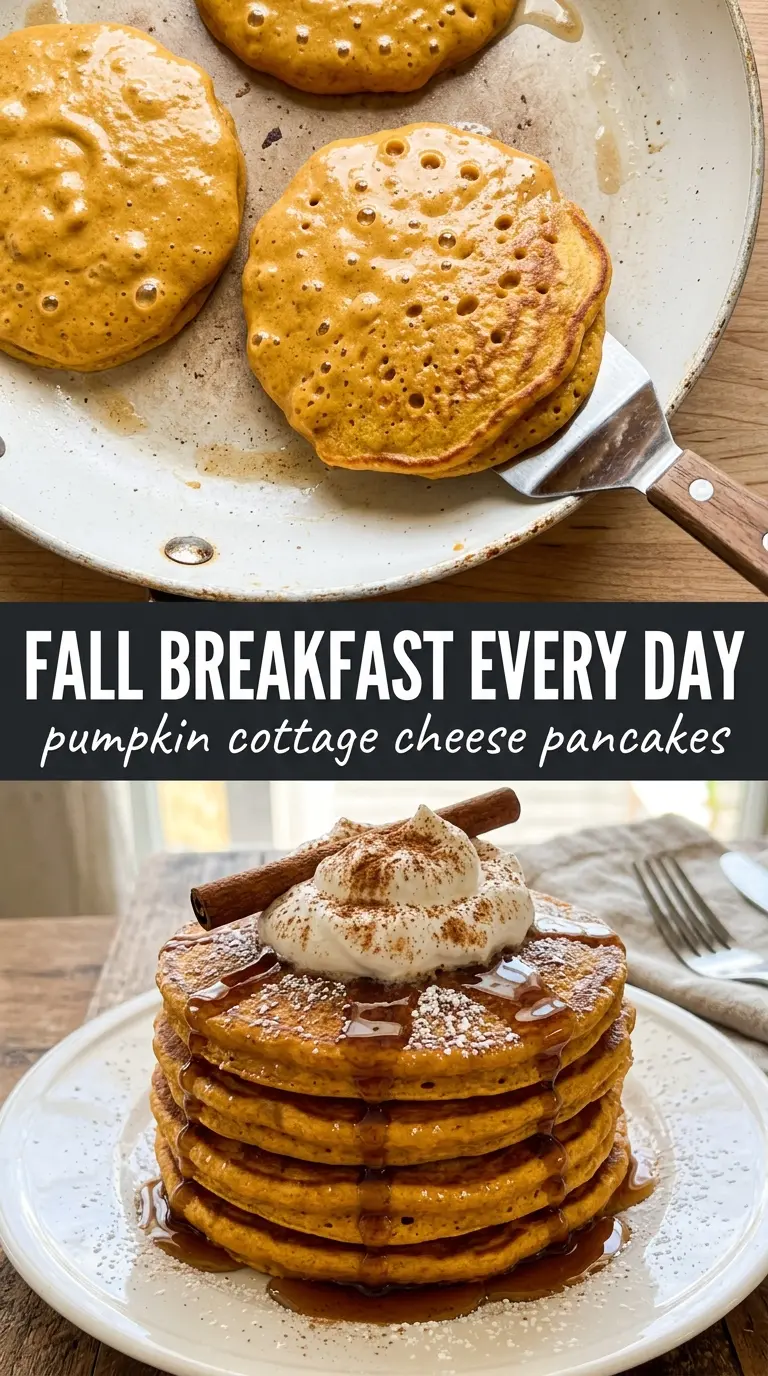
Thick pumpkin cottage cheese pancakes land on the plate with a tender middle, a golden crust, and just enough spice to make the whole stack taste like fall without turning heavy. The cottage cheese blends right into the batter, so you get a high-protein pancake that still eats light and fluffy instead of dense or rubbery.
The trick is blending the batter until completely smooth and letting it rest for a few minutes before it hits the pan. That short rest gives the oats time to hydrate and helps the pancakes hold their shape on the griddle. Medium-low heat matters here too; if the pan runs too hot, the outside browns before the center sets.
Below, I’ll walk through the small details that keep these pancakes tall and tender, plus the swaps that work if you need a gluten-free version or want to adjust the texture a little.
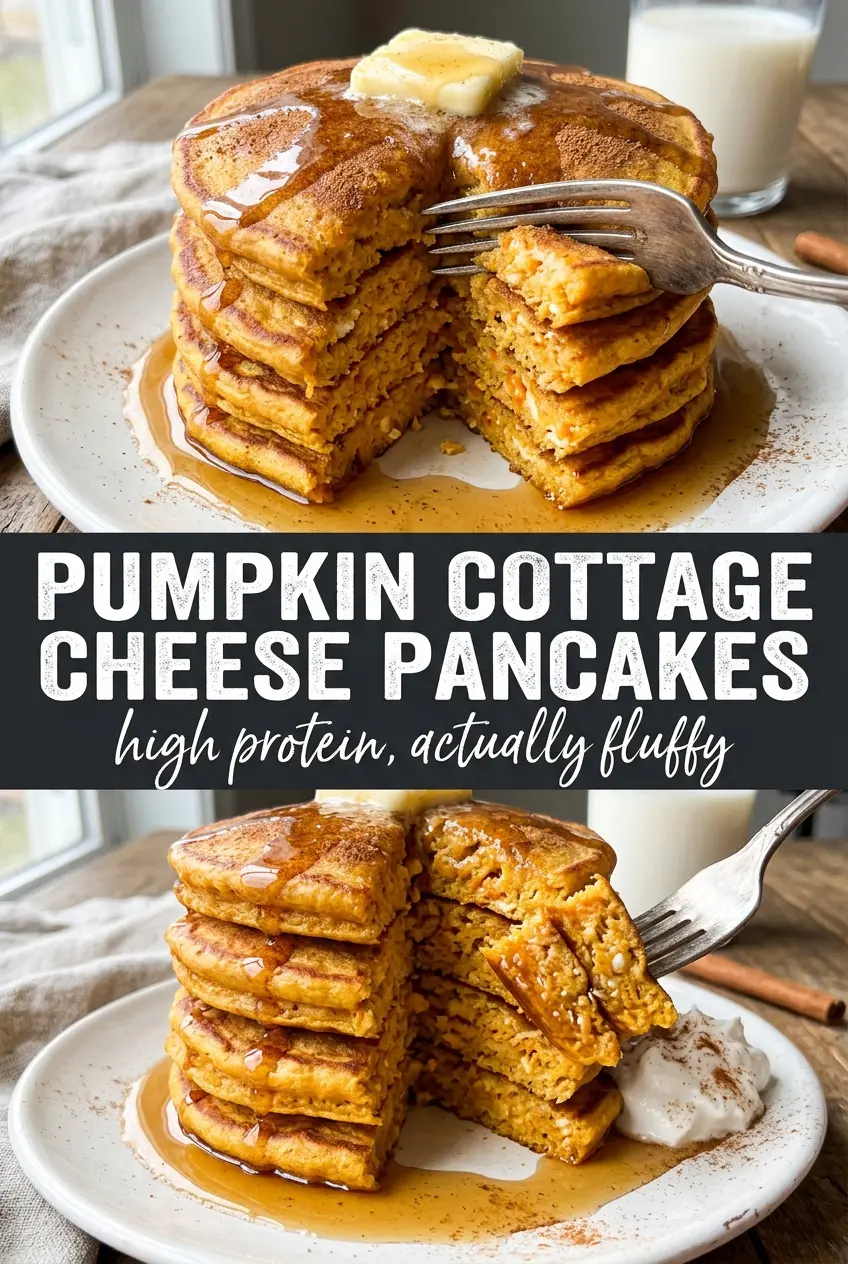
The pancakes came out thick and fluffy, and the cottage cheese disappeared completely after blending. I loved that the centers cooked through without drying out, and the cinnamon-pumpkin flavor was perfect with maple syrup.
Keep these pumpkin cottage cheese pancakes handy for a tall, fluffy breakfast stack with maple syrup and cinnamon on top.
The Cottage Cheese Needs to Disappear Completely
With pancakes like these, the texture lives or dies in the blender. If the cottage cheese stays even slightly curdy, the batter can bake up unevenly and the pancakes feel bumpy instead of tender. Blend until the mixture looks smooth and creamy, with no visible curds and no separate eggy streaks.
Rolling oats work beautifully here because they soften as the batter rests and give the pancakes enough structure to flip without falling apart. Oat flour makes the batter a little smoother and a touch more delicate, so use it if you want the most uniform texture. The pumpkin puree adds moisture, but it also makes the batter heavier than a standard pancake batter, which is why the rest time matters.
What Each Ingredient Is Actually Doing in the Batter
- Canned pumpkin puree — This brings the flavor and the moisture, but it also thickens the batter fast. Use plain pumpkin puree, not pumpkin pie filling, or the pancakes will turn overly sweet and spiced before you even start cooking.
- Full-fat cottage cheese — This is the ingredient that gives you the protein boost and the creamy interior. Full-fat cottage cheese blends smoother and tastes richer; low-fat works in a pinch, but the pancakes can come out a little drier.
- Rolled oats or oat flour — Oats help the pancakes hold together and give them a hearty, tender bite. If you use rolled oats, blend until they break down fully; if you use oat flour, the batter will be smoother and slightly lighter.
- Pumpkin pie spice and cinnamon — Pumpkin pie spice carries the warm background notes, while the extra cinnamon sharpens the flavor so the pancakes don’t taste flat. If you’re out of pumpkin pie spice, use a mix of cinnamon, ginger, nutmeg, and a pinch of cloves.
- Baking powder — This gives the batter lift, especially since pumpkin and cottage cheese weigh it down. Don’t skip it, and don’t use stale baking powder, or the pancakes will spread more than they rise.
- Maple syrup — A little sweetness in the batter rounds out the pumpkin and helps the pancakes brown nicely. You can reduce it slightly if you plan to serve a generous pour on top, but don’t leave it out completely.
Getting the Griddle Temperature Right Before the Flip
Let the Batter Rest Before It Hits the Pan
After blending, let the batter sit for about 5 minutes while the griddle heats. That pause gives the oats time to absorb moisture and thicken the batter enough that the pancakes mound instead of spreading thin. If the batter still looks loose after resting, wait another minute or two before cooking.
Cook Low Enough for the Center to Set
Use medium-low heat and grease the griddle with butter. Scoop about 1/4 cup batter for each pancake and leave space between them so they don’t steam into each other. If the butter browns instantly or the pancakes darken before bubbles appear, the pan is too hot.
Flip Only When the Edges Look Ready
Cook the first side for 3 to 4 minutes, until the edges look set and bubbles show up across the surface. The center should still look a little moist, not raw and glossy. Flip once, gently, and cook the second side for 2 to 3 minutes until the pancakes feel springy when touched in the middle.
Stack Them While They’re Still Warm
Serve the pancakes right away with butter, maple syrup, and chopped pecans. They’re best hot off the griddle, when the edges are crisp and the center stays soft. If you need to hold them for a few minutes, set them on a wire rack instead of piling them on a plate, or the bottoms will soften.
How to Adapt These Pancakes Without Losing the Fluffy Texture
Gluten-Free Oat Flour Version
Use certified gluten-free oat flour or blend certified gluten-free rolled oats into a fine flour before mixing. The batter will be a little smoother and easier to pour, and the pancakes cook a touch more evenly. This swap keeps the same hearty texture without changing the flavor.
Lighter Dairy-Free Approach
For a dairy-free version, replace the cottage cheese with a thick, plain dairy-free yogurt and add an extra tablespoon of oats if the batter looks loose. You’ll lose some of the tangy richness and protein, but the pancakes still cook up tender and pumpkin-forward.
Extra-Soft Pancakes
Blend the batter a little less if you want a softer, more rustic texture from the oats, then cook the pancakes slightly smaller so they’re easier to flip. This version gives you a more tender center, but the pancakes will be a bit more fragile, so keep the heat low.
Make Ahead for a Busy Morning
Cook the pancakes, cool them on a rack, and store them in the fridge or freezer for later. They reheat well because the batter is already set and the pumpkin keeps the inside moist, but they’re best reheated gently so the edges don’t turn tough.
Storage and Reheating
- Refrigerator: Store in an airtight container for up to 4 days. The pancakes stay moist, though the edges soften a bit after chilling.
- Freezer: Freeze in a single layer, then transfer to a freezer bag with parchment between layers. They keep for up to 2 months and thaw fast.
- Reheating: Warm in a toaster oven or dry skillet over low heat until hot. The common mistake is blasting them in the microwave, which makes the texture rubbery and steamy instead of fluffy.
Questions I Get Asked About This Recipe
Pumpkin Cottage Cheese Pancakes
Ingredients
Equipment
Method
- Add canned pumpkin puree, full-fat cottage cheese, large eggs, vanilla extract, rolled oats (or oat flour), pumpkin pie spice, cinnamon, baking powder, maple syrup, and salt to a blender. Blend until completely smooth, with no visible oat or pumpkin lumps.
- Let the batter rest for 5 minutes while you preheat a griddle over medium-low heat. The batter will thicken slightly and become easier to pour.
- Grease the griddle with butter and pour about 1/4 cup batter per pancake. Drop batter carefully so it forms round, even circles.
- Cook for 3–4 minutes until bubbles form on top and the edges look set. You should see the center begin to look drier before flipping.
- Flip and cook for 2–3 more minutes until the second side is golden. Press very lightly only if needed to help them cook through.
- Stack the pancakes tall and top with maple syrup. Add a pat of butter and sprinkle chopped pecans over the stack.