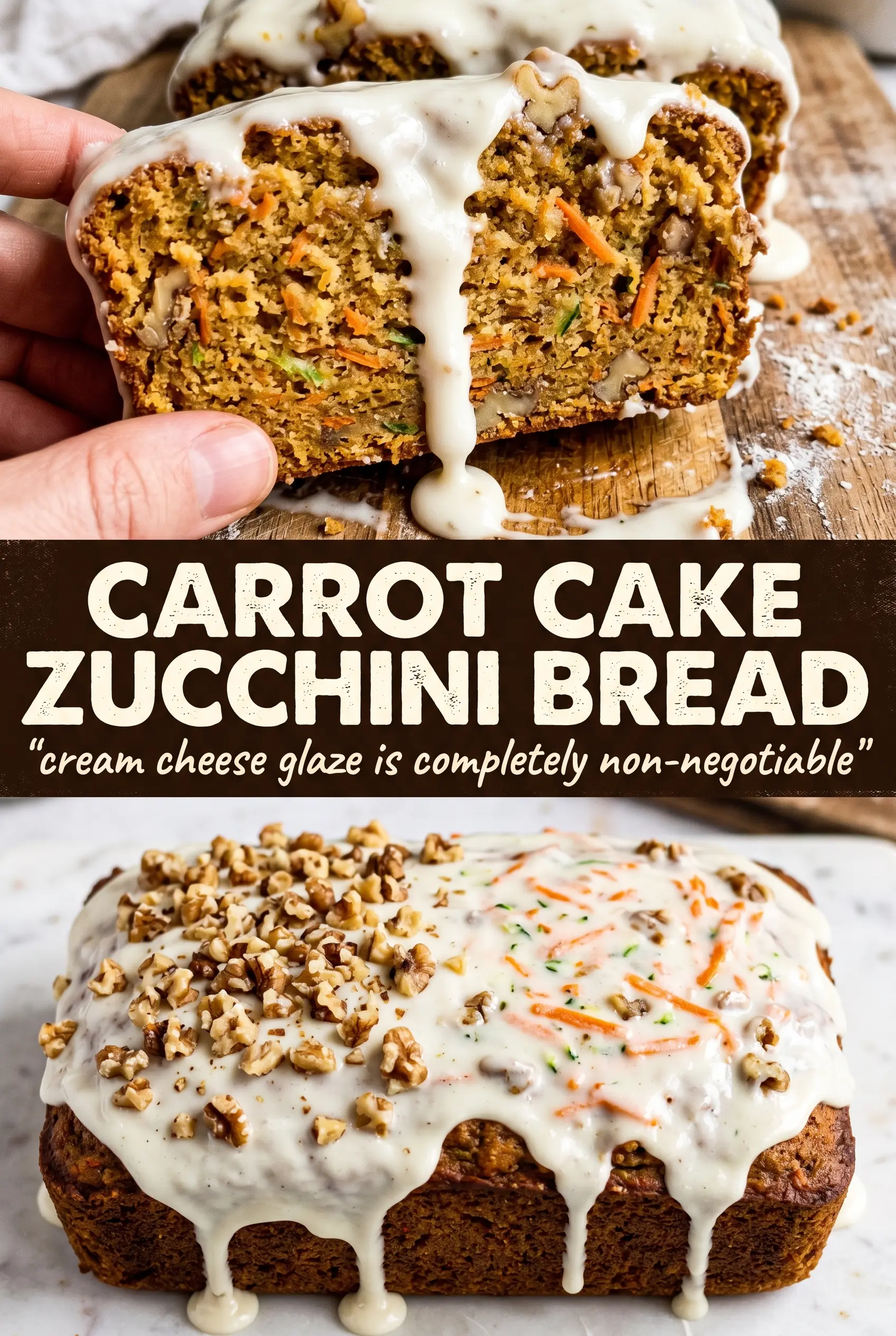
Carrot Cake Zucchini Bread comes out tender, warmly spiced, and just sweet enough to feel like a treat without crossing into full dessert territory. The zucchini disappears into the crumb, but it leaves behind that soft, almost plush texture that keeps each slice moist for days. The carrots bring a gentle sweetness and a little extra structure, while the cream cheese frosting turns the whole loaf into something people hover over the counter for.
The trick here is balance. You want the zucchini grated fine and squeezed dry so the batter doesn’t turn heavy, but you don’t want to wring out every last bit of moisture or the loaf bakes up dry. Greek yogurt adds tenderness and a slight tang that plays well with the cream cheese frosting, and the brown sugar keeps the crumb soft and flavorful. The spices are kept in the background just enough to give the loaf that carrot-cake warmth without overwhelming the vegetables.
Below you’ll find the one step that matters most for a clean, even crumb, plus a few variations if you want to skip the frosting, add nuts, or make the loaf a little more breakfast-friendly.
The loaf baked up moist all the way through, and the frosting set nicely after chilling for a few minutes. I liked that the zucchini disappeared into the texture but still kept the bread soft the next day.
Carrot Cake Zucchini Bread with cream cheese frosting is the kind of loaf that stays soft, spiced, and sliceable for days.
The Moisture Trap Most Quick Breads Fall Into
Carrot and zucchini breads can turn gummy fast when the batter starts out too wet. The zucchini is the usual culprit because it holds a lot of water, and if you toss it in without squeezing it dry, that moisture ends up steaming the loaf instead of letting it bake into a tender crumb. This recipe handles that by using just enough yogurt and oil to keep things soft, then relying on the dry vegetables to stay in balance.
The other thing that matters is mixing. Once the flour goes in, stop as soon as the streaks disappear. Overmixing develops the gluten in the flour and gives you a tight, rubbery loaf instead of the light, cake-like slice you want with this kind of bread.
What Each Ingredient Is Actually Doing In This Loaf

- All-purpose flour — This gives the loaf its structure without making it dense. A bread flour swap would make the crumb chewier and heavier, which works against the soft quick-bread texture here.
- Baking soda and baking powder — The combination gives the loaf lift and helps it rise evenly in the pan. If you skip one, the texture turns flat or uneven, especially with all the moisture from the vegetables.
- Brown sugar — This keeps the crumb moist and adds a little molasses depth that feels right with the cinnamon and ginger. White sugar will work in a pinch, but the loaf loses some of its warm, rounded flavor.
- Greek yogurt — This adds tenderness and a slight tang that keeps the loaf from tasting one-note. Sour cream works just as well if that’s what you have.
- Zucchini and carrots — The zucchini is there for moisture, but only after it’s grated and squeezed dry. The carrots should be finely grated so they soften fully and melt into the loaf instead of leaving hard shreds behind.
- Cream cheese frosting — The frosting should be soft enough to spread but not runny. If your cream cheese is too warm, it turns loose fast, so soften it just until it gives when pressed, not until it feels greasy.
Building The Batter So The Loaf Bakes Evenly
Mix The Dry Ingredients First
Whisk the flour, leaveners, salt, and spices together until the color looks uniform and there are no little pockets of cinnamon hiding in the bowl. That even distribution matters more than it seems, because the spices need to hit every bite and the baking powder has to be spread through the batter for a level rise. If you see clumps now, you’ll taste them later.
Beat The Wet Base Until Smooth
Work the brown sugar, eggs, oil, yogurt, and vanilla together until the mixture looks glossy and slightly thickened. You’re not trying to whip in a lot of air here; you’re just dissolving the sugar and giving the loaf a consistent base. If the eggs are cold, the batter may look a little broken at first, but it comes together once the dry ingredients go in.
Fold In The Vegetables Without Beating Them Down
Stir in the zucchini and carrots before the flour so they get coated evenly. Then add the dry ingredients and fold gently until the last streak of flour disappears. If you stir hard or keep going after the batter looks mixed, the loaf gets tough and the vegetables lose their nice little pockets of texture.
Watch For The Center To Set, Not Just The Top
Bake until the top is set, deeply golden, and a toothpick in the center comes out clean or with a few dry crumbs. The loaf often browns before the middle finishes, so if the top is getting dark too early, lay a loose piece of foil over it for the rest of the bake. Let it cool completely before frosting or the cream cheese will slide right off.
How To Adapt The Loaf Without Losing The Texture
Skip The Frosting For A Breakfast Loaf
Leave the cream cheese frosting off and the loaf becomes a little more breakfast-friendly without changing the crumb. The bread is still sweet enough on its own, especially if you keep the brown sugar as written, and it slices neatly once cooled.
Make It Gluten-Free With A Cup-For-Cup Blend
Use a good 1:1 gluten-free baking blend in place of the all-purpose flour. The loaf will still bake up tender, though it may need a few extra minutes in the oven and benefits from a full cool before slicing so it doesn’t crumble.
Add Pecans For More Bite
The pecans add crunch and a little toasted depth that plays nicely with the spices. Fold them in at the very end so they stay evenly distributed instead of sinking to the bottom of the pan.
Use Raisins For A Sweeter, More Classic Carrot Cake Feel
Raisins lean the loaf closer to carrot cake and add soft little bursts of sweetness. If you use them, stir them in dry or toss them with a spoonful of flour first so they don’t clump together in one corner of the batter.
Storage and Reheating
- Refrigerator: Store frosted or unfrosted slices in an airtight container for up to 5 days. The loaf stays moist, and the flavor deepens by day two.
- Freezer: Freeze unfrosted slices wrapped tightly for up to 2 months. Frosting doesn’t freeze as neatly, so add it after thawing if you want the best texture.
- Reheating: Warm an unfrosted slice in the microwave for 10 to 15 seconds or in a low oven until just warmed through. Don’t overheat it or the crumb turns dry fast.
Answers To The Questions Worth Asking
Carrot Cake Zucchini Bread
Ingredients
Equipment
Method
- Preheat oven to 350°F and grease a 9x5 loaf pan. Set it aside for batter assembly.
- Whisk all-purpose flour, baking soda, baking powder, salt, and cinnamon, ginger, and nutmeg together. Mix until spices are evenly distributed with no visible clumps.
- Beat brown sugar, eggs, vegetable oil, Greek yogurt, and vanilla extract until smooth. The mixture should look glossy and fully combined.
- Stir in grated and squeezed-dry zucchini and finely grated carrots. Mix just until vegetables are coated.
- Fold dry ingredients into the wet mixture until just combined. Fold in raisins or pecans if using, and stop as soon as no dry streaks remain (visual cue: batter looks thick and uniform).
- Bake at 350°F for 55–65 minutes, until a toothpick comes out clean. If needed, rotate the pan halfway through for even browning.
- Cool the loaf completely before frosting. Let it rest at room temperature until fully set (visual cue: frosting-ready loaf surface is no longer warm).
- Beat cream cheese softened, powdered sugar, vanilla, and milk until smooth, then spread generously over the cooled loaf. Swirl across the top for a thick, slightly textured finish.