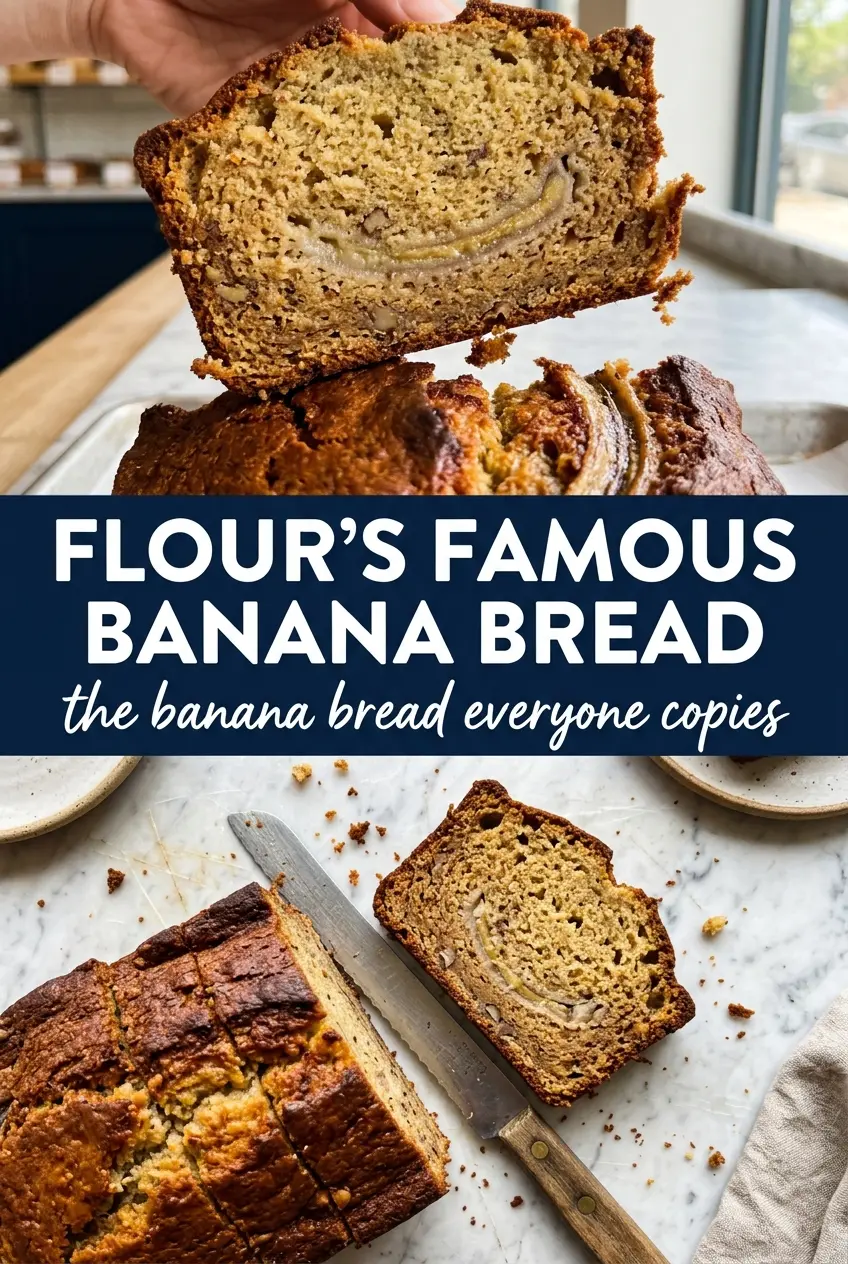
Flour’s Famous Banana Bread bakes up with a deep golden crust, a tender open crumb, and that bakery-style sweetness that makes one slice turn into two. The walnut topping gives every bite a little crunch, while the sour cream keeps the loaf moist without turning it heavy or gummy. It tastes like the kind of banana bread that came from a glass case, not a standard home kitchen loaf pan.
What makes this version stand out is the lower baking temperature and the long butter-sugar beating time. That combo builds structure and air before the bananas go in, which helps the loaf rise without getting dense. The sour cream matters too. It adds richness and a little tang, and it keeps the crumb soft for days.
Below, I’ll walk through the technique that gives this banana bread its bakery finish, plus the ingredient details that matter most if you want the same texture every time. I’ve also included the swaps and storage notes that are worth knowing before you start.
The loaf came out with that deep brown crust on top and stayed moist for days. I chopped the walnuts a little finer and it sliced beautifully without crumbling.
Like this bakery-style banana bread? Save it to Pinterest for the loaf with the walnut crust and tender sour cream crumb.
The Reason Most Banana Breads Turn Dense Before They Even Hit the Oven
Banana bread gets heavy when the batter is handled like a quick stir-and-bake mixture. This loaf depends on building air first, then protecting that air once the flour goes in. The long beating time for butter and sugar isn’t decorative; it gives the loaf lift, helps the crust bake up with that bakery look, and keeps the crumb from collapsing into a squat, damp center.
The other trap is overmixing after the flour is added. Once the dry ingredients go in, the batter should look a little rough and almost hesitant to come together. That’s normal. If you keep beating it smooth, you’ll trade tenderness for toughness, and the loaf will bake up tight instead of open.
What Each Ingredient Is Actually Doing in This Loaf
- All-purpose flour — This gives the loaf its structure without making it dry. Bread flour would push it toward chewier and sturdier than you want here.
- Baking soda — It reacts with the bananas and sour cream to help the loaf rise and brown. Don’t swap in baking powder alone; you won’t get the same color or lift.
- Butter and sugar — Beating these together until pale and fluffy is what creates the loft. Use room-temperature butter so it traps air instead of staying greasy.
- Sour cream — This is the moisture insurance. Greek yogurt works in a pinch, but the loaf will be a little less rich and slightly tangier.
- Very ripe bananas — The darker and spottier, the better. They bring sweetness and the soft banana flavor that holds up after baking.
- Walnuts — Toasting them first wakes up their flavor and keeps them from tasting flat in the finished loaf. Chop them enough that they distribute evenly, but don’t grind them to dust.
Building the Batter Without Losing the Bakery Texture
Start with the Pan and Dry Mix
Grease and flour the loaf pan before you do anything else. A 9×5 pan gives this batter the right depth, and the flour coating helps the loaf release cleanly after that long bake. Sift the flour, baking soda, and salt together so the leavening is evenly distributed; if the soda clumps, you’ll get uneven rise and odd bitter pockets.
Whip the Butter and Sugar Until It Looks Pale
Beat the butter and sugar on high speed until the mixture is noticeably lighter in color and looks almost fluffy. That usually takes around 5 minutes, and it matters more than most people think. If you stop when it just looks combined, you’ll miss the air that gives the loaf its lift. Scrape the bowl once or twice so the butter at the bottom doesn’t stay dense.
Fold in the Bananas and Flour Gently
Add the eggs one at a time, then mix in the sour cream, mashed bananas, and vanilla until the batter looks smooth but not whipped. When the flour goes in, switch to gentle folding and stop as soon as you no longer see dry streaks. A few small floury wisps are better than an overworked batter, because the loaf finishes mixing in the oven. Fold in the walnuts last so they stay evenly suspended instead of sinking to the bottom.
Bake for Color, Not Just Time
The loaf goes into a 325°F oven, which feels low if you’re used to quick banana bread recipes, but that lower heat is part of the signature texture. Bake until the top is deep brown and a toothpick comes out clean from the center, usually 60 to 70 minutes. If the top looks done early, keep going; the crust should be richly caramelized, not pale. Let the loaf cool in the pan briefly before turning it out so the crumb can set without tearing.
How to Adapt This Banana Bread Without Losing the Texture
Dairy-Free Version
Swap the butter for a plant-based butter that bakes well and use an unsweetened plain dairy-free yogurt in place of the sour cream. You’ll lose a little of the rich bakery taste, but the loaf will still stay moist and sliceable.
Nut-Free Loaf
Leave out the walnuts and bake the batter as written. The top won’t have that signature crunch, but the crumb stays every bit as tender. If you want a little texture back, sprinkle a spoonful of coarse sugar over the top before baking.
Gluten-Free Swap
Use a 1:1 gluten-free baking flour that already includes xanthan gum. The loaf will be a touch more delicate, so let it cool fully before slicing. Don’t try to replace the flour with almond flour alone; this recipe needs a structure-building blend.
How to Store It for Later
- Refrigerator: Store tightly wrapped for up to 5 days. The crumb stays moist, but the crust softens a bit.
- Freezer: This freezes well. Wrap the cooled loaf or individual slices in plastic, then foil, and freeze for up to 3 months.
- Reheating: Warm slices in a 300°F oven or toaster oven until just heated through. Microwave only briefly, or the crumb can turn gummy and the walnuts lose their texture.
Answers to the Questions Worth Asking
Flour's Famous Banana Bread
Ingredients
Equipment
Method
- Preheat the oven to 325°F and grease and flour a 9x5 loaf pan, so the loaf releases cleanly after baking.
- Sift together all-purpose flour, baking soda, and salt and set aside for even lift and seasoning.
- Beat unsalted butter and sugar on high speed for about 5 minutes until very light and fluffy, creating a batter with a fine crumb.
- Add large eggs one at a time, beating well after each addition to fully emulsify the batter.
- Mix in sour cream, mashed very ripe bananas, and vanilla extract until the batter looks smooth and evenly colored.
- Fold in the flour mixture gently until just combined, then fold in chopped walnuts so the batter stays airy and tender.
- Pour the batter into the prepared pan and bake for 60–70 minutes at 325°F until the top is deep brown and a toothpick comes out clean.