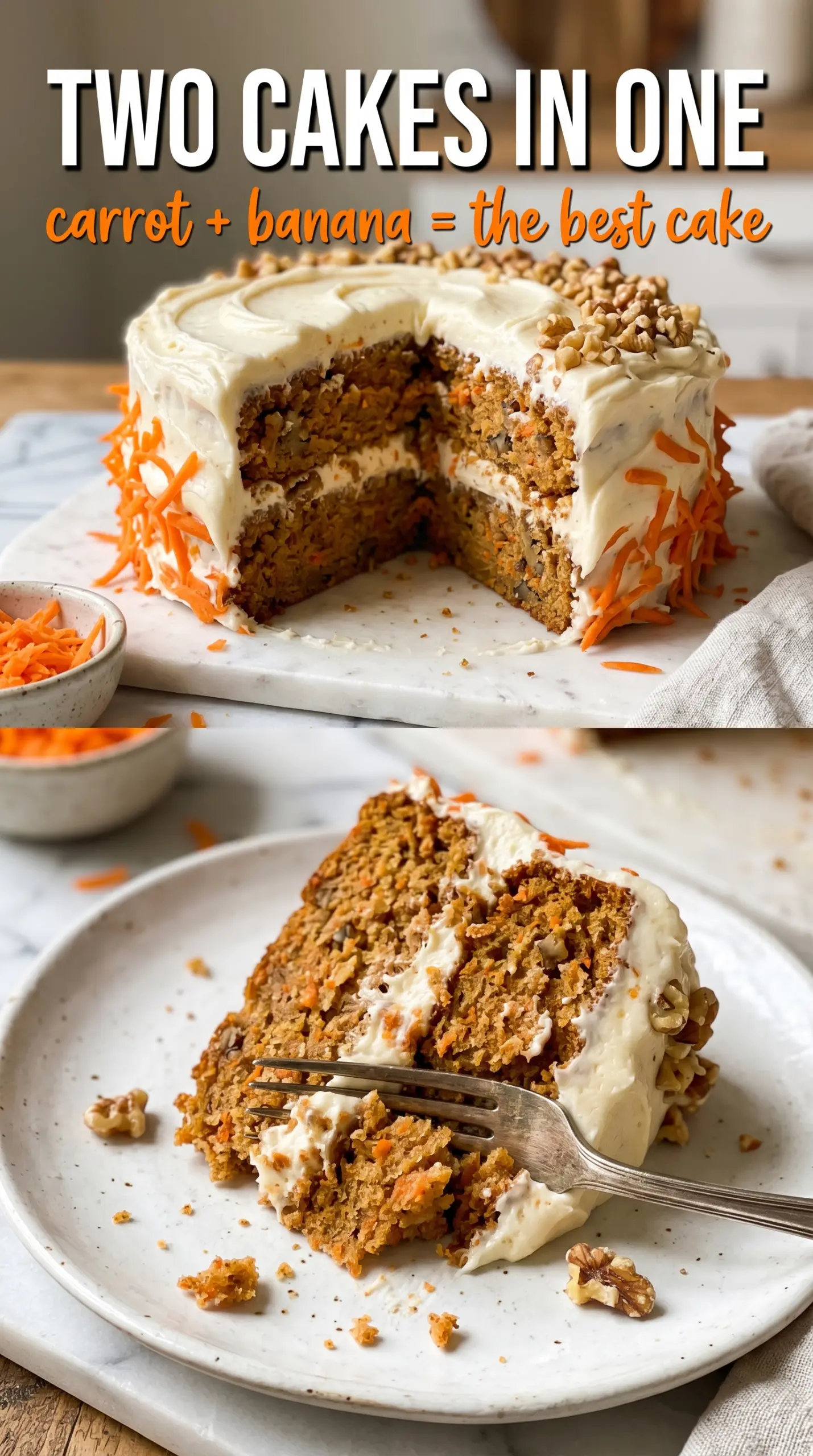
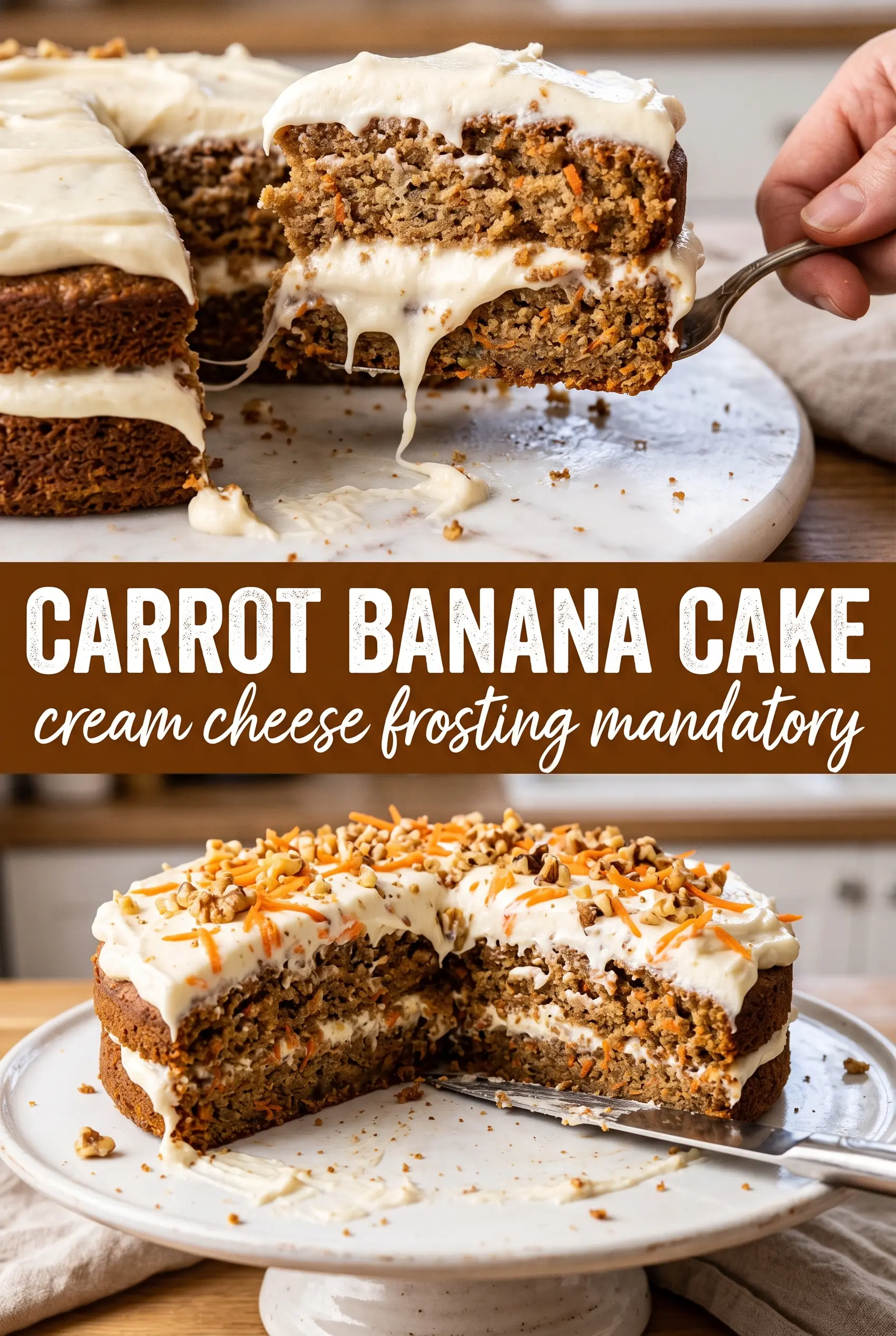
Carrot banana cake comes out wonderfully moist, with a tender crumb that stays soft for days and just enough spice to keep every bite interesting. The bananas bring natural sweetness and a plush texture, while the shredded carrots melt into the batter so the cake never feels heavy or dense. Finished with a thick layer of cream cheese frosting, it lands right in that sweet spot between snack cake and celebration cake.
What makes this version work is balance. The bananas add moisture, but they’re paired with baking soda and baking powder so the cake still lifts properly instead of turning gummy. The oil keeps the crumb softer than butter alone would, and the carrots are folded in raw so they bake down gently and leave little streaks of sweetness throughout. If you’ve ever had a carrot cake that tasted flat or a banana cake that sank in the middle, this one avoids both problems by keeping the batter simple and the ratios steady.
Below, I’m walking through the small details that matter most: how ripe the bananas should be, why you don’t want to overmix once the flour goes in, and how to get a frosting that spreads smoothly without sliding off the cake.
The cake stayed incredibly moist for two days, and the cream cheese frosting set up thick enough to slice cleanly. I used very ripe bananas and the crumb came out tender without being mushy.
Save this carrot banana cake for the days when you want a soft spice cake, thick cream cheese frosting, and a dessert that stays moist for days.
The Reason This Cake Stays Moist Without Turning Heavy
The biggest mistake in banana carrot cake is treating it like a quick bread and stirring until it looks perfectly smooth. That works against you here. Once the flour goes in, overmixing builds structure fast, and the cake shifts from tender to tight before it ever reaches the oven. You want the batter just combined, with a few streaks disappearing as you fold in the last bit of dry ingredients.
The other thing that matters is moisture balance. Bananas and carrots both bring water to the batter, but they don’t behave the same way. Bananas soften the crumb and add body, while carrots give little pockets of sweetness and keep the cake from tasting one-note. If your cake has ever baked up gummy in the center, the bananas were probably too large or too ripe for the rest of the batter. Stick with two medium ripe bananas and freshly shredded carrots, and the texture stays plush instead of wet.
What Each Ingredient Is Actually Doing in This Cake
- Bananas — Use bananas with lots of brown freckles and soft spots. They mash smoothly and blend into the batter without leaving chunks, which gives the cake its tender, almost custardy crumb. If your bananas are barely ripe, the cake will taste flatter and the texture won’t be as soft.
- Shredded carrots — Freshly grated carrots are best because pre-shredded carrots are too dry and too thick. Fine shreds practically disappear into the batter and bake through evenly, while coarse shreds can leave stringy bites. Grate them right before mixing for the best texture.
- Vegetable oil — Oil keeps the cake soft even after it chills in the fridge under frosting. Butter can work, but it sets firmer once cooled and the crumb won’t stay as supple for as long. Neutral oil is the safer choice here because the spice and fruit should stay in front.
- Brown sugar — This adds a little molasses depth that plain white sugar can’t quite match. It also helps hold moisture, which matters in a cake built around fruit and carrots.
- Cream cheese frosting — Softened cream cheese and butter beat into a smooth, spreadable frosting that cuts the sweetness of the cake. If either one is too cold, the frosting turns lumpy and you’ll keep beating it longer than you should.
Mixing the Batter and Frosting Without Losing the Texture
Building the Wet Base
Start by whisking the oil, brown sugar, eggs, and vanilla until the mixture looks glossy and a little thickened. That step dissolves the sugar enough to keep the cake from feeling gritty. Stir in the mashed bananas and shredded carrots next; the batter will look loose and speckled, and that’s exactly right. If the bananas are cold from the fridge, the oil can seize slightly and the mixture may look cloudy, so let them warm up first.
Folding in the Dry Ingredients
Add the flour, baking soda, baking powder, spices, and salt all at once, then fold just until the flour disappears. Stop the moment you stop seeing dry pockets. Overmixing at this stage tightens the crumb and can make the cake sink a little in the middle as it bakes. If you’re using walnuts, fold them in at the very end so they stay evenly distributed instead of sinking to the bottom.
Baking Until the Center Springs Back
Divide the batter evenly between your pans and bake until a toothpick comes out clean or with just a few moist crumbs. The top should spring back lightly when touched, and the edges will pull just slightly from the pan. If the center still looks wet, give it a few more minutes, but don’t overbake this cake chasing a completely dry toothpick — that’s how you lose the soft texture that makes it special.
Whipping the Frosting to a Spreadable Finish
Beat the cream cheese and butter first until they look smooth and pale. Then add the powdered sugar and vanilla and beat again until the frosting is fluffy and holds soft peaks. If the frosting looks loose, the cream cheese or butter was too warm; pop the bowl in the fridge for 10 to 15 minutes and beat it again briefly. Frost only after the cakes are fully cool, or the frosting will melt and slide.
How to Adapt This Cake for Different Pans and Diets
Make It as a 9×13 Sheet Cake
Bake the batter in a greased 9×13 dish at the same temperature, but start checking a little early since the thinner layer cooks faster. You’ll get a less dramatic slice than a layer cake, but the crumb stays just as soft and it’s easier to serve for a crowd.
Gluten-Free Version
Use a good 1:1 gluten-free flour blend that already includes xanthan gum. The cake will still be moist, but the crumb may be a touch more delicate, so let it cool completely before moving it around or frosting it.
Dairy-Free Frosting Swap
Use a dairy-free cream cheese and a plant-based butter with a firm texture. The frosting won’t have quite the same tang, but it will still spread well if both ingredients are softened just enough to beat smooth, not melted.
Skip the Walnuts Without Changing the Cake
Leaving out the walnuts won’t affect the structure at all. You’ll just get a smoother crumb and a little less crunch, which works well if you want the banana and spice to stay front and center.
Storage and Reheating
- Refrigerator: Store covered for up to 5 days. The cake stays moist, and the frosting firms up slightly, which actually makes slicing cleaner.
- Freezer: Freeze unfrosted layers tightly wrapped for up to 2 months. Frosting can separate after thawing, so I freeze the cake layers separately and add the cream cheese frosting fresh.
- Reheating: Let individual slices come to room temperature for the best texture. If you want a warm slice, microwave it briefly without frosting, then add frosting after it cools a little so the topping doesn’t melt away.
Questions I Get Asked About This Cake
Carrot Banana Cake
Ingredients
Equipment
Method
- Preheat the oven to 350°F and grease two 8-inch round pans (or a 9x13 dish) so the cake releases cleanly.
- Whisk vegetable oil, brown sugar, eggs, and vanilla extract together until smooth, then stir in mashed bananas and shredded carrots.
- Fold in all-purpose flour, baking soda, baking powder, cinnamon, nutmeg, ginger, and salt until just combined, then fold in walnuts.
- Divide batter between pans and bake at 350°F for 30–35 minutes, until a toothpick comes out clean.
- Beat cream cheese, butter, powdered sugar, and vanilla extract until smooth and fluffy.
- Cool the cakes completely before frosting generously with thick swirls.