Paula Deen banana bread bakes up with a tight, moist crumb and a butter-rich flavor that lands somewhere between a classic quick bread and a slice of pound cake. The crust turns deep golden while the center stays tender, which is exactly what makes this loaf worth keeping around for breakfasts, snack plates, and late-afternoon slices with coffee.
The texture comes from starting with softened butter and sugar beaten until pale and fluffy. That step traps air and keeps the loaf from turning heavy, while the ripe bananas bring moisture and enough sweetness to balance the richness. A loaf like this doesn’t need a long ingredient list to work; it needs the right method so the butter stays emulsified and the batter doesn’t get overmixed once the flour goes in.
Below you’ll find the simple timing cues that keep the crumb soft, plus the small adjustment that makes the loaf easier to slice warm without crumbling. If you like banana bread that leans indulgent instead of plain, this one earns its place.
The loaf came out with that rich, buttery crumb I was hoping for, and the center set perfectly at 65 minutes without drying out the edges. My husband kept sneaking slices while it was still warm.
Save this Paula Deen banana bread for the days when you want a buttery banana loaf with a pound-cake crumb and a deep golden crust.
The Step That Keeps This Banana Bread Tender Instead of Dense
Most banana bread gets heavy for one of two reasons: the butter and sugar never get enough air beaten into them, or the flour gets worked in until the batter turns stiff. This recipe depends on that first creaming step. Four minutes sounds long, but that pale, fluffy mixture is what gives you a finer crumb and keeps the loaf from baking up like a brick.
The bananas should be ripe enough to mash easily and speckled enough to taste sweet, but they don’t need to be liquefied. Leave a little texture if you want the loaf to bake up with those soft banana pockets that show up in the slice. Once the flour goes in, stop mixing as soon as you no longer see dry streaks. Overmixing tightens the crumb and makes the loaf tougher than it should be.
What Each Ingredient Is Doing in the Loaf
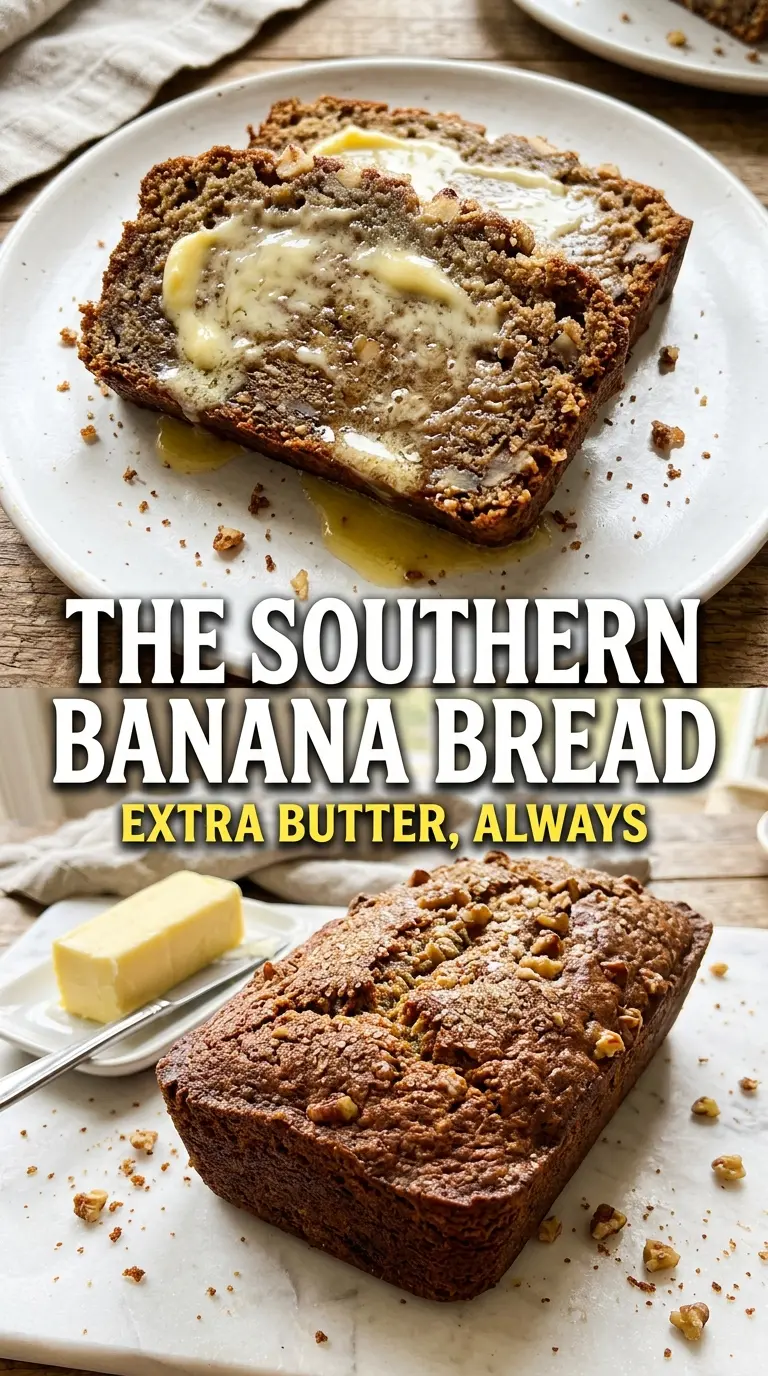
- Butter — This is where the rich, pound-cake-style flavor comes from. Softened butter creams with the sugar and gives the loaf its tender, tight crumb. If your butter is too cold, it won’t trap air; if it’s melted, the bread bakes up greasy and flatter.
- Bananas — Riper bananas bring sweetness, moisture, and that unmistakable banana aroma. Three medium bananas is the sweet spot here; too many and the loaf can turn gummy in the center. If your bananas are frozen, thaw them fully and drain off excess liquid before mashing.
- Eggs — The eggs hold everything together and help the loaf rise cleanly. Add them one at a time so the butter mixture stays smooth instead of curdling. That little bit of patience keeps the batter glossy and stable.
- All-purpose flour — This gives the loaf structure without making it cakey. Spoon and level it if you can, because packed flour will dry the bread out fast. There isn’t a great substitute that keeps the texture exactly the same, though a 1:1 gluten-free blend can work if it includes xanthan gum.
- Pecans — Optional, but they add a nice crunch against the soft crumb and play well with the buttery base. Toast them first if you want more flavor. If you skip them, the loaf still holds up beautifully.
Getting the Batter Mixed Without Losing the Crumb
Cream the butter and sugar until it changes color
Beat the softened butter and sugar together until the mixture turns lighter in color and looks fluffy, not grainy. That usually takes about 4 minutes, and you can see the volume increase under the beater. If the butter is only half-softened, the mixture stays dense and won’t aerate properly, which shows up later as a heavy loaf.
Add the eggs and bananas in a smooth order
Beat in the eggs one at a time so each one disappears into the mixture before the next goes in. Then stir in the mashed bananas and vanilla. If the batter looks a little separated at this point, that’s fine; it comes back together once the flour is folded in. The important part is not rushing the eggs, because that’s how you keep the butter mixture stable.
Fold the dry ingredients just until the flour disappears
Add the flour, baking soda, and salt, then fold gently until you no longer see dry streaks. The batter should look thick and spoonable, not stretchy. If you beat it at this stage, the loaf turns chewy and tough instead of tender. Fold in the pecans at the very end so they stay distributed without breaking up the batter.
Bake until the center is set, not dry
Pour the batter into a generously greased 9×5 loaf pan and bake at 350°F for 60 to 70 minutes. The top should be deeply golden and the center should test clean with a toothpick. If the top darkens too quickly before the middle is done, lay a loose piece of foil over it for the last 15 minutes. Let it cool in the pan for 15 minutes before unmolding so it sets up enough to slice without collapsing.
Three Ways to Adjust This Loaf Without Losing What Makes It Good
Make it nut-free
Leave out the pecans entirely and the loaf still bakes up with the same soft crumb and buttery flavor. You won’t lose structure, because the nuts are there for texture, not for balance. If you want a little extra interest, scatter a few chopped pecans over the top before baking instead of folding them in.
Gluten-free version
Swap the all-purpose flour for a cup-for-cup gluten-free baking blend that includes xanthan gum. The loaf will still be tender, though the crumb may be a little more delicate when warm. Let it cool fully before slicing so it doesn’t break apart at the center.
Less-sweet banana bread
Reduce the sugar to 3/4 cup if your bananas are extremely ripe and you want a less dessert-like loaf. The texture stays rich because the butter is doing most of the work here, but the crust will bake a touch lighter and the banana flavor will read a little more clearly.
Storage and Reheating
- Refrigerator: Keep the loaf covered for up to 5 days. The crumb stays moist, though the butter makes it firm up a little once chilled.
- Freezer: This freezes well. Wrap the cooled loaf or individual slices tightly in plastic, then foil, and freeze for up to 3 months.
- Reheating: Warm slices in a 300°F oven for about 8 minutes or toast them lightly. If you microwave them too long, the butter melts out and the crumb turns rubbery instead of soft.
Answers to the Questions Worth Asking
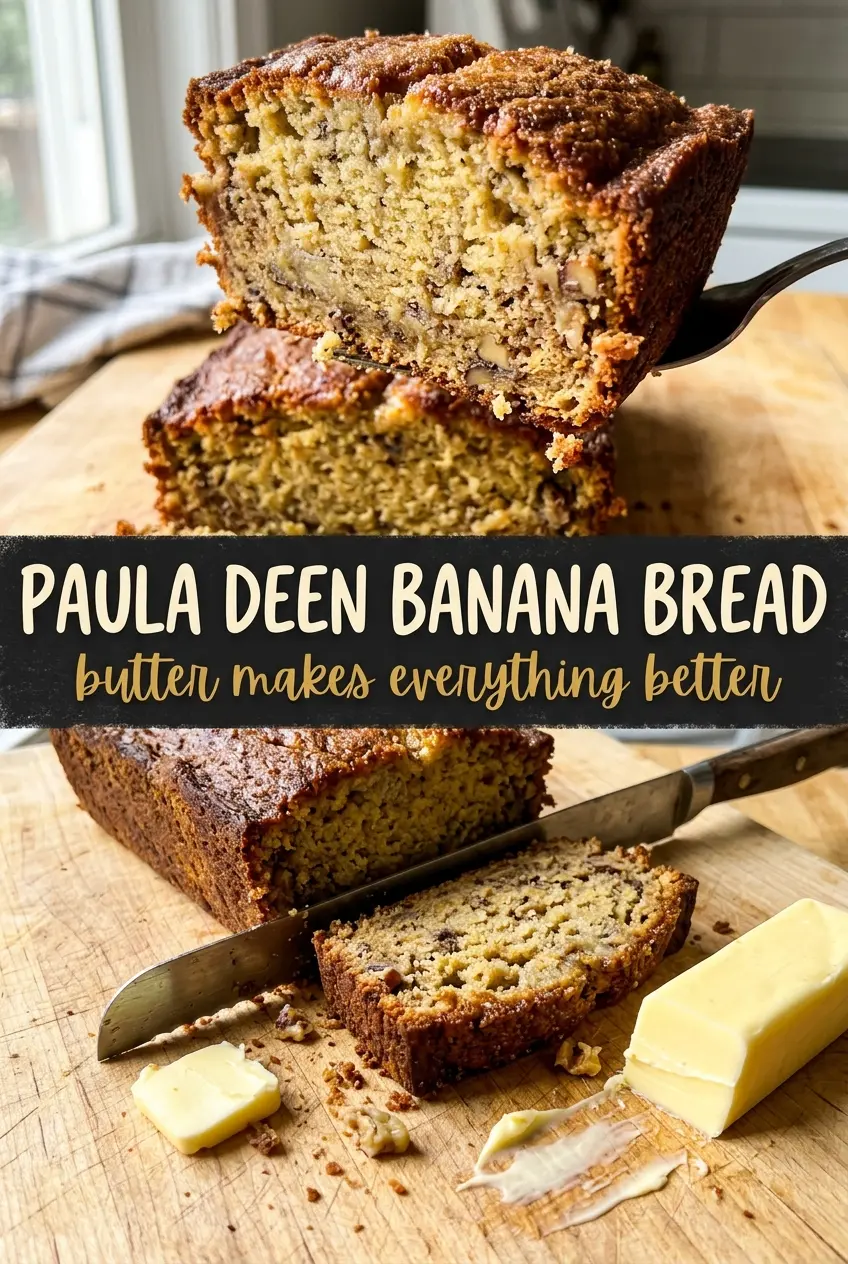
Paula Deen Banana Bread
Ingredients
Equipment
Method
- Preheat oven to 350°F and generously grease a 9x5 loaf pan.
- Pour the greased loaf pan batter-ready area into place so the pan is ready for immediate baking after mixing.
- Beat softened butter and sugar together until very light and fluffy, about 4 minutes.
- Beat in eggs one at a time.
- Stir in mashed bananas and vanilla until evenly incorporated.
- Fold in flour, baking soda, and salt until just combined.
- Fold in pecans if using.
- Pour batter into the loaf pan and bake at 350°F for 60–70 minutes until deeply golden and a toothpick inserted in the center comes out clean.
- Cool in the pan for 15 minutes before unmolding.
- Serve warm with extra butter.