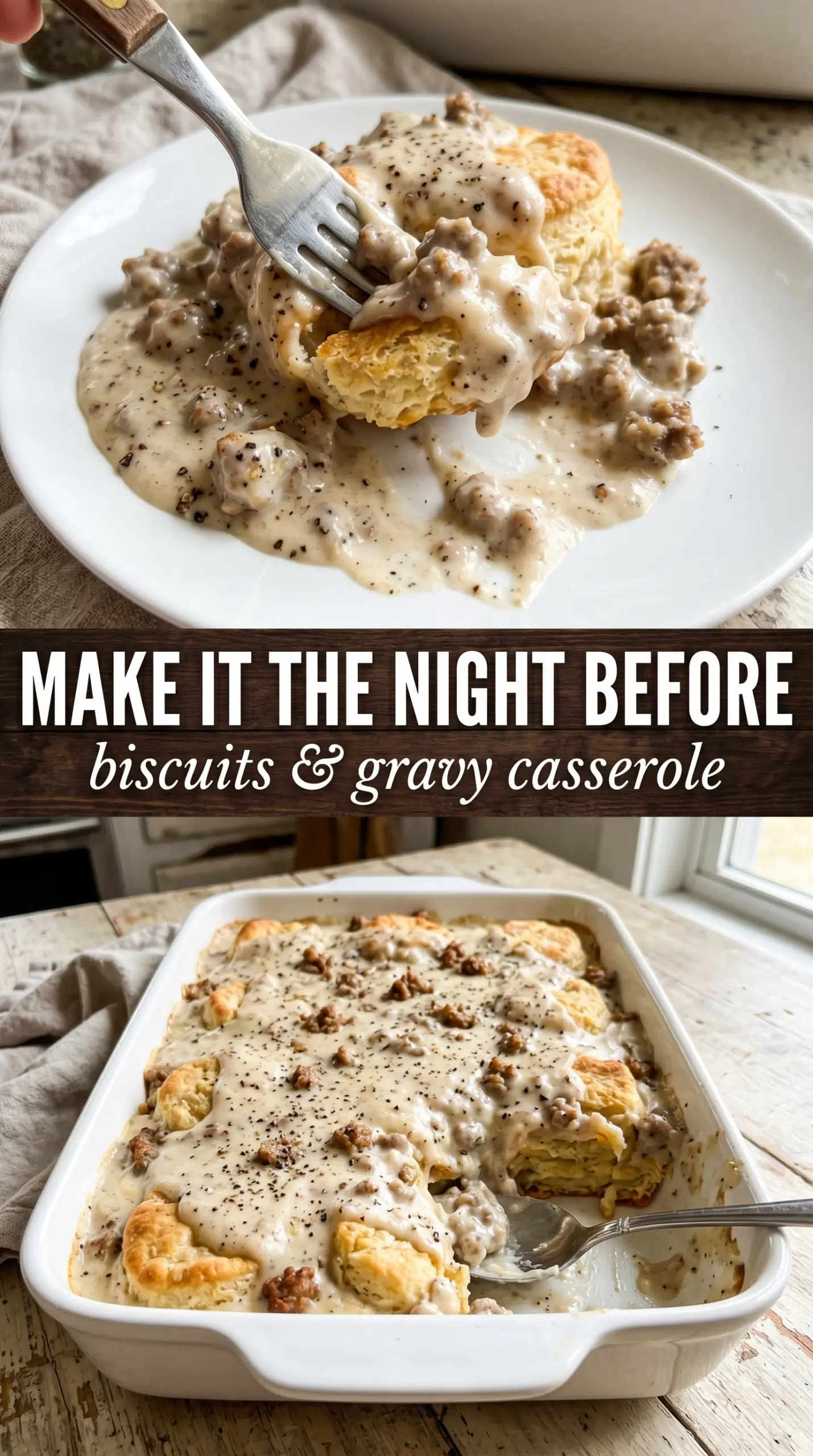
Biscuit pieces bake up plush and tender under a blanket of peppery sausage gravy, with golden tops peeking through and cheddar melting into the cracks. Every spoonful gives you the best parts of biscuits and gravy without the stovetop juggling act: soft biscuit, rich gravy, set eggs, and that little browned edge around the pan that disappears fast at the table.
The trick here is building the gravy until it’s thick enough to coat a spoon before it ever hits the casserole dish. If it’s loose, the biscuits sink and the whole bake turns soupy. The eggs go on top in a thin layer, which helps the casserole set without turning the bottom bready or heavy.
Below, I’ve included the small details that make this breakfast casserole hold together cleanly, plus a few easy variations if you want to change the cheese, make it ahead, or work around what’s already in your fridge.
The gravy thickened up beautifully and the biscuit pieces baked through without getting soggy. I served it for a Sunday brunch, and everyone went back for seconds.
Save this biscuits and gravy casserole for a breakfast bake with fluffy biscuits, thick sausage gravy, and a golden cheddar top.
The Gravy Has to Be Thick Before It Meets the Biscuits
Biscuits and gravy casserole falls apart when the gravy is too loose. In a skillet, the flour needs a full minute with the sausage drippings and butter so it loses that raw taste, then the milk goes in gradually while you stir constantly. What you’re looking for is a gravy that mounds slightly on the spoon and leaves a trail for a second when you drag a spatula across the pan.
That thickness matters because the biscuits keep absorbing liquid as they bake. If the gravy starts thin, you end up with a casserole that tastes underseasoned and slices sloppily. A heavy hand with black pepper is part of the job here; the biscuits and eggs both mute the seasoning, and the pepper keeps the whole dish tasting like breakfast instead of plain cream sauce.
What Each Ingredient Is Actually Doing in the Pan
- Refrigerated biscuit dough — This gives you the fluffy, bread-like base without mixing a scratch biscuit dough. Quartering the pieces helps them bake through under the gravy instead of staying gummy in the center. If you use frozen biscuits, thaw them first so they don’t stay doughy underneath.
- Breakfast sausage — This is the backbone of the flavor. Use a sausage you actually like eating on its own, because the seasoning carries the whole dish. Mild, hot, or sage all work; turkey sausage will work too, but it makes a leaner gravy, so the finished casserole tastes a little less rich.
- Whole milk — Whole milk gives the gravy its body and keeps it from tasting flat. Lower-fat milk can work in a pinch, but the sauce won’t have the same silky finish. If you need a dairy-free version, an unsweetened plain oat milk is the closest swap, though it won’t thicken quite as luxuriously.
- Sharp cheddar — Sharp cheddar cuts through the richness and gives the top a salty, browned edge. Pre-shredded cheese works, but freshly shredded melts smoother. If you want a milder casserole, use medium cheddar; if you want more bite, mix in a little pepper jack.
- Eggs — The eggs turn this from biscuits and gravy into a true casserole. Whisking them with a splash of milk keeps them tender instead of rubbery, and pouring them over the gravy lets them set in thin layers through the bake.
Getting the Biscuit Bake Set Without Drying Out the Top
Brown the Sausage First
Cook the sausage over medium heat until it’s deeply browned and no pink remains, breaking it into small crumbles as it cooks. Those browned bits are what give the gravy its depth, so don’t rush this part. Leave the sausage drippings in the pan when you add the butter; that fat is carrying the flavor. If the sausage looks greasy, spoon off just a little before adding the flour, but don’t wipe the skillet clean.
Build the Gravy Until It Clings
Stir the flour into the sausage and butter for about a minute, then pour in the milk slowly while whisking or stirring constantly. At first it will look thin and a little lumpy, then it should turn glossy and thick enough to coat the back of a spoon. If it ever looks grainy, the heat is too high or the milk went in too fast; pull the pan down to medium-low and keep stirring until it smooths out.
Layer the Casserole in the Right Order
Spread the biscuit pieces evenly in the dish so they’re not piled in one corner. Pour the sausage gravy over the top, then whisk the eggs with a splash of milk and pour that over the gravy in an even layer. The eggs should seep around the biscuit pieces instead of sitting on top in one thick sheet. Finish with cheddar across the surface so the top browns and the casserole gets those little salty spots where the cheese bubbles against the pan.
Bake Until the Center Sets
Bake at 375°F until the top is golden and the center no longer jiggles when you tap the pan, usually 30 to 35 minutes. If the top browns too fast, lay a loose piece of foil over it for the last 10 minutes. The biggest mistake here is pulling it out while the center still looks soft; the eggs need that full time to set, or the casserole collapses when you slice it.
How to Change This Casserole for Different Kitchens and Different Mornings
Make-Ahead Brunch Casserole
Assemble the casserole up to the point of baking, cover it tightly, and refrigerate overnight. In the morning, bake it straight from the fridge and add 5 to 10 extra minutes if the center is still cool. The biscuit pieces will soak up a little more gravy as it sits, which makes the texture even more cohesive.
Dairy-Free Version
Use a dairy-free butter, unsweetened oat milk, and a meltable dairy-free cheese. The gravy will still thicken, but it won’t have the same rich finish as one made with whole milk and cheddar. Keep the seasoning bold, because dairy-free swaps can soften the savory edge a little.
Spicier Southern-Style Upgrade
Use hot sausage and add a pinch of cayenne or crushed red pepper to the gravy. That gives the casserole a little back-end heat that cuts through the milk and cheese. It’s the easiest way to make the dish taste a little more lively without changing the structure.
Gluten-Free Swap
Use a gluten-free biscuit dough and thicken the gravy with a measure-for-measure gluten-free flour blend. The texture will still be soft and satisfying, though the biscuit layer may be a little more tender and less chewy than the original. Let the casserole rest for 10 minutes before cutting so it holds together better.
Storage and Reheating
- Refrigerator: Store leftovers covered for up to 4 days. The biscuit pieces soften a bit, but the flavor holds well.
- Freezer: This freezes better after baking than before. Cool completely, cut into portions, wrap tightly, and freeze for up to 2 months.
- Reheating: Reheat covered in a 325°F oven until warmed through, or microwave individual slices in short bursts. Don’t blast it on high heat or the eggs can turn rubbery before the center is hot.
Answers to the Questions Worth Asking

Biscuits and Gravy Casserole
Ingredients
Equipment
Method
- Preheat the oven to 375°F and grease a 9x13 dish.
- Brown the breakfast sausage in a skillet until crumbled well, then leave it in the pan and add the butter.
- Whisk the all-purpose flour into the sausage drippings and cook for 1 minute, stirring, until it looks slightly toasted.
- Gradually add the whole milk, stirring constantly, until a thick gravy forms.
- Season the gravy heavily with salt and lots of cracked black pepper.
- Spread the quartered biscuit pieces across the bottom of the greased dish.
- Pour the sausage gravy evenly over the biscuits.
- Whisk the eggs with a splash of milk, then pour over the gravy.
- Top with the shredded sharp cheddar, then bake for 30–35 minutes until the eggs are set and the biscuits are golden, with a bubbling center.