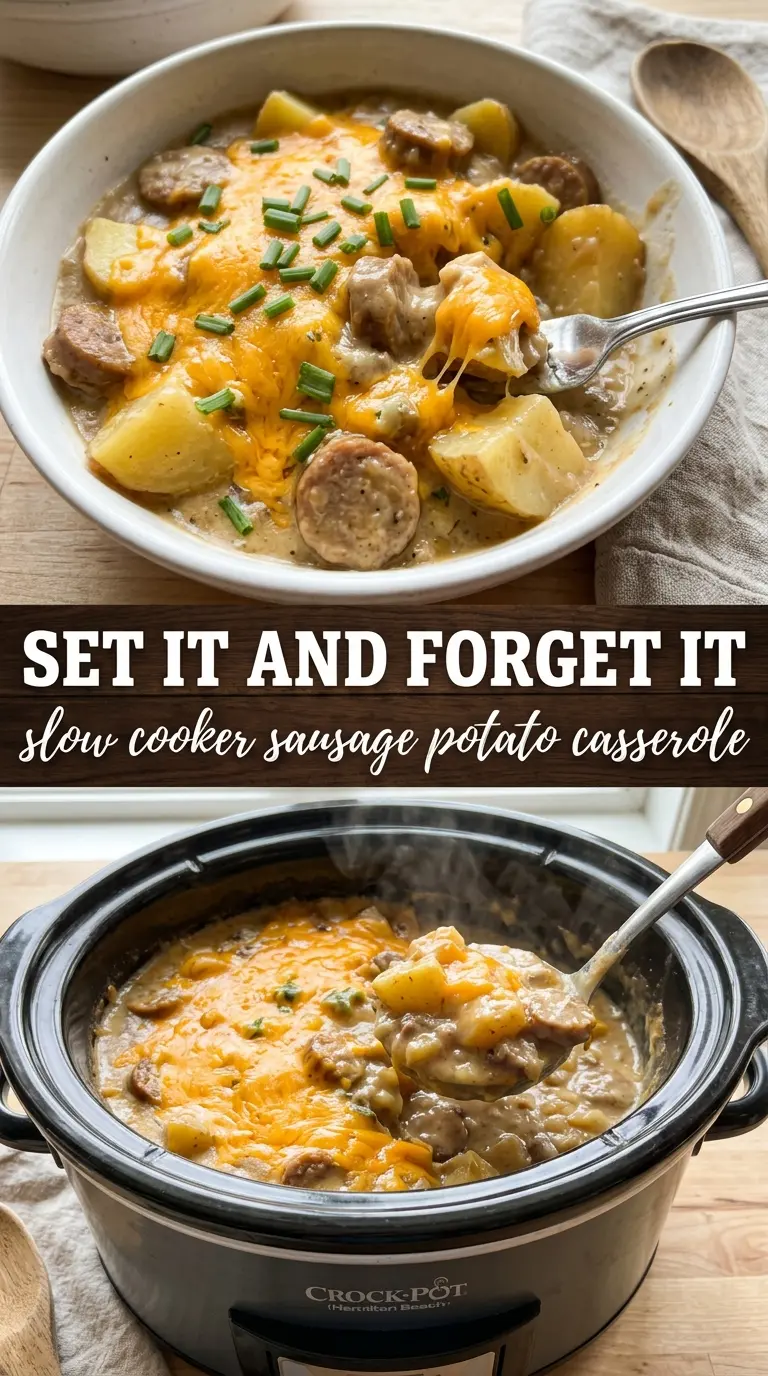
Tender potatoes, smoky sausage, and a set, cheesy egg custard make this slow cooker sausage and potato casserole the kind of breakfast that disappears fast. The slow cooker does the work here, but it also gives the eggs time to turn soft and sliceable instead of dry. What you end up with is a hearty, scoopable casserole with golden edges and a creamy middle that holds together on the plate.
The key is building it in layers and not overloading the eggs. Thawed hash browns give you a more even base than raw potatoes, and stirring some of the cheddar into the egg mixture helps the custard stay flavorful all the way through instead of sitting only on top. Smoked sausage brings salt and seasoning on its own, so the rest of the dish can stay simple and balanced.
Below you’ll find the small details that matter most: how to keep the casserole from turning watery, which sausage works best, and how to adapt it when you want to feed a bigger crowd or change up the cheese.
The eggs set up beautifully and the hash browns stayed tender instead of mushy. I loved that I could prep it the night before and just turn the slow cooker on in the morning.
Save this slow cooker sausage and potato casserole for a hands-off breakfast that comes out cheesy, hearty, and set every time.
The part that keeps the eggs from turning rubbery
Slow cooker egg casseroles go wrong when the heat is too aggressive or the mix is too wet. If you cook this on high for too long, the edges tighten before the center has a chance to set evenly. Low heat gives the eggs time to thicken gently, which is why the texture stays tender instead of turning spongy.
Another thing that helps here is the ratio of eggs to potatoes. Frozen hash browns already carry a little moisture, so the egg mixture needs enough structure to bind everything without becoming loose. The cheese in the custard does double duty: it adds richness and helps the filling set in a smoother, more stable way.
- Thawed hash browns — Thaw them first so the casserole doesn’t release extra water as it cooks. Cold, icy potatoes are the fastest way to end up with a watery bottom.
- Smoked sausage — Kielbasa or smoked sausage works best because it comes pre-cooked and seasoned. You can use another fully cooked sausage, but raw sausage needs separate browning before it goes in.
- Sharp cheddar — Sharp cheddar gives the casserole enough flavor to cut through the eggs and potatoes. Mild cheddar works, but the dish tastes flatter.
- Whole milk — Whole milk makes a softer custard than lower-fat milk. You can use 2%, but the filling won’t be quite as rich.
What Each Ingredient Is Actually Doing in This Recipe
- Primary ingredient (the star) — Quality matters most. Choose the best you can find.
- Cooking medium (oil, butter, or broth) — This carries flavors and prevents dryness.
- Seasonings (salt, pepper, spices, herbs) — Layer flavors so nothing overpowers. Build depth gradually.
- Aromatics (garlic, onion, herbs) — Cook with fat to bloom flavors. Become the foundation.
- Supporting ingredients — Complement the main ingredient without overpowering it.
- Sauce or liquid (if applicable) — Brings flavors together. Balance richness with acid.
- Acid (lemon, vinegar, wine, or other) — Brightens and prevents flat-tasting results.
- Final finish (garnish, glaze, or sauce) — Prevents one-dimensional taste and adds visual appeal.
Building the casserole so it sets evenly
Greasing the crockpot well
Coat the insert generously before anything goes in. Egg casseroles cling to the sides as they set, and if the crockpot isn’t greased well, you’ll lose a lot of the browned edges when you scoop it out. A thin slick of butter or nonstick spray is enough, but cover the corners and the lower sides too.
Laying down the potato base
Spread the thawed hash browns in an even layer and press them down lightly. Don’t pack them tight; you want the egg mixture to seep through and bind the casserole rather than sit on top. If the potatoes are piled unevenly, the middle will stay loose while the edges overcook.
Whisking the custard and adding the cheese
Whisk the eggs, milk, seasonings, and half the cheddar until the mixture looks smooth and a little frothy. That air helps the casserole stay light. Pour it slowly over the potatoes and sausage so the custard settles into the layers instead of pooling in one corner, then finish with the remaining cheese. If you dump it in too fast, the top can get overly cheesy before the center is set.
Cooking until the center is just firm
Cook on low for about 6 hours, or on high for 3 to 4 hours if you need it sooner. The casserole is done when the center no longer looks wet and the eggs have a gentle, set wobble instead of a slosh. If your slow cooker runs hot, start checking early; overcooked eggs get grainy fast. A knife inserted in the center should come out mostly clean.
How to adapt this when you need a different version
Make it gluten-free without changing the texture
This casserole is naturally gluten-free as long as your sausage is certified gluten-free. Keep the rest of the recipe exactly the same. The texture doesn’t need a flour substitute because the eggs and cheese do the binding work.
Use breakfast sausage for a softer, milder flavor
If you swap the smoked sausage for cooked breakfast sausage, the casserole tastes more like a classic brunch bake and less smoky. Brown and drain it first so it doesn’t add extra grease to the slow cooker. The filling will be a little softer and less assertive.
Make it dairy-free with one tradeoff
Use unsweetened dairy-free milk and a meltable dairy-free shredded cheese. The custard still sets, but it won’t be as rich or as creamy as the original. Choose a sausage with good seasoning, since the cheese won’t be carrying as much of the flavor.
Storage and Reheating
- Refrigerator: Store leftovers in an airtight container for up to 4 days. The potatoes will firm up a little as they chill, but the flavor holds well.
- Freezer: This freezes better than many egg bakes, though the texture gets a touch softer after thawing. Freeze in portions, wrapped well, for up to 2 months.
- Reheating: Reheat in the microwave in short bursts or covered in a low oven until warmed through. Don’t blast it on high heat or the eggs can turn tough before the center is hot.
Answers to the questions worth asking

Slow Cooker Sausage and Potato Casserole
Ingredients
Equipment
Method
- Grease the crockpot insert well, making sure the bottom and sides are coated to prevent sticking (no visible dry spots).
- Layer the thawed hash browns in the bottom of the crockpot, then scatter the sausage slices on top so the layers are evenly distributed.
- Whisk the eggs, whole milk, garlic powder, onion powder, salt, and black pepper until smooth and uniform in color.
- Stir in 1.5 cups of the sharp cheddar until evenly dispersed and slightly thickened.
- Pour the egg mixture over the sausage and potato layers, then shake the insert gently to settle everything into an even layer.
- Top with the remaining cheddar, then cook on low for 6 hours or high for 3–4 hours until the eggs are set and the edges look golden.
- Garnish with fresh chives and serve directly from the crockpot, letting the cheesy custard hold together when lifted with a spoon.