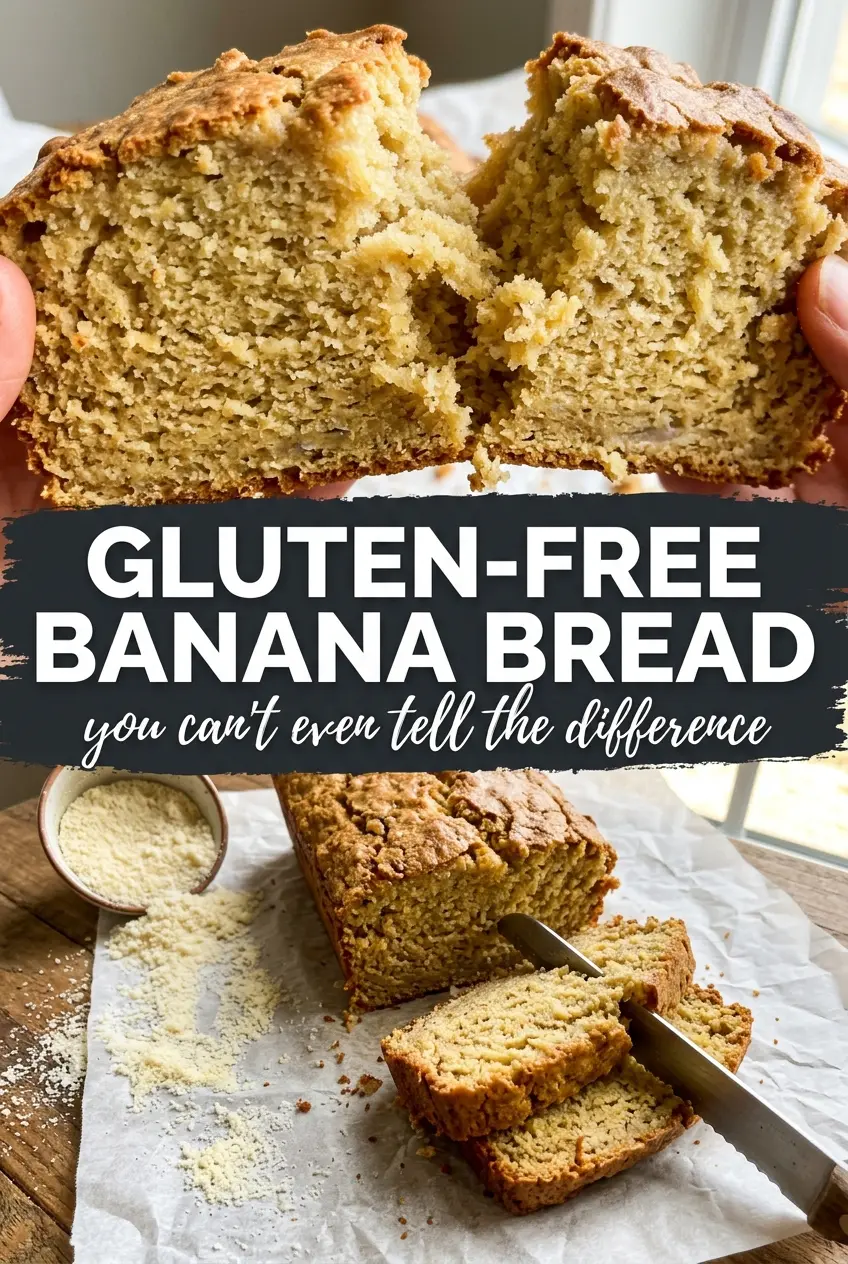
Gluten-free banana bread should still give you that tall, golden loaf with a tender slice and a strong banana aroma the second it comes out of the oven. This version does that without turning gummy in the middle or dry at the edges, which is where a lot of almond flour loaves go sideways. The crumb stays moist, the top bakes up nicely browned, and each slice holds together instead of crumbling apart in your hand.
The trick is in the balance. Almond flour brings richness and softness, while tapioca starch gives the loaf just enough structure so it doesn’t eat like banana custard. Bananas do the heavy lifting for sweetness and moisture, so the batter looks looser than a classic wheat loaf batter; that’s exactly what you want here. If you’ve tried gluten-free banana bread before and ended up with a dense middle or a greasy slice, this method fixes both problems.
Below you’ll find the small details that matter most: when to stop mixing, why the loaf needs a full cool-down, and how to keep the top from overbrowning before the center is set. Those are the things that turn a decent gluten-free loaf into one you’ll bake again.
The loaf came out unbelievably moist, and the parchment made it easy to lift out cleanly. I checked it at 50 minutes like you said and tented it with foil, which kept the top from getting too dark before the center finished baking.
Keep this gluten-free banana bread on hand for a naturally moist almond flour loaf with a golden crust and tender crumb.
The Batter Is Wetter on Purpose — and That’s What Keeps It Tender
Gluten-free banana bread fails when people expect it to behave like wheat bread. Almond flour has no gluten network to absorb and hold moisture the same way, so the batter stays loose and the loaf needs a different finish: slower baking, a full cool-down, and enough structure from eggs and starch to set the crumb. If you stop baking at the first hint of color, the middle will stay soft and slightly underdone even after the top looks finished.
The other mistake is overmixing. Once the dry ingredients go in, stir only until the flour disappears. Almond flour doesn’t punish you the way wheat flour does, but aggressive mixing can still make the loaf heavier than it should be. The batter should look thick but spoonable, not like a traditional quick bread dough.
What Each Ingredient Is Doing in This Loaf
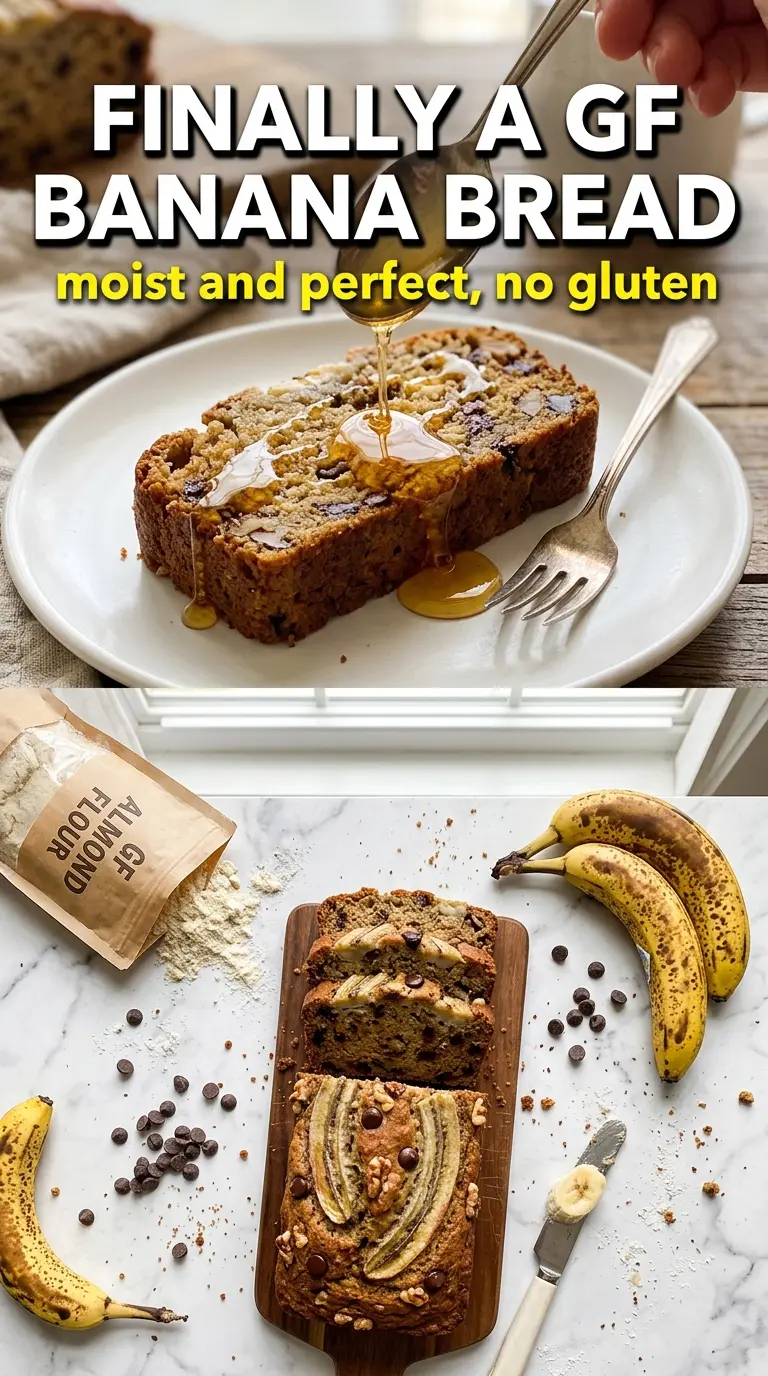
- Bananas — The riper they are, the better the loaf. Deeply spotted bananas bring sweetness, moisture, and the banana flavor that carries the whole bread. If yours are still a little firm, they won’t mash as smoothly and the loaf will taste flatter.
- Almond flour — This is the backbone of the recipe. Use blanched almond flour, not almond meal, if you want a lighter crumb and a cleaner slice. Almond meal will still work, but the bread will be a little denser and more rustic.
- Tapioca starch — This is the part that keeps the loaf from eating like soft pudding. It gives the batter enough lift and helps the slices hold together. Arrowroot works here too, though tapioca gives the better chew and slightly bouncier crumb.
- Eggs — They provide the structure that gluten usually would. There isn’t a great egg-free substitute for this exact loaf because the eggs are doing more than binding; they’re setting the bread as it bakes. If you need a different formula, you’d be better off starting with a recipe designed for egg-free baking.
- Coconut oil or butter — Either one works. Coconut oil gives a slightly cleaner, lighter finish, while butter adds a rounder flavor. Use whichever tastes best to you, but melt it first so it blends evenly into the banana mixture.
Getting the Center Set Without Burning the Top
Mix the Wet Ingredients Until They Look Unified
Whisk the bananas, eggs, melted oil, honey or maple syrup, and vanilla until the mixture looks smooth and loose. A few small banana bits are fine, but you don’t want streaks of egg or pockets of oil. That first mix matters because it spreads the moisture evenly through the batter before the dry ingredients go in.
Add the Dry Ingredients and Stop as Soon as They Disappear
Stir in the almond flour, tapioca starch, baking soda, cinnamon, and salt until the batter looks fully combined. It will be thicker than muffin batter and looser than standard banana bread batter, and that’s the right texture. If you keep stirring after everything is incorporated, you won’t improve the bread; you’ll just make it heavier.
Bake Until the Middle Has Actual Structure
Pour the batter into the lined loaf pan and bake at 350°F. Start checking at 50 minutes because almond flour loaves can go from underbaked to perfect fast, and the top often browns before the center finishes setting. If the top gets dark too quickly, lay a loose piece of foil over it; don’t press it down or you’ll trap steam and soften the crust.
Let the Loaf Cool All the Way Before You Slice It
This is the part people skip, and it’s the reason slices fall apart. Gluten-free banana bread keeps setting as it cools, so if you cut into it while it’s warm, the middle can seem gummy even when the bake is technically done. Leave it in the pan until it’s fully cool, then lift it out with the parchment and slice with a sharp knife.
Three Smart Ways to Change the Loaf Without Ruining the Crumb
Dairy-Free Version
Use coconut oil instead of butter and the loaf stays fully dairy-free without changing the structure. Coconut oil gives the bread a slightly firmer texture when cool, while butter makes it taste a little richer. Both work, so pick the one you prefer.
Lower-Sugar Banana Bread
Cut the honey or maple syrup down by half if your bananas are extra ripe. The loaf will still be sweet from the fruit, but the crumb may bake a touch more firmly because you’re reducing one of the liquid ingredients. That’s a good trade if you want a less sweet breakfast slice.
Nut-Free Swap
This recipe depends on almond flour, so a true nut-free swap needs a different formula. Sunflower seed flour can work in other bakes, but it won’t behave the same here and can tint the loaf green over time when combined with baking soda. If you need nut-free banana bread, use a recipe built around oat flour or a tested gluten-free blend instead.
Storage and Reheating
- Refrigerator: Store covered for up to 5 days. The crumb firms up in the fridge, so the slices taste best after a brief warm-up.
- Freezer: Freezes well. Wrap individual slices tightly and freeze for up to 3 months, then thaw at room temperature or warm straight from frozen.
- Reheating: Toast a slice lightly or warm it in a 300°F oven for a few minutes. Microwaving too long makes almond flour bread feel soggy and rubbery, so use short bursts if that’s your only option.
Answers to the Questions Worth Asking
Gluten-Free Banana Bread
Ingredients
Equipment
Method
- Preheat oven to 350°F and line a 9x5 loaf pan with parchment paper, ensuring the paper reaches up the sides for easy lifting.
- Whisk mashed bananas, eggs, melted coconut oil, honey, and vanilla extract together until smooth.
- Stir in almond flour, tapioca starch, baking soda, cinnamon, and salt until fully combined, with no dry streaks remaining.
- Pour batter into the prepared pan—the batter will be wetter than traditional banana bread.
- Bake for 55–65 minutes until the top is deeply golden and a toothpick comes out clean; check at 50 minutes and tent loosely with foil if browning too fast.
- Cool completely in the pan before slicing, since gluten-free breads need the full cooling time to set.