Puffy, custardy baked French toast casserole has a way of disappearing fast once it hits the table. The top bakes into a crisp, cinnamon-sugar shell while the middle stays soft and rich, with brioche that soaks up the custard without turning to mush. It slices cleanly, serves a crowd, and tastes like the kind of breakfast that took more effort than it actually did.
The trick is using a sturdy, enriched bread like brioche or challah and giving it enough time to fully drink in the custard. That rest matters. If you rush it, the center can bake up dry in spots while the edges get too dark. Cold butter scattered over the top helps create those golden, craggy patches that taste almost like a crumble topping, and the brown sugar finishes everything with a gentle crackle.
Below you’ll find the little details that make this bake work every time, plus a few useful variations if you want to change the flavor or prep it ahead for a busy morning.
The bread soaked overnight without getting soggy, and the top baked up crisp while the inside stayed custardy. My kids asked for seconds before I’d even sat down.
Save this overnight baked French toast casserole for the mornings when you want a golden, custardy brunch with almost no last-minute work.
The Reason This Casserole Stays Custardy Instead of Drying Out
The biggest mistake with baked French toast casserole is treating it like a regular loaf-style bake. This dish needs bread that can hold its shape after soaking, which is why brioche or challah works so well. Their rich, tender crumb absorbs the custard without collapsing, so you get soft bites instead of a dense, eggy slab.
The other piece that matters is the rest time. The custard needs hours, not minutes, to move through the bread all the way to the center. Pressing the cubes down after pouring keeps the top from staying dry, and the overnight chill gives the whole dish a more even texture. If you’ve ever cut into a French toast bake and found dry spots in the middle, this is usually the reason.
- Brioche or challah — These breads are soft enough to soak up custard but sturdy enough to bake into distinct cubes. Standard sandwich bread works in a pinch, but the texture is less plush and the casserole can turn mushy faster.
- Heavy cream — This adds richness and helps the custard set with a silky texture. You can swap in more whole milk if needed, but the finished casserole will taste lighter and less luxurious.
- Cold butter topping — The butter melts into the brown sugar and cinnamon as the casserole bakes, creating those crisp, caramelized patches on top. Room-temperature butter won’t give the same craggy finish.
- Brown sugar — This is what gives the top its deeper caramel note and helps it brown into a crackly crust. Dark brown sugar works too if you want a stronger molasses flavor.
What Each Ingredient Is Doing in the Pan

Eggs are the structure here. They turn the milk and cream into a custard that sets around the bread instead of pooling at the bottom of the dish. Six eggs might sound like a lot, but that’s what gives the casserole its sliceable texture.
Whole milk and heavy cream make the base rich enough to taste like proper French toast. All milk will work, but the finished bake is looser and less velvety. If you want to lighten it a little, use 1 1/2 cups whole milk and 1/2 cup half-and-half rather than cutting the dairy too far.
Vanilla, cinnamon, and nutmeg do more than season the custard. They round out the egginess and give the casserole that classic warm breakfast aroma. Nutmeg is subtle, so keep the pinch; too much can take over quickly.
Powdered sugar and maple syrup are for serving, and they matter more than they seem. The casserole itself is only mildly sweet, which is what you want. The syrup wakes it up at the table instead of making the bake cloying in the oven.
Building the Custard So the Center Sets Just Right
Arranging the Bread
Grease the baking dish well, then spread the bread cubes in an even layer. You want some gaps between the pieces so the custard can move around and soak in, not a tightly packed block. If the bread is very fresh, let the cubes sit out for a bit so they dry slightly; stale bread absorbs more evenly and holds its shape better.
Mixing the Custard
Whisk the eggs, milk, cream, sugar, vanilla, cinnamon, and nutmeg until the mixture looks smooth and fully combined. Pour it slowly over the bread, moving around the dish so every corner gets some. Press the cubes down gently with the back of a spoon or clean hands, then let the casserole sit until the top looks moistened instead of dry.
Overnight Soak and Topping
Cover the dish and refrigerate it overnight or at least four hours. That chill time gives the bread time to absorb the custard all the way through. Right before baking, scatter the cold butter pieces over the top and sprinkle on the brown sugar and cinnamon. If the butter is too soft, it melts too quickly and you lose the crisp, craggy topping.
Baking Until Puffy and Golden
Bake at 350°F until the casserole is puffed, the top is deep golden, and the center no longer looks wet when you jiggle the pan. The edges should be set and lightly crisp. If the top browns too fast before the middle is done, lay a loose sheet of foil over the dish for the rest of the bake. Let it rest a few minutes before serving so the custard settles and slices cleanly.
How to Adapt It Without Losing the Texture That Makes It Good
Gluten-Free Version with the Right Bread
Use a sturdy gluten-free brioche-style loaf or thick sliced gluten-free bread that’s a little dry, not soft and squishy. The texture will be slightly more delicate, but the long soak still works as long as the bread can hold its shape. Don’t use a very airy sandwich bread or it can collapse into the custard.
Dairy-Free Swap
Replace the milk and cream with a rich, unsweetened plant milk such as oat milk and use a dairy-free butter for the topping. The casserole will still bake up set, but it won’t taste quite as lush as the original. Coconut milk works too if you don’t mind a faint coconut note.
Apple Cinnamon Variation
Tuck a layer of thin apple slices between the bread cubes before adding the custard, then add a little extra cinnamon to the topping. The apples soften as they bake and bring a more brunchy, bakery-style feel. Use firm apples so they hold their shape instead of turning to sauce.
Make-Ahead for a Crowd
Assemble the casserole the night before, cover it tightly, and refrigerate it until baking time. If it comes out of the fridge very cold, add a few extra minutes in the oven so the center has time to heat through. This is the version I use when breakfast needs to happen without any morning scrambling.
Storage and Reheating
- Refrigerator: Store leftovers covered for up to 4 days. The top softens, but the flavor stays good.
- Freezer: It freezes well in individual portions. Wrap tightly and freeze for up to 2 months, then thaw in the fridge before reheating.
- Reheating: Warm slices in a 325°F oven until heated through, or use the microwave for a quicker option. The oven keeps the edges from turning rubbery, which can happen if you blast the whole casserole too hard in the microwave.
Questions I Get Asked About This Recipe
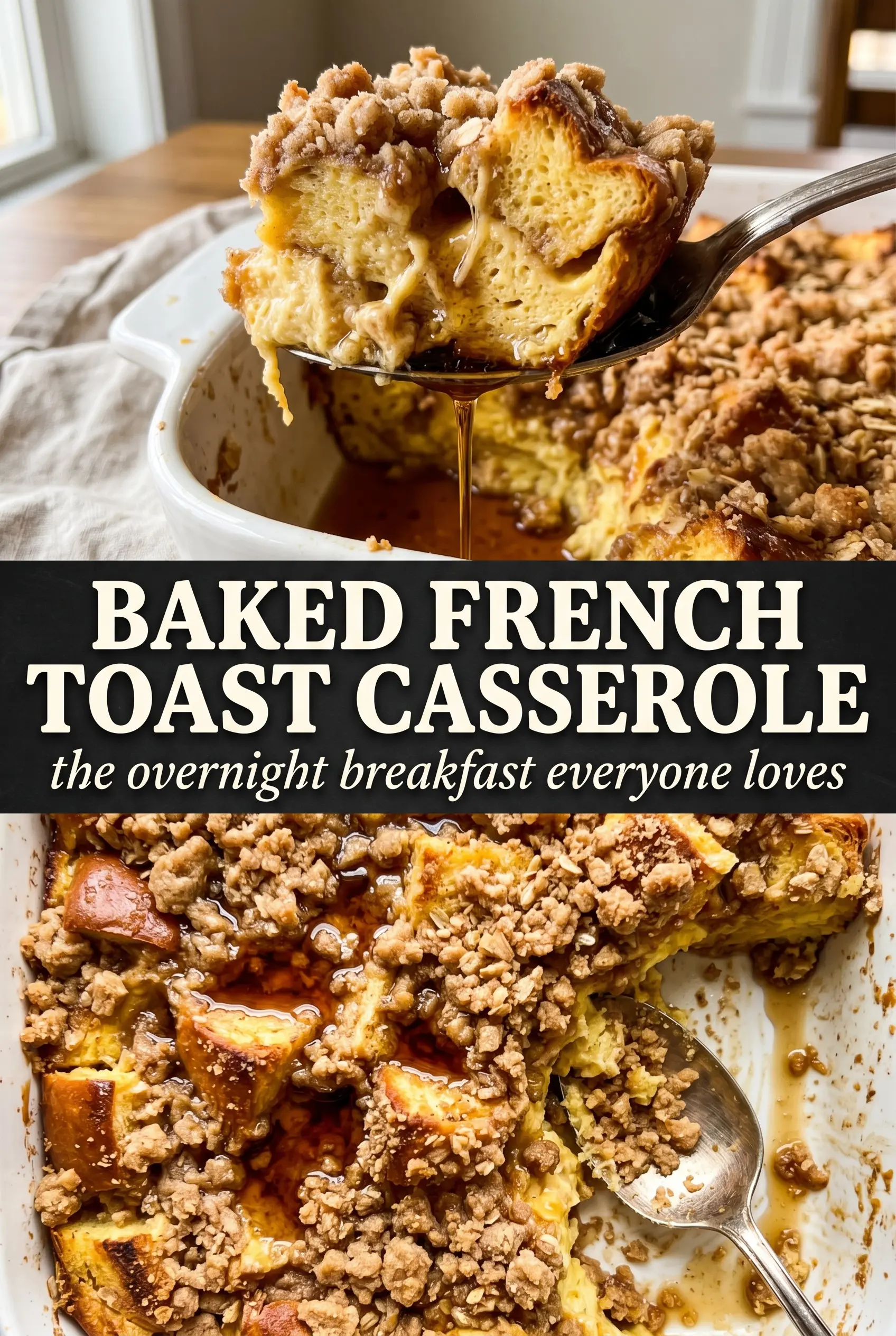
Baked French Toast Casserole
Ingredients
Equipment
Method
- Grease a 9x13 dish and arrange the bread cubes in an even layer.
- Whisk the eggs, whole milk, heavy cream, sugar, vanilla extract, cinnamon, and nutmeg until smooth.
- Pour the custard over the bread, then press down so every cube soaks up the mixture and the surface looks evenly saturated.
- Cover the dish and refrigerate overnight (8 hours) or at least 4 hours.
- Scatter the cold butter cubes over the top so they form small visible bits across the surface.
- Sprinkle brown sugar and cinnamon evenly over the butter for a speckled topping.
- Bake at 350°F for 40–45 minutes, until the casserole is golden and puffed at the edges.
- Dust with powdered sugar and drizzle with maple syrup before serving.