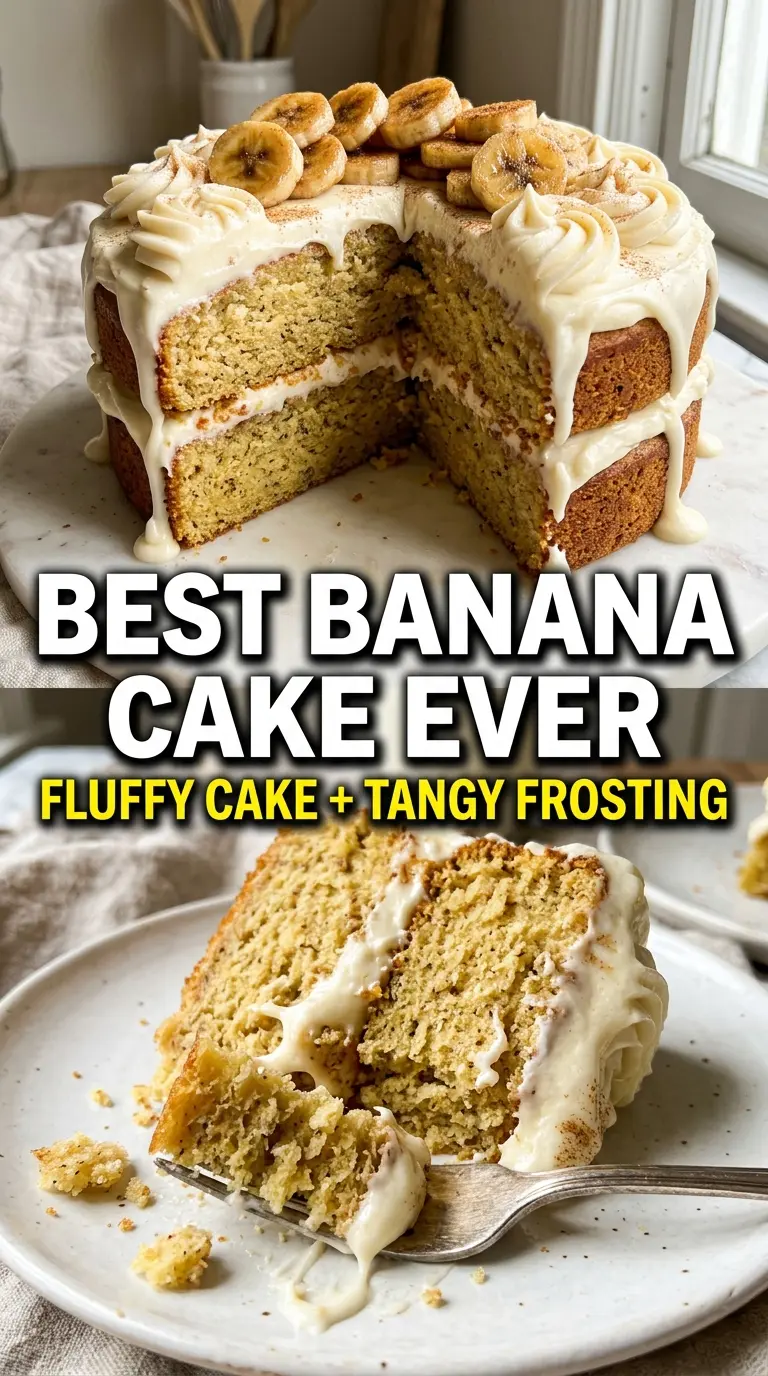
Pillowy banana cake with cream cheese frosting is the kind of dessert that disappears fast because it hits that sweet spot between homey and celebration-worthy. The cake stays moist for days, the crumb is tender without being heavy, and the tangy frosting gives every bite enough contrast to keep you coming back for another piece.
What makes this version work is the balance. Ripe bananas bring natural sweetness and softness, but sour cream keeps the batter rich without making it dense. The batter also gets built in a way that keeps the cake light for a banana cake: the flour mixture and sour cream go in alternately, so the crumb stays even and the cake bakes up with a little lift instead of turning gummy.
Below, I’ll walk you through the part that matters most: how to avoid an overmixed batter, how to get a frosting that spreads thickly instead of sliding, and a few swaps that still keep the cake worth baking.
The cake came out incredibly moist and the frosting held its shape beautifully even after sitting out. I loved that the banana flavor came through without tasting overly sweet, and the cream cheese frosting was thick enough to spread in big swoops.
Banana cake with cream cheese frosting like this one is worth saving for the day you want a soft, moist cake with thick, tangy frosting and a clean 9×13 pan finish.
The Trick to Keeping Banana Cake Soft Instead of Dense
The biggest mistake with banana cake is treating it like quick bread and stirring it until it looks perfectly smooth. That’s how you end up with a tight, heavy crumb. This batter should be mixed only until the flour disappears, because the flour and sour cream already give it enough structure and moisture without extra work from you.
Another place people go wrong is using bananas that aren’t ripe enough. Pale bananas bring starch but not much flavor, and you’ll taste it in the finished cake. You want bananas with deep brown spots and a soft texture, because they mash more easily and blend into the batter instead of leaving dry little chunks.
- Overripe bananas — These do the heavy lifting for flavor and moisture. If yours are just yellow, the cake will still bake, but it won’t taste as full or sweet.
- Sour cream — This keeps the crumb tender and gives the cake a slight tang that balances the frosting. Plain Greek yogurt works in a pinch, but the cake will be a little less rich.
- Baking soda and baking powder — The two leaveners work together here, which helps the cake rise evenly in a 9×13 pan. Don’t skip one to simplify the recipe; the texture depends on both.
What Each Ingredient Is Doing in the Batter and Frosting
- Butter — In the cake, butter gives a richer crumb than oil alone and helps the batter hold air when you beat it with sugar. In the frosting, it softens the tang of the cream cheese and makes the texture spreadable instead of sharp.
- All-purpose flour — This gives the cake enough body to slice cleanly without making it bready. Cake flour is finer, but it can make the structure too delicate for a banana sheet cake that needs to hold frosting.
- Vanilla and cinnamon — Vanilla rounds out the banana flavor, and cinnamon adds warmth without turning the cake into spice cake. The cinnamon should stay subtle; if it gets loud, it starts fighting the frosting.
- Cream cheese for the frosting — Use block-style cream cheese, not the spreadable tub kind. The tub version has more moisture and won’t whip into that thick, billowy texture you want for swooping across the top.
- Heavy cream — Just a little loosens the frosting enough to beat it fluffy. If you add too much, it’ll go soft and lose the thick finish that makes this cake look bakery-style.
Building the Batter and Frosting the Cake at the Right Moment
Starting With the Butter and Sugar
Beat the butter and sugar until the mixture looks pale and fluffy, not just combined. That step traps air, which helps the cake rise in the oven instead of baking up compact. Once the eggs, vanilla, and bananas go in, the batter may look a little loose or curdled, and that’s normal. Don’t chase a perfectly smooth look before the flour goes in.
Alternating the Dry Ingredients and Sour Cream
Add the flour mixture and sour cream in turns, starting and ending with the flour. This keeps the batter from breaking or overworking, and it helps the sour cream distribute evenly. Stop mixing as soon as the last streak of flour disappears; if you keep going, the cake gets tougher and loses that soft, pillowy texture.
Baking Until the Center Springs Back
Spread the batter into a greased 9×13 pan and bake until a toothpick comes out clean and the center feels set when lightly touched. The top should be golden and the edges will pull slightly from the pan. If the middle still looks shiny or jiggles like batter, give it a few more minutes. A banana cake that’s underbaked in the center will sink once it cools.
Whipping the Frosting Until It Holds
Beat the cream cheese and butter first until completely smooth, then add the powdered sugar gradually. This order matters because lumps in the fat base never fully disappear later. Add the vanilla and cream at the end, just enough to make the frosting fluffy and thick. If it gets too loose, chill it for 10 to 15 minutes before spreading.
Frosting a Fully Cooled Cake
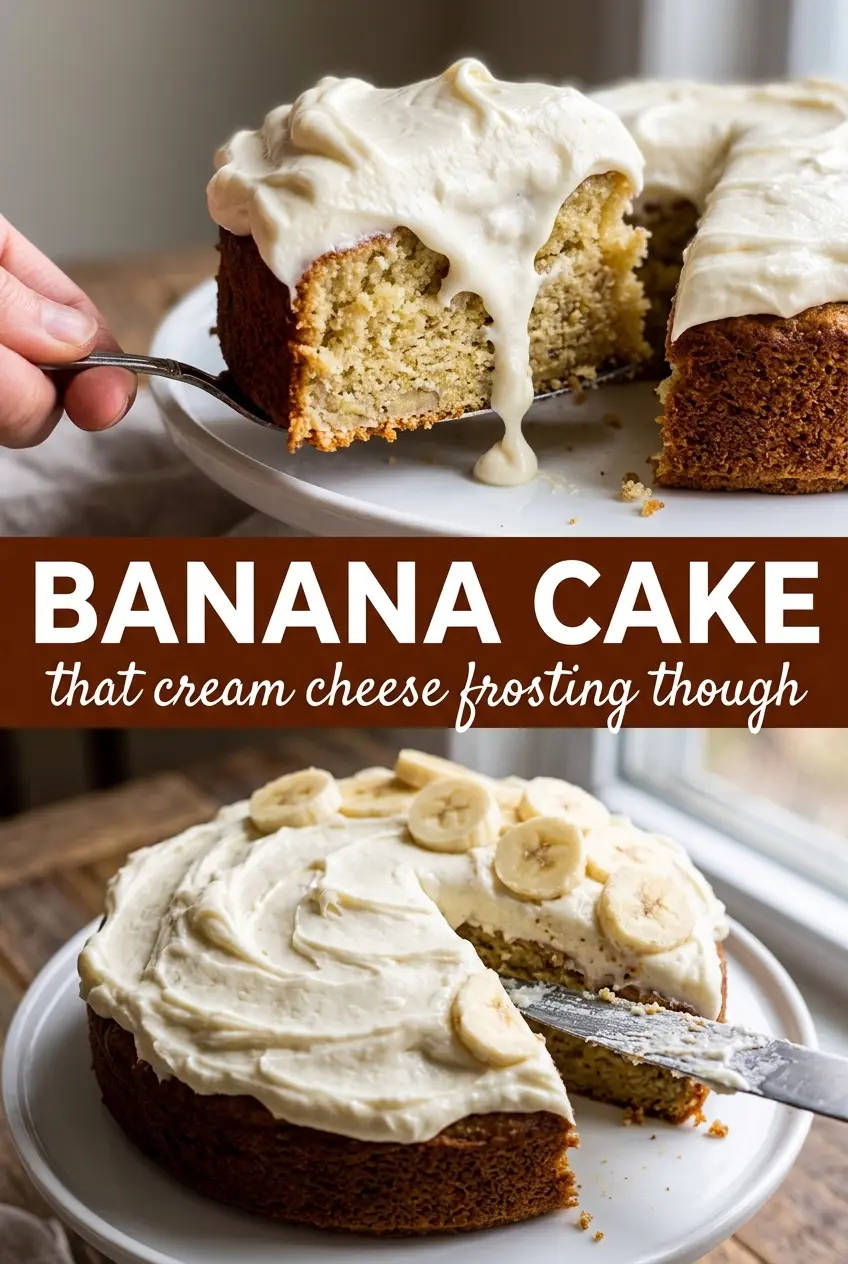
Let the cake cool all the way before frosting it. Even a little warmth will soften the cream cheese frosting and make it slide instead of sitting in those soft peaks. Spread it generously, then use the back of a spoon or offset spatula to create ridges across the top. That texture holds onto the frosting and gives the cake a finished look without extra decoration.
How to Adapt Banana Cake With Cream Cheese Frosting Without Losing the Texture
Make It Gluten-Free
Use a good 1:1 gluten-free baking flour in place of the all-purpose flour. The cake will still be moist, but it may crumble a little more when sliced, so let it cool completely before cutting. Don’t use almond flour alone here; it won’t give the same structure in a sheet cake.
Dairy-Free Version
Swap the butter for a solid plant-based baking stick and use a thick dairy-free yogurt instead of sour cream. For the frosting, use dairy-free cream cheese and a plant-based butter that stays firm at room temperature. The cake will still taste like banana cake, but the frosting will be a little softer and may need chilling before serving.
Turn It Into Cupcakes
Divide the batter into lined muffin cups and bake until the tops spring back when lightly touched. Cupcakes bake faster and dry out sooner, so start checking early. They’re a good choice if you want more frosting on each serving, but you’ll lose the clean sheet-cake slice that makes this recipe so easy to serve.
Add Nuts Without Changing the Crumb
Fold in chopped walnuts or pecans at the very end, after the batter is mixed. Use a light hand so the nuts stay distributed instead of sinking to the bottom. They add crunch and a little bitterness that works well with the sweet frosting, especially if you sprinkle some on top too.
Storage and Reheating
- Refrigerator: Store covered for up to 5 days. The frosting stays firm and the cake stays moist, though the banana flavor gets even deeper by day two.
- Freezer: The unfrosted cake freezes well for up to 2 months. Wrap it tightly in plastic and foil, then thaw overnight in the refrigerator before frosting.
- Reheating: This cake is best served at cool room temperature, not warmed. If it has been chilled, let slices sit out for 20 to 30 minutes so the frosting softens slightly and the crumb tastes tender again.
Answers to the Questions Worth Asking
Banana Cake with Cream Cheese Frosting
Ingredients
Equipment
Method
- Preheat the oven to 350°F and grease a 9x13 pan.
- Beat the butter and sugar until fluffy, 2–4 minutes, then add the eggs and vanilla and mix until combined.
- Add the mashed bananas and mix until fully incorporated, with no dry streaks.
- Incorporate the dry ingredients by alternating: fold in the flour mixture and sour cream, starting and ending with flour, until just combined.
- Pour the batter into the prepared pan and bake for 30–35 minutes, until a toothpick comes out clean.
- Cool the cake completely before frosting, until the top is no longer warm to the touch.
- Beat the cream cheese and butter until smooth, 1–2 minutes, stopping to scrape the bowl as needed.
- Gradually add the powdered sugar, then mix in the vanilla and heavy cream until thick and fluffy.
- Frost the completely cooled cake generously and swoop the frosting into billowing soft peaks across the entire surface.