Golden blueberry French toast casserole comes out with a soft custardy center, pockets of cream cheese, and a crunchy brown sugar streusel that cracks under the spoon. The blueberries melt into the bread as it bakes, so every serving gets a little jammy fruit, a little creamy tang, and enough crisp top to keep each bite interesting.
What makes this version work is the overnight soak. The bread has time to absorb the egg mixture all the way through, which keeps the middle tender instead of dry or eggy. Cream cheese cubes hold their shape just enough to give you those rich, cool pockets after baking, and the streusel goes on at the last minute so it stays crisp instead of disappearing into the custard.
Below you’ll find the small details that matter most: how to keep the casserole from turning soggy, why frozen blueberries work fine, and what to do if you want to prep this a little farther ahead for brunch.
The bread soaked up the custard overnight without getting mushy, and the streusel stayed crisp on top. The cream cheese pockets were the best part, especially with the blueberries that turned jammy in the oven.
Save this blueberry French toast casserole for a make-ahead brunch with jammy berries, cream cheese pockets, and a crisp brown sugar topping.
The Reason the Bread Soaks Overnight Instead of Going Soggy
The mistake with most French toast casseroles is rushing the soak. The bread needs time to pull in the custard from the outside in, and that overnight rest is what gives you a slice that holds together instead of collapsing into wet crumbs. If you bake it too soon, the top can brown before the center has a chance to set, which leaves you with a dry edge and a loose middle.
Using sturdy French bread matters here because it keeps some structure after soaking. Soft sandwich bread can work in a pinch, but it turns tender faster and loses that layered texture that makes this casserole feel substantial. The goal is a custardy interior with distinct bread pieces, not bread pudding that melts into itself.
What the Blueberries, Cream Cheese, and Streusel Are Each Doing

- French bread — This is your structure. Day-old bread works best because it soaks up the custard without turning gummy, and the cubes keep enough definition after baking to give each bite some chew.
- Cream cheese — Cold cubes are the trick. They soften in the oven and leave little creamy pockets instead of disappearing into the custard. Full-fat cream cheese gives the cleanest texture, but reduced-fat will still work if that’s what you have.
- Blueberries — Fresh or frozen both work. Frozen berries go in straight from the freezer; don’t thaw them first or they’ll bleed too much color and make the casserole wet.
- Eggs and milk — This is the custard that sets the bake. Whole milk gives the richest result, but 2% will still set properly. Lower-fat milk works, though the casserole will taste lighter and a little less plush.
- Brown sugar streusel — This is what gives you that golden crackly top. Keep the butter cold and rub it in until the mixture looks like damp sand with a few bigger clumps; that texture bakes into crumbles instead of a paste.
- Maple syrup — It sweetens the custard without making it taste flat. Pure maple syrup brings a deeper flavor than pancake syrup, and it’s worth using the real thing here.
Building the Layers So the Center Sets and the Top Stays Crisp
Layering the Bread and Fillings
Start with half the bread on the bottom so the custard doesn’t pool in one place. Scatter the cream cheese and the first batch of blueberries over that layer, then cover with the remaining bread cubes. Press everything down gently after you pour in the custard so the dry pieces on top can start absorbing liquid. Don’t mash it flat; you want the bread to stay in loose layers so the casserole bakes up light instead of dense.
Soaking It Long Enough
Pour the egg mixture over the bread in a slow, even stream so every corner gets some. The top may still look a little dry at first, but it will settle as it rests in the fridge. Cover the dish and refrigerate overnight so the custard reaches the center of the bread. If you skip that rest, the casserole bakes unevenly and the middle stays bready instead of creamy.
Adding the Streusel at the Right Moment
Mix the streusel until the butter is cut in and the crumbs hold together when squeezed. Keep it chilled until baking time. Add it just before the casserole goes into the oven so it stays crisp and brown instead of dissolving into the custard during the soak. Bake until the top is puffed, the center doesn’t slosh when you nudge the pan, and the streusel has turned deep golden around the edges.
Use Mixed Berries Instead of All Blueberries
Swap in raspberries or blackberries for part of the blueberries if you want a sharper fruit note. Raspberries break down more, so the casserole will look a little saucier and less neatly defined, but the flavor is bright and worth it. Keep the total fruit amount the same so the custard still sets properly.
Make It Dairy-Free
Use a sturdy dairy-free cream cheese and an unsweetened oat or almond milk that can stand up to baking. The texture will be a little less rich, but the custard still sets well if you keep the same egg ratio. Choose a dairy-free cream cheese that comes in block form, not a soft tub spread, or it can melt away instead of leaving pockets.
Make It Gluten-Free
Use a sturdy gluten-free bread with some chew, not a super soft sandwich loaf. Gluten-free bread varies a lot, so stale cubes are especially helpful here because they absorb the custard more evenly. The casserole may need an extra 5 minutes in the oven if the bread is very dense.
Prep It Earlier in the Day
You can assemble the casserole in the morning and keep it chilled for several hours before baking, but don’t add the streusel until right before it goes in the oven. The bread will continue to soften as it sits, so if you’re making it far ahead, stick with the overnight rest rather than stretching it much longer. That keeps the texture balanced instead of muddy.
Storage and Reheating
- Refrigerator: Store leftovers covered for up to 4 days. The top softens a bit, but the custard stays nice and sliceable.
- Freezer: It freezes well in individual portions. Wrap tightly and freeze for up to 2 months, then thaw in the fridge before reheating.
- Reheating: Warm portions in a 325°F oven until heated through, or microwave short bursts if you’re in a hurry. The oven keeps the streusel closer to crisp; the microwave is faster but softens the topping.
Answers to the Questions Worth Asking
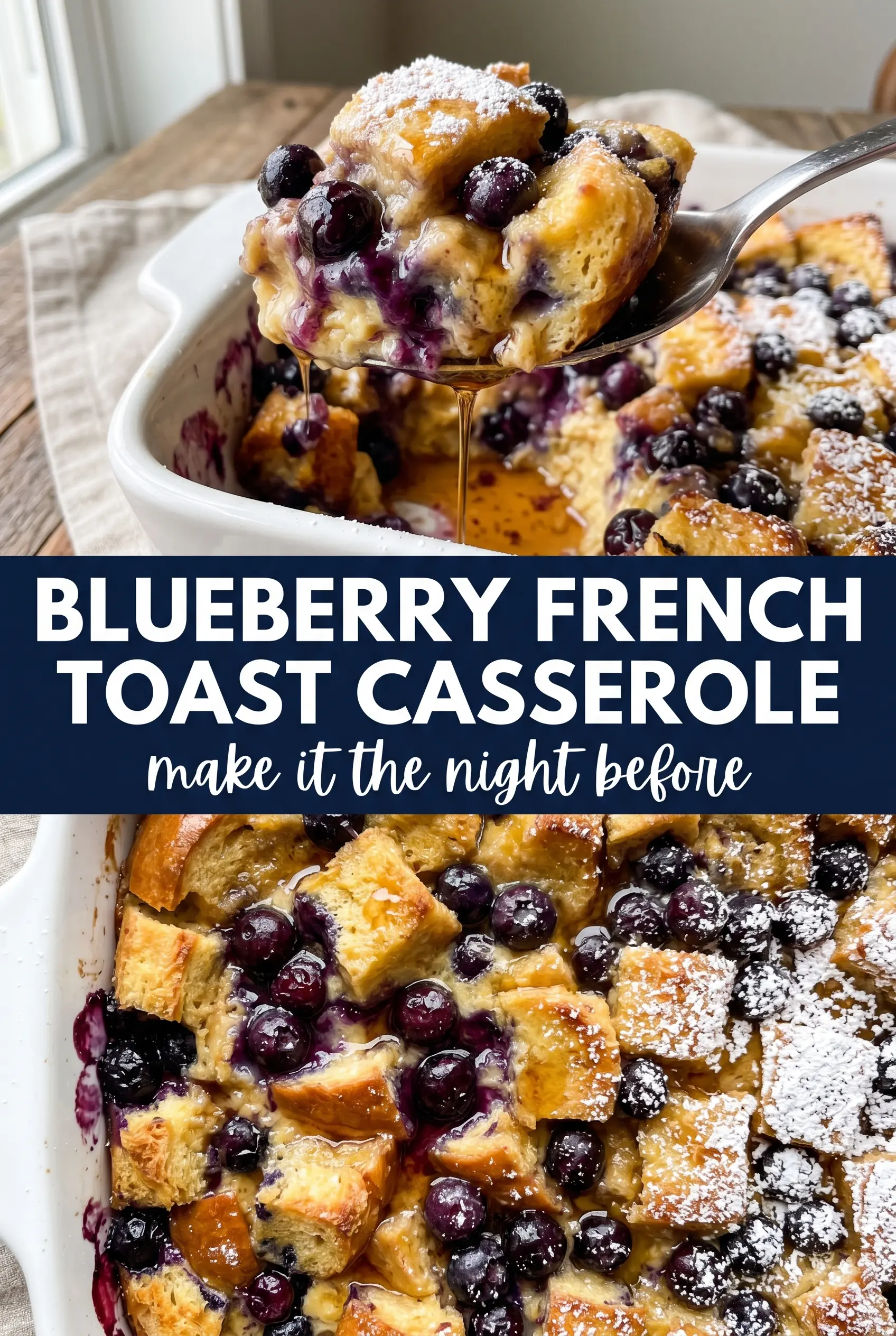
Blueberry French Toast Casserole
Ingredients
Equipment
Method
- Grease a 9x13 dish and spread half the French bread cubes on the bottom.
- Scatter half the cream cheese cubes and 1 cup blueberries over the bread, then add the remaining bread cubes.
- Whisk eggs, whole milk, maple syrup, and vanilla extract together, then pour evenly over the bread and press down gently.
- Scatter the remaining blueberries on top, cover, and refrigerate overnight (soaking).
- Rub flour, brown sugar, cinnamon, and cold butter together until crumbly, then refrigerate.
- Top the soaked casserole with the chilled streusel.
- Bake at 350°F for 40–45 minutes, until puffed and golden.
- Dust with powdered sugar and serve with maple syrup if desired.