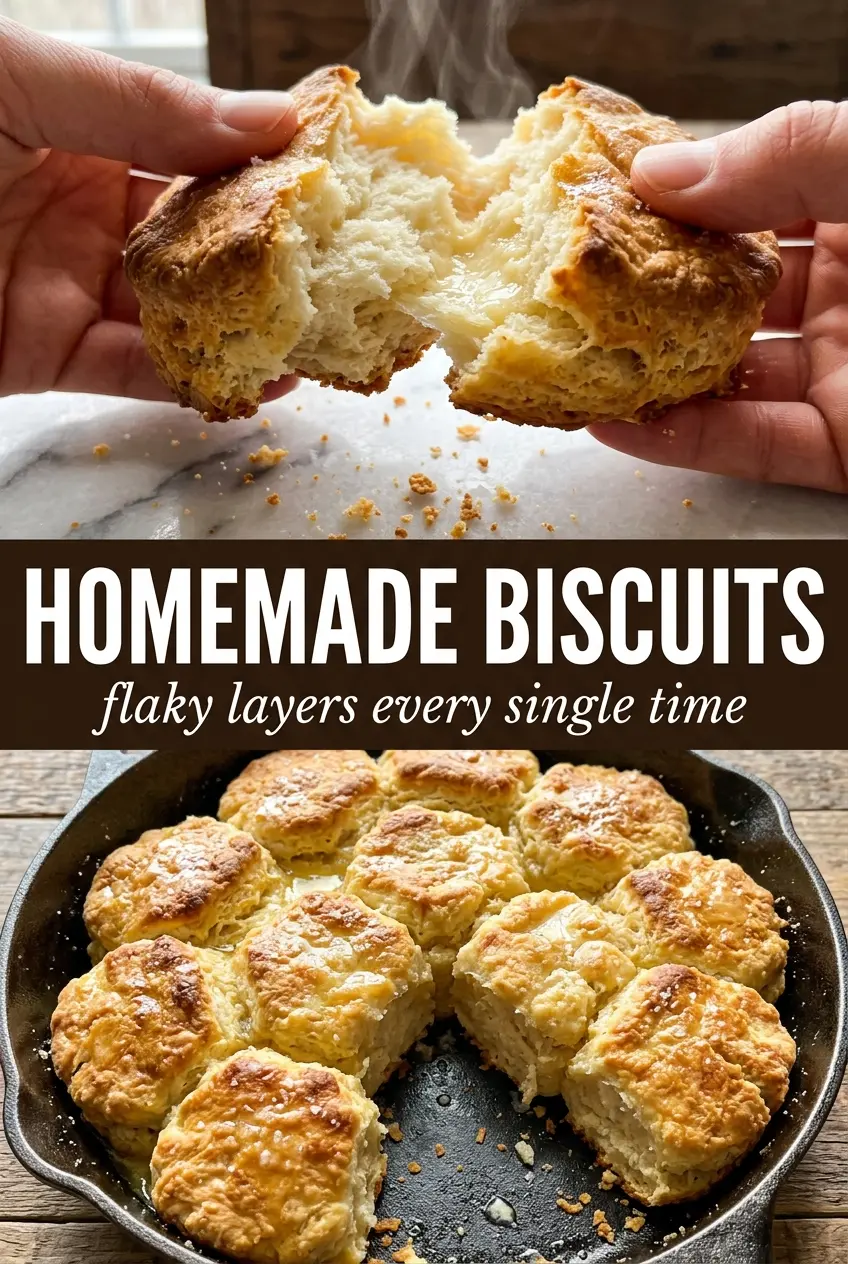
Tall, flaky homemade biscuits are at their best when the layers pull apart in soft sheets and the centers stay tender instead of bready. The outside should bake up deeply golden, with enough structure to hold a pat of butter without collapsing, and the inside should look almost custardy when you split one open hot from the oven.
What makes this version work is cold butter, cold buttermilk, and a very light hand once the liquid goes in. Those butter pieces melt in the oven and leave little pockets behind, which is what gives biscuits their lift and those uneven, craggy layers people fight for. Folding the dough a few times also builds height without turning it tough, so you get biscuits that rise straight up instead of spreading out flat.
Below, I’m walking through the small details that matter most: how to handle the dough without overworking it, why the cutter matters more than people think, and what to change if you need a dairy-free version that still bakes up with good texture.
The biscuits rose tall and split into those buttery layers I never seem to get right. Not twisting the cutter made a huge difference, and they baked up with crisp tops and tender middles.
Save these tall, flaky buttermilk biscuits for a breakfast that needs buttery layers and a golden crust.
The Small Mistakes That Keep Biscuits From Rising Tall
Most biscuit problems come from warmth and handling. If the butter starts softening before it hits the oven, you lose the steam pockets that create height. If you knead the dough like bread, the biscuits turn tight and dry instead of layered and tender.
The other common mistake is twisting the cutter. That seals the edges and keeps the biscuit from climbing straight up in the oven. A clean press straight down gives the dough its best chance to rise evenly, and placing the biscuits close together helps them support one another as they bake.
- Cold butter — This is the engine of the whole recipe. Keep it in the fridge until the second you need it, and if your kitchen runs warm, pop the cut butter back in the freezer for a few minutes before mixing.
- Cold buttermilk — The chill matters just as much as the tang. It keeps the butter firm long enough to get the dough into the oven with visible pieces still intact.
- Pastry cutter or fingertips — Either one works. If you use your fingers, move fast and stop when the mixture looks like coarse crumbs with some bigger butter bits left behind.
- All-purpose flour — This gives the biscuits enough structure without making them dense. Bread flour will make them chewier and less tender, which works against the soft layers you want here.
What Each Ingredient Is Actually Doing in These Biscuits

- Baking powder and baking soda — They work as a pair. Baking powder gives the main lift, while baking soda reacts with the buttermilk for extra rise and a better browned crust.
- Sugar — Just a little. It doesn’t make the biscuits sweet; it helps with browning and rounds out the flavor so the finished biscuits taste richer.
- Buttermilk — This brings tang, tenderness, and the acid needed to activate the soda. If you don’t have it, use milk mixed with a little lemon juice or vinegar, but the texture won’t be quite as plush.
- Butter for brushing — That final brush gives the tops a soft shine and helps them bake into a more flavorful crust. Melted butter also settles into the cracks and makes the biscuits taste like they came straight from a cast-iron skillet kitchen.
How to Build the Layers Without Overworking the Dough
Whisking the Dry Base
Start with a thorough whisk so the baking powder, baking soda, salt, and sugar are spread evenly through the flour. That matters because a pocket of baking soda can leave a bitter bite, and a pocket of salt can make one biscuit taste sharper than the rest. Once the dry ingredients are mixed, work quickly so the flour doesn’t sit around and absorb moisture before the butter goes in.
Cutting in the Butter
Add the cold butter and stop when you still see pea-sized pieces and a few larger bits. Those chunks are not a problem; they’re the reason the biscuits rise in layers. If the butter disappears completely, the biscuits will bake up more like soft rolls than true flaky biscuits.
Folding for Height
When the dough comes together, turn it out and fold it over itself three or four times before patting it to thickness. The dough should look a little rough, not smooth and polished. If it feels sticky, dust the board lightly with flour, but don’t work so much flour into it that the biscuits turn dry.
Cutting and Baking
Press the cutter straight down and lift it straight up. Don’t twist. Place the biscuits on the sheet so they’re touching or just barely apart, then brush the tops with melted butter and bake until they’re deeply golden and the sides look set. If the tops brown too fast before the centers are done, your oven is running hot, so keep an eye on color rather than the clock alone.
Cheddar Biscuits for a Savory Twist
Fold in about 3/4 cup shredded sharp cheddar after cutting in the butter. The cheese adds saltiness and a little extra browning, but it also makes the dough slightly heavier, so don’t overload it if you still want tall layers.
Dairy-Free Biscuits That Still Rise
Use a firm plant-based butter and unsweetened non-dairy milk mixed with 1 tablespoon lemon juice in place of the buttermilk. The biscuits will still puff and brown, though the flavor will be a little less rich and the crumb a touch less tender than the classic version.
Gluten-Free Biscuits With a Tender Crumb
Use a 1:1 gluten-free baking flour that already includes xanthan gum. The dough will usually be a little softer, so handle it gently and skip any extra flour that would dry it out.
Storage and Reheating
- Refrigerator: Store baked biscuits in an airtight container for up to 3 days. They’ll soften a little on the outside, but the crumb stays good.
- Freezer: Freeze baked biscuits for up to 2 months, wrapped tightly. You can also freeze the cut unbaked biscuits on a tray, then bag them and bake from frozen with a few extra minutes in the oven.
- Reheating: Warm in a 300°F oven for 8 to 10 minutes until heated through. The microwave makes them rubbery, which is the fastest way to lose the flaky texture.
Questions I Get Asked About This Recipe
Homemade Biscuits
Ingredients
Equipment
Method
- Preheat your oven to 450°F and line a baking sheet with parchment paper.
- Whisk all-purpose flour, baking powder, baking soda, salt, and granulated sugar together in a large bowl.
- Add cold cubed cold unsalted butter and cut it into the flour until the mixture resembles coarse pea-sized crumbs with some larger butter bits.
- Add cold buttermilk and stir just until the dough comes together—do not overmix.
- Turn the dough onto a lightly floured surface, fold it over on itself 3–4 times, then pat to 1-inch thickness.
- Cut the biscuits with a biscuit cutter (no twisting) and place them on the prepared sheet.
- Brush the tops with melted butter.
- Bake for 12–15 minutes at 450°F until deeply golden.