Sharp cheddar and zucchini bake into a loaf that lands somewhere between a savory quick bread and a snack you can slice and eat warm from the pan. The crumb stays tender, the top turns deeply golden, and the pockets of melted cheese give every bite a little salt and pull without making the loaf heavy. It’s the kind of bake that disappears fast because it works for breakfast, lunch, or tucked beside soup at dinner.
The trick is squeezing the zucchini dry enough to keep the loaf from turning wet, but not so aggressively that it loses all the moisture that keeps the crumb soft. Sharp cheddar does the heavy lifting here; milder cheese melts, but it won’t give you the same punch or the same browned crust on top. A little honey helps round out the savory edges without turning this into a sweet bread.
Below, I’ve laid out the small details that matter most: how dry the zucchini should be, why the cheese gets divided, and what to do if you want to swap in butter or make the loaf a little more breakfast-forward.
The loaf came out moist but not dense, and the cheddar on top baked into this crisp, salty crust that my kids kept picking off the slices.
Save this cheddar zucchini bread for the days when you want a savory loaf with a crisp cheddar top and a soft, melty center.
The Reason This Loaf Stays Tender Instead of Turning Gummy
Quick breads with zucchini usually fail in one of two ways: they bake up wet in the center, or they turn dense because the batter gets overworked while the cook tries to chase out the moisture. This loaf avoids both problems by treating the zucchini like an ingredient, not a shortcut. Once it’s grated and squeezed dry, it adds tenderness and body without flooding the batter.
The other reason this loaf works is the balance between fat, cheese, and flour. The oil or melted butter keeps the crumb soft, while the sharp cheddar brings enough salt and structure to give the bread a savory edge. If the loaf ever feels heavy, it’s usually because the zucchini wasn’t squeezed enough or the flour was stirred in too long.
What Each Ingredient Is Actually Doing Here
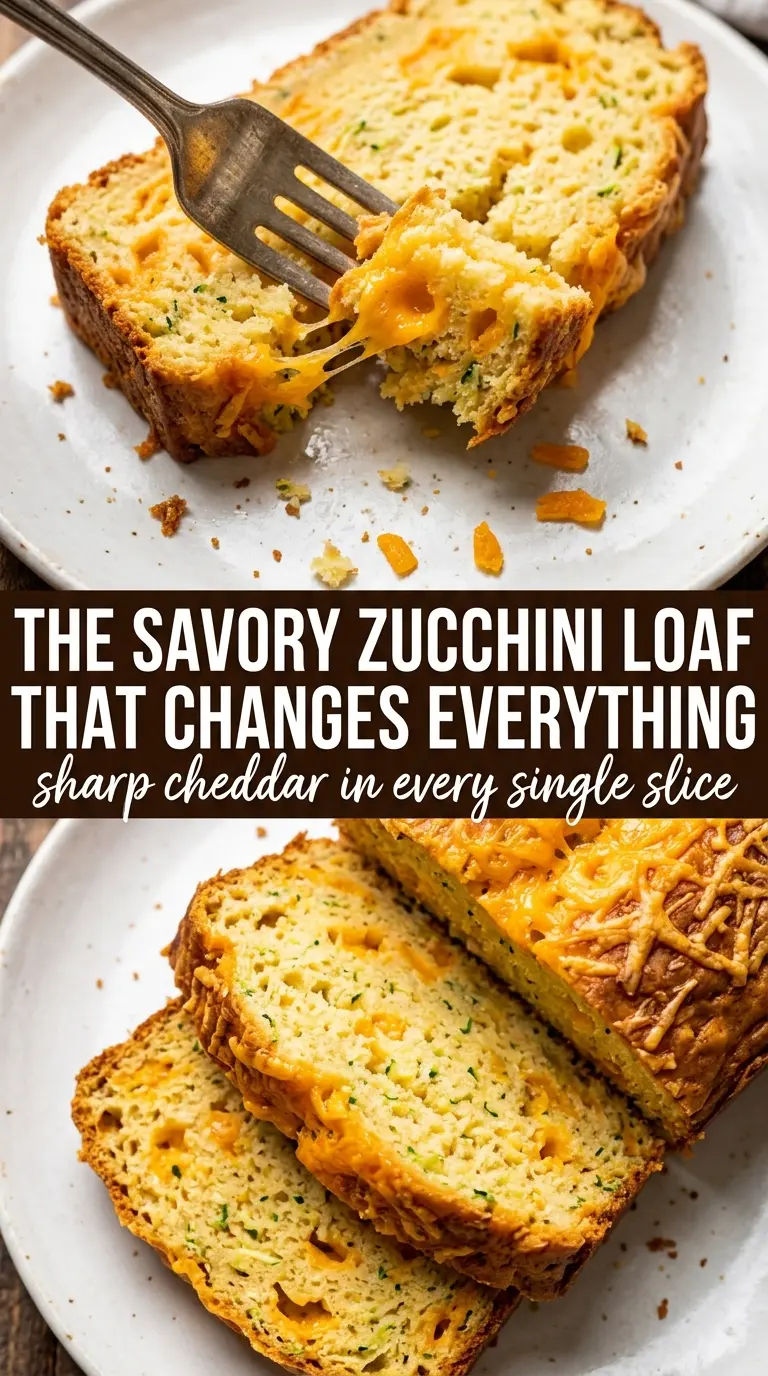
- Zucchini — This is there for moisture and tenderness, but it has to be squeezed dry after grating. A box grater works fine, and there’s no benefit to peeling it unless the skin is especially thick.
- Sharp cheddar — Use sharp, not mild. Sharp cheddar gives the loaf its savory backbone and browns better on top. Pre-shredded cheese works in a pinch, but freshly shredded melts more smoothly and gives you better pockets inside the crumb.
- Oil or melted butter — Oil makes the loaf stay soft longer, while butter gives a slightly richer flavor. Either works, but if you want the bread to stay moist on day two, oil is the safer pick.
- Honey or sugar — You only need a little. It rounds out the saltiness and helps the crust color without making the loaf taste sweet.
- Green onions — Optional, but they add a fresh bite that plays well with cheddar. If you leave them out, the loaf is still balanced; if you add them, slice them thin so they disappear into the crumb instead of clumping.
Building the Batter Without Overworking It
Start With the Dry Bowl
Whisk the flour, baking powder, salt, garlic powder, and black pepper together first so the leavening and seasoning are evenly distributed. That gives you a loaf that rises evenly and tastes seasoned all the way through instead of in random pockets. If the baking powder isn’t mixed in well, parts of the loaf can rise unevenly and create tunnels.
Keep the Wet Mix Loose
Beat the eggs, milk, oil, and honey until the mixture looks smooth and slightly glossy. This is the base that carries the zucchini and cheese, so it should look fully combined before anything else goes in. Stir in the zucchini and one cup of cheddar, and don’t worry if the mixture looks chunky; that’s what you want.
Fold, Don’t Beat
Add the dry ingredients to the wet mixture and stir only until the flour disappears. A few streaks are better than a batter that’s been worked into a paste, because overmixing develops the flour and makes quick bread tough. Pour the batter into the pan, then scatter the remaining cheddar over the top so it can bake into a browned crust instead of disappearing into the middle.
Bake Until the Center Sets
Bake at 350°F until the top is deep golden and a toothpick comes out clean or with just a few moist crumbs, usually 50 to 58 minutes. If the top browns too quickly, tent it loosely with foil near the end of baking. Let the loaf rest for 15 minutes before slicing so the crumb finishes setting; cutting too early can make it look underbaked even when it’s done.
Three Ways to Bend This Loaf Without Breaking It
Make it gluten-free with a 1:1 baking blend
A good cup-for-cup gluten-free flour blend works here as long as it includes xanthan gum. The texture will be a little more delicate and slightly less springy than the original, but the loaf still slices well once fully cooled.
Swap in butter for a richer, more bakery-style crumb
Use melted butter in place of the oil if you want a deeper, more buttery flavor. The loaf will still be moist, but it may stale a little faster than the oil version, so it’s best if you plan to eat it within a day or two.
Turn it into a sharper, saltier breakfast loaf
Add a handful of extra cheddar and a little more black pepper if you want the loaf to lean harder into breakfast territory. The top will brown more aggressively, so watch the last 10 minutes closely and cover loosely with foil if needed.
Add herbs without muddying the flavor
A tablespoon or two of chopped chives, dill, or parsley works well if you want a fresher finish. Keep the herbs fine and modest; too much can make the loaf taste grassy instead of savory.
Storage and Reheating
- Refrigerator: Store wrapped or in an airtight container for up to 4 days. The crumb stays moist, but the cheese topping softens after the first day.
- Freezer: This freezes well. Slice the cooled loaf, wrap individual slices, and freeze for up to 2 months so you can reheat only what you need.
- Reheating: Warm slices in a 300°F oven or toaster oven until the cheese softens and the edges crisp again. The biggest mistake is microwaving too long, which makes the cheese greasy and the crumb rubbery.
Answers to the Questions Worth Asking
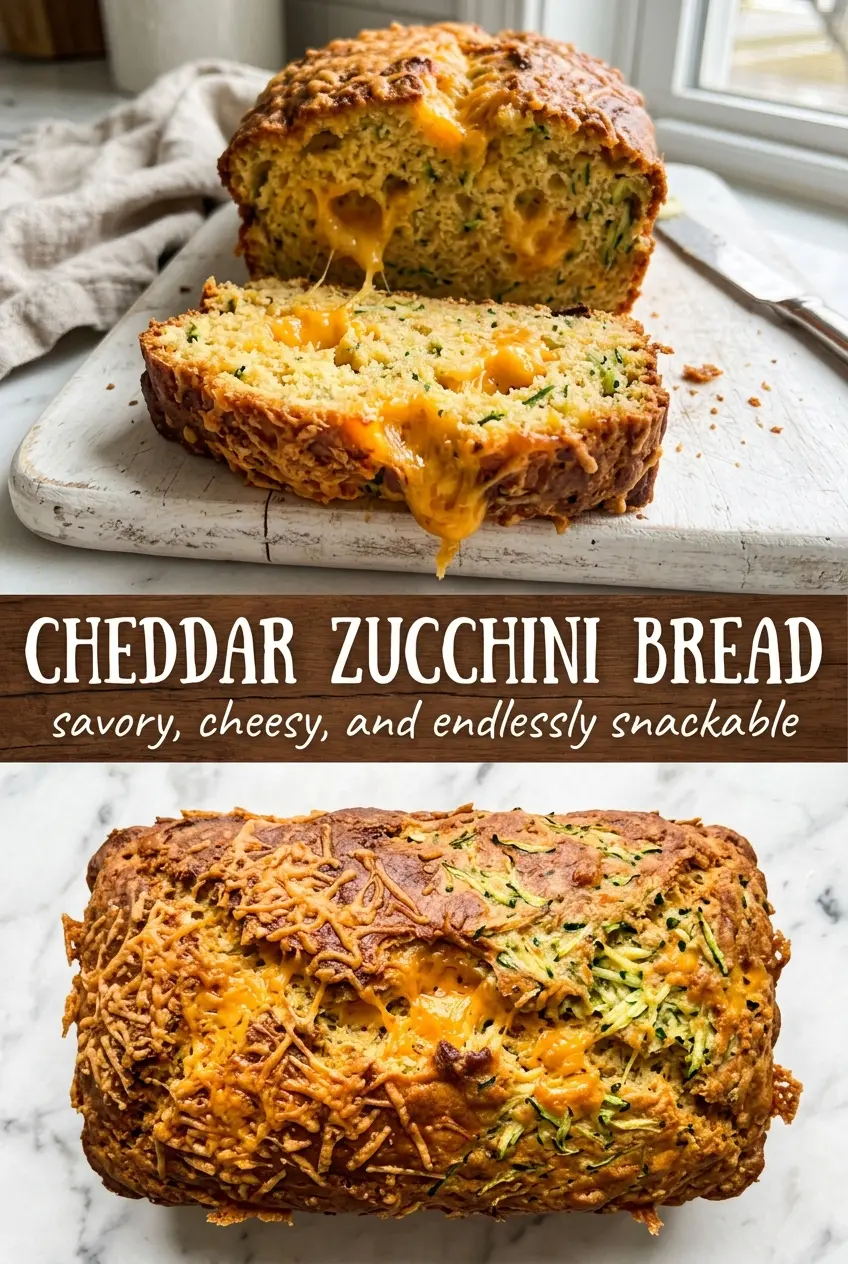
Cheddar Zucchini Bread
Ingredients
Equipment
Method
- Preheat oven to 350°F and grease a 9x5 loaf pan, leaving it ready for batter.
- Whisk all-purpose flour, baking powder, salt, garlic powder, and black pepper together until evenly combined.
- Beat eggs, whole milk, vegetable oil or melted butter, and honey or sugar in a separate bowl until smooth.
- Stir grated squeezed zucchini and 1 cup sharp cheddar cheese into the wet mixture.
- Fold dry ingredients into wet until just combined—stop when no dry streaks remain to avoid a tough loaf.
- Pour batter into the loaf pan and top with the remaining 1/2 cup sharp cheddar cheese.
- Bake for 50–58 minutes at 350°F until the top cheese is golden and a toothpick comes out clean.
- Cool the loaf for 15 minutes before slicing so the crumb sets and the melted cheese firms up.