Banana bundt cake earns its place on the table when it stays soft for days, slices cleanly, and still feels special enough to bring out for company. This version does all of that. The crumb is tender and banana-forward without turning gummy, and the cream cheese glaze settles into every ridge of the pan so each slice looks as good as it tastes.
The trick is balance. Ripe bananas bring moisture and flavor, sour cream keeps the crumb plush, and the batter gets mixed in a way that avoids toughness. A bundt pan needs more care than a loaf pan, too — every corner has to be greased and floured well or the cake will hang on when you try to invert it.
Below, I’ve included the small details that matter most: how to keep the cake from sticking, why the glaze should go on only after the cake is fully cool, and a few swaps that still give you that tall, dramatic finish.
The cake came out with a perfect crumb and the glaze draped down the ridges exactly like the photo. I used very ripe bananas and the flavor was deep, not just sweet.
Save this banana bundt cake for the days when you want a tall, moist cake with a thick cream cheese glaze and zero fuss at the table.
The Bundt Pan Is the Real Test Here
A banana bundt cake can taste perfect and still fail if it clings to the pan. Bundt cakes punish weak prep because all those ridges create places for batter to glue itself in place. Grease every curve, every seam, and every high point, then dust with flour and tap out the excess. That extra minute is what gives you a clean release and those sharp, bakery-style lines.
The other place people run into trouble is overmixing. Once the flour goes in, the batter should be folded just until the dry streaks disappear. Overworking it builds a tighter crumb, and banana cake should stay soft and tender, not bready. The sour cream helps here too, because it adds moisture without thinning the batter so much that the cake turns dense in the middle.
What Each Ingredient Is Actually Doing in This Banana Bundt Cake
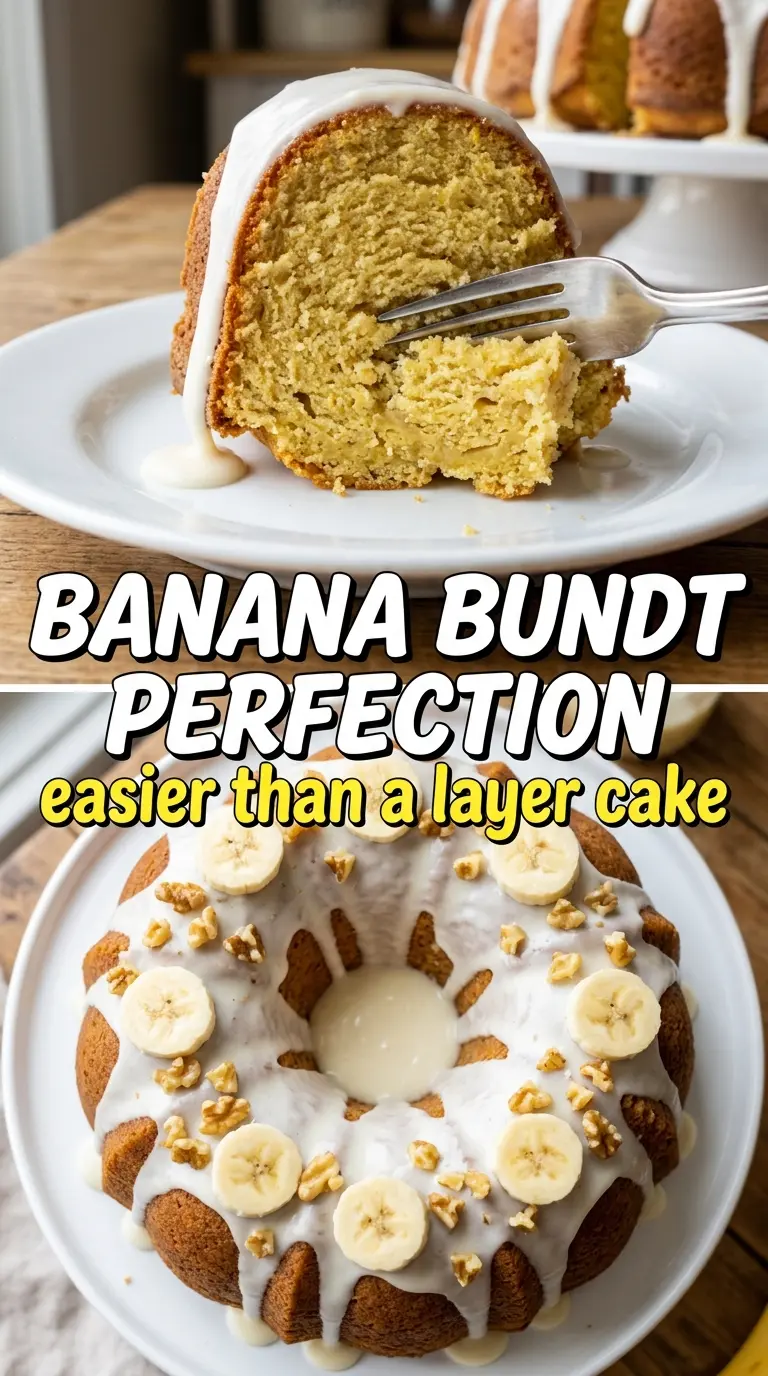
- Ripe bananas — The darker and softer they are, the better the flavor and moisture. You want bananas with plenty of brown spots and a strong aroma; pale bananas won’t give the same depth. Mash them well so they disappear into the batter instead of leaving chunks that bake unevenly.
- Butter and sugar — Beating these together first gives the cake some lift and helps create a lighter crumb. The butter should be softened, not melted, or you’ll lose that aerated texture. This is one place where the mixer does the work that a spatula can’t fully replace.
- Sour cream — This is what keeps the cake plush for days. Plain Greek yogurt can work in a pinch, but the result will be a little tangier and slightly less rich. If you swap it, use full-fat yogurt and keep the measurement the same.
- Cinnamon — It doesn’t make the cake taste like spice cake; it just rounds out the banana flavor and keeps the sweetness from tasting flat. A small amount is enough. More than that starts to compete with the glaze.
- Cream cheese glaze — Softened cream cheese is nonnegotiable if you want a smooth glaze. If it’s cold, you’ll get tiny lumps that never fully whisk out. The milk should be added gradually so the glaze pours thickly instead of running straight off the cake.
How to Build the Batter and Get the Glaze to Set Right
Beating the Base
Start by creaming the butter and sugar until the mixture looks pale and fluffy, not just combined. That change in color matters because it means air has been trapped in the fat, which helps the cake rise. Add the eggs one at a time so the batter stays smooth; if you dump them all in at once, the mixture can look curdled before it comes together again. The bananas go in with the vanilla, and the batter may look a little loose at this point, which is exactly what you want.
Alternating Dry and Wet Ingredients
Mix the flour, baking soda, salt, and cinnamon separately, then add the dry ingredients and sour cream in alternating additions. This keeps the batter from tightening up all at once. Stop mixing as soon as the flour disappears; if you keep going, the cake can turn heavy and a little rubbery around the edges. The finished batter should be thick, scoopable, and speckled with banana.
Baking Until the Center Stays Set
Pour the batter into the prepared bundt pan and smooth the top so it bakes evenly. Bake until a toothpick comes out clean or with just a few moist crumbs, not wet batter. If the top is browning too quickly, the cake is still probably underdone in the center, so trust the tester more than the color. Let it rest in the pan for 20 minutes; any less and it can tear, any longer and steam may make it stick.
Cooling and Glazing
Turn the cake out onto a rack and let it cool completely before glazing. Warm cake will melt the glaze into a thin puddle instead of letting it drape in thick ribbons. Beat the cream cheese mixture until it’s smooth and pourable, then spoon or drizzle it over the ridges so it falls naturally down the sides. The glaze will thicken a bit as it sits, which is exactly what gives each slice that finished look.
How to Adapt This for a Different Table
Make It Nutty
Fold 1 cup of chopped pecans into the batter or scatter them over the glaze before it sets. They add crunch and a toasted note that plays well with banana, but they also make the crumb feel a little more rustic. If you choose this route, toast the nuts first so they taste deliberate instead of raw.
Dairy-Free Version
Use a plant-based butter and swap the sour cream for thick dairy-free yogurt. The cake will still bake up moist, though the crumb won’t be quite as rich. For the glaze, use dairy-free cream cheese and add the milk a teaspoon at a time until it reaches a slow pour.
Gluten-Free Swap
A good 1:1 gluten-free flour blend can work here, especially one with xanthan gum already mixed in. The cake may need a few extra minutes in the oven, and the crumb will be a touch more delicate when sliced. Let it cool fully before cutting so it has time to set.
Brown Butter Upgrade
Brown the butter first, then let it cool until it’s soft but not liquid before beating it with the sugar. That adds a nutty, caramel edge that makes the banana flavor taste deeper. The only catch is texture: if the butter is too warm, the batter can lose some of the air you worked into it.
Storage and Reheating
- Refrigerator: Store covered for up to 5 days. The cake stays moist, and the glaze firms up slightly on top.
- Freezer: Freeze the unglazed cake for up to 2 months, well wrapped. Glaze after thawing for the cleanest finish.
- Reheating: Bring slices to room temperature or warm them briefly in the microwave for 10 to 15 seconds. Don’t overheat the glazed cake or the topping will melt and slide off.
Answers to the Questions Worth Asking
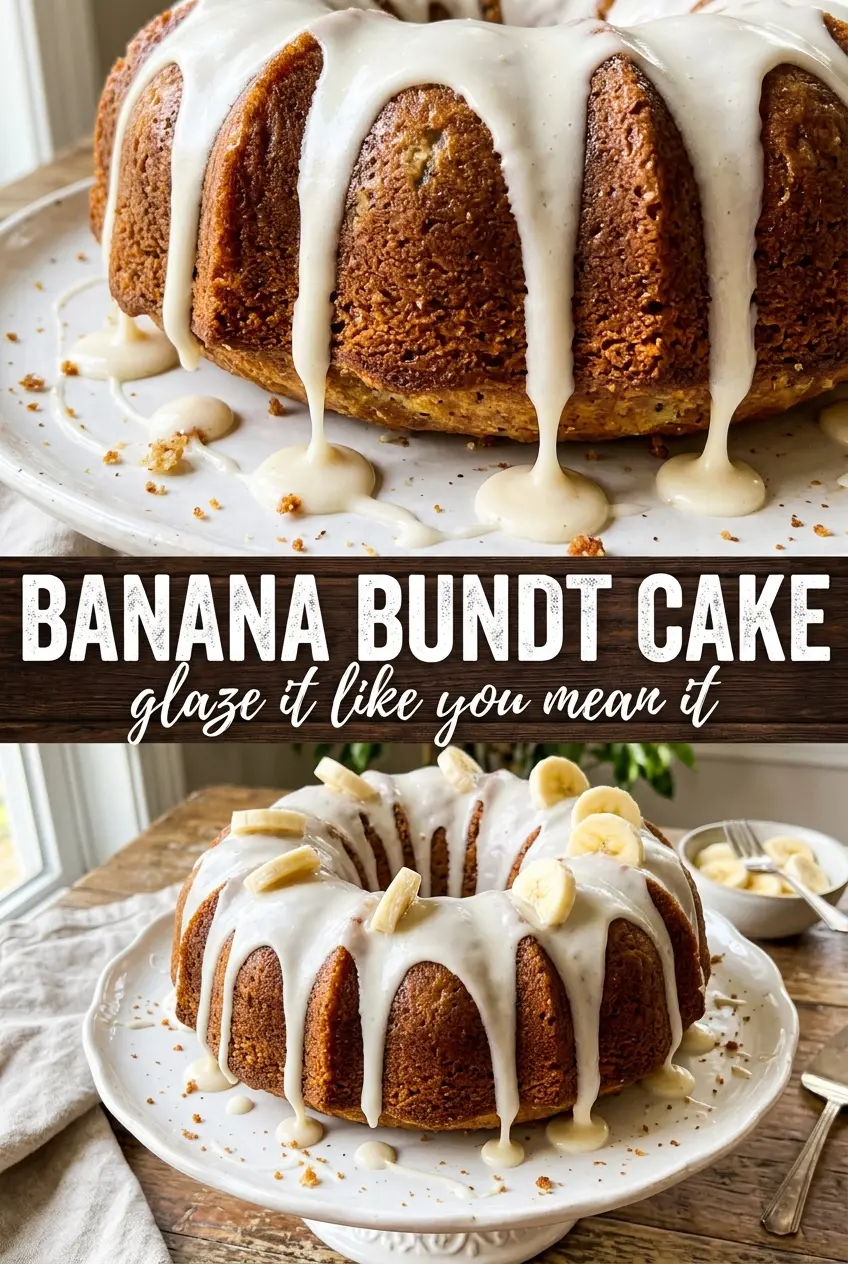
Banana Bundt Cake
Ingredients
Equipment
Method
- Preheat oven to 325°F and very thoroughly grease and flour a 12-cup bundt pan, coating every crevice so the cake releases cleanly.
- Beat butter and sugar until light and fluffy, then add eggs one at a time while mixing until incorporated.
- Mix in vanilla extract and the mashed bananas until the batter looks evenly combined.
- Combine flour, baking soda, salt, and cinnamon, then add this dry mix to the batter and fold to start the alternation.
- Add sour cream and fold gently, keeping the batter cohesive and not overworked.
- Repeat by folding in the remaining flour mixture and then the remaining sour cream in two more alternations until you end with dry ingredients.
- Pour batter into the prepared bundt pan and tap lightly to settle the surface into the pan’s ridges.
- Bake at 325°F for 60–70 minutes, until a toothpick comes out clean with no wet crumbs clinging.
- Cool the cake in the pan for 20 minutes, using the time to let the structure set.
- Invert the cake and cool completely before glazing so the glaze stays thick and doesn’t melt away.
- Beat cream cheese, powdered sugar, milk, and vanilla until smooth, then pour the glaze over the cooled cake.