Honey garlic kielbasa with veggies lands on the table with crisp-edged sausage, caramelized vegetables, and a sticky glaze that clings to every bite. The kielbasa browns at the edges while the broccoli, peppers, zucchini, and onion roast just long enough to pick up color without turning limp. It’s the kind of sheet pan dinner that tastes like you worked harder than you did.
The key is giving the sauce enough body to coat the ingredients without flooding the pan. Honey brings the shine and the caramelization, Dijon sharpens the sweetness, and soy sauce adds enough salt and depth to keep the whole tray from tasting one-note. A hot oven does the heavy lifting here, but the single-layer spread and halfway toss are what keep the vegetables roasting instead of steaming.
Below, I’ve included the small details that make this recipe work on a real weeknight, plus a few swaps if you want to change up the vegetables or adjust the heat.
The sauce got sticky and glossy in the oven, and the veggies were tender with browned edges instead of soggy. I tossed it all on the pan just like you said and dinner was done fast.
Like this honey garlic kielbasa with veggies? Save it to Pinterest for the nights when you want a sticky sheet pan dinner with almost no cleanup.
The Trick to Roasting Kielbasa and Vegetables Without Steaming Them
The most common mistake with sheet pan dinners is crowding the pan. When the vegetables pile up, they release moisture and start steaming before they ever get a chance to caramelize. Here, the kielbasa helps carry flavor, but the pan still needs space so the edges of the sausage and the cut sides of the vegetables can make direct contact with the heat.
The other thing that matters is the sauce. Honey burns if it sits in a thin puddle too long, so the vegetables and sausage need to be coated, not drowned. A hot oven at 400°F gives you enough heat to brown the kielbasa and roast the vegetables at the same time without turning the garlic bitter.
What Each Ingredient Is Actually Doing in This Sheet Pan Dinner
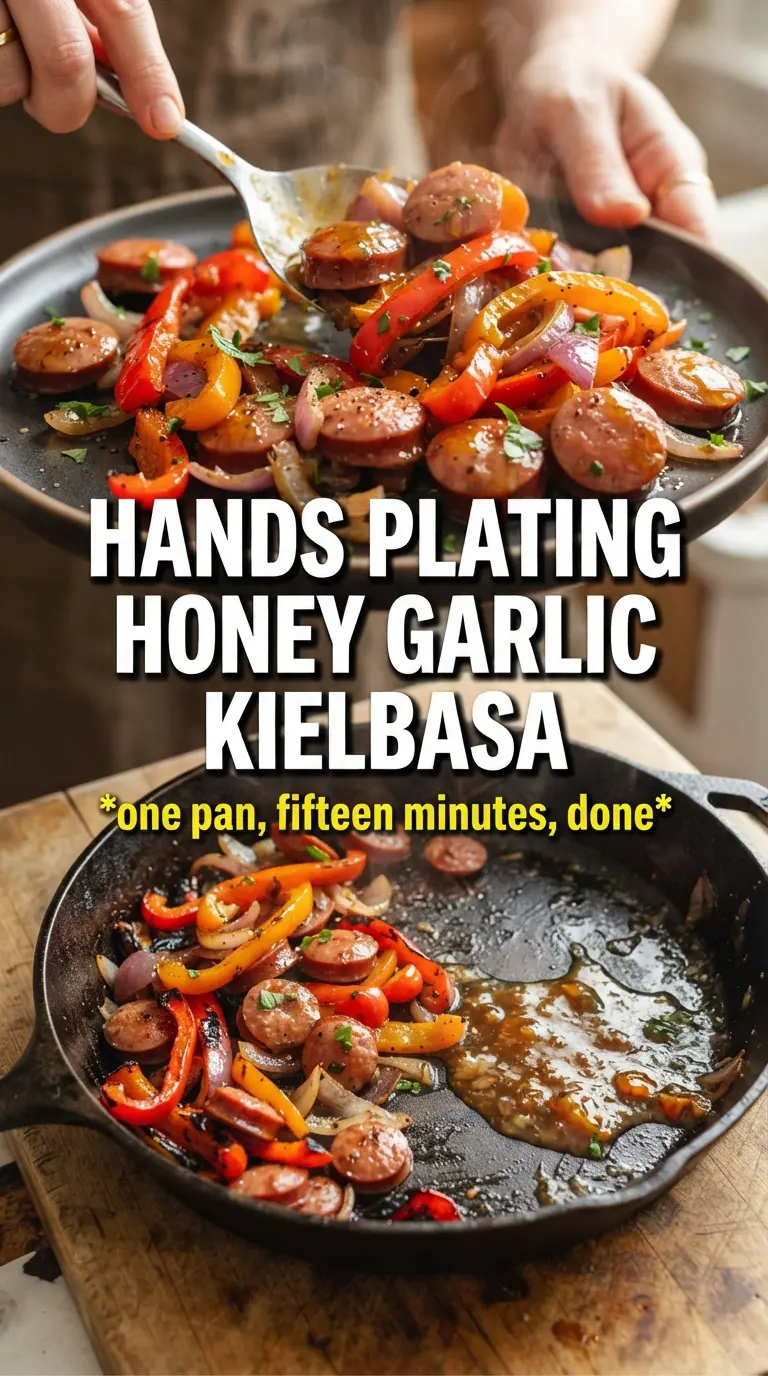
- Kielbasa — This brings the smoky, salty backbone and browns beautifully in the oven. Pre-cooked kielbasa is the easiest option here and works best because it only needs heat and color, not long cooking.
- Honey — This is what gives the glaze its shine and stickiness. There isn’t a true substitute that behaves exactly the same, but maple syrup can stand in if you want a slightly deeper, less floral sweetness.
- Dijon mustard — Dijon keeps the sauce from tasting flat and helps the glaze cling to the sausage and vegetables. Yellow mustard won’t give the same depth, so use Dijon if you can.
- Soy sauce — This adds salt, umami, and color. Low-sodium soy sauce works fine if that’s what you keep on hand; just don’t skip it, because it balances the sweetness of the honey.
- Broccoli, peppers, zucchini, and red onion — These vegetables roast at a good shared pace and bring a mix of sweet, crisp, and tender textures. Cut them into similar sizes so nothing turns soft before the rest of the pan is done.
- Garlic — Fresh minced garlic gives the sauce its sharp, savory edge. Jarred garlic will work in a pinch, but fresh tastes cleaner once it roasts.
Getting the Glaze to Stick and the Vegetables to Brown
Whisk the sauce first
Mix the honey, garlic, soy sauce, Dijon, olive oil, and red pepper flakes before you touch the vegetables. That way the garlic gets distributed evenly instead of clumping in one corner of the pan. The sauce should look loose and glossy, not thick like a marinade paste.
Coat everything evenly
Toss the kielbasa and vegetables until every piece has a light sheen. If a pool of sauce sits at the bottom of the bowl, the pan will end up wet and uneven. The goal is a thin coating that caramelizes as it roasts.
Roast in a single layer
Spread everything onto the baking sheet with space between the pieces. If the vegetables are stacked, they soften before they brown. Halfway through cooking, toss them once so the broccoli florets and onion edges pick up color from a fresh angle.
Finish when the edges darken
Pull the pan when the sausage is golden and the vegetables have browned spots but still hold their shape. If the pan stays in too long, the honey can go from glossy to sticky-burned fast. Sesame seeds and green onions go on at the end so they stay bright and fresh against the warm glaze.
How to Adapt This for Different Pans, Heat Levels, and Diets
Make it spicier
Add another pinch of red pepper flakes or a small squeeze of hot sauce to the glaze. That gives the honey more contrast and keeps the sweetness from taking over.
Gluten-free version
Use a gluten-free kielbasa and swap in tamari for the soy sauce. The flavor stays balanced, and you won’t lose the salty depth that makes the glaze work.
Change up the vegetables
Swap in Brussels sprouts, cauliflower, or carrots if that’s what you have. Just cut the denser vegetables smaller so they finish at the same time as the sausage.
Storage and Reheating
- Refrigerator: Store leftovers in an airtight container for up to 4 days. The vegetables soften a bit, but the flavor stays good.
- Freezer: You can freeze it, but the vegetables will lose some texture after thawing. If you plan to freeze portions, undercook the vegetables slightly the first time.
- Reheating: Reheat in a 375°F oven or an air fryer until hot. The microwave works in a pinch, but it softens the vegetables and dulls the glaze.
Questions I Get Asked About This Recipe
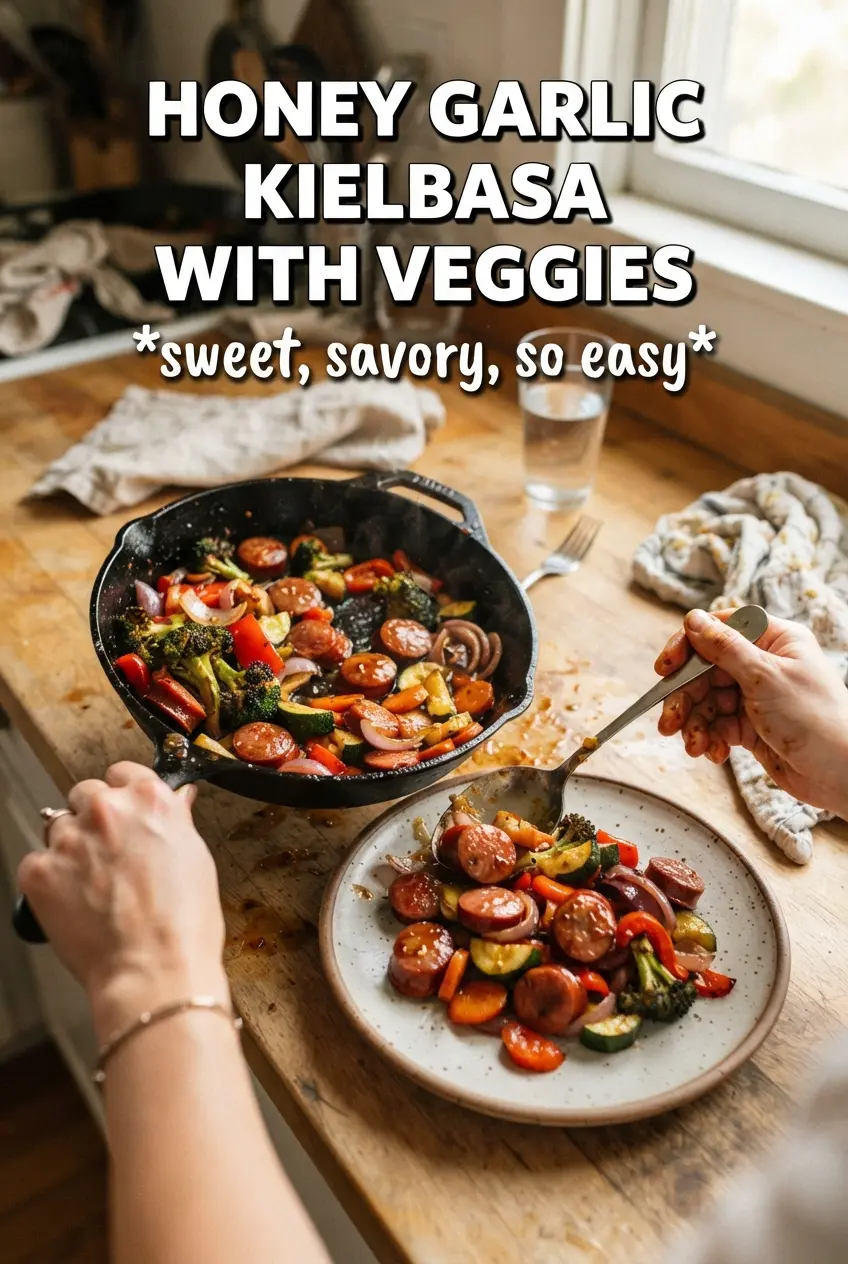
Honey Garlic Kielbasa With Veggies
Ingredients
Equipment
Method
- Preheat the oven to 400F and line a large baking sheet to get it ready for roasting. This hot start helps the kielbasa brown and the vegetables caramelize.
- Whisk honey garlic sauce ingredients together until smooth and glossy. Keep whisking just until the honey and mustard fully blend.
- Toss kielbasa, broccoli florets, red bell pepper, green bell pepper, zucchini, and red onion with the honey garlic sauce. Mix until every piece looks lightly coated.
- Spread the coated mixture on the baking sheet in a single layer. Give the vegetables space so they roast instead of steaming.
- Roast for 20-25 minutes, tossing halfway, until the vegetables are caramelized and the kielbasa is golden. Look for browned edges on broccoli and peppers and a shiny, set glaze on the sausage.
- Scatter sesame seeds and green onions over the sheet pan. Serve immediately while the glaze is still sticky and the veggies are hot.