Fudgy turtle brownies hit that sweet spot between dense chocolate cake and a candy bar baked into the pan. The edges set up with a little chew, the center stays soft and rich, and the caramel drizzled through the top turns every square into a mix of chocolate, toasted pecan, and glossy chew. A finish of melted chocolate and flaky sea salt keeps the sweetness in check and makes the whole pan taste finished, not just sweet.
What makes this version work is the order of the mixing. The chocolate and butter melt together first, which gives the brownies a smooth base and keeps the crumb dense instead of airy. Eggs go in after the mixture cools a bit, so they blend in without scrambling, and the flour is folded in just until the batter disappears. That’s the difference between fudgy brownies and dry ones. The caramel goes on top before baking, so it settles into the surface and swirls instead of sinking to the bottom.
Below, you’ll find the exact cue for pulling these brownies from the oven before they overbake, plus a few smart swaps if you need to work with what’s in the pantry.
The caramel stayed right on top and the brownies baked up fudgy instead of cakey. I let them cool all the way before cutting, and the pecans stayed crisp with that little salty finish on top.
Save these turtle brownies for the days when you want fudgy chocolate, gooey caramel, and toasted pecans in one pan.
The Reason These Turtle Brownies Stay Fudgy Instead of Dry
The biggest mistake with brownies is baking them like cake. Once too much air gets whipped into the batter, or the pan stays in the oven until the center looks completely set, the texture turns dry and crumbly instead of rich and dense. These brownies stay fudgy because the batter starts with melted butter and chocolate, then gets folded together just enough to combine. That keeps the structure tight and the crumb moist.
The other thing that matters here is the caramel topping. If you swirl it too deeply, it disappears into the batter and you lose the turtle effect. If you add it in thick ribbons across the top and drag a knife through just once or twice, it stays visible and gives you those glossy pockets of chew in every square. Pull the pan when the center still has moist crumbs on a tester. Overbaking is the fastest way to lose the texture this recipe is built for.
What the Chocolate, Caramel, and Pecans Are Each Doing Here
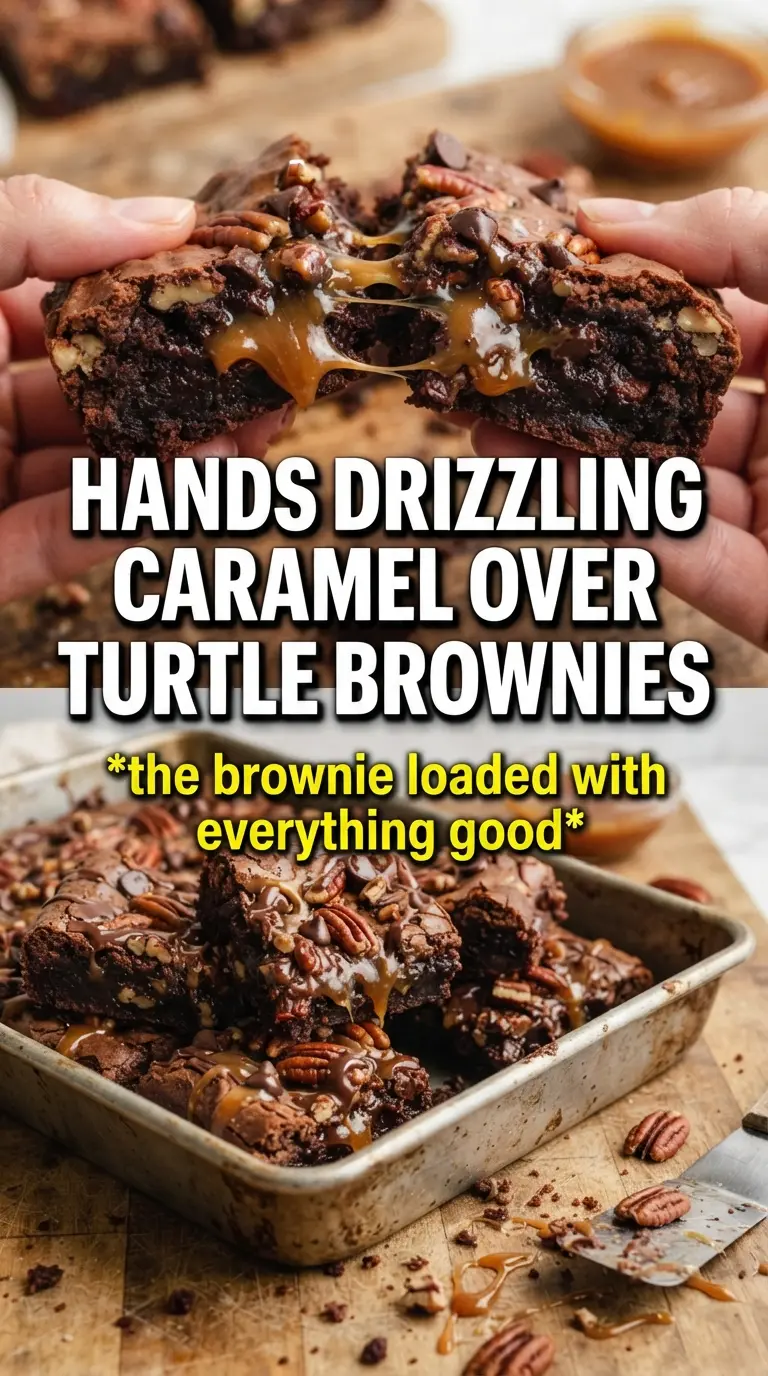
- Dark chocolate — This is what gives the brownies their deep, almost truffle-like base. Use a chocolate you’d actually eat on its own; a bland baking bar will flatten the whole pan. If you only have semi-sweet chocolate, the brownies will be a little sweeter but still work.
- Butter — Butter carries the chocolate flavor and helps the edges bake up with a soft chew. Don’t swap in a low-fat spread here. It changes the texture and makes the brownies less rich.
- Cocoa powder — The cocoa reinforces the chocolate without making the batter heavy. Natural or Dutch-process both work, but Dutch-process will give a darker, smoother finish.
- Thick caramel sauce — This needs to be thick enough to sit on top of the batter for a minute before swirling. Thin ice cream topping won’t hold the pattern and tends to sink. If your caramel is cold from the fridge, warm it just enough to drizzle.
- Toasted pecans — Toasting matters. Untoasted pecans taste flat next to all that chocolate and caramel, while toasted pecans bring out the nutty edge that makes turtle desserts taste like turtle desserts.
Building the Batter and Keeping the Caramel on Top
Melt the chocolate base
Melt the butter and chocolate together until the mixture is smooth and glossy, then let it cool for a few minutes before adding the eggs. If the chocolate base is too hot, the eggs can thicken into little streaks instead of blending cleanly. You want warm, not steaming. The mixture should look satiny and pourable.
Whisk in the eggs and sugar
Stir in the sugar, then whisk in the eggs and vanilla until the batter turns thick and slightly shiny. This is the point where the brownies start to get their dense structure. Don’t whip aggressively. Too much air works against the fudgy texture and pushes the brownies toward cake.
Fold in the dry ingredients
Add the flour, cocoa, and salt and fold just until no dry streaks remain. A few small lumps are fine. Overmixing after the flour goes in develops too much gluten, which is one of the main reasons brownies bake up tough instead of dense. Stop as soon as the batter looks uniform.
Swirl and bake
Spread the batter into the pan, drizzle the caramel over the top, and drag a knife through in broad, shallow swirls. Press the pecans into the surface so they don’t fall off after baking. Bake until the edges are set and the middle still has moist crumbs on a tester, then let the brownies cool completely before adding the chocolate drizzle. If you cut them early, the caramel will smear and the center will collapse.
How to Adapt These Brownies Without Losing the Turtle Effect
Dairy-Free Turtle Brownies
Use a dairy-free butter substitute and a dairy-free dark chocolate that melts smoothly. The texture stays close to the original because the brownies rely more on chocolate and eggs than on dairy for richness. Just check that your caramel sauce is dairy-free too, or the turtle topping won’t stay fully dairy-free.
Nut-Free Version
Skip the pecans and scatter extra chocolate chips over the top instead, or use toasted sunflower seeds for crunch. You’ll lose the classic turtle flavor, but the brownies will still be rich, fudgy, and finished with caramel. If you use seeds, press them in lightly so they stick after baking.
Gluten-Free Brownies
Use a 1:1 gluten-free flour blend in place of the all-purpose flour. The brownies will still bake up fudgy, but they may need a few extra minutes in the oven depending on the blend. Pull them when the center is set at the edges and still soft in the middle.
Storage and Reheating
- Refrigerator: Store in an airtight container for up to 5 days. The caramel firms up a little, which actually helps the squares slice cleanly.
- Freezer: These freeze well. Wrap individual brownies tightly and freeze for up to 2 months, then thaw at room temperature while still wrapped so the chocolate drizzle doesn’t sweat.
- Reheating: Warm a brownie for 10 to 15 seconds in the microwave if you want the caramel softer. Don’t overheat it or the chocolate will get greasy and the edges will dry out.
Answers to the Questions Worth Asking
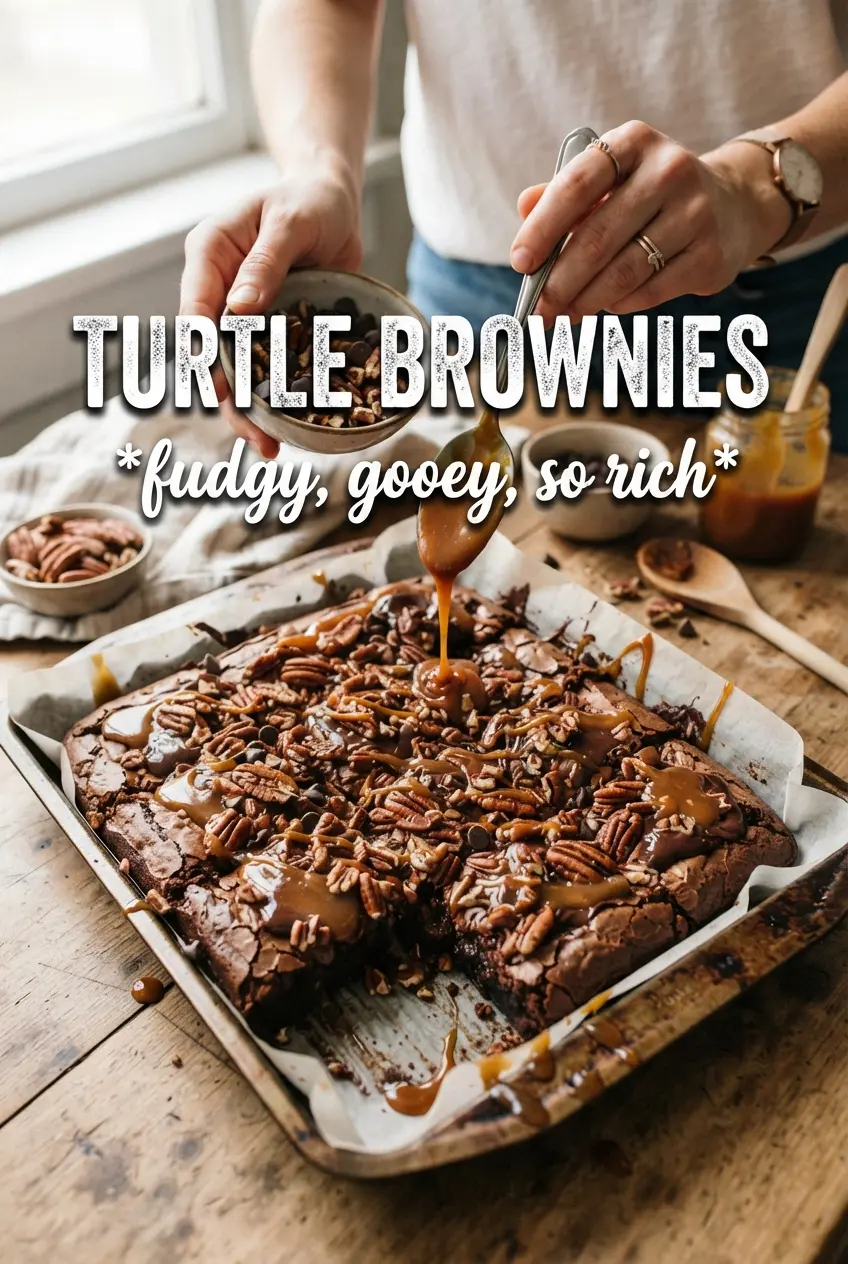
Turtle Brownies
Ingredients
Equipment
Method
- Preheat oven to 350F and line a 9x13 pan with parchment, leaving overhang for easy lifting.
- Melt the butter and dark chocolate together, then cool slightly so the eggs don’t scramble.
- Whisk in sugar, eggs, and vanilla until glossy and smooth.
- Fold in flour, cocoa, and salt just until no dry streaks remain.
- Spread batter into the prepared pan in an even layer.
- Drizzle thick caramel sauce over the top and swirl with a knife for marbled ribbons.
- Press toasted pecan halves across the surface so they adhere as the brownies bake.
- Bake for 28-32 minutes at 350F until set with moist crumbs when lightly pressed.
- Cool completely, then drizzle melted semi-sweet chocolate chips over the top.
- Sprinkle flaky sea salt over the finished brownies before slicing.