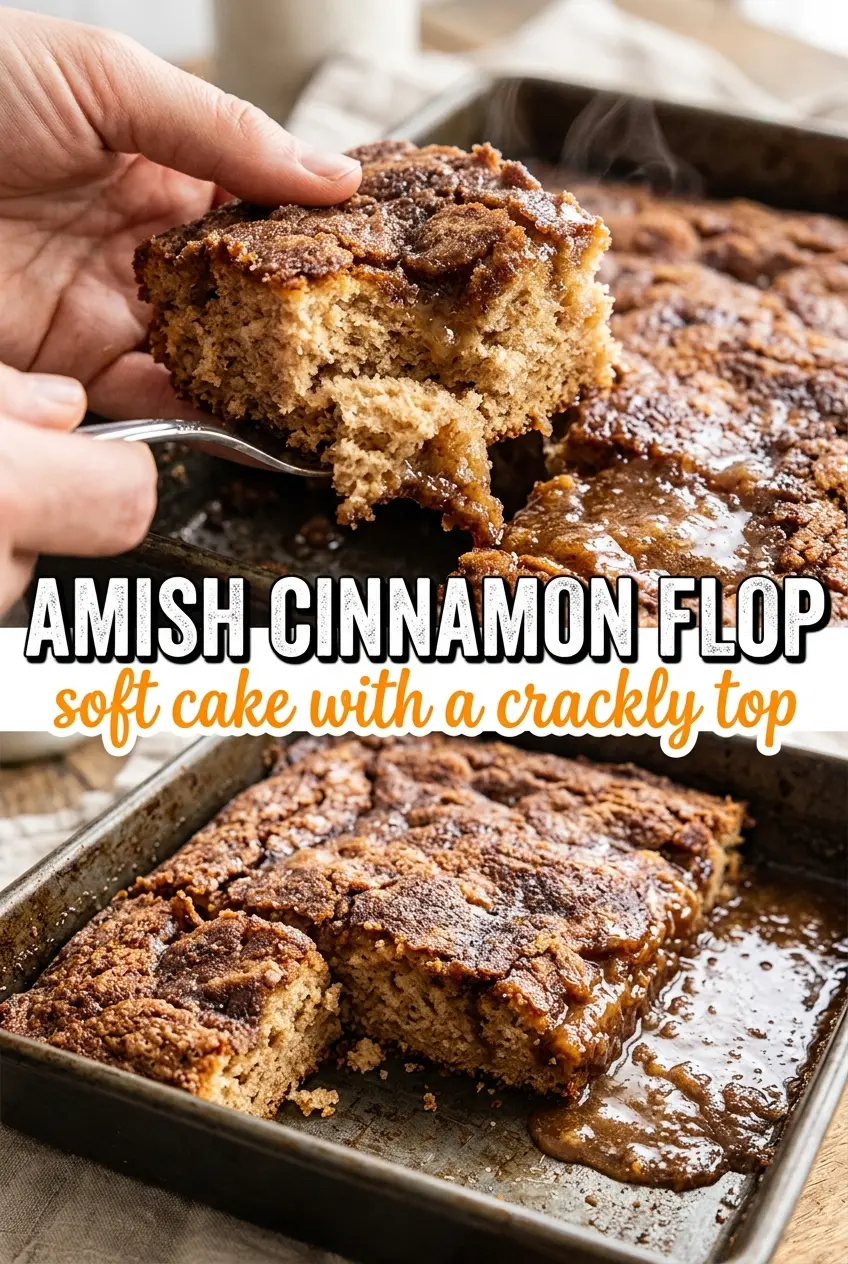
Amish Cinnamon Flop bakes into one of those humble breakfast cakes that disappears faster than you expect. The top turns crackly and caramelized where the cinnamon sugar melts into the butter, while the inside stays soft, moist, and just dense enough to slice cleanly. It lands somewhere between coffee cake and snack cake, which is exactly why it keeps earning another pan on the counter.
The trick is in the topping. Cold butter sliced thin and scattered over the cinnamon sugar gives you those rich, pooled pockets instead of a uniformly sandy top, and that contrast is what makes the cake special. The batter itself stays plain on purpose so the cinnamon-brown sugar layer can do all the heavy lifting without getting muddy or heavy.
Below, I’ve included the little details that matter most: how to keep the batter tender, why the butter needs to stay cold, and what to look for when the top is caramelized but the center is still perfectly soft.
The cinnamon sugar formed a crackly top and the butter melted into little caramel spots all over. Mine baked up in 28 minutes and the center stayed soft without being gummy.
Save this Amish Cinnamon Flop for the mornings when you want a crackly cinnamon-sugar top and a soft, old-fashioned coffee cake with almost no fuss.
The Batter Stays Tender When You Don't Overwork It
This cake only needs a light hand. The flour gets enough structure from the baking powder, and the milk-egg mixture keeps it soft, but if you stir until the batter looks perfectly smooth, you'll tighten it up and lose that plush crumb. A few streaks are fine when it goes into the pan.
The other thing people miss is the pan size. An 8×8 or 9×9 pan both work, but a smaller pan gives you a thicker layer and more contrast between the tender middle and the caramelized top. Spread the batter evenly, but don't fuss with it once it's in the pan.
What the Topping Is Actually Doing Here

- Brown sugar — This melts into the top of the cake and gives you that sticky, caramel-like crust. Dark brown sugar will deepen the molasses note, but light brown sugar is the cleaner, more classic choice.
- Cinnamon — This is the whole point of the topping, so don't use stale cinnamon. If yours has been sitting in the cabinet for years, buy fresh; the aroma matters here.
- Cold butter — Thin slices matter more than cubes. They melt slowly across the surface, creating little pools and crisp edges instead of sinking instantly into the batter.
- Whole milk — Whole milk gives the batter just enough richness without making it heavy. Lower-fat milk will work, but the crumb won't taste as soft.
Building the Cake So the Top Caramelizes, Not Sinks
Mix the batter with restraint
Whisk the dry ingredients first so the baking powder is evenly distributed, then stir in the milk, egg, oil, and vanilla just until the flour disappears. The batter should look a little thick and rough. If you keep going past that point, the cake gets tougher and loses the tender texture that makes this recipe worth repeating.
Layer the cinnamon sugar evenly
Once the batter is in the pan, spread it into the corners and sprinkle the brown sugar-cinnamon mixture over the entire surface. An even layer matters because any bare patches bake up plain while the sugared spots turn glossy and crackled. Don't press the sugar down into the batter; it should sit on top and melt there.
Add the butter in thin slices
Lay the cold butter across the topping so it covers as much of the surface as possible. Thin slices melt more evenly than one or two big pieces, which helps the topping caramelize instead of leaving dry pockets of cinnamon sugar. Bake until the top is bubbly and the center tests clean with a toothpick, usually 25 to 30 minutes.
Three Ways to Adapt the Amish Cinnamon Flop
Make it dairy-free
Swap the whole milk for unsweetened almond milk or oat milk and use a plant-based butter with a firm texture. You'll still get a caramelized top, though the butter spots won't taste quite as rich as the original version.
Use buttermilk for a tangier crumb
Replace the whole milk with the same amount of buttermilk if you want a little tang to balance the sweet topping. The batter will be a touch thicker and the crumb a little tighter, which works nicely if you like a more old-fashioned coffee cake feel.
Turn it into a gluten-free breakfast cake
Use a 1:1 gluten-free baking flour that includes xanthan gum. The texture will be a little more delicate, so let the cake cool fully before slicing or the center can crumble.
Storage and Reheating
- Refrigerator: Store covered for up to 4 days. The topping softens a little, but the cake stays moist.
- Freezer: Freeze individual squares tightly wrapped for up to 2 months. Thaw at room temperature so the topping doesn't turn sticky from condensation.
- Reheating: Warm slices in a 300°F oven for 8 to 10 minutes or microwave briefly. Don't overheat it, or the sugar topping can turn chewy instead of crackly.
Answers to the Questions Worth Asking
Amish Cinnamon Flop
Ingredients
Equipment
Method
- Preheat the oven to 375°F and grease an 8x8 or 9x9 baking pan. You should be ready to pour batter as soon as the oven reaches temperature.
- Whisk the all-purpose flour, sugar, baking powder, and salt together in a bowl. Whisking evenly distributes the leavening for a consistent rise.
- Mix the whole milk, large egg, vegetable oil, and vanilla extract together, then stir into the dry ingredients until just combined. Stop once you don’t see dry flour.
- Pour the batter into the prepared pan and spread evenly. Keep the surface level so the topping caramelizes across the whole cake.
- Mix the brown sugar and cinnamon together and sprinkle over the entire surface of the batter. Cover every corner so you get a crackled, caramelized top.
- Lay thin slices of cold butter across the top of the cinnamon sugar, covering as much surface as possible. As it bakes, the butter pools and turns bubbly and caramelized.
- Bake for 25–30 minutes at 375°F, until a toothpick comes out clean and the top is bubbly and caramelized. The golden, crackled top is the visual cue the center is set.