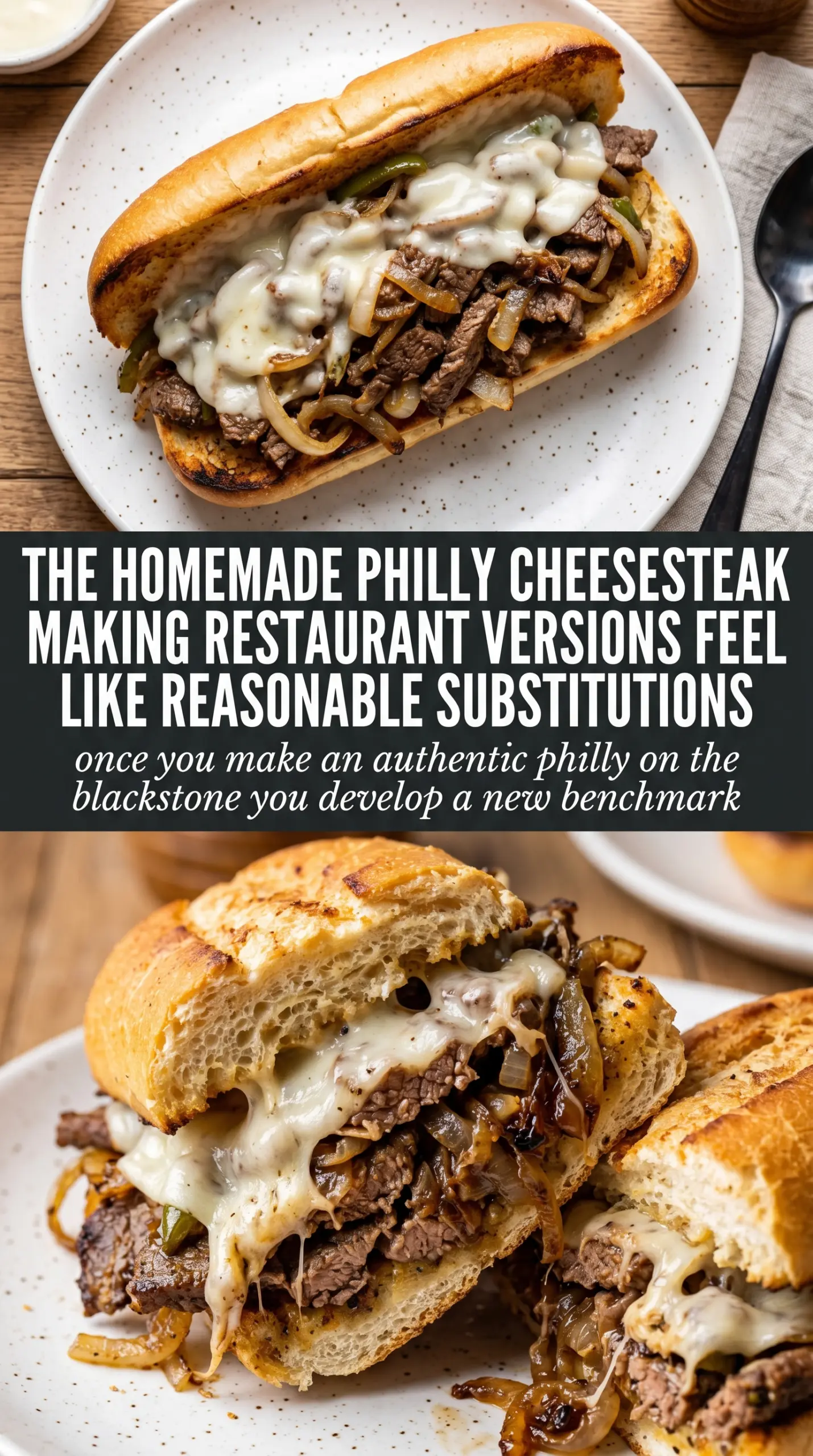
Thinly sliced steak, caramelized onions, melted cheese, and a toasted hoagie roll make this Blackstone Philly cheesesteak hit the plate with the kind of balance that keeps people coming back for a second sandwich. The griddle gives you what a skillet can’t: enough space to brown the meat fast, soften the vegetables without steaming them, and toast the rolls right next to the filling so everything lands hot and ready at once.
The trick is timing. The onions and peppers need a head start so they turn sweet and soft before the steak goes down, and the steak needs high heat so it sears instead of turning gray and tough. Once the cheese melts over the chopped meat, you’ve got that classic cheesesteak texture — juicy, salty, and just loose enough to pile into the bread without falling apart.
Below, I’ll show you how to keep the steak tender, how to get the onions properly browned on the griddle, and what to use if you want the most traditional version or a cleaner melt with provolone.
The steak stayed tender, the onions caramelized instead of steaming, and the cheese melted right over the meat without making the rolls soggy. My husband said it tasted like the real thing from the first bite.
Save this Blackstone Philly cheesesteak for the next time you want a fast griddle dinner with juicy steak, caramelized onions, and a proper toasted hoagie roll.
The Griddle Heat That Keeps the Steak Tender Instead of Gray
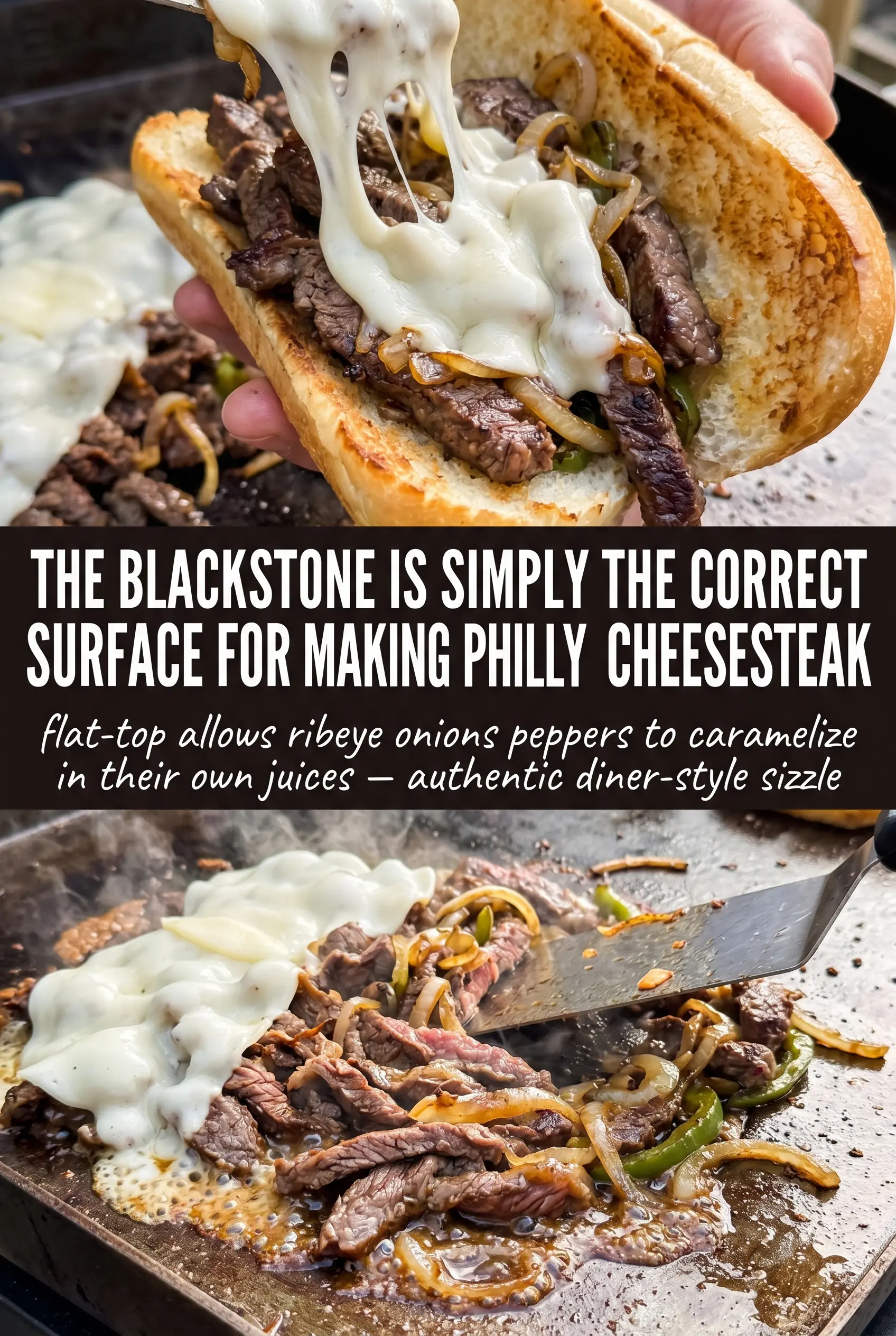
The biggest mistake in a cheesesteak is crowding the meat or cooking it too slowly. Ribeye has enough fat to stay juicy, but it still needs a hot surface so the outside browns before the inside overcooks. On a Blackstone, that means preheating until the griddle is fully hot, then giving the steak a short, aggressive cook while chopping it into smaller pieces with spatulas.
If the steak sits in a pale layer of moisture, the heat is too low or the griddle is overloaded. Spread the meat out, let it hit the metal, and only stir once it starts to color. That little bit of browning is what gives the sandwich its beefy depth.
- Ribeye steak — Ribeye is the right cut because the fat melts as it cooks, which keeps the chopped steak rich and tender. Slice it as thinly as you can across the grain; if it’s easier, chill it first so you can get cleaner slices.
- Onions and green bell peppers — The onions bring sweetness and the peppers add the classic sharp-green note. If you want a more traditional cheesesteak, you can skip the peppers, but the onions still need enough time to soften and brown before the steak goes down.
- Provolone or Cheese Whiz — Provolone gives you a cleaner, milder melt, while Cheese Whiz delivers the iconic gooey finish. Provolone works best if you want slices to drape over the meat; Whiz is the move when you want the sandwich to eat like a classic takeout cheesesteak.
- Hoagie rolls — A sturdy roll matters because the filling is juicy and hot. Soft sandwich bread won’t hold up, and even a decent roll tastes better when it’s buttered and toasted on the griddle.
What Each Ingredient Is Actually Doing in Authentic Blackstone Philly Cheesesteak
- Protein (quality, proper thickness) — Good quality protein tastes better. Even thickness ensures even cooking.
- Seasoning (bold, distributed throughout) — Don’t be shy with salt and pepper. Quality seasoning elevates everything.
- Oil or fat (protective and flavorful) — The fat helps develop crust and carries flavors. Use generously.
- Heat management (appropriate temperature for the protein) — Too high and the outside burns before the inside cooks. Too low and it steams.
- Technique (sear, then finish based on thickness) — Proper technique creates flavor. Sear for crust, then cook through gently.
- Aromatics and seasonings (garlic, herbs, spices) — These add complexity and depth. Distribute them throughout the cooking process.
- Resting time (let it rest before serving) — Resting allows juices to reabsorb. This keeps the protein moist and tender.
- Optional: finishing sauce or glaze — A light sauce adds richness without overwhelming. Apply at the very end.
How to Layer the Filling So the Sandwich Stays Juicy, Not Messy
Softening the Vegetables First
Start the onions and peppers on the hot griddle with oil and let them cook until the onions turn translucent and then lightly browned at the edges. That usually takes 8 to 10 minutes, depending on how full the griddle is. If they’re still crisp when the steak is done, they’ll taste raw next to the beef and the whole sandwich will feel unfinished.
Cooking the Steak in a Thin, Fast Layer
Season the sliced ribeye with salt and pepper, then spread it across the griddle in a thin layer. It should sizzle immediately. Chop and turn it with spatulas as it cooks so the pieces stay small, but don’t keep tossing it after it’s browned or you’ll lose the crust you just built. Three to four minutes is usually enough; longer than that and ribeye starts drying out.
Melting the Cheese Before It Hits the Roll
Divide the steak into four portions, then lay the cheese directly over each portion while the meat is still on the griddle. Let it sit for a moment until the cheese softens and starts to slump into the chopped beef. That step matters because the cheese acts like glue once the sandwich is assembled, helping the filling stay together instead of slipping out of the roll.
Toasting the Rolls at the Last Minute
Butter the hoagie rolls and toast them cut-side down on the griddle until they’re golden. Don’t walk away here; they can go from lightly toasted to scorched fast on a hot surface. A good roll should be crisp enough to stand up to the filling but still soft enough to bite through without shattering.
How to Adapt This for Different Cheese and Bread Preferences
Classic Provolone Cheesesteak
Use provolone if you want a more balanced, less salty sandwich with a smooth melt. It gives the filling a cleaner finish than Cheese Whiz and lets the beef stay front and center.
Cheese Whiz Style
If you want the most nostalgic version, swap in Cheese Whiz and spoon it over the chopped steak just before stuffing the rolls. The texture is looser and richer, and the sandwich eats more like the classic street-style version.
Gluten-Free Version
Use a sturdy gluten-free hoagie roll or serve the filling over roasted potatoes or rice. The steak and vegetables stay the same, but the bread substitute needs to be toasted well so it can hold the juices.
No Pepper Version
Leave out the bell peppers and increase the onions slightly if you want a more traditional Philly-style filling. The flavor turns a little sweeter and more streamlined, which gives the beef and cheese more room to stand out.
Storage and Reheating
- Refrigerator: Store the steak, vegetables, and rolls separately for up to 3 days. The filling holds well, but the bread softens fast once it touches the meat.
- Freezer: The cooked steak and vegetables can be frozen for up to 2 months. Freeze the filling flat in a bag so it reheats quickly; don’t freeze assembled sandwiches because the rolls turn soggy.
- Reheating: Reheat the filling on a skillet or griddle over medium heat until hot, then toast fresh rolls and assemble. Microwaving makes the steak rubbery and the bread limp, which is the fastest way to lose the texture that makes this sandwich good.
Questions I Get Asked About This Recipe
Authentic Blackstone Philly Cheesesteak
Ingredients
Equipment
Method
- Heat Blackstone griddle to medium-high heat and add oil.
- Cook onions and peppers until caramelized, about 8-10 minutes, then move to the side.
- Season steak with salt and pepper and cook on hot griddle for 3-4 minutes, chopping with spatulas.
- Divide steak into 4 portions and top each with cheese, allowing to melt.
- Butter and toast hoagie rolls on the griddle until golden.
- Scoop each steak portion with onions and peppers into toasted rolls and serve immediately.